

Most advice about DTF printing misses a critical detail that trips up even seasoned American and European custom apparel creators. Knowing what sets DTF apart is the first step for any small clothing business or independent artist who wants repeat customers through lasting print quality. This guide clears up core misconceptions, gives clear definitions, and highlights key differences so you can offer distinctive merchandise that stands out around the world.
Table of Contents
- Dtf Printing Defined: Core Concepts And Misconceptions
- How Dtf Printing Works Step By Step
- Materials, Equipment, And Design Requirements
- Dtf Printing Vs Screen And Dtg Methods
- Common Issues, Costs, And Best Practices
Key Takeaways
| Point | Details |
|---|---|
| DTF Printing is Versatile | DTF printing works on various materials, providing flexibility for custom apparel needs beyond traditional methods. |
| Complementary Technology | It is important to view DTF as a complement to screen printing, particularly for intricate multi-color designs. |
| Critical Workflow Stages | Each stage of the DTF process—from digital design to fabric transfer—is essential for achieving high-quality results. |
| Investment Considerations | Businesses should carefully calculate initial setup and operational costs to ensure a viable return on investment. |
DTF Printing Defined: Core Concepts and Misconceptions
Direct-to-Film (DTF) printing represents a revolutionary textile decoration technique that transforms how custom apparel designers create vibrant, detailed graphics. Unlike traditional printing methods, DTF allows for complex designs to be printed onto a specialized film before being transferred onto various fabric types. The process involves printing full-color CMYK images with a strategic white ink backing that ensures exceptional opacity and color vibrancy.
Understanding DTF requires recognizing its unique workflow. Textile designers can print intricate designs onto PET film using advanced digital printers, which then receive a fine thermoplastic polyurethane powder application. This powder creates a durable adhesive layer that enables transfers across multiple textile surfaces without requiring extensive fabric pretreatment. The method stands out because it supports intricate graphics and works effectively for both small batch and medium-volume production runs.
Many professionals mistakenly view DTF as a complete replacement for screen printing, which is inaccurate. DTF is actually a complementary technology that excels in specific scenarios such as producing detailed, multi-color designs on challenging fabric types. Its versatility allows printing on materials ranging from cotton and polyester to leather and performance wear, making it an incredibly flexible solution for custom apparel creators. The technique provides superior color reproduction and allows for more design complexity compared to traditional heat transfer methods.
Pro Tip: When exploring DTF printing, invest in high-quality films and calibrate your printer settings precisely to ensure consistent transfer quality and color accuracy.
How DTF Printing Works Step by Step
Direct-to-Film (DTF) printing involves a sophisticated multi-stage process that transforms digital designs into vibrant textile transfers. The technique begins with precise digital design preparation, where graphic artists create or select artwork that will be printed onto specialized transfer films. The printing process starts with a mirrored design printed using CMYK and white ink layers onto a PET film, ensuring exceptional color reproduction and design clarity.
Once the initial printing is complete, the transfer undergoes a critical powder application stage. While the printed ink remains slightly tacky, a fine thermoplastic polyurethane powder is carefully spread across the surface. This powder serves as a crucial adhesive mechanism, creating a durable bond between the design and the eventual fabric surface. Heat is then applied to fuse the powder, transforming the transfer into a stable, ready-to-apply graphic that can be stored for future use or immediately applied to textiles.
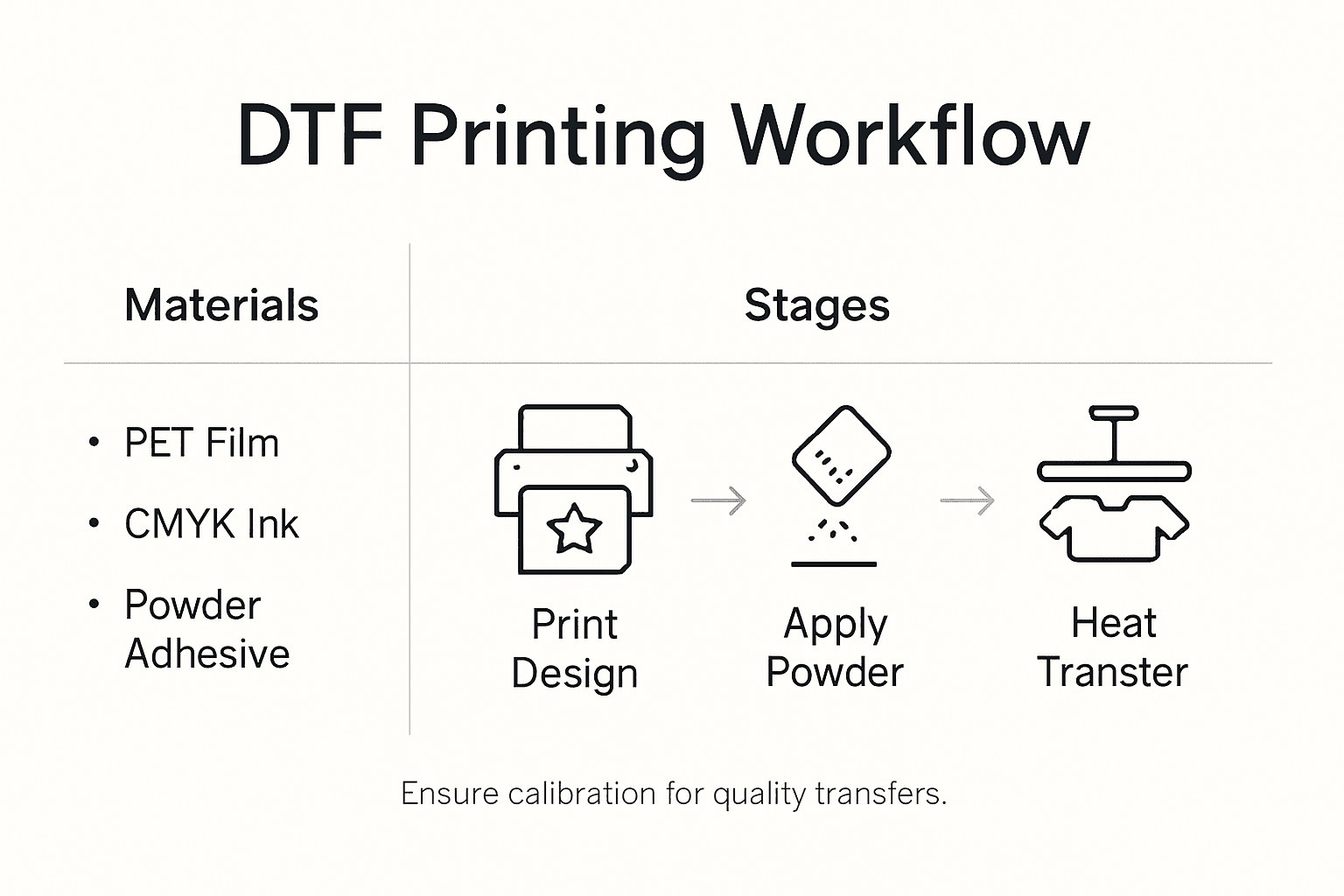
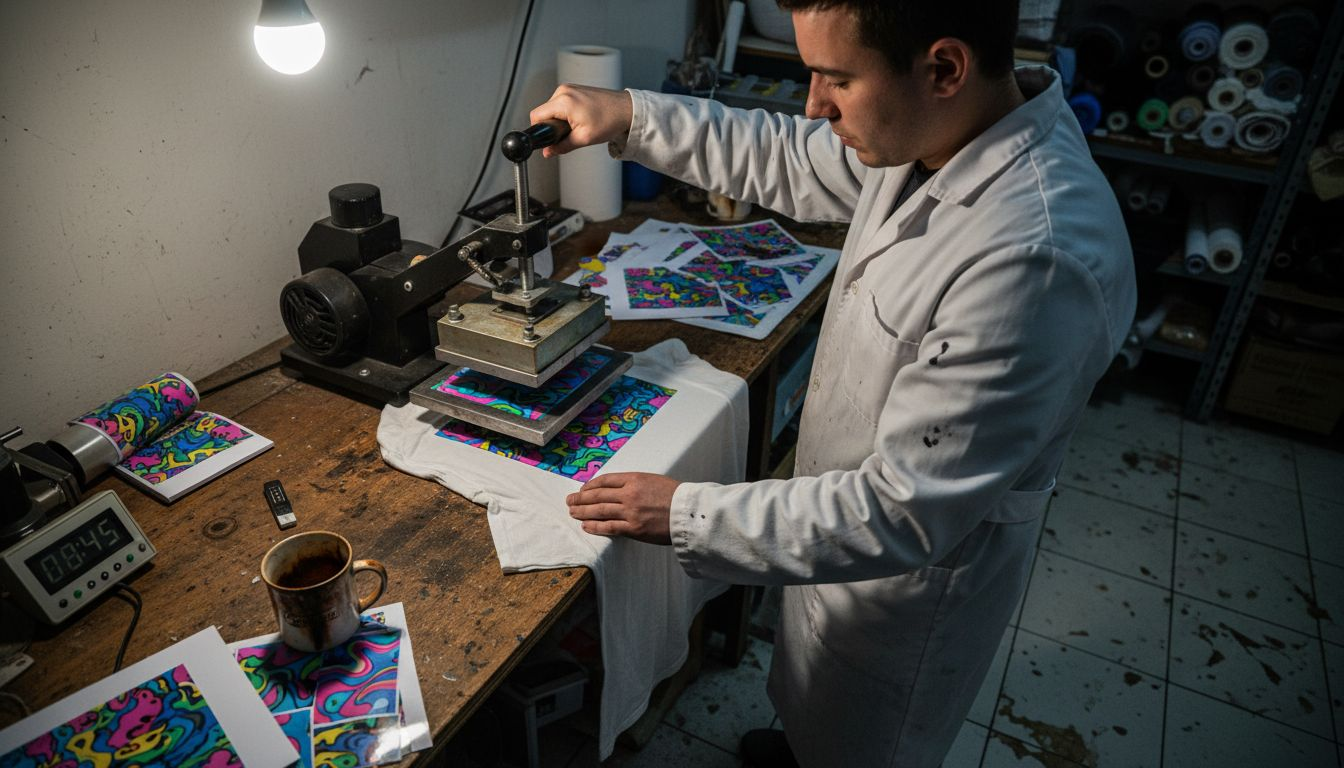
The final stage involves the actual fabric transfer, which requires precise heat and pressure application. Designers position the prepared transfer film onto the target fabric, using a heat press to activate the thermoplastic adhesive. The application process typically involves maintaining specific temperature and pressure settings, which vary depending on the fabric type and design complexity. The carrier film is then carefully peeled away, revealing the vibrant, permanently transferred design. This method provides unprecedented flexibility, allowing custom apparel suppliers to create intricate designs without extensive fabric pretreatment.
Pro Tip: Always perform a test transfer on a similar fabric swatch to calibrate your heat press settings and ensure optimal design transfer quality.
Below is a summary of essential DTF printing workflow stages and their main business benefits:
| Workflow Stage | Purpose | Business Value |
|---|---|---|
| Digital Design Prep | Create & optimize artwork | Enables creative complexity |
| Printing on PET Film | Applies mirrored design & white ink | Delivers sharp, vibrant graphics |
| Powder Application | Adds adhesive bonding powder | Supports durable fabric transfers |
| Powder Curing & Storage | Heats to set adhesive, stores transfer | Allows future production flexibility |
| Fabric Transfer | Heat-presses film onto fabric | Ensures high-quality, permanent finish |
Materials, Equipment, and Design Requirements
DTF Printing Materials form the critical foundation for successful textile transfers. Specialized printing requires specific substrate materials, including PET films and unique DTF inks, which differ significantly from traditional textile printing supplies. The primary materials include high-quality polyethylene terephthalate (PET) transfer films, CMYK color inks with an additional white ink layer for opacity, and a fine thermoplastic polyurethane powder that creates the adhesive mechanism for fabric transfer.
Equipment selection represents another crucial aspect of the DTF printing workflow. Professionals need specialized printers capable of handling DTF films and integrated powder application systems, which typically include modified direct-to-garment printers or dedicated roll-to-roll DTF printing machines. Essential equipment encompasses digital printers with white ink capabilities, powder applicators, industrial-grade heat presses, and curing units that can precisely control temperature and pressure during the transfer process. Raster image processor (RIP) software becomes equally important for managing color profiles and design preparation.
Design requirements for DTF printing demand meticulous digital preparation and technical understanding. Graphic designers must create high-resolution digital artwork specifically optimized for DTF transfer, considering factors like color vibrancy, image complexity, and potential fabric texture interactions. Designs require mirroring before printing to ensure correct orientation during transfer, with color management playing a critical role in achieving accurate reproduction. Vector-based graphic formats and high-contrast images typically yield the most impressive results, allowing for intricate details and smooth color transitions across various fabric surfaces.
Pro Tip: Invest in color calibration tools and perform regular test prints to maintain consistent design quality and color accuracy across different transfer materials.
DTF Printing vs Screen and DTG Methods
Direct-to-Film (DTF) printing emerges as a versatile alternative to traditional textile decoration methods, offering unique advantages over screen printing and direct-to-garment (DTG) techniques. DTF differs fundamentally by decoupling the printing and transfer processes, allowing for more flexible design applications, unlike screen printing’s rigid screen-based approach or DTG’s direct fabric printing method. While screen printing requires extensive setup for each color layer and works best for large volume runs, DTF printing enables intricate, multi-color designs with minimal preparation.
Compared to direct-to-garment printing, DTF demonstrates remarkable versatility in fabric compatibility. DTG printing typically limits designers to cotton or cotton-blend fabrics and requires extensive pre-treatment, whereas DTF transfers can be applied to a wide range of materials including polyester, synthetic blends, and even dark-colored textiles without additional fabric preparation. This flexibility allows custom apparel creators to expand their design possibilities beyond the constraints of traditional printing methods, making DTF an increasingly attractive option for small to medium-scale production runs.
Each printing method carries distinct strengths and limitations. Screen printing remains optimal for extremely large production volumes with simple, bold designs, while DTG excels in producing photorealistic images on light-colored cotton garments. DTF printing bridges these techniques by offering high-resolution design capabilities, durability, and material versatility. The heat transfer process enables sharper details and more vibrant color reproduction compared to traditional methods, with the added benefit of creating transfers that can be stored and applied later, providing unprecedented production flexibility for custom apparel businesses.
Here’s how DTF, screen, and DTG printing methods compare on key factors:
| Factor | DTF Printing | Screen Printing | DTG Printing |
|---|---|---|---|
| Setup Time | Quick, minimal setup | Long, multiple screens | Fast, digital-only prep |
| Design Complexity | Handles detailed, multi-color | Best for simple, bold images | Excellent for photo-like art |
| Material Compatibility | Cotton, polyester, blends, leather | Mostly cotton & blends | Mostly cotton |
| Batch Size Suitability | Small to medium runs | Best for large runs | Small batch or 1-off prints |
| Storage of Transfers | Transfers can be stored | No storage, prints applied direct | No storage, prints applied direct |
| Production Flexibility | Highly flexible, stored transfers | Inflexible, fixed screens | Flexible, print on demand |
Pro Tip: Evaluate your specific project requirements by creating test prints using different printing methods to determine the most cost-effective and visually appealing solution for your unique design needs.
Common Issues, Costs, and Best Practices
Successful DTF printing requires careful navigation of several technical challenges and financial considerations. Common operational issues include managing powder overspray, preventing ink clogging, and ensuring precise powder adhesive curing, which directly impact print quality and durability. Powder application represents a particularly nuanced aspect of the process, with uneven distribution potentially compromising transfer effectiveness. Printers must maintain meticulous control over environmental conditions and equipment calibration to minimize these potential complications.
Equipment and financial investments form another critical dimension of DTF printing. Initial setup costs encompass specialized printers, powder adhesive systems, curing equipment, and ongoing maintenance expenses, which can represent a substantial commitment for small to medium-sized businesses. Professional-grade DTF printers range from $2,000 to $15,000, with additional expenses for consumables like specialized films, CMYK and white inks, and thermoplastic powders. Small batch producers must carefully calculate their potential return on investment, considering factors like design complexity, fabric type, and production volume.
Implementing robust best practices becomes essential for minimizing waste and maximizing print quality. Recommended strategies include establishing consistent printer maintenance routines, utilizing compatible raster image processor (RIP) software for precise color management, and creating controlled printing environments that reduce powder inhalation risks. Operators should focus on regular printer head cleaning, maintaining optimal ink viscosity, and developing standardized heat press protocols to ensure transfer durability and wash resistance. Regular training and workflow optimization can significantly reduce production errors and improve overall print consistency.
Pro Tip: Create a comprehensive maintenance log to track printer performance, ink usage, and transfer quality, enabling data-driven improvements in your DTF printing workflow.
Unlock the Full Potential of DTF Printing for Your Custom Apparel Business
If you are navigating the complexities of Direct-to-Film printing to create detailed, vibrant designs on various fabrics you understand the importance of reliable, high-quality transfers. The challenges of precise powder application, color accuracy, and versatile fabric compatibility demand expert solutions that simplify your workflow while delivering professional results. Transfer Kingz offers a trusted platform where you can access premium DTF transfers, custom apparel printing, heat transfers, t-shirt printing, high-quality prints designed to meet the exacting standards highlighted in your DTF printing journey.
Experience the ease of working with durable, vivid transfers that perform consistently across cotton, polyester, and blends without the need for complex pretreatment. With Transfer Kingz, you can take advantage of fast turnaround times, affordable pricing, and a straightforward ordering process catered to small businesses, hobbyists, or large production runs. Visit Transfer Kingz today to explore high-quality printing supplies and see how you can elevate your custom apparel production with our comprehensive range of DTF transfers and printing solutions. Start transforming your designs with confidence and quality now.
Frequently Asked Questions
What is DTF printing?
Direct-to-Film (DTF) printing is a textile decoration technique that allows for the printing of intricate designs on specialized films, which can then be transferred onto various fabric types. It utilizes a full-color CMYK printing process along with a white ink backing for enhanced color vibrancy and opacity.
How does DTF printing work?
DTF printing involves several steps, including preparing digital designs, printing mirrored images onto PET films, applying an adhesive powder, curing the adhesive, and finally transferring the design onto fabric using a heat press. This process allows for high-quality and detailed graphics on multiple fabric surfaces.
What materials are needed for DTF printing?
Essential materials for DTF printing include high-quality PET transfer films, CMYK inks with a white ink layer, and thermoplastic polyurethane powder. Specialized printers and heat press units are also required to ensure successful transfers and optimal print quality.
How does DTF printing compare to screen printing and DTG printing?
DTF printing offers advantages over screen and direct-to-garment (DTG) printing, such as quicker setup times, the ability to handle detailed multi-color designs, and compatibility with a broader range of materials. While screen printing is best suited for large runs of simple designs and DTG is ideal for photo-like images on light fabrics, DTF combines aspects of both for high-resolution and flexible production capabilities.
Recommended
- How dtf shirt transfers are Revolutionizing Custom Apparel – Transfer Kingz
- Can Digital Transfer Film Handle Intricate and Detailed Prints? – Transfer Kingz
- DTF Printing for Business Branding: How Custom DTF Transfers Boost Sma – Transfer Kingz
- DTF Printing for Business Branding: How Custom DTF Transfers Boost Sma – Transfer Kingz