

Explore New Rochelle's Top DTF Printing
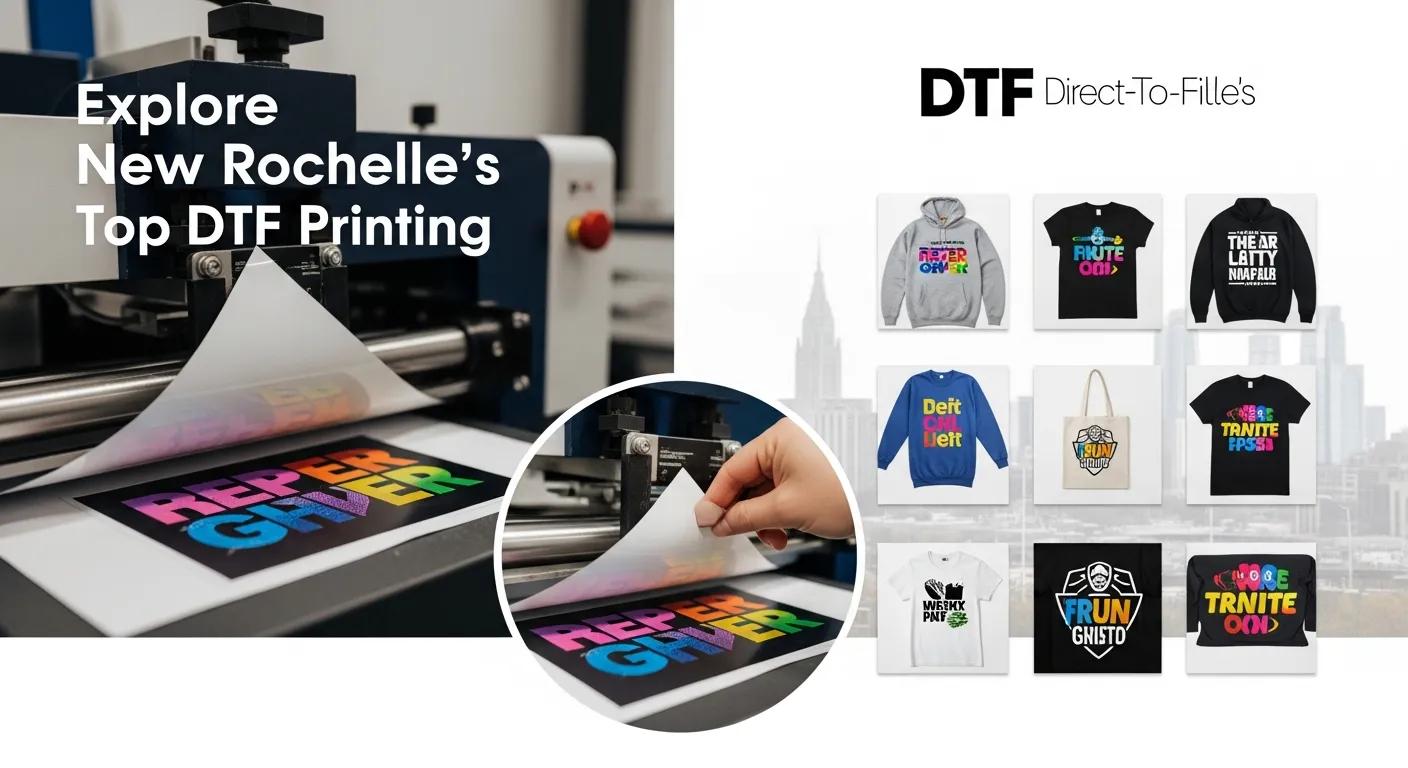
DTF (Direct-to-Film) and UV DTF transfers deliver vibrant, durable prints for apparel and hard-surface merchandise, with local availability and practical same-day options in New Rochelle. This guide explains how DTF printing works, why it’s often preferable to screen printing and DTG for small runs, and how UV DTF 3D PermaStickers extend those benefits to rigid surfaces. Readers will learn the technical workflow, substrate compatibility, durability expectations, and practical ordering paths — including how a gang sheet workflow reduces per-piece cost. The article also highlights who benefits most from custom DTF transfers, from small retailers to artists preparing event merch, and covers file requirements and turnaround expectations for quick projects. Throughout, local-service considerations such as no-minimum orders, same-day printing cutoffs, and pickup options are woven into actionable advice for New Rochelle customers. By the end you’ll understand how to choose transfer types, prepare artwork for best color fidelity, and place efficient orders using an online gang sheet tool.
What Makes DTF Printing the Top Choice in New Rochelle?
DTF printing is a digital transfer process that prints full-color artwork onto PET film, applies an adhesive powder, and then cures the adhesive to create a press-and-peel transfer that bonds to fabric. This workflow produces vibrant color fidelity, strong wash resistance, and compatibility with a wide range of textiles because the ink and adhesive form an integrated film that adheres reliably. Local businesses favor DTF for its fast turnaround, low setup cost for short runs, and consistent results across mixed-fabric orders, making it ideal for on-demand merchandising and event shirts. The next section explains the stepwise mechanics of DTF so you can prepare artwork and anticipate finishing steps for best results.
DTF delivers specific advantages compared with traditional methods:
- Full-Color Reproduction: DTF produces continuous-tone images with smooth gradients and photographic detail.
- Fabric Versatility: Transfers adhere well to cotton, polyester blends, and many textured fabrics.
- Low Setup Cost: No screens or expensive setup means economical small batches and prototypes.
- Durability: Properly applied DTF resists repeated washing and abrasion.
These benefits make DTF a practical choice for local New Rochelle operations that need high-quality results without large minimums. To summarize how DTF stacks up technically and operationally, the table below contrasts key attributes across common printing approaches.
DTF attributes compared for quick selection:
| Printing Method | Characteristic | Practical Benefit |
|---|---|---|
| DTF (Direct-to-Film) | Prints to PET film, powder adhesive, heat-applied | Vibrant colors, versatile substrates, economical for small runs |
| Screen Printing | Ink deposited through screens | Excellent for large runs, high opacity on dark garments |
| DTG (Direct-to-Garment) | Ink printed directly on fabric | Soft handfeel for cotton, less ideal for mixed fibers |
This comparison highlights how DTF sits between DTG and screen printing by offering photographic color with low setup requirements. Understanding the DTF workflow in the next subsection clarifies why these attributes translate into real-world advantages for local apparel and merch orders.
How Does Direct-to-Film Printing Work for Custom Apparel?
Direct-to-Film starts with a high-resolution design that is printed in reverse onto a PET film using water-based or pigment inks, followed by an application of adhesive powder which is heat-cured to form a tacky transfer layer. The cured film is then press-applied to the garment with a heat press, where the adhesive bonds the ink layer to fabric fibers, and the PET backing is peeled away to reveal the finished image. This press-and-peel application produces transfers that combine strong adhesion with a printed surface that resists washing and wear over time. Proper artwork preparation — including correct resolution, color profiling, and bleed — ensures the transfer reproduces color accurately and aligns cleanly during heat application.
What Are the Key Benefits of DTF Transfers for Local Businesses?
DTF transfers offer small businesses fast, low-risk ways to test designs, produce on-demand inventory, and fulfill mixed-material orders without large minimums or setup fees. The technology supports vivid color ranges that are certified to high color standards, which helps businesses maintain consistent brand colors across merchandise. DTF is also suitable for mixed-fabric production runs, allowing retailers to offer diverse garment choices without separate processes. For local sellers and event organizers, that flexibility reduces inventory overhead and shortens time-to-shelf for new products.
How Do UV DTF Transfers Elevate Custom Printing on Hard Surfaces?
UV DTF transfers combine direct-to-film printing with UV-curable inks and adhesives to create durable, raised, or 3D effects that adhere to non-porous surfaces without the same heat-press requirements as textile transfers. The process prints artwork onto a specialized film using UV inks, which are cured by ultraviolet light to lock pigments and create a robust, scratch-resistant layer. This method is especially effective for applications that need tactile, dimensional accents, and it offers long-lasting color retention on rigid merchandise.
UV DTF benefits include:
- Scratch-Resistance and Weather Durability: UV curing produces a hard surface finish that holds up to handling.
- 3D/Relief Effects: Layered ink deposition can create raised textures and dimensional highlights.
- Adhesion to Rigid Substrates: Works on glass, metal, and coated materials where textile transfers cannot be used.
These advantages position UV DTF as a bridge between sticker printing and full-surface decoration, enabling brands to add premium tactile elements to merchandise. The next subsection details substrates that work best with UV DTF 3D PermaStickers and how to prepare surfaces for reliable adhesion.
What Surfaces Are Ideal for UV DTF 3D PermaStickers?
UV DTF 3D PermaStickers adhere best to smooth, non-porous substrates such as glass, metal, coated acrylic, and many plastics where a cured ink film can form a stable bond. Proper surface preparation — cleaning, degreasing, and, if needed, light abrasion or primer — ensures the adhesive layer can wet the surface evenly and cure to a durable finish. Items like tumblers, phone cases, signage panels, and coated wood that receive consistent handling are ideal candidates because the UV-cured layer resists scratching and moisture. For projects involving curved or textured items, small test pieces help verify adhesion and cure profiles before committing to large runs.
Why Choose UV DTF Transfers for Durable, Vibrant Merchandise?
UV-curable inks used in UV DTF maintain strong pigment stability and resist fading, which preserves brand colors on merchandise exposed to light and handling. The cured adhesive and ink layers create a barrier that reduces abrasion and moisture ingress, improving long-term appearance and tactile quality. Compared with vinyl or paper labels, UV DTF produces seamless prints with no visible edge lift when applied correctly, and it supports high-detail artwork and fine color transitions. For brands seeking premium, long-lasting promotional items or retail goods, UV DTF provides a combination of visual impact and physical resilience.
What Sets Transfer Kingz Apart as New Rochelle's Local DTF Print Shop?
Transfer Kingz positions itself locally with service features that match the operational needs of New Rochelle creators, retailers, and event organizers: no minimum orders, same-day printing cutoff for orders placed before 12 PM EST, a free online gang sheet builder to consolidate designs, and a local pickup option for immediate fulfillment. Transfer Kingz’s stated commitment to premium materials and certified color standards supports reliable color fidelity for branded merchandise, which is critical for repeatable retail quality. The table below summarizes Transfer Kingz’s core offerings and the practical value each brings to local customers.
| Service | Attribute | Value |
|---|---|---|
| No Minimums | Order flexibility | Enables single-item and small-batch production |
| Same-Day Printing | Cutoff before 12 PM EST | Fast turnaround for urgent orders |
| Gang Sheet Builder | Free online tool | Reduces per-transfer cost via efficient nesting |
| G7 Color Standards | Color certification | Consistent, vibrant brand colors |
This concise comparison shows how operational terms and quality standards translate into value for small businesses and independent creators in New Rochelle. The next subsections explain how those service features benefit customers in everyday scenarios and what quality standards underpin long-lasting prints.
How Do No Minimum Orders and Fast Shipping Benefit Customers?
No-minimum policies remove a major barrier for hobbyists, artists, and small businesses that need single samples or short promotional runs without committing to large inventory investments. Fast shipping and same-day printing options allow teams to respond to sudden opportunities — like pop-up events or last-minute orders — with minimal delay, reducing lost sales and missed deadlines. For retailers, the ability to produce test runs and reorder quickly supports iterative product development and seasonal merchandising strategies. Practical timelines under these service terms translate into operational agility that many New Rochelle-based makers and sellers rely on to launch and refine products.
What Quality Standards Ensure Vibrant and Long-Lasting Prints?
High-quality DTF and UV DTF results depend on premium PET films, stable pigments, and robust adhesive systems that cure consistently during production, all supported by color management aligned to recognized standards. Adhering to G7 or similar color targets ensures that printed output matches intended brand colors across batches and substrates, reducing rework and returns. Post-press care recommendations — such as correct heat-press settings, peel timing, and wash guidelines — further maximize durability once transfers are applied to garments or goods. For customers, these quality practices translate into merchandise that maintains appearance and tactile feel over repeated use.
How Can You Easily Order Custom DTF Transfers Using the Gang Sheet Builder?
Using a gang sheet builder consolidates multiple small designs onto a single print sheet to maximize surface usage, reduce per-piece cost, and simplify order handling for DTF transfers. The tool lets you place various design elements, choose quantities per design, and preview nesting to see how many impressions fit per sheet before ordering. Maximizing sheet utilization lowers material waste and spreads fixed print costs across more transfers, which is especially valuable for mixed-design or multi-size orders. The next subsection provides a clear, step-by-step process to create and submit a gang sheet so you can start saving on production.
Follow these steps to create and submit a gang sheet:
- Prepare Artwork: Export designs as high-resolution PNG or vector PDF files with transparent backgrounds and correct color profiles.
- Arrange Layout: Upload each design to the gang sheet tool and place art at intended print sizes with required bleed and spacing.
- Specify Quantities: Assign quantities for each design and preview the nested sheet to verify layout and yield.
- Submit Order: Confirm print settings, select substrate or transfer type, and choose same-day or standard turnaround as needed.
These steps streamline ordering and reduce per-transfer cost, making gang sheets an efficient approach for mixed small-batch production. A short practical note follows about how the online builder integrates with local service options.
The online Gang Sheet Builder is provided as a free tool to simplify nesting and cost estimation, and customers can use it to combine multiple small designs into a single order for efficient processing. This integration reduces manual layout errors, accelerates proofing, and helps estimate per-transfer pricing before checkout. For urgent projects, orders placed in the morning can qualify for same-day printing if submitted prior to the 12 PM EST cutoff, and local pickup is available to avoid shipping delays. Using the builder alongside these fulfillment options streamlines the full production-to-pickup workflow for New Rochelle creators.
What Is the Step-by-Step Process to Create and Submit a Gang Sheet?
Begin by preparing individual artwork files at the correct final print dimensions, ensuring 300 DPI raster images or clean vector PDFs with transparent backgrounds and color-managed profiles. Next, upload each file to the gang sheet interface and position art to maximize usable sheet area while leaving proper bleed and separation for cutting or finishing. After arranging the sheet, enter per-design quantities and review the tool’s yield estimation to confirm cost-effectiveness. Finally, select transfer type and turnaround, approve a proof if requested, and submit the order for print or same-day processing if within the established cutoff.
How Does the Gang Sheet Builder Save Costs and Maximize Efficiency?
Gang sheets reduce per-item costs by sharing the printable area across multiple small designs so that fixed print setup and material expenses are distributed across more transfers. By nesting designs tightly and optimizing orientation, a single sheet can produce many impressions that would otherwise require separate print runs, lowering waste and labor. This approach also simplifies inventory management because different designs can be fulfilled from the same physical sheet as needed. For businesses testing new motifs or selling low-volume SKUs, gang sheets convert what would be high per-unit costs into manageable, repeatable production runs.
Who Can Benefit from New Rochelle's Leading DTF Printing Services?
DTF and UV DTF transfers serve a wide range of users, from solo artists and microbrands to event organizers and boutique retailers who need short runs with reliable color and durability. The technology supports on-demand merchandising, rapid prototyping, and branded promotional goods without heavy setup costs, which suits creators scaling from first samples to small seasonal runs. Local pickup and same-day printing options further benefit clients who require fast turnaround for local events, pop-ups, or retail replenishment.
Target audiences and common use cases include:
- Small Retailers: Produce limited-run merch and seasonal items without holding large inventories.
- Artists & Designers: Create samples and sell print-on-demand merchandise with high color fidelity.
- Event Organizers: Fulfill last-minute orders for branded shirts and giveaways.
These audience clusters illustrate how DTF enables flexible production strategies for varied creators. The following subsection details how small businesses and artists, in particular, use these services to grow.
How Do Small Businesses and Artists Use Custom Transfers to Grow?
Small businesses and independent artists use custom DTF transfers to validate designs with low financial risk, quickly iterate product offerings, and respond to localized demand from New Rochelle customers and events. Short runs let sellers test artwork and sizing combinations before committing to larger inventories, and the color fidelity supports consistent branding across small batches. Artists can also produce limited-edition runs, collaborate with local retailers, and offer on-demand customization for patrons. By combining gang sheet efficiency with no-minimum ordering and local pickup, creators preserve cash flow while expanding product lines.
What Options Are Available for Individuals and Brands Seeking Custom Apparel?
Individuals and brands can order single items, small runs, or larger batches with variations in placement, contour cutting, and white-ink underbases for optimal opacity on darker fabrics. Customization options typically include full-color photographic prints, spot white layers for opacity, and choices of matte or glossy transfer finishes that affect the look and hand of the garment. For brands requiring strict color matching, specifying target color standards and providing vendor-supplied swatches helps achieve consistent results. Ordering support and clear file-prep guidelines ensure submitted artwork produces the highest-quality transfers possible.
What Are the Most Frequently Asked Questions About DTF and UV DTF Printing?
Customers commonly ask about acceptable file types, expected turnaround times including same-day cutoffs, and how durable transfers are after application; concise answers help set realistic expectations before ordering. Accepted formats usually include high-resolution PNG with transparent background, TIFF for raster work, and vector PDFs for scalable art, all exported at 300 DPI or higher. Turnaround options range from standard production to rush and same-day services when orders meet the specified cutoff time, and simple prepress checks can prevent delays. The next subsections give clear, actionable answers for file prep and durability considerations to reduce common post-order issues.
What File Types and Turnaround Times Should Customers Expect?
Preferred file types are vector PDFs for line art and high-resolution PNG or TIFF files for photographic images, each prepared at final print size with 300 DPI resolution and a standard color profile to ensure fidelity. Include necessary bleed and safe area margins, and provide transparent backgrounds where applicable to avoid unexpected edges during transfer placement. Standard turnaround varies by provider, but rush and same-day options are common if orders are submitted early; specifically, same-day printing is often offered for orders placed before the established 12 PM EST cutoff. Providing correctly formatted files up front reduces proofing time and enables faster fulfillment.
How Durable Are DTF and UV DTF Transfers After Application?
When applied with correct temperature, pressure, and peel timing, DTF transfers typically withstand repeated machine washing with minimal fading and high abrasion resistance, thanks to the cured ink-adhesive film that bonds to fabric fibers. UV DTF transfers add scratch and weather resistance for hard-surface items because UV-cured inks form a hardened surface layer that resists scuffs and environmental exposure. Recommended care practices — such as washing inside-out on gentle cycles for garments and avoiding high heat for coated items — extend the lifespan of both textile and UV transfers. For critical applications, conducting wash and abrasion tests on sample pieces provides assurance before full production.
For readers ready to act, Transfer Kingz offers practical, local service options including no minimums, a free Gang Sheet Builder to reduce per-transfer costs, same-day printing for orders placed before 12 PM EST, lightning-fast shipping, and a local pickup option to accelerate fulfillment. These features support small-batch projects, rapid prototypes, and urgent event needs without sacrificing color fidelity or material quality. If you plan to order custom DTF transfers for apparel or UV DTF 3D PermaStickers for rigid merchandise, prepare artwork to the specified file guidelines, consider using the gang sheet workflow to lower costs, and submit orders early in the day to qualify for same-day processing. This operational approach helps New Rochelle creators and brands turn designs into sellable, long-lasting products with minimal friction.
0 comments