

TL;DR:
- Standing out in a crowded apparel market requires affordable, high-quality customization methods like DTF transfer technology. DTF offers vibrant, detailed prints on various fabrics with low setup costs, enabling small brands to produce limited runs efficiently. Brands that leverage DTF to tell compelling stories build stronger customer loyalty and differentiate themselves from competitors.
Standing out in the crowded apparel market is harder than ever. Small clothing brands and independent designers need more than a good idea — they need customization methods that are affordable, fast, and produce results that turn heads. Direct-to-Film (DTF) transfer technology has changed what is possible for small brands, making it easier to produce vibrant, detailed, professional-quality garments without the minimums, setup fees, or technical overhead that come with traditional methods. This article walks you through seven creative customization strategies, a clear framework for choosing the right approach, and a side-by-side look at how DTF stacks up against the competition.
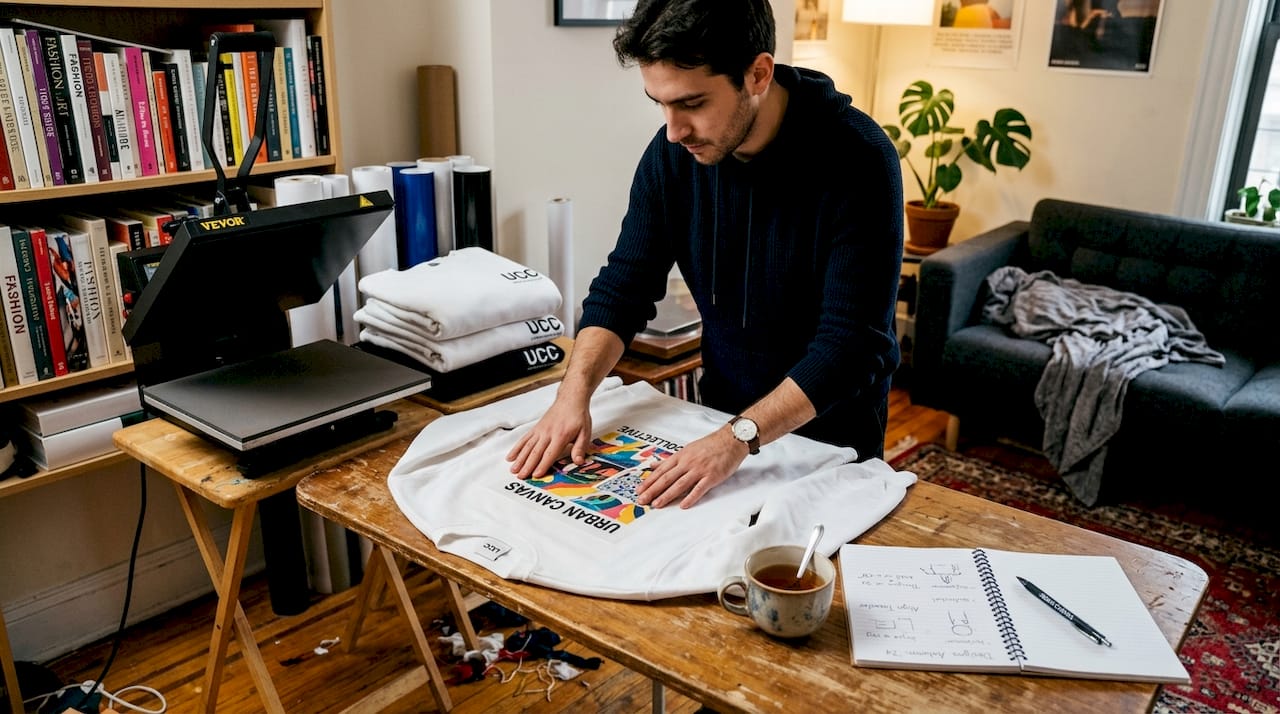
Table of Contents
- How to choose the right customization approach
- Spotlight on high-quality Direct-to-Film (DTF) transfer technology
- 7 creative ways to customize apparel with DTF
- Comparing DTF with other apparel customization methods
- Which customization approach fits your brand?
- Why creative customization is more than just technology
- Bring your customization vision to life with Transfer Kingz
- Frequently asked questions
Key Takeaways
| Point | Details |
|---|---|
| DTF is versatile | Direct-to-Film transfers work well on many fabrics and designs, making them ideal for small brands. |
| Creative customization options | DTF enables textured effects, photo-quality graphics, unique placements, and tailored personalization. |
| Comparison drives decisions | Understanding how DTF stacks up against screen and inkjet printing ensures brands choose wisely. |
| Quality affects loyalty | Choosing high-quality transfers increases customer satisfaction and repeat orders. |
| Telling your brand story | The most successful custom apparel blends technology with brand identity and creativity. |
How to choose the right customization approach
Before you start pressing transfers, it pays to map out what your brand actually needs. Not every customization method works on every fabric, and not every technique makes sense at every price point. Getting clear on your criteria upfront saves you from expensive mistakes and frustrated customers.
Here are the key factors to evaluate:
- Material compatibility: Some printing methods struggle with synthetic fabrics or dark garments. Best fabrics for DTF include cotton, polyester blends, and synthetic materials, giving you real flexibility across your product line.
- Durability versus wash cycles: Will your customers wash their gear heavily? A method that fades after 10 washes is a brand reputation issue.
- Vibrancy and color accuracy: Especially important for photographic designs, gradients, or brand-specific colors that need to match exactly.
- Cost and scalability: Screen printing has low per-unit costs at high volumes but expensive setup. DTF flips this equation, making small runs financially smart.
- Lead time: If you are filling orders fast or testing new designs, you need a method that does not require two-week setup windows.
For newer brands or those switching methods, the most common mistake is overcomplicating designs for first-time runs. Intricate artwork with 12 colors looks stunning on a screen, but if you have not tested how it presses on your target fabric, you are taking an unnecessary risk.
Pro Tip: Build a small sample run of three to five pieces before committing to a full production batch. This lets you check color accuracy, placement, and wash performance before your customers see it.
Spotlight on high-quality Direct-to-Film (DTF) transfer technology
DTF is a printing process where a design is printed onto a special film using CMYK (cyan, magenta, yellow, black) inks plus white. A hot-melt adhesive powder is then applied and cured, creating a ready-to-press transfer. You apply the transfer to a garment using a heat press, peel the film, and you are done.
Here is what makes the process work so well in practice:
- Wide color gamut: DTF can reproduce complex gradients, photographic details, and brand-matched colors that screen printing simply cannot achieve without major setup investment.
- No pretreatment needed: Unlike Direct-to-Garment (DTG) printing, DTF does not require fabric pretreatment, which saves time and reduces chemical handling.
- Fabric flexibility: The adhesive layer bonds to almost any textile surface, from 100% cotton hoodies to polyester jerseys to nylon bags.
- Small batch economics: There are no screens to burn and no minimum order quantities, meaning you can produce a single custom piece as economically as a run of 50.
- Detailed reproduction: Fine lines, small text, and photographic imagery all translate cleanly because the process is fully digital.
DTF ink durability is one of the technology’s standout selling points. High-quality DTF ink delivers prints that maintain vibrancy after multiple washes, which translates directly to fewer customer complaints and stronger word-of-mouth. Research and real-world testing consistently show DTF prints retain their vibrancy for 30 or more wash cycles when applied correctly and produced with premium materials.
Compared to inkjet direct printing on fabric, DTF offers better adhesion and wash resistance because the adhesive powder creates a physical bond rather than relying on ink absorption alone. Compared to screen printing, DTF wins on detail and setup cost while being competitive on wash durability.
7 creative ways to customize apparel with DTF
Once you understand the technology, the real fun starts. DTF design ideas span a wide range of creative applications, and the best brands are using them in ways that go well beyond a basic chest print. DTF enables intricate, multi-color, and textured designs that elevate branded clothing to something customers actively want to wear and show off.
Here are seven techniques worth trying:
- Textured prints with dimension. You can create gloss, matte, or soft-touch finishes by varying the adhesive coating or adding specialty layers. A glossy logo on a matte fabric creates a tactile contrast that looks high-end and feels premium in hand.
- Photo-realistic full-color graphics. DTF handles continuous-tone images beautifully. A photographic print of your brand’s founding location, a product shot, or an artistic landscape can become a signature piece in your collection.
- Unique logo placement. Move beyond the center chest. Sleeve logos, hem prints, back-collar details, and inside-label branding all signal a level of craft that customers associate with premium clothing lines.
- Collaboration series or limited-run editions. DTF’s no-minimum model makes it easy to produce a 20-piece collaboration run with a local artist or another brand. The scarcity creates demand, and the economics make sense even at small volumes.
- Layered designs for depth. You can press multiple transfers onto the same garment in layers to create a three-dimensional visual effect. A base graphic with an overlaid text element creates a built-up look that photographs well and catches the eye in person.
- Custom numbering and personalization. Sports teams, corporate gifting programs, and event merchandise all benefit from individual personalization. DTF makes it easy to produce a 50-piece run where every item has a different name or number without any extra setup cost.
- Eco-friendly ink and substrate options. Water-based DTF inks reduce the environmental footprint of your production. Pairing them with organic or recycled fabric substrates lets you tell a credible sustainability story to eco-conscious customers.
Following solid DTF printing tips and working from a solid t-shirt design checklist before you submit artwork will save you revision cycles and get your orders produced faster.
Pro Tip: When launching a new design, start with a batch of 10 to 15 pieces and promote them as a limited release. This tests market demand without overcommitting inventory, and the limited framing often drives faster sales.
Comparing DTF with other apparel customization methods
Understanding where DTF fits in the broader landscape helps you choose wisely and explain your process to clients. Here is a direct comparison across five key criteria.
| Criteria | DTF | Screen printing | Inkjet (DTG) |
|---|---|---|---|
| Detail and complexity | Excellent | Limited by color count | Very good |
| Color range | Full spectrum | Limited per setup | Full spectrum |
| Durability (wash cycles) | 30+ washes | 50+ washes | 20-25 washes |
| Fabric compatibility | Most fabrics | Light fabrics best | Cotton best |
| Cost for small runs | Low | High (setup fees) | Medium |
| Setup time | Minutes | Days to weeks | Minutes |
DTF vs screen printing is one of the most common comparisons brands research before switching methods. DTF often surpasses screen printing in detail, color range, and fabric versatility, making it ideal for boutique brands that need flexibility and quality without committing to large minimums.
When looking at inkjet vs DTF, the key difference comes down to adhesion and fabric range. Direct-to-Garment inkjet printing works beautifully on cotton but struggles with synthetic blends and requires pretreatment. DTF skips the pretreatment step and bonds to a much wider range of materials.
“For small apparel brands that need to move fast, hit exact colors, and print on anything from a cotton hoodie to a nylon jacket, DTF is the most flexible option in the market right now.”
The table above shows that screen printing still wins on raw durability at very high wash counts. But for brands that produce limited runs, personalized items, or multi-color designs, DTF’s combination of speed, cost, and quality is difficult to beat.
Which customization approach fits your brand?
Once you have compared the methods, the practical question is which one matches your specific brand strategy. Here is a quick guide to matching methods to goals:
- Boutique brand with signature designs: DTF is your best fit. Full color, fine detail, and small batch economics align perfectly with limited-edition drops and artisan branding.
- Eco-conscious brand: Choose DTF with water-based inks and sustainable substrates. The story is authentic and the process delivers on it.
- Fast fashion or trend-driven brand: DTF’s quick turnaround means you can respond to trends in days, not weeks. No screen setup means no sunk cost when a trend passes.
- Corporate gifting or event merchandise: DTF personalization capabilities make it ideal for name-by-name runs. One setup, unlimited variation.
- High-volume basics brand: Screen printing may still win here on per-unit cost if you are running thousands of identical pieces in two or three colors.
Choosing high-quality transfers significantly impacts customer satisfaction and repeat business. A garment that looks great after 10 washes earns a repeat customer. A garment that cracks after three sends customers to your competitors.
Here is a summary of key takeaways to keep close when making your decision:
| Brand type | Best method | Key advantage |
|---|---|---|
| Boutique and artisan | DTF | Detail and color range |
| Eco-conscious | DTF with water-based inks | Sustainability story |
| Fast fashion | DTF | Speed to market |
| Corporate gifts | DTF with personalization | Name and number variation |
| High-volume basics | Screen printing | Cost at scale |
Referencing solid print-on-demand tips and established DTF printing best practices helps you avoid the common pitfalls that cost newer brands time and money as they scale.
Why creative customization is more than just technology
Here is the part that does not get said enough: technology does not build brands. Stories do.
DTF is a remarkable tool. It removes barriers, cuts costs, and opens up design possibilities that did not exist at small-scale economics a few years ago. But we see brands using exactly the same technology, the same fabrics, and even similar price points, and one of them builds a loyal following while the other stagnates. The difference is almost never the print quality.
The brands that win use their apparel to say something. A limited-edition run that references a local neighborhood event. A collaboration with an artist whose values align with the brand’s. A custom tag or label detail that only the person wearing the garment will notice but will absolutely appreciate. These are emotional signals. They tell the customer that the brand sees them, shares their values, and sweats the details.
DTF makes these moves affordable and fast. It enables the story. But the brand still has to write it. The most effective use of brand-building tips always circles back to this point: customization is the vehicle, not the destination. Your identity, your customer relationship, and your story are what customers are actually buying.
The uncomfortable truth is that a stunning print on a garment nobody cares about is still a garment nobody cares about. Invest in the technology, yes. But invest just as hard in the story you are telling with it.
Bring your customization vision to life with Transfer Kingz
Everything covered in this article, from design selection to fabric compatibility to print method comparison, points toward one practical question: where do you get the best DTF transfers to execute your vision?
Transfer Kingz makes it simple to upload your artwork, build gang sheets to maximize your material use, and place orders with no minimums. Whether you are testing a new design concept or scaling a proven seller, our turnaround times and premium materials mean you get professional results without the wait. Our Print Point resource helps you navigate the full process, from file prep to final press. And if you are working on something complex, our guides on intricate DTF prints will show you exactly what is possible. Your next best-selling design is closer than you think.
Frequently asked questions
What is Direct-to-Film transfer technology, and how does it work?
DTF transfers involve printing a design onto a special film with CMYK and white inks, coating it with adhesive powder, curing it, then heat pressing it onto apparel. This process allows vibrant, durable designs on a wide range of materials without pretreatment.
Which fabrics work best for DTF customization?
DTF works on cotton, polyester blends, and synthetic materials, covering the majority of popular apparel. DTF transfers excel across fabric types, making it one of the most versatile decoration methods available.
How do DTF transfers compare to screen printing for detail and durability?
DTF delivers superior detail and color complexity, especially for small runs and multi-color designs. DTF often surpasses screen printing in color range and fabric versatility, though screen printing has a slight edge on raw durability at very high wash counts.
What are unique ways to use DTF for brand-building?
Custom sleeve placement, limited-run collaborations, layered effects, and personalized numbering all create brand distinction that generic chest prints cannot match. DTF enables intricate designs that give small brands the creative tools to compete with much larger labels.
How does choosing quality transfers impact customer satisfaction?
Garments that hold their color and detail after repeated washing create a positive ownership experience that drives word-of-mouth and repeat purchases. High-quality transfers significantly impact customer satisfaction and repeat business over the long run.
0 comments