

For small retailers, apparel decorators, and specialty wholesalers, the advantages of no minimum orders are real and measurable: you preserve working capital, test new SKUs without overcommitting, and avoid the deadstock that quietly kills margins. Whether it’s worth it depends on your order volume and how well you track landed cost — but for most small businesses, the flexibility advantage outweighs the higher per-unit price on most SKUs.
- Flexibility to test: Order one design, one SKU, or one product line without tying up cash in inventory you haven’t proven yet.
- Lower working capital requirement: No large upfront buy means cash stays available for operations, marketing, or other inventory.
- Reduced overstock risk: Smaller, more frequent orders let you match supply to actual demand rather than forecasted demand.
The sections below cover the real trade-offs (per-unit markups, shipping costs, hidden fees), a worked cost example for DTF transfers, when bulk MOQs still make more financial sense, and how to run a low-risk pilot.
Key Takeaways
No-minimum ordering is most valuable as a testing tool: use small orders to generate sell-through data, then scale the SKUs that prove themselves while moving to volume pricing on proven catalog staples.
| Point | Details |
|---|---|
| Test before committing | Pilot new SKUs with a single small order and a 30-day sell-through window before scaling. |
| Track true landed cost | Add shipping and fees to the invoice price — per-unit cost on paper is not your real cost. |
| MOQs still win on proven SKUs | When demand is stable and volume discounts exceed 30%, bulk ordering beats flexibility. |
| Gang sheets cut per-unit cost | Nesting multiple designs on one sheet lowers per-design cost without requiring a large order. |
| Transferkingz for no-min DTF | Transferkingz offers no-minimum DTF transfers with a gang-sheet builder and fast U.S. fulfillment. |
Table of Contents
- What “no minimum order” actually means — and how it differs from MOQ
- 1. You can test new SKUs without a financial commitment
- 2. Working capital stays in your business
- 3. Overstock and deadstock risk drops sharply
- 4. You can carry a wider product variety
- 5. Speed-to-market accelerates
- 6. Supplier relationships become more flexible
- 7. Small orders function as market research
- Trade-offs and hidden costs you need to account for
- How to run no-minimum ordering effectively
- When traditional MOQs are still the better option
- How Transferkingz maps directly to these advantages
- What actually works in practice
- Start your first no-minimum pilot with Transferkingz
- Sources
What “no minimum order” actually means — and how it differs from MOQ
A no-minimum order means a supplier will fulfill any quantity you request, including a single unit, with no per-order, per-SKU, or per-account quantity floor. That’s different from a minimum order quantity (MOQ), which sets the smallest purchase a supplier will accept — often 12, 24, 50, or 100 units depending on the category.
The distinction matters because the market is full of hybrid models that blur the line. “Low minimums” (say, 6 units) are not zero minimums. Annual spend thresholds — where a supplier requires $500 or $1,000 in purchases per year to maintain account access — are account-level minimums even when individual orders have no floor. Order aggregation is a different model entirely: a platform pools many small buyers into one bulk purchase placed with a brand, which can deliver genuine zero-minimum ordering at brand-direct wholesale pricing rather than the inflated per-unit pricing typical of small-order fulfillment.
| Dimension | No-minimum ordering | Traditional MOQ |
|---|---|---|
| Flexibility | Order any quantity, any time | Locked to minimum purchase floor |
| Per-unit cost | Higher on small runs | Lower at scale |
| Lead time | Often faster for digital/print | Can be longer for offshore production |
| Inventory risk | Low — buy only what you need | Higher — must commit to minimum volume |
| Operational complexity | Simple for digital; more complex for physical goods | Simpler once demand is predictable |
1. You can test new SKUs without a financial commitment
The clearest no minimum purchase advantage is the ability to pilot a product before committing to volume. A specialty food retailer can order three jars of a new hot sauce to gauge customer response. An apparel decorator can run a single DTF transfer sheet for a new design before printing 50 shirts. Ordering without minimums increases buyer flexibility and reduces upfront financial risk — the inventory you don’t buy can’t become deadstock.
2. Working capital stays in your business
Every dollar tied up in inventory sitting on a shelf is a dollar not available for payroll, marketing, or the next opportunity. No-minimum sourcing lets you buy closer to actual demand, which keeps your cash cycle tighter. For small retailers operating on thin margins, that difference between a $200 test order and a $2,000 MOQ commitment is often the difference between staying solvent and carrying a problem.
3. Overstock and deadstock risk drops sharply
Deadstock — inventory you bought but can’t sell — is one of the most common margin killers in retail and apparel. Industry experts frame no-minimum policies as strategic tools for managing uncertainty in fast-moving categories like fashion and custom apparel, where trends shift faster than a 90-day production lead time. Smaller, more frequent orders let you match supply to real sell-through data rather than a forecast you made three months ago.
4. You can carry a wider product variety
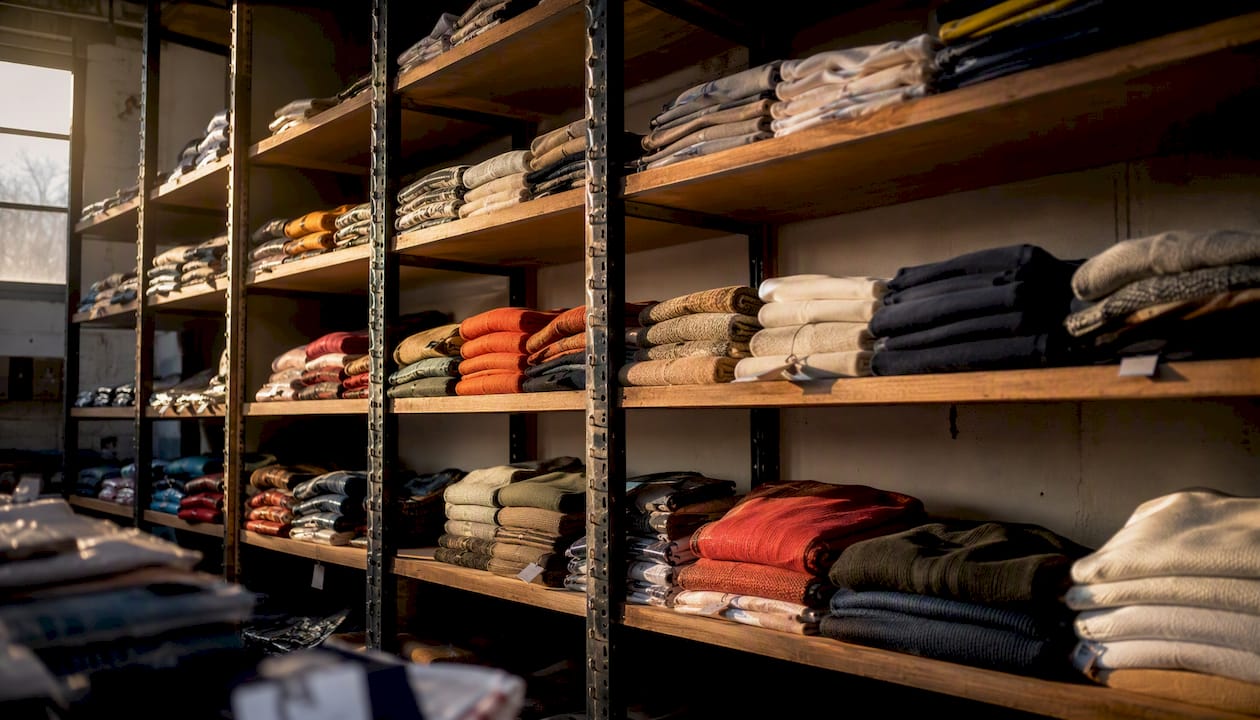
With MOQs, every SKU you add requires a minimum buy. That forces most small retailers to carry fewer SKUs, which limits the range they can offer customers. No-minimum sourcing removes that constraint. A small boutique can stock 20 niche items instead of 5 proven ones. A print shop can offer 15 design colorways instead of committing to a full run of each.
5. Speed-to-market accelerates
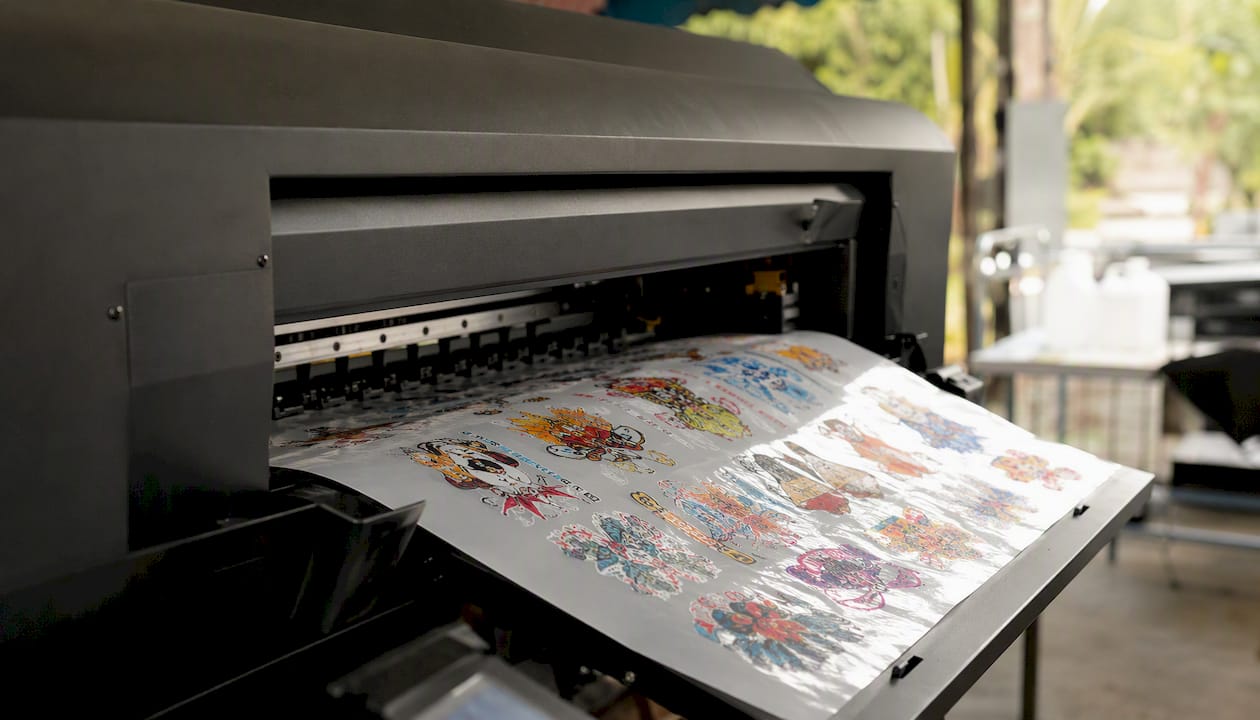
Digital printing and web-to-print platforms enable single-unit production because digital presses eliminate makeready costs — the setup time and material waste that made short runs economically unviable on traditional equipment. For DTF transfers and custom apparel, that means a design can go from file upload to finished transfer in 24–48 hours, not weeks. That speed matters when you’re chasing a trend, fulfilling an event order, or testing a seasonal design.
6. Supplier relationships become more flexible
Traditional MOQ structures often lock you into a single supplier because switching means meeting a new minimum. No-minimum sourcing lets you work with multiple suppliers simultaneously, compare quality and turnaround, and shift volume based on performance. Supplier flexibility — specifically volume and delivery flexibility — is a recognized driver of efficient resource use in supply chains, and it’s easier to negotiate when you’re not bound by a minimum commitment.
7. Small orders function as market research
The most effective no-minimum users don’t just order small — they treat small orders as experiments, using sell-through data to guide restocking decisions. A 30-day pilot on a new SKU tells you more about actual demand than any forecast. That data then informs whether to scale up, reorder at a higher volume for a better per-unit price, or drop the SKU entirely.
Trade-offs and hidden costs you need to account for
No-minimum ordering is not universally cheaper. Per-unit costs are almost always higher on small runs than on bulk orders, and shipping cost per unit rises sharply when you’re not filling a full box or pallet. A few specific cost factors to watch:
- Per-unit markup: Suppliers price small orders higher to cover fixed handling costs. On a DTF transfer, a single 11"×14" sheet might cost $4.50 individually versus $2.80 per sheet at 20 sheets.
- Shipping cost per unit: A $7 flat-rate shipping charge on a $15 order is a 47% cost add. On a $150 order, it’s 4.7%. The math changes fast.
- Platform or account minimums: Some wholesale platforms advertise no minimums but require a paid membership or annual spend threshold to access those terms.
- Longer lead times for custom runs: Physical goods with custom production (not digital) may still require minimum batch sizes to hit a viable production run, even if the supplier doesn’t call it an MOQ.
Quick worked example for a DTF transfer order:
Say you’re testing a new design on 6 shirts. You order 6 DTF transfer sheets at $4.50 each ($27.00) plus $8.00 shipping, for a total landed cost of $35.00, or $5.83 per transfer. At 20 sheets, the same design costs $2.80 each ($56.00) plus $8.00 shipping, for $64.00 total, or $3.20 per transfer. The per-unit difference is $2.63. If your shirts sell at $25 each, the margin difference is real but manageable — and the test order tells you whether to commit to the 20-sheet run.
The net benefit of order flexibility depends on forecast accuracy, safety stock, and how well you manage distribution costs. Flexibility helps when demand is uncertain; it costs you when demand is predictable and stable.
How to run no-minimum ordering effectively
A structured approach turns no-minimum sourcing from a convenience into a real inventory tool.
- Define your test SKUs. Pick 3–5 products with uncertain demand — new designs, seasonal items, or categories you haven’t carried before.
- Set a pilot window. A 30-day sell-through window is a practical standard. If a SKU doesn’t sell through at least 70% in 30 days, it’s not worth scaling.
- Track true landed cost per unit. Include product cost, shipping, any platform fees, and your time to process the order. The per-unit price on the invoice is not your landed cost.
- Set reorder triggers. If a SKU hits a strong sell-through threshold before the 30-day window closes, reorder immediately — and consider moving to a higher-volume tier for a better per-unit price.
- Compare landed cost vs. bulk pricing. Once you have sell-through data, run the math from the worked example above. If the volume discount saves more than the carrying cost of the extra inventory, scale up.
Pro Tip: Treat your first no-minimum order as a data-gathering exercise, not just a fulfillment decision. The sell-through rate and landed cost from that first small run are the inputs you need to make a confident bulk buy later.
When traditional MOQs are still the better option
No-minimum sourcing is not the right call for every SKU or every business. MOQs make more financial sense when:
- Demand is predictable and stable. If you’ve sold 200 units of the same basic black tee every month for a year, the per-unit savings from a bulk order outweigh the flexibility benefit.
- Volume discounts are significant. When a supplier offers 40–50% lower per-unit pricing at MOQ, the savings can cover months of carrying cost.
- Lead times are long. Offshore production runs with 60–90 day lead times require volume commitments to be economically viable regardless of minimum policies.
- Supplier relationships depend on volume. Some suppliers reserve their best pricing, priority production slots, and dedicated account support for buyers who commit to minimums. Dropping below that threshold can cost you more than the flexibility is worth.
For those SKUs, bulk printing advantages in cost and efficiency are real.
How Transferkingz maps directly to these advantages
Transferkingz is built around the specific needs of small print shops, indie apparel brands, and event merch sellers who need the benefits of flexible ordering without the per-unit penalty that usually comes with it.
Key features that address the typical no-minimum trade-offs:
- No order minimums: Order a single transfer sheet or a full gang sheet — no quantity floor, no account minimum.
- Gang-sheet builder: Nest multiple designs on one sheet to reduce per-design cost while keeping total order size small. This is how no-minimum DTF transfers stay cost-competitive with bulk runs.
- Fast turnaround: Same-day local pickup in the Dallas area and nationwide shipping, which matters when you’re testing a design for an event or a short-run seasonal drop.
- Online order tools: Upload your artwork, configure your sheet, and place the order without a sales call or a minimum commitment conversation.
A practical pilot with Transferkingz: start with one gang sheet combining 3–4 new designs. Track which designs sell through fastest, then scale those specific designs on the next order. The custom apparel printing benefits for small brands are clearest when you use the first order as a test, not a production run.
What actually works in practice
The conventional framing of no-minimum ordering focuses on flexibility as the headline benefit. That’s accurate, but it undersells the real advantage: information. A small order is not just a low-risk purchase — it’s a structured test that generates sell-through data you can’t get any other way.
The businesses that get the most out of no-minimum sourcing are not the ones who use it to avoid commitment permanently. They use it to earn the right to commit. They run a small order, measure what sells, and then move to volume on the SKUs that prove themselves. The ones who skip that step — who treat no-minimum as a permanent operating mode rather than a testing tool — end up with high per-unit costs across their entire catalog and no path to better margins.
Tracking true landed cost is non-negotiable. The per-unit price on the invoice is a starting point, not a final number. Add shipping, platform fees, and the time cost of processing small orders, and you’ll know whether the flexibility is actually paying for itself.
Start your first no-minimum pilot with Transferkingz
Small-order sourcing works best when the supplier’s model is built for it, not just tolerating it. Transferkingz offers no-minimum DTF transfers with a gang-sheet builder that keeps per-design costs low even on small runs, fast turnaround for testing seasonal or event designs, and same-day pickup for Dallas-area customers.
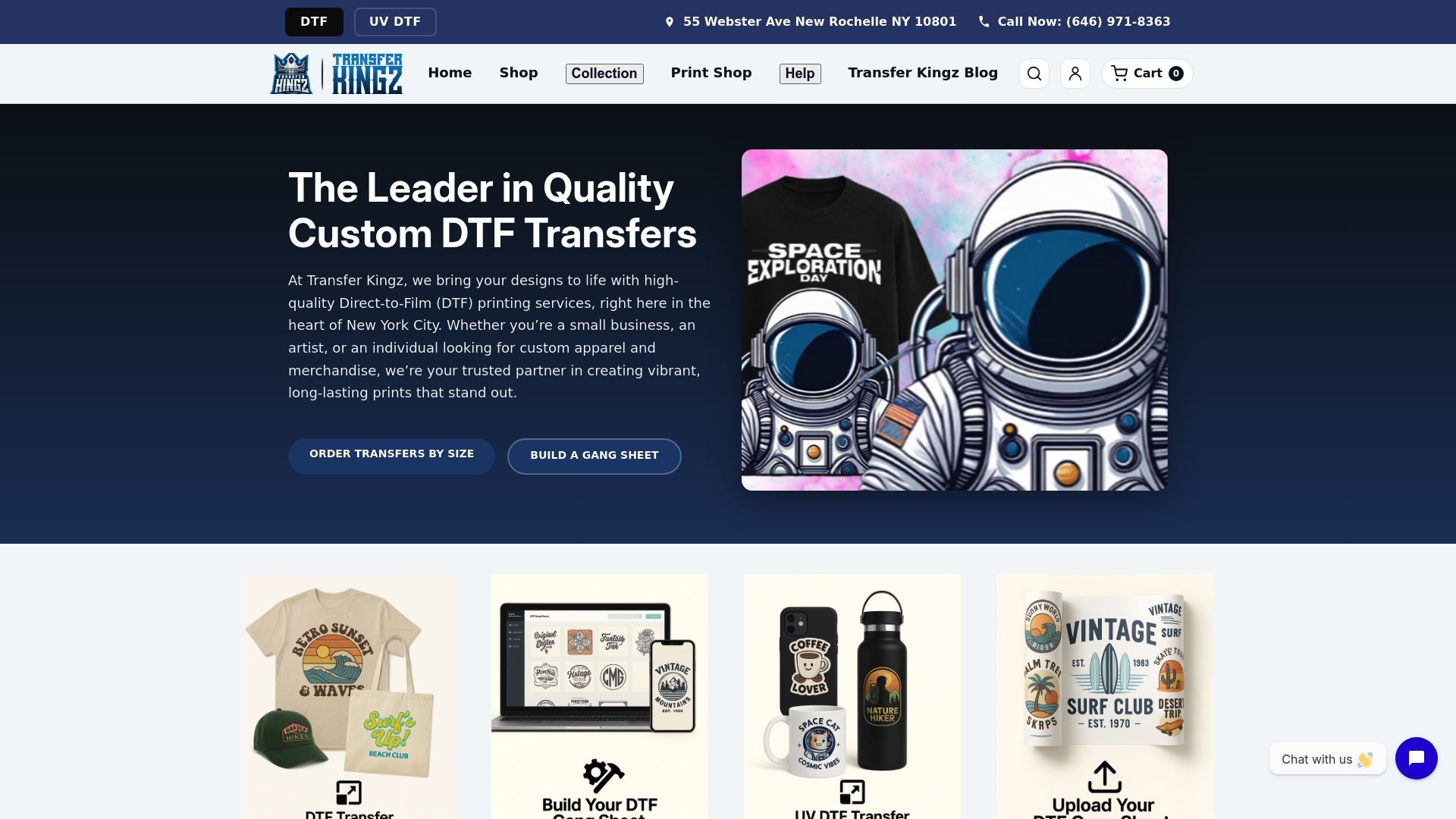
To start: visit the Print Point ordering page to build your first gang sheet or single-transfer order. Upload your artwork, configure your sheet size, and place the order online — no minimums, no account setup fees, no sales call required. For Texas-based buyers, DTF transfers across Texas are available with regional shipping options. Start with one sheet combining your top 3 untested designs, track sell-through over 30 days, and let the data tell you what to scale.
Sources
- Placing Orders Without Minimum Quantities: Is it Worth it? - Packwire
- No-minimum order wholesale guide — Catalist (blog)
- Cost and benefits of order flexibility (CoffeeCo case study) — MISI thesis (PDF)
- What Is No Minimum Orders? W2P Glossary | Web to Print Guide
- The no-moq advantage: how small orders help you manage inventory better — Wholesale Fashion Trends
0 comments