

TL;DR:
- In 2026, apparel decoration trends include puff embroidery, hybrid layering, and large-format back prints. Digital printing advances and automation streamline workflows and ensure sustainability becomes a baseline requirement. Combining multiple decoration methods offers higher margins and better customer appeal.
The future of apparel decoration 2026 is defined by hybrid decoration methods, full workflow automation, and sustainability practices that have moved from optional to mandatory. Puff embroidery leads as the top trend this year, while Direct-to-Film technology advances beyond novelty into technical maturity. Digital textile printers now reach production speeds that rival traditional analog methods. Businesses and creatives who understand these shifts will set the pace. Those who ignore them will lose ground to shops that have already retooled their production floors.
What are the key apparel decoration trends reshaping the industry in 2026?
Puff embroidery is the #1 decoration trend in 2026, driven by its raised, tactile finish that signals premium quality. The technique uses a foam underlay beneath standard embroidery thread, creating a three-dimensional effect that photographs well and feels distinct in hand. Hats and outerwear are the primary canvases, though decorators are applying it to chest logos on fleece and structured jackets.
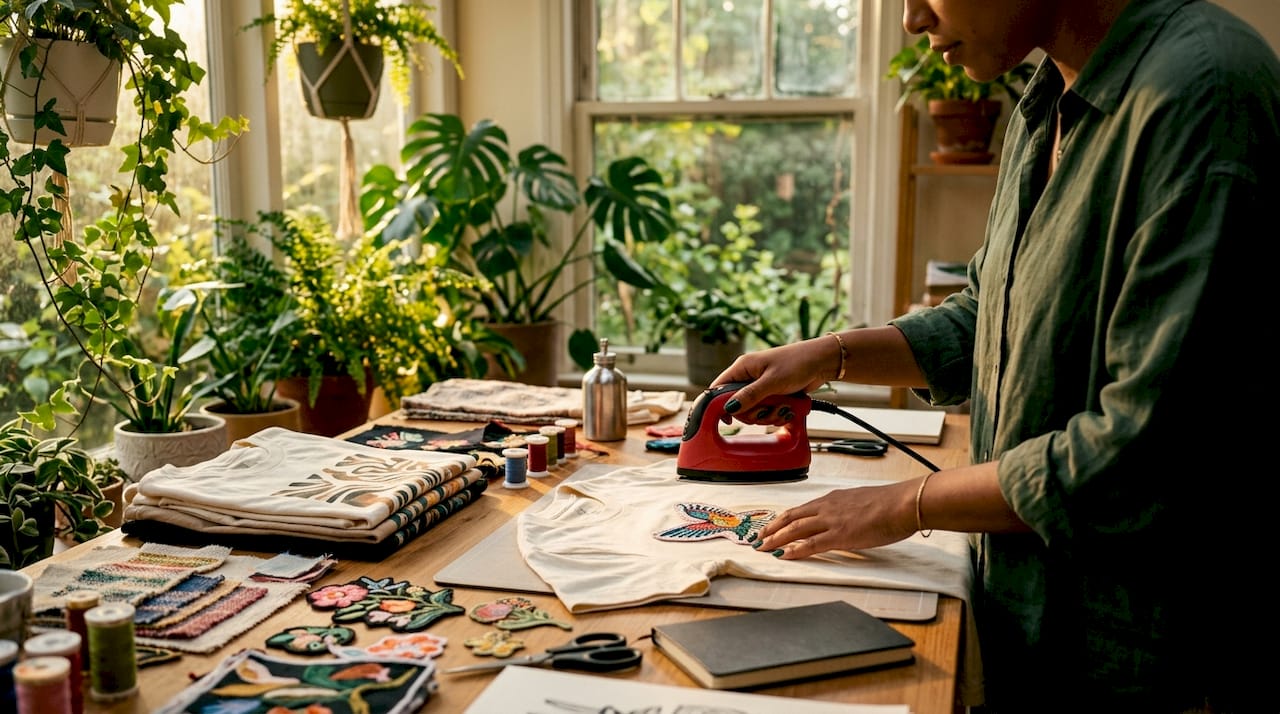
Mixed-media decoration is the second major shift. Shops are combining screen printing, embroidery, and woven patches on a single garment to create visual depth that no single method can achieve alone. A hoodie might carry a large screen-printed graphic on the back, a puff-embroidered logo on the chest, and a patch on the sleeve. That layered approach commands higher retail prices and builds brand identity more effectively than a flat print alone.
Color direction in 2026 follows Pantone’s Cloud Dancer palette, which favors soft whites, warm creams, and earthy neutrals. Large-format back prints dominate brand storytelling, with bold graphics placed where the most visual real estate exists. Vintage and nostalgic aesthetics continue to influence graphic choices, with distressed textures and retro typography appearing across streetwear and workwear categories alike.
Key decoration trends driving 2026 apparel:
- Puff embroidery for premium, three-dimensional brand marks on structured garments
- Mixed-media layering combining screen print, embroidery, and patches on one piece
- Tonal, earthy palettes anchored by Cloud Dancer and warm neutrals
- Large-format back prints for narrative-driven brand graphics
- Vintage-inspired graphics with distressed textures and retro type treatments
Pro Tip: Align your decoration method to your price point before choosing a technique. Puff embroidery signals luxury. A flat screen print signals accessibility. Mixing both on one garment signals a brand that understands craft.
How are digital printing technologies evolving in 2026?
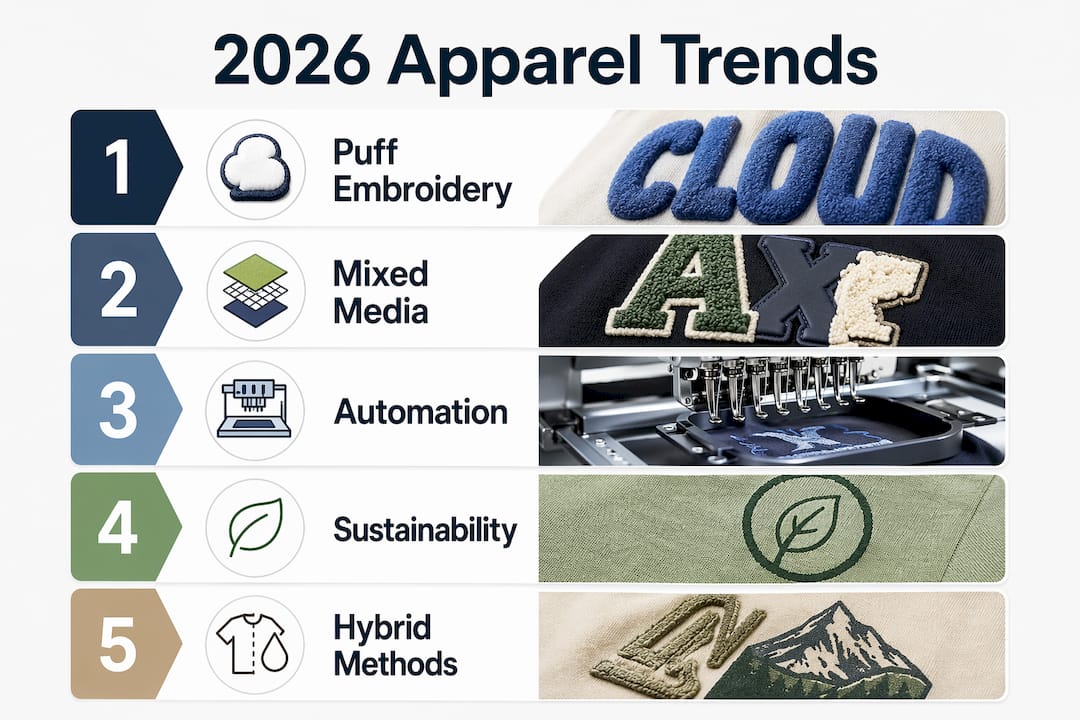
Digital textile printing is no longer the underdog competing against screen printing. EFI Reggiani’s ecoNEXT Plus reaches production speeds of approximately 100 meters per hour using waterless pigment printing. That speed eliminates the water-intensive pre-treatment steps that made digital printing slower and more expensive than screen printing at volume.
Sustainability is now a baseline requirement, not a marketing differentiator. Digital product passports track water consumption, energy use, and ink chemistry across a garment’s lifecycle. Industrial decorators who cannot produce this data face growing barriers in retail and wholesale supply chains. The shift to low-impact inks and transparent resource metrics is operational, not cosmetic.
DTF technology in 2026 focuses on technical maturity rather than novelty. Powderless DTF systems now use jettable liquid adhesives instead of traditional hot-melt powder, improving print consistency and durability across wash cycles. That change also removes a messy production step that slowed throughput and created quality inconsistencies. Transferkingz has tracked these developments closely, and the DTF technology trends for 2026 show a clear move toward cleaner, faster, and more repeatable output.
| Technology | Key Advancement | Primary Benefit |
|---|---|---|
| Waterless pigment printing | Eliminates water pre-treatment | Faster production, lower environmental impact |
| Powderless DTF adhesive | Jettable liquid adhesive replaces powder | Consistent bonding, cleaner workflow |
| Digital product passports | Lifecycle resource tracking | Regulatory compliance, supply chain transparency |
| Advanced pigment ink chemistry | Improved wash fastness and color gamut | Durable prints rivaling screen print quality |
Pro Tip: Invest in a hybrid digital-analog workflow before committing to a single technology. A shop that can run DTF for personalization and screen printing for volume has more margin flexibility than one locked into either method alone.
What role does automation and AI play in apparel decoration workflows?
Automation has moved from a cost-saving experiment to a production requirement for shops handling personalization at scale. AI-driven systems now manage the full order-to-output workflow without human intervention, from order intake through template creation, print routing, and finishing. That capability matters most for businesses running hundreds of personalized units per day, where manual handling creates bottlenecks that kill margins.
Embroidery has seen the most dramatic automation gains. AI-enabled embroidery machines now adjust thread tension and fabric parameters dynamically, reducing the operator skill required to produce consistent output. A machine that once needed an experienced technician to set up each job now self-calibrates based on fabric type and design complexity. That shift lowers the barrier to entry for smaller shops and reduces waste from setup errors.
The practical steps for building an automated decoration workflow:
- Integrate order management software that connects your storefront directly to production queues without manual data entry.
- Use AI template creation tools that generate print-ready files from customer inputs automatically.
- Deploy intelligent embroidery machines that handle thread and tension adjustments without operator intervention.
- Set up automated print routing that assigns jobs to the correct machine based on method, substrate, and turnaround time.
- Track output data to identify where manual steps still exist and eliminate them systematically.
Production-on-demand automation removes the labor bottlenecks that made small-batch personalization unprofitable. Shops that have implemented full workflow automation report faster turnaround times and lower per-unit labor costs on short runs. The workforce automation trends reshaping textile production reflect a broader industry shift away from labor-intensive manual processes.
“The production-on-demand philosophy is evolving beyond print to include full workflow automation from order intake to template creation, with zero human intervention between order and output.”
How can businesses use hybrid decoration methods for competitive advantage?
Hybrid decoration is the defining competitive strategy for high-margin apparel in 2026. Combining screen printing, embroidery, and DTF on a single garment produces results that no single method can match for visual complexity and tactile quality. The key is knowing which method to apply at which point in the production process.
Screen printing remains the most cost-effective method for volume runs of identical graphics. DTF excels at personalization, short runs, and designs with fine detail or photographic elements. Embroidery delivers the premium finish that justifies higher retail prices on structured garments. Top decorators combine all three within a single order, using each method where it performs best rather than defaulting to one technology for everything.
A practical example: a corporate apparel order might use screen printing for the primary back graphic, DTF for individual name personalization on the chest, and embroidery for the company logo on the collar. That combination delivers personalization, brand consistency, and premium finish at a price point that a single-method approach cannot match. The digital textile printing guide from Transferkingz breaks down how to structure these decisions by job type.
| Decoration method | Best use case | Key strength |
|---|---|---|
| Screen printing | High-volume identical runs | Low per-unit cost at scale |
| DTF transfers | Short runs, personalization, fine detail | Speed, versatility, no minimum order |
| Embroidery | Premium logos, structured garments | Tactile quality, durability |
| Puff embroidery | Brand marks on hats and outerwear | Three-dimensional premium finish |
| Mixed-media layering | High-value retail and corporate apparel | Visual depth, higher margins |
Digital pigment inks now rival screen printing quality in wash fastness and color gamut, which makes the case for hybrid workflows even stronger. Decorators no longer have to sacrifice quality when choosing digital methods for speed.
Pro Tip: Match your decoration method to your customer’s end use, not just their budget. A restaurant uniform needs durability. A fashion drop needs visual impact. A corporate gift needs perceived value. Each requirement points to a different method or combination.
Key Takeaways
Hybrid decoration, automation, and sustainability together define the competitive standard for apparel decoration in 2026, and businesses that adopt all three will outperform those that treat them as separate priorities.
| Point | Details |
|---|---|
| Puff embroidery leads trends | The top 2026 decoration trend uses foam underlay for a premium three-dimensional finish on hats and outerwear. |
| Powderless DTF improves consistency | Liquid adhesive systems replace hot-melt powder, delivering cleaner workflows and more durable prints. |
| Automation removes labor bottlenecks | AI-driven workflows handle order intake through output with no manual intervention, cutting per-unit costs on short runs. |
| Hybrid methods maximize margins | Combining screen printing, DTF, and embroidery on one garment produces results no single method can match. |
| Sustainability is now operational | Digital product passports and waterless printing are baseline requirements, not optional upgrades. |
What I’ve learned from watching the decoration industry shift in real time
The shops that struggle in 2026 are not the ones using older equipment. They are the ones using older thinking. They treat screen printing and digital as competing choices rather than complementary tools. They view sustainability as a marketing checkbox rather than a production discipline. And they underestimate how fast customer expectations for personalization have moved.
The most important insight I can offer is this: the quality of your blank matters as much as the quality of your decoration. A puff-embroidered logo on a poorly constructed hat looks worse than a flat print on a premium one. Automation and advanced printing technology amplify the quality of your substrate choices. They do not compensate for bad ones.
Automation is not a threat to skilled decorators. It is a tool that frees skilled decorators from repetitive tasks so they can focus on the decisions that actually require judgment. The shops I respect most have embraced this fully. They run automated workflows for standard orders and reserve human attention for complex jobs where experience makes a measurable difference.
The personalization demand is real and it is accelerating. Customers who once accepted a standard logo on a stock garment now expect their name, their number, or their specific colorway. Meeting that expectation profitably requires automation. There is no other way to make short-run personalization work at a margin that sustains a business.
— Anthony
Transferkingz DTF printing for 2026 apparel decoration
Transferkingz specializes in the DTF transfer technology that sits at the center of 2026’s hybrid decoration workflows. The platform handles small-batch and on-demand orders without minimums, which makes it practical for decorators who need personalization capability without committing to large print runs.
Transferkingz uses premium inks and films with fast turnaround times, supporting the production-on-demand model that defines competitive decoration shops this year. Whether you are adding DTF transfers to a mixed-media garment or running a fully personalized order, the custom DTF printing services cover the technical requirements. For decorators in the Dallas area, the DTF transfers Dallas service page details local fulfillment options. The gang sheet builder and no-minimum ordering make Transferkingz a practical fit for shops building out hybrid workflows in 2026.
FAQ
What is the top apparel decoration trend in 2026?
Puff embroidery is the leading trend in 2026, using a foam underlay to create a raised, three-dimensional design effect most commonly applied to hats and outerwear.
How does powderless DTF differ from traditional DTF printing?
Powderless DTF uses jettable liquid adhesives instead of hot-melt powder, producing more consistent bonding, cleaner production environments, and improved durability across wash cycles.
Why is hybrid decoration the preferred method for high-margin apparel?
Combining screen printing for volume, DTF for personalization, and embroidery for premium finishes on a single garment delivers visual complexity and quality that no single method can achieve alone.
What does sustainability require from apparel decorators in 2026?
Sustainability now requires waterless or low-water printing processes, low-impact inks, and digital product passports that track water, energy, and material use across a garment’s lifecycle.
How does automation affect small decoration shops specifically?
AI-driven order management and intelligent embroidery machines reduce the operator skill and manual labor required for short runs, making personalized small-batch production profitable for shops of any size.
0 comments