

TL;DR:
- B2B apparel production focuses on bulk manufacturing for businesses, emphasizing compliance, repeatability, and volume consistency. It involves structured processes, contractual documentation, and choosing between OEM and ODM models based on design control and speed. Proper planning and comprehensive tech packs are crucial for avoiding delays, controlling quality, and building strong manufacturing partnerships.
B2B apparel production is defined as the bulk manufacturing of garments for businesses such as retailers, wholesalers, and private-label brands, with a focus on volume consistency, regulatory compliance, and repeatable quality. Unlike direct-to-consumer manufacturing, which prioritizes speed and small runs, B2B clothing manufacturing operates around minimum order quantities (MOQs), structured production timelines, and binding documentation. Boutique manufacturers accept orders as low as 50 pieces, while large factories require significantly higher volumes. Every stage of the apparel production process, from tech pack creation to final shipping, is designed to protect both parties and deliver predictable results at scale.
What is B2B apparel production, and how does it differ from D2C?
B2B apparel production is the organized process of manufacturing garments in bulk for business buyers rather than individual consumers. The core distinction from direct-to-consumer (D2C) manufacturing is the buyer. In B2B, the buyer is a retailer, distributor, or brand owner placing large orders with defined specifications. In D2C, the manufacturer ships directly to the end customer, often in smaller quantities with faster turnaround expectations.
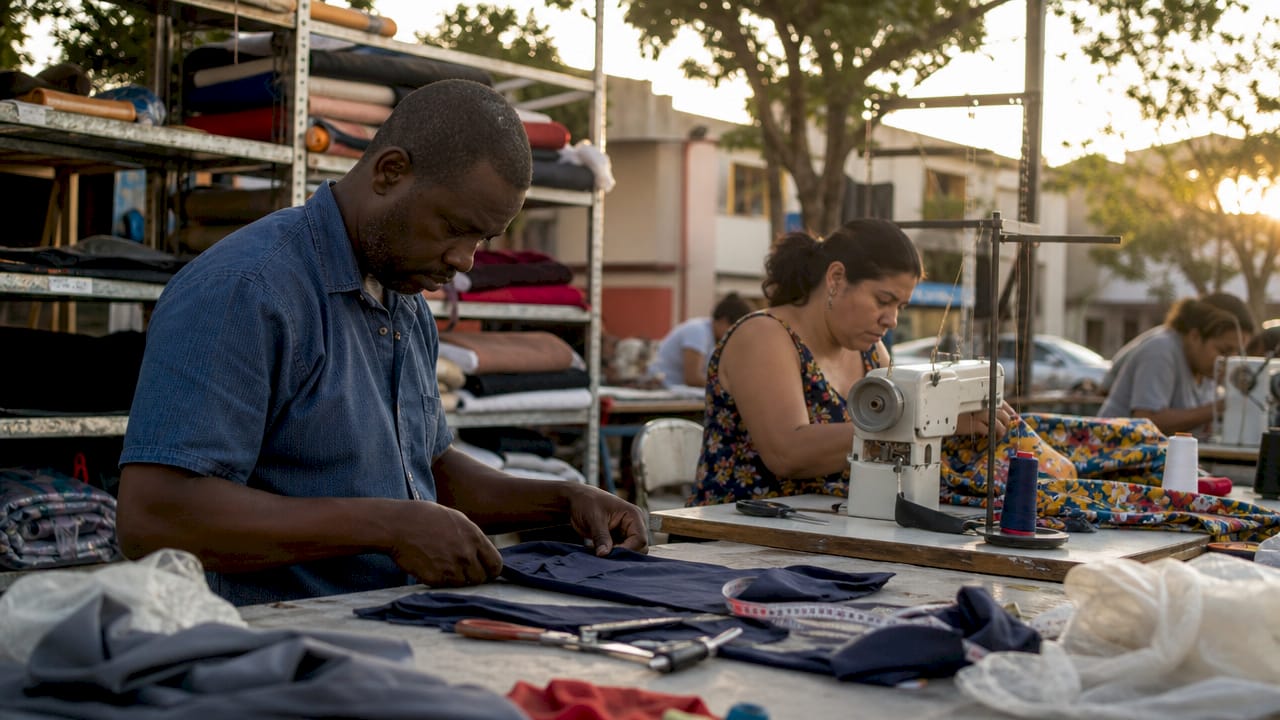
The business apparel supply chain in B2B is built around three non-negotiable pillars: MOQs, compliance, and repeatability. MOQs protect the factory’s economics. Compliance requirements, such as fabric content labeling under the Federal Trade Commission’s Textile Fiber Products Identification Act, protect the brand legally. Repeatability means every unit in a bulk run must match the approved sample. These requirements make B2B garment sourcing more complex than D2C, but they also make it far more reliable at scale.
Understanding what is clothing production at the B2B level also means recognizing that the relationship between brand and manufacturer is contractual, not transactional. The documents you create before production starts carry as much weight as the garments themselves.
What are the main operational models in B2B apparel production?
B2B brands choose between OEM and ODM as their primary production model. Each model distributes design ownership and production responsibility differently, and choosing the wrong one costs time and money.
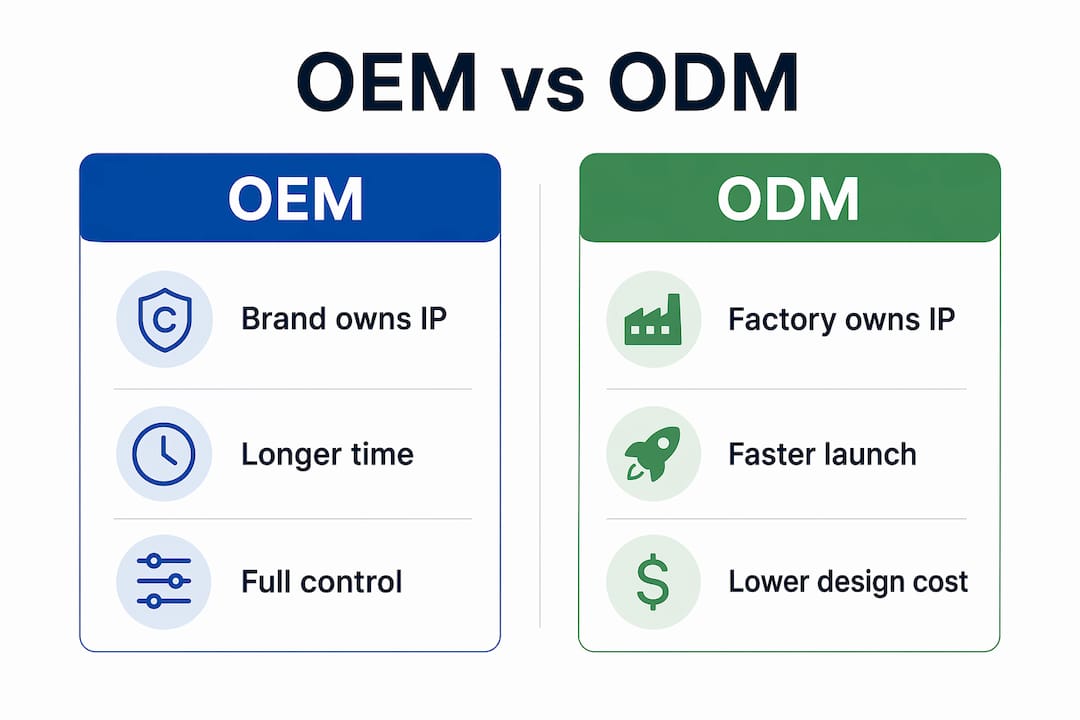
OEM vs. ODM: understanding the core difference
In the Original Equipment Manufacturer (OEM) model, the brand owns the intellectual property and provides the factory with a complete tech pack. The factory produces to the brand’s exact specifications. OEM suits brands with a distinct design identity that cannot be replicated using off-the-shelf patterns. The tradeoff is time. Developing original designs, finalizing tech packs, and running sampling loops adds weeks to the production calendar.
In the Original Design Manufacturer (ODM) model, the factory provides existing designs that the brand private-labels. ODM is the faster path to market. Brands that need to test a new category quickly, or that lack in-house design resources, use ODM to reduce development time significantly. The tradeoff is differentiation. Every brand using the same ODM factory can access the same base designs.
| Feature | OEM | ODM |
|---|---|---|
| Design ownership | Brand owns IP | Factory owns IP |
| Time to market | Longer | Faster |
| Cost | Higher development cost | Lower upfront cost |
| Customization | Full control | Limited to modifications |
| Best for | Established brands with unique designs | New brands or fast market entry |
Pro Tip: If you are launching a new product line and need to validate demand before investing in original design development, start with ODM. Once a SKU proves itself, migrate it to OEM for full brand control.
What does the typical B2B apparel production process look like?
The full B2B apparel production cycle takes approximately 8–14 weeks from tech pack finalization to finished goods delivery. That timeline assumes no major sampling revisions and no shipping delays. In practice, most brands experience at least one of those disruptions.
The production lifecycle stage by stage
The apparel production process follows a defined sequence. Each stage has a clear owner and a deliverable that unlocks the next step.
| Stage | Owner | Typical Duration |
|---|---|---|
| Tech pack finalization | Brand | 1–2 weeks |
| Material sourcing and approvals | Factory or brand (CMT) | 1–2 weeks |
| Pattern making | Factory | 3–5 days |
| Sampling and revisions | Factory + brand | 2–4 weeks |
| Bulk production | Factory | 3–5 weeks |
| Quality control | Brand or third party | 3–5 days |
| Packing and shipping | Factory + freight | 1–2 weeks |
Sampling cycles cause major timeline breaks because multiple back-and-forth iterations often extend development by 3–4 weeks beyond initial factory promises. This is the single most underestimated risk in wholesale apparel production planning. Brands that build buffer time into their production calendar avoid the costly choice between delaying a launch or accepting a substandard sample.
The apparel manufacturing process spans tech pack finalization through shipping, with each stage requiring defined owners and deliverables. Skipping or rushing any stage creates compounding problems downstream.
Pro Tip: Add 3–4 weeks to whatever sampling timeline your factory quotes. Factories quote best-case scenarios. You need to plan for the realistic one.
How do sourcing methods affect cost, quality, and control?
The sourcing model you choose determines how much control you keep over materials and how much complexity you absorb into your operations. In CMT (Cut, Make, Trim), the brand sources raw materials and handles logistics. In Full Package Production (FPP), the manufacturer sources materials, simplifying your logistics but reducing your direct oversight of material quality.
CMT vs. Full Package Production: what each model demands
CMT gives brands direct control over fabric quality, trims, and cost per unit. The brand negotiates directly with fabric mills, ships materials to the factory, and manages the supply chain. This model works well for brands with experienced sourcing teams and established supplier relationships.
FPP transfers material sourcing to the factory. The factory buys fabric, trims, and accessories, then delivers finished garments. This reduces the brand’s operational burden but introduces a layer of separation between the brand and the raw materials. Quality drift in fabric is harder to catch when you are not sourcing it yourself.
Key considerations when choosing between CMT and FPP:
- Internal capacity. CMT requires a sourcing team or a dedicated agent. If you do not have one, FPP is the more realistic starting point.
- Cost control. CMT offers tighter cost control because you negotiate material prices directly. FPP bundles material costs into the factory’s margin.
- Quality oversight. CMT lets you approve every material before it reaches the factory floor. FPP requires stricter contractual quality standards to compensate.
- Supply chain complexity. CMT multiplies your vendor relationships. FPP consolidates them into one factory relationship.
Pro Tip: Before signing any manufacturing contract, map your internal logistics capacity honestly. Brands that choose CMT without the infrastructure to support it end up with delayed shipments and quality disputes.
What documentation and partnerships does successful B2B production require?
A detailed tech pack acts as a binding technical and legal contract. Most production failures trace back to incomplete or unclear tech packs. A complete tech pack includes flat sketches, material specifications with GSM ratings, trim details, measurement charts by size, construction notes, and label placement. Treating it as a design suggestion rather than a legal document is the most common and most expensive mistake in B2B garment sourcing.
The pre-production meeting and golden sample review are equally critical. Skipping the pre-production meeting risks deviations from agreed standards, leading to unsellable inventory at retail prices. The golden sample is the physical standard against which every bulk unit is measured. Once both parties sign off on it, it becomes the reference point for quality control inspections.
Strong supplier relationships also reduce production risk in ways that contracts alone cannot. Factories prioritize clients who communicate clearly, pay on time, and provide complete documentation. Brands that treat manufacturers as strategic partners rather than interchangeable vendors get faster problem resolution, better production slots, and more honest communication about delays.
Critical documentation requirements for B2B apparel production:
- Tech pack with GSM specs, measurement charts, and construction details
- Bill of materials listing every component with approved supplier names
- Golden sample signed off by both brand and factory before bulk production begins
- Quality control checklist aligned with the tech pack measurements
- Purchase order with delivery terms, payment schedule, and penalty clauses for non-compliance
For brands integrating print decoration into their production, DTF printing best practices should be documented in the tech pack alongside construction specs. Print placement, color standards, and wash durability requirements all belong in the same document that governs the garment itself.
How can brands integrate B2B production into a broader business model?
Brands often use a hybrid model, testing SKUs through D2C channels first, then scaling successful products using B2B apparel production for consistency and efficiency. This approach reduces inventory risk significantly. A product that sells well in small D2C runs has proven demand before the brand commits to a bulk MOQ.
Scaling through B2B production also requires alignment between manufacturing strategy and cash flow. Bulk orders tie up capital for 8–14 weeks before goods arrive. Brands that plan their production calendar around cash flow cycles avoid the situation where inventory arrives but cannot be paid for.
Practical integration strategies for decision-makers:
- Test with D2C, scale with B2B. Use small-batch or print-on-demand runs to validate demand before committing to bulk production.
- Manage SKU count deliberately. Fewer SKUs in bulk production means lower complexity and better factory relationships.
- Align production timelines with selling seasons. Work backward from your launch date to set your tech pack deadline.
- Use technology to track production stages. Production management tools that log sample approvals, QC results, and shipping milestones reduce miscommunication with factories.
Key Takeaways
B2B apparel production requires complete documentation, a clearly chosen sourcing model, and a production calendar that accounts for sampling delays of 3–4 weeks beyond factory estimates.
| Point | Details |
|---|---|
| OEM vs. ODM choice | OEM gives full design control; ODM accelerates time to market with factory-owned designs. |
| Production timeline | The full cycle runs 8–14 weeks; sampling revisions are the most common source of delays. |
| CMT vs. FPP | CMT offers cost control but requires sourcing infrastructure; FPP simplifies logistics at the cost of material oversight. |
| Tech pack as contract | A complete tech pack with GSM specs and measurement charts is a legal document, not a design suggestion. |
| Hybrid scaling model | Test SKUs via D2C first, then commit to bulk B2B production for proven products to reduce inventory risk. |
Why I think most brands underestimate the documentation side of B2B production
After working closely with apparel businesses at various production scales, the pattern I see most often is this: brands invest heavily in design and almost nothing in documentation. They hire talented designers, develop strong concepts, and then hand factories a two-page PDF with a sketch and a fabric description. Then they are surprised when the bulk run looks nothing like the sample.
The tech pack is not a formality. It is the only thing standing between your vision and a factory’s interpretation of it. Factories work with dozens of clients simultaneously. Without a precise, complete tech pack, your garment gets built on assumptions. And assumptions in manufacturing cost money.
The other thing I have learned is that the pre-production meeting is where the real partnership gets established. Brands that show up prepared, with a golden sample and a clear QC checklist, signal to the factory that they are serious operators. That reputation matters. Factories allocate their best production slots and most experienced operators to clients who make their jobs easier.
MOQ timing also deserves more attention than most guides give it. Committing to a bulk order 10–12 weeks before you need the goods means tying up capital during your slowest cash-flow period if you are not careful. Map your production calendar against your financial calendar before you sign a purchase order. The brands that scale successfully in B2B are the ones that treat manufacturing as a financial discipline, not just an operational one.
For brands adding print decoration to bulk production, integrating DTF print workflows into the tech pack from the start prevents costly reprints and placement errors later.
— Anthony
How Transferkingz supports B2B apparel production
Transferkingz specializes in Direct-to-Film (DTF) transfers built for businesses that produce custom apparel at volume. Whether you are decorating bulk garment runs or adding branded graphics to wholesale orders, Transferkingz delivers print-ready transfers with no minimum order requirements and fast turnaround times.
For apparel businesses in Texas, Transferkingz offers custom DTF printing services designed to support bulk decoration needs without the lead times of traditional screen printing. The gang sheet builder lets you maximize print area per order, reducing cost per unit on larger runs. Brands looking for a reliable print partner that fits into an existing B2B production workflow can also explore the Print Point platform for custom printing solutions built around production-scale needs.
FAQ
What is B2B apparel production?
B2B apparel production is the bulk manufacturing of garments for business buyers such as retailers, wholesalers, and private-label brands. It differs from D2C manufacturing in its focus on volume, compliance, and repeatable quality across large orders.
What is the difference between OEM and ODM in apparel manufacturing?
OEM means the brand owns the design and provides a tech pack for the factory to produce. ODM means the factory provides existing designs that the brand private-labels, offering faster time to market with less design control.
How long does B2B apparel production take?
The full production cycle takes approximately 8–14 weeks from tech pack finalization to delivery. Sampling revisions are the most common cause of delays, often adding 3–4 weeks beyond initial factory estimates.
What is a tech pack and why does it matter?
A tech pack is a detailed technical document that specifies materials, measurements, trims, and construction methods for a garment. It functions as a binding manufacturing contract and is the primary tool for preventing production errors.
What is the difference between CMT and Full Package Production?
CMT (Cut, Make, Trim) requires the brand to source and supply raw materials, giving more cost control but adding supply chain complexity. Full Package Production transfers material sourcing to the factory, simplifying logistics but reducing the brand’s direct oversight of material quality.
0 comments