

Small business owners and artists seeking affordable, custom apparel solutions find DTF printing promising, but the process, costs, and challenges can feel complex. You want vibrant designs on shirts without massive upfront investment or complicated workflows. This guide provides practical steps, essential context, and troubleshooting advice to help you launch or refine your DTF printing operation with confidence and clarity.
Table of Contents
- What is DTF printing and why does it matter?
- Essential tools and materials for DTF printing
- Step-by-step: The DTF printing process
- Troubleshooting DTF: Common problems and quick fixes
- What to expect: DTF quality, durability, and profit potential
- Move forward with DTF printing: Solutions for beginners
- Frequently asked questions
Key Takeaways
| Point | Details |
|---|---|
| Low barrier to entry | DTF printing is beginner-friendly and requires a modest investment compared to other production methods. |
| Versatile for small runs | It’s ideal for short or custom apparel batches, offering flexibility in design and quantities. |
| Durable, quality prints | Properly applied DTF prints last 40 to 60 washes, rivaling traditional screen printing. |
| Troubleshooting is key | Quick fixes for common issues help ensure reliable, high-quality results. |
| Profit potential | With the right process, DTF can be a profitable addition for growing small apparel businesses. |
What is DTF printing and why does it matter?
DTF stands for Direct-to-Film: you print designs onto special film, apply adhesive powder, cure it, then heat press the transfer onto garments. Unlike screen printing, which requires screens and setup fees, or DTG (direct-to-garment), which needs pretreated fabrics and expensive printers, DTF excels at small runs and costs lower than screen printing for short batches. You can produce one shirt or one hundred without changing your workflow.
DTF’s value shines for small batches, frequent design updates, and intricate artwork. You avoid screen fees, handle polyester and cotton equally well, and achieve photo-quality detail. Industry data shows DTF can be profitable for small businesses at around 300 shirts per month, making it accessible for independent creators. Durability matters too: DTF lasts up to 40-60 washes when done properly, rivaling traditional methods.
Here’s how DTF compares to alternatives:
| Method | Best For | Setup Cost | Per-Print Cost | Durability |
|---|---|---|---|---|
| DTF | Small runs, detailed designs | Medium | $1.80-$4.25 | 40-60 washes |
| Screen Printing | Large runs, simple designs | High | Low (bulk) | 50+ washes |
| DTG | One-offs, photo prints | High | $3-$5 | 30-40 washes |
For creators who need flexibility, DTF vs screen printing explained shows DTF wins on versatility. You also benefit from DTF’s lower setup costs compared to traditional methods, letting you test designs without financial risk.
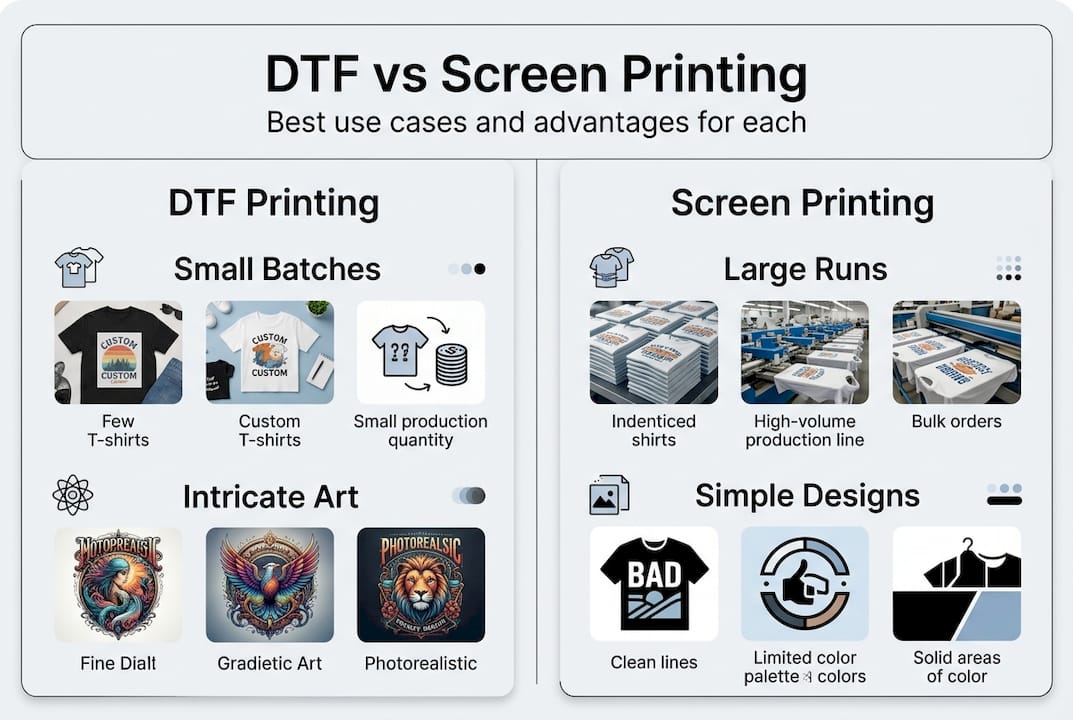
Pro Tip: Start with DTF for custom orders and switch to screen printing only when you hit consistent runs of 100+ identical shirts.
Essential tools and materials for DTF printing
Before making your first print, you need specific equipment and consumables. DTF startup costs range from $3,000 to $20,000, with per-print costs $1.80-$4.25 in-house. Here’s what you must have:
- DTF printer: Modified inkjet or dedicated DTF model with white ink channels
- DTF film: PET film designed for ink adhesion and release
- DTF inks: CMYK plus white, formulated for film printing
- Adhesive powder: Hot-melt polymer that bonds ink to fabric
- Powder shaker and curing oven: For even powder application and melting
- Heat press: 15x15 inch minimum, with accurate temperature control
- Design software: RIP software to manage color and white ink layers
Hidden costs include maintenance supplies (cleaning solution, print heads), replacement films, and extra powder. Budget $200-$500 monthly for consumables once you’re printing regularly.
| Tool/Material | Average Cost | Priority Level |
|---|---|---|
| DTF Printer | $3,000-$15,000 | Essential |
| Heat Press | $300-$2,000 | Essential |
| DTF Film (100 sheets) | $80-$150 | Essential |
| Adhesive Powder (5kg) | $60-$100 | Essential |
| RIP Software | $0-$500 | Essential |
| Maintenance Kit | $50-$150 | High |
Pro Tip: Consider buying a starter kit to simplify launch and save money. Bundled packages often include film, powder, and software at discounted rates.
Understanding DTF printing terminology helps you make informed equipment choices and avoid costly mistakes.
Step-by-step: The DTF printing process
With your toolkit ready, here’s exactly how you go from art file to wearable design:
- Prepare your design: Create or import artwork in your RIP software. Set white ink underbase for color vibrancy and ensure resolution is 300 DPI minimum.
- Print onto DTF film: Load film into your printer. Print the design with CMYK inks, then add white ink layer on top. The white layer sits between the color and fabric.
- Apply adhesive powder: While ink is still wet, use a powder shaker to coat the entire print evenly. Shake off excess powder and recycle it.
- Cure the powder: Run the film through a curing oven or heat press at 160-170°C for 2-3 minutes. Powder melts and bonds to the ink, creating a solid transfer.
- Peel and store: Let the film cool, then peel the backing if using cold-peel film. Store transfers flat in a cool, dry place until ready to press.
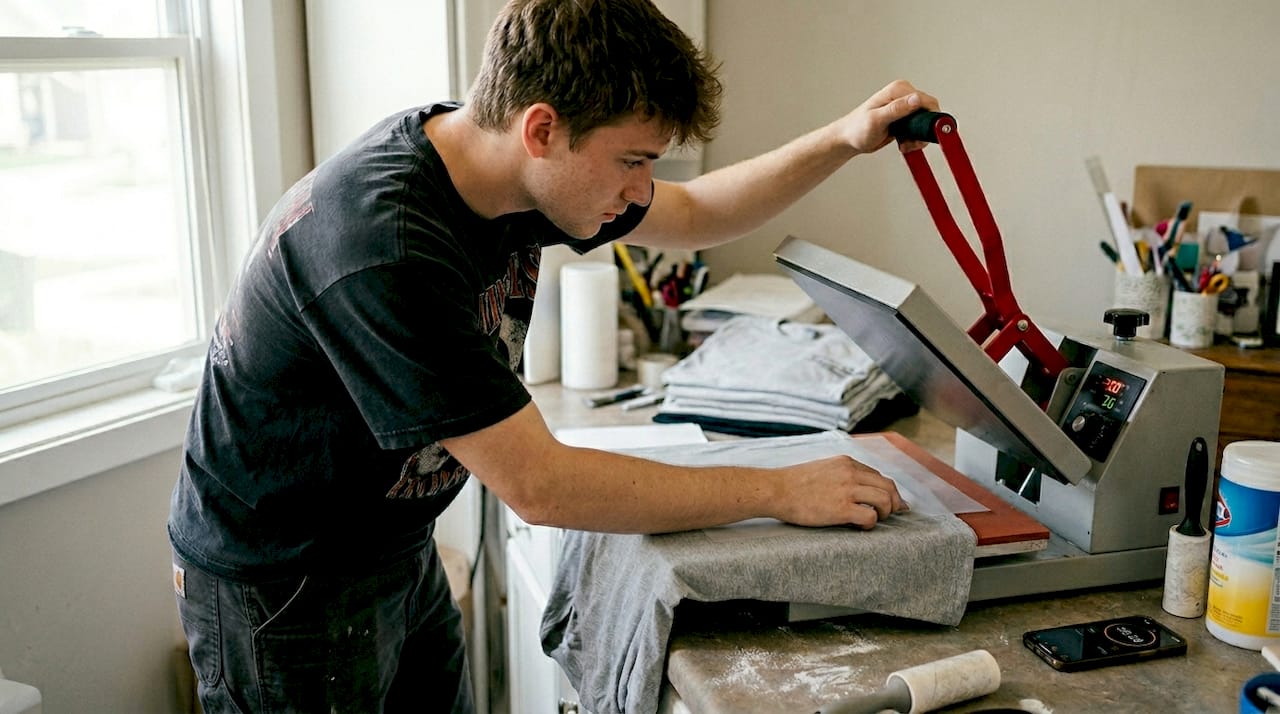
- Heat press to garment: Preheat your garment, position the transfer, and press at 160°C for 15-20 seconds with medium-firm pressure. Peel film while hot or cold depending on film type.
- Finish and inspect: Let the garment cool completely. Check adhesion, color accuracy, and edges. Re-press any loose areas for 5 seconds.
Key choices matter: temperature too low causes poor adhesion, too high scorches fabric. Pressure too light leaves gaps, too heavy flattens detail. Time your press cycles with a timer for consistency.
Pro Tip: Keep transfer powder dry and workspace humidity-controlled. Moisture clumps powder and ruins prints.
Research shows DTF is most cost-effective for small runs and can be very profitable if scaled efficiently. Learning why DTF is ideal for small businesses helps you optimize your workflow from day one.
Troubleshooting DTF: Common problems and quick fixes
Even with step-by-step guidance, DTF can surprise you. Here’s how to handle and avoid the most common setbacks:
- White ink clogs: Shake and circulate white ink daily to prevent clogs and ruined prints. Run nozzle checks before each session. If clogs occur, use cleaning solution and manual purge cycles.
- Transfer not sticking: Increase press temperature by 5°C or add 5 seconds to dwell time. Ensure powder was fully cured before pressing. Check that garment is preheated and moisture-free.
- Banding or lines: Clean print heads thoroughly. Adjust print speed in RIP software. Verify film is loaded straight and tension is correct.
- Color shifts or dullness: Calibrate your monitor and printer profiles. Use ICC profiles designed for DTF inks. Check ink levels and replace cartridges before they run dry.
- Cracking after washing: Lower press temperature slightly or reduce pressure. Ensure powder coat is even. Avoid over-curing, which makes transfers brittle.
Shake and circulate white ink daily to prevent clogs and ruined prints.
Preventive maintenance saves money and frustration. Clean print heads weekly, store inks properly, and keep your workspace dust-free. When issues persist despite fixes, consult your equipment manufacturer or seek help from experienced DTF communities.
Detailed guidance on troubleshooting DTF printing issues and DTF troubleshooting tips can resolve most problems quickly. For comprehensive solutions, review the DTF transfer troubleshooting guide covering advanced scenarios.
Frequent issues include white ink clogs, poor transfer, cracking, color inaccuracy, and solutions for each are well-documented. Learning these fixes early prevents wasted materials and downtime.
What to expect: DTF quality, durability, and profit potential
Once you’re producing prints, it’s vital to know how your results will measure up and what profits to anticipate. DTF-printed shirts last 40-60 washes with proper technique and become profitable after 300 shirts per month. The feel is soft and flexible, closer to screen printing than DTG’s sometimes stiff finish. Color vibrancy rivals any method when you use quality inks and films.
Profit margins depend on order size and pricing strategy. For in-house production, expect $1.80-$4.25 per print cost. Sell custom shirts at $15-$30 retail, and your margin ranges from 40% to 80% depending on volume and design complexity. Small batches (10-50 shirts) favor DTF over screen printing due to zero setup fees.
Hybrid use with screen printing is common: DTF handles detailed, low-volume jobs while screen printing tackles large, simple runs. This flexibility maximizes profit and minimizes waste.
| Metric | Expected Result | Business Impact |
|---|---|---|
| Durability | 40-60 washes | Comparable to screen printing |
| Cost per Print | $1.80-$4.25 | Profitable at 300+ shirts/month |
| Setup Time | 5-10 minutes | Fast turnaround for custom orders |
| Fabric Compatibility | Cotton, polyester, blends | Versatile product offerings |
Use DTF for custom orders, small batches, and intricate designs. Switch to screen printing when you have 100+ identical shirts or simple logos. Many successful shops run both methods side by side.
Exploring DTF printing small business growth and understanding why small businesses use DTF reveals proven strategies for scaling your operation and maximizing returns.
Move forward with DTF printing: Solutions for beginners
Ready to make your first shirts or scale up? Professional transfer services can simplify startup or grow output without the full equipment investment. If you’re not ready to buy a printer, ordering pre-made DTF transfers lets you test the market and build customer demand before committing to hardware.
Transfer Kingz offers ready-to-apply DTF transfers with no minimum orders, quick turnaround, and premium inks that deliver the 40-60 wash durability you need. Whether you’re in Dallas or anywhere across Texas, you can access professional-grade transfers that let you focus on design and sales while we handle production. Explore Transfer Kingz DTF resources to find gang sheet builders, application guides, and bulk pricing that scales with your business.
Starting with transfers gives you immediate cash flow and customer feedback. Once you hit consistent volume, investing in your own equipment becomes a clear next step. Either way, you’re building a profitable apparel business with DTF’s flexibility and quality.
Frequently asked questions
How long do DTF prints last on apparel?
DTF prints last 40-60 washes if applied and cured correctly. Proper heat press settings and quality materials ensure durability comparable to screen printing.
How much does it cost to start DTF printing?
Startup investment ranges $3,000-$20,000, depending on printer and materials. Budget for ongoing consumables like film, powder, and inks at $200-$500 monthly.
What is the biggest maintenance challenge in DTF printing?
Keeping white ink from clogging is the top maintenance issue. Regular white ink circulation prevents clogs, so shake and run nozzle checks daily.
What garments are best for DTF printing?
DTF offers versatility for different garment types, working well on cotton, blends, polyester, and more. This makes it highly adaptable for diverse product lines.
Can I use DTF for small custom batches or one-off designs?
Yes, DTF excels for small runs and custom jobs. It’s cost-effective for one-off orders and quick turnarounds without setup fees.
0 comments