

Yes, custom apparel is worth the investment. Nearly 75% of people say branded T-shirts make them trust a business more, and a single outerwear piece can generate a high number of impressions over its lifetime. That is a marketing channel most paid-ad budgets cannot match on a per-impression basis. For U.S. small-to-midsize brands, the benefits of custom apparel compound over time in ways a Facebook ad simply cannot.
The three biggest business impacts, in order, are:
- Brand visibility: Apparel travels everywhere its wearer goes, generating impressions with zero recurring media spend.
- Employee cohesion: Uniforms and branded gear create a visible team identity that customers notice and staff appreciate.
- Low cost per impression: A $15 shirt worn 50 times costs fractions of a cent per brand exposure.
Pro Tip: Before ordering 500 units, run a pilot of 24–48 pieces at one event or with one team. You will learn sizing distribution, design preferences, and actual wear rates before committing to volume.
Table of Contents
- What are the real benefits of custom apparel for your business?
- Where does custom apparel deliver the highest ROI?
- How to plan and roll out a custom apparel program
- Which garments and printing methods make the most sense?
- How do you choose a vendor you can actually trust?
- What does the data say about custom apparel ROI?
- What legal rules apply to logos and artwork on custom apparel?
- How do you source custom apparel sustainably?
- Key Takeaways
- Why most businesses underestimate what apparel actually does
- Transferkingz brings your custom apparel program to life faster
What are the real benefits of custom apparel for your business?
Custom apparel functions as a long-term marketing asset, not a one-time expense. The distinction matters when you are building a budget case.
Brand visibility and the walking-billboard effect. A quality T-shirt generates many impressions over its lifetime, while outerwear can generate even more. Compare that to a digital display ad, where apparel recall hits 85% versus 27% for online ads. The gap is not marginal. People remember what they wore or what they received far longer than what they scrolled past.
Trust and professional perception. The VistaPrint data is worth repeating in any budget conversation: nearly 75% of consumers say branded T-shirts make them trust a business more. That trust signal is passive. It works whether or not a salesperson is in the room.
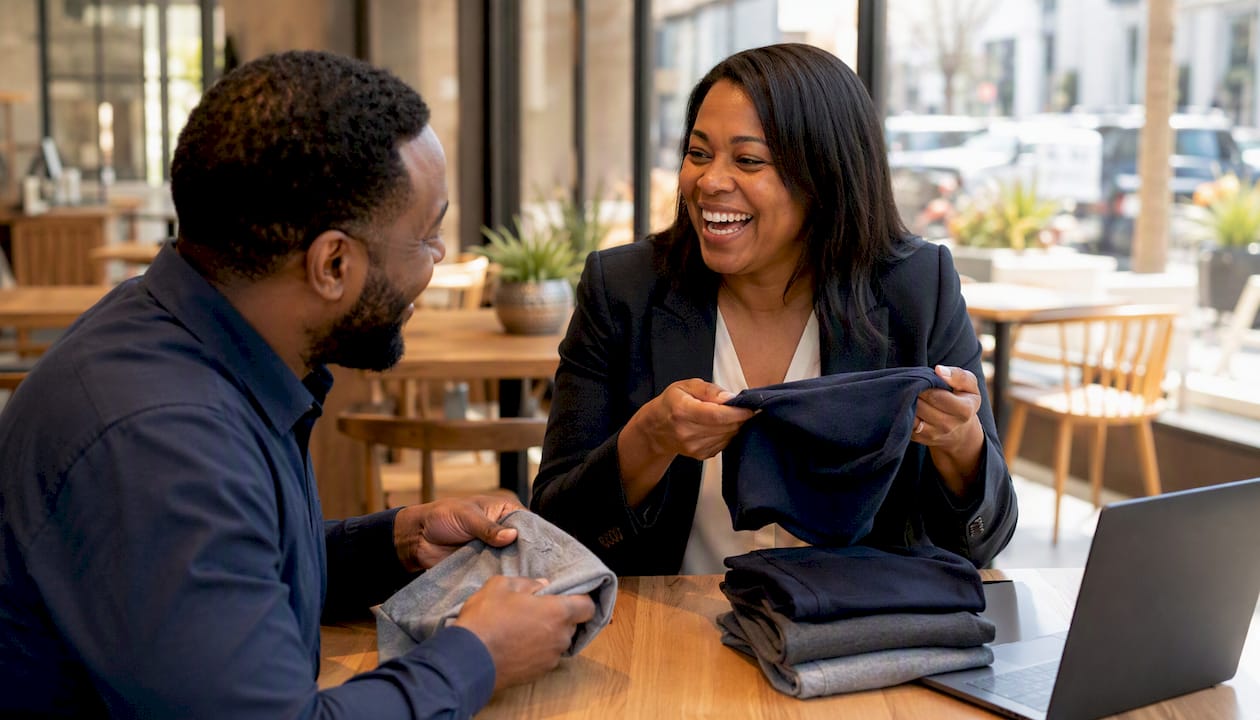
Employee unity and morale. When staff wear the same branded gear, customers can find them instantly. Surveys show about 67% say branded apparel improved their ability to identify employees, which speeds up service interactions in retail and hospitality. Beyond identification, quality matters: 91% of business buyers say their team feels more valued when receiving a recognized retail brand versus generic items. Cheap gear sends a message too.
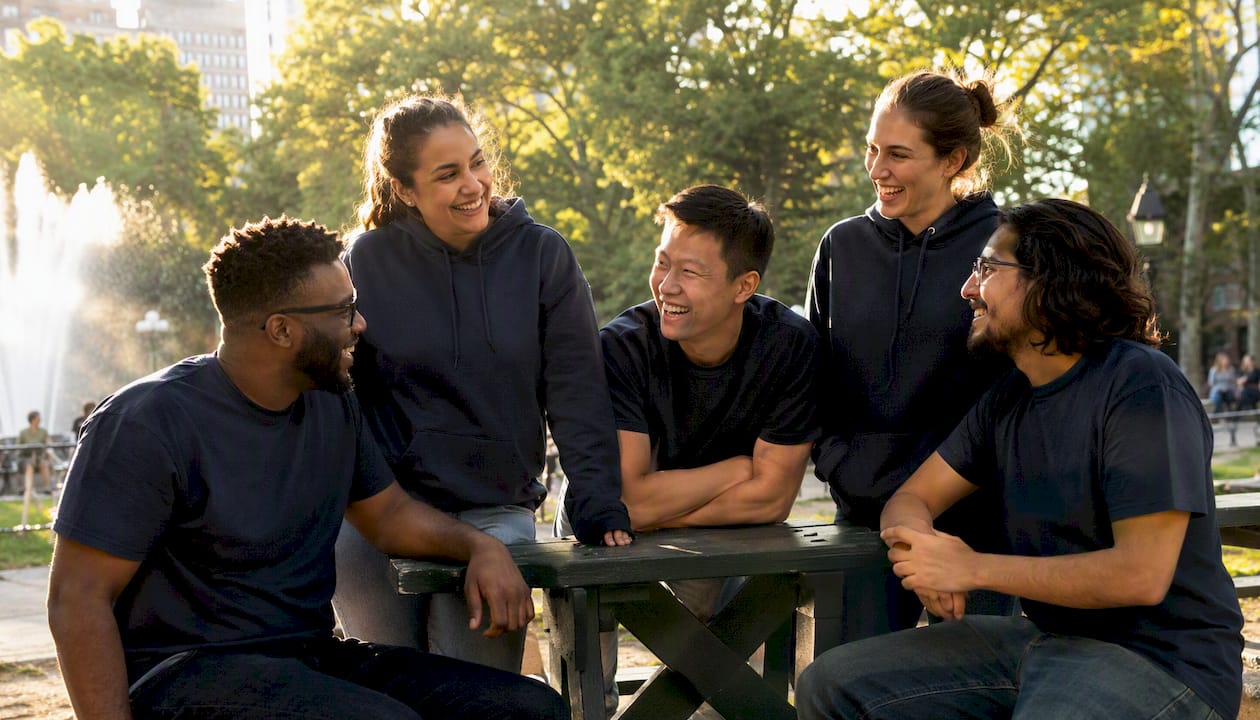
Client gifting and retention. A well-chosen branded hoodie in an onboarding kit does something a PDF welcome guide cannot: it creates a physical, daily reminder of your relationship. Recipients who keep and use quality items generate ongoing brand impressions and report stronger affinity toward the gifting brand.
Merchandising revenue. Around 36% of shoppers prefer customized products and many will pay a premium for personalization. For brands with an engaged audience, a limited-run merch drop is not just a branding exercise. It is a revenue line.
Differentiation through exclusivity. Made-to-order apparel increases customer switching costs because brand-matched merchandise cannot be replicated by a competitor. That exclusivity creates recurring, programmatic revenue for the supplier and stronger loyalty for the brand.
Stat to know: Apparel recall is 85% versus 27% for online ads, per industry research cited by Custom Ink. That 3x recall gap is the clearest argument for apparel in any media mix.
Where does custom apparel deliver the highest ROI?
Not every use case returns equal value. These six contexts consistently outperform.
- Trade shows and events: Staff in matching branded shirts are easier to spot on a crowded floor. Attendees approach them faster, and your booth looks more credible than a competitor whose team is wearing whatever they grabbed that morning.
- Customer-facing uniforms: In retail, restaurants, and hospitality, a uniform is a trust signal before a word is spoken. It tells customers who to ask and signals that the business is organized.
- Client gifting and onboarding packages: A branded quarter-zip or premium tote in a welcome kit signals investment in the relationship. It also generates impressions every time the client wears it in public.
- Employee recognition programs: Milestone gifts, team-launch kits, and anniversary gear build internal culture. When employees wear branded gear outside of work, they become voluntary brand ambassadors.
- Merch and e-commerce: Brands with loyal audiences can sell limited-run apparel as a standalone product. The margin on a $40 branded hoodie with a $12 blank and $4 transfer is real money, and the buyer is doing your marketing for you.
- Promotional giveaways: The key is choosing items people actually keep. A cheap pen disappears. A quality branded T-shirt stays in rotation for years, generating thousands of impressions at a fraction of the cost of a paid placement.
How to plan and roll out a custom apparel program
A custom apparel program fails most often not because the shirts were bad, but because nobody defined what success looked like before ordering.
- Set objectives and metrics first. Are you measuring brand impressions at an event, employee adoption rate, client retention lift, or merch revenue? Each goal changes what you order and how you measure it.
- Define scope. Nail down the use case, garment types, size range, quantities, and budget before touching a design file. Size inclusivity matters: a team that cannot wear the gear defeats the purpose.
- Write a design brief. Specify logo placement, color matching standard (Pantone references beat CMYK approximations for brand accuracy), and any accessibility requirements. A brief prevents three rounds of revisions.
- Size your order and plan distribution. For a first run, order conservatively. Unisex sizing tends to run large; factor that into your size curve. Plan who receives what and when before the boxes arrive.
- Build a realistic timeline. Full cut-and-sew custom projects can run art review at roughly 15 days, sampling at 30 days, production at 30–40 days, and ocean transit at another 30 days for overseas manufacturing. DTF transfers on stock blanks compress that dramatically.
- Calculate cost per impression. Divide total apparel spend by estimated lifetime impressions per item. A $20 shirt generating 5,000 impressions costs $0.004 per impression. Most digital ad formats cannot get close.
- Run a pilot batch. Order 24–48 pieces, distribute them, and collect data: wear frequency, feedback on fit and quality, and any brand-impression metrics you can track (event leads, QR scans, promo code redemptions).
| Phase | Typical Timeline (DTF on stock blanks) | Typical Timeline (Full custom cut-and-sew) |
|---|---|---|
| Artwork review | 1–2 days | 10–15 days |
| Sampling / proof | 2–5 days | 30 days |
| Production | 3–7 days | 30–40 days |
| Shipping (domestic) | 1–5 days | 30–40 days (ocean) |
Pro Tip: Gang-sheeting, printing multiple designs on a single transfer sheet, cuts per-unit cost significantly on small runs. Transferkingz’s gang sheet builder lets you mix designs on one sheet, which is ideal for pilot batches with varied artwork.
Which garments and printing methods make the most sense?
The garment and the decoration method are two separate decisions, and getting both right determines whether the finished product stays in rotation or ends up in a drawer.
Garment choices by use case:
- Cotton tees: Best for events, giveaways, and casual team gear. Comfortable, widely available, and DTF transfers adhere exceptionally well to 100% cotton.
- Polyester performance shirts: Ideal for outdoor events, athletic teams, and staff in active roles. Sublimation works well here, though DTF handles polyester blends reliably too.
- Polos: The standard for customer-facing retail and hospitality uniforms. They read as professional without being formal.
- Outerwear (hoodies, quarter-zips, jackets): The highest-impression items in any apparel program, given how long they stay in use. Worth spending more on the blank.
Decoration methods compared:
Screen printing delivers sharp, vibrant results on large runs but requires separate screens per color, making it expensive for small quantities or complex artwork. Embroidery reads as premium and holds up through hundreds of washes, but it cannot reproduce photographic detail or gradients. Direct-to-garment (DTG) prints directly onto fabric and handles full-color artwork, though it can struggle with color consistency across different fabric types.
Direct-to-Film (DTF) transfers are the strongest option for consistent color reproduction across cotton and polyester garments. They require no minimum order quantity, handle fine detail and gradients without the color-count limitations of screen printing, and apply in minutes with a heat press. For brands that need color fidelity across multiple fabric types without the variability of multiple screen printers, DTF is the most practical choice. You can explore a full comparison of textile printing methods to match your specific use case.
Care and longevity: Turn garments inside out before washing, use cold water, and avoid high-heat drying. DTF transfers that are heat-pressed correctly hold up through dozens of washes without cracking or peeling. Proper care instructions on a hang tag or in a welcome kit protect the brand impression long-term.
How do you choose a vendor you can actually trust?
The wrong vendor costs you more than money. A late delivery before a trade show or a batch with inconsistent colors damages the brand impression the apparel was supposed to build.
- Ask for a sample before committing to volume. Any vendor worth hiring will provide one. If they push back, that is your answer.
- Get a written timeline with milestones. Vague promises like “about two weeks” are red flags. You want art approval, production start, and ship dates in writing.
- Confirm color-matching capability. Ask whether they work from Pantone references and how they handle color drift across a production run. Digital and DTF workflows reduce this variability significantly compared to traditional screen printing.
- Review their file requirements upfront. A vendor who accepts low-resolution files without flagging it will deliver blurry prints. Look for vendors who specify vector or high-resolution artwork and offer artwork support.
- Check their return and reprint policy. What happens if a batch arrives with color inconsistencies or defects? A clear, written policy is a reliability signal.
Red flags to walk away from:
- No physical samples or only low-resolution mockups
- Timelines that shift after you pay
- No public reviews or case studies
- Inability to explain their printing process or equipment
Reliability signals to look for: documented production timelines, clear file specs, a firm warranty or reprint policy, and references from businesses in your industry. Sourcing quality wholesale apparel blanks from a reputable supplier is another signal that a vendor takes the finished product seriously.
What does the data say about custom apparel ROI?
The numbers make a strong case, and the measurement framework is straightforward.
Key figure: Promotional apparel generates roughly 5,000 impressions per T-shirt and 6,100 per outerwear piece over a lifetime, with an 85% recall rate versus 27% for online ads.
How to measure your program:
- Track impressions by item type. Use industry benchmarks (5,000 for tees, 6,100 for outerwear) as your baseline, then adjust based on how often your specific audience wears the item.
- Assign unique promo codes or QR codes to apparel distributed at specific events or to specific segments. When someone redeems the code, you have a direct attribution signal.
- Run pre/post surveys with employees or clients who received apparel. Ask about brand perception, likelihood to recommend, and whether they wear the item. A 10-question survey before and after a gifting program reveals retention and NPS impact.
- Calculate cost per impression. Formula: Total apparel spend ÷ Total estimated lifetime impressions = Cost per impression. A $1,500 order of 75 shirts at 5,000 impressions each = 375,000 total impressions = $0.004 per impression.
- Compare to your paid-media CPM. If your average digital CPM is $10 (cost per 1,000 impressions), your apparel is delivering at roughly $4 per 1,000. The comparison makes the ROI case in any marketing meeting.
Custom apparel printing benefits for small brands go beyond impressions: the retention and referral signals from client gifting programs often show up in renewal rates and net promoter scores within two quarters of a program launch.
What legal rules apply to logos and artwork on custom apparel?
Putting a design on a shirt does not make it yours to use commercially. Three legal areas matter here.
Trademark clearance. Before printing any logo, wordmark, or slogan on apparel you plan to sell or distribute, confirm you own or have licensed the trademark. The U.S. Patent and Trademark Office (USPTO) database lets you search existing registrations. Using a registered mark without authorization exposes you to infringement claims regardless of whether you profit from it.
Copyright in artwork. If a designer created the artwork, copyright belongs to the creator unless you have a written work-for-hire agreement or an assignment of rights. This applies to freelancers, agencies, and any third-party design tool that generates artwork with licensing restrictions. Always get rights documentation in writing before sending files to production.
Third-party brand and character art. Sports team logos, entertainment characters, and brand marks are almost always protected by both trademark and copyright. Fan art sold commercially without a license is a common and costly mistake. When in doubt, use original artwork or commission work with a clear rights transfer.
This is general information, not legal advice. Confirm your specific situation with a qualified intellectual property attorney before going to production.
How do you source custom apparel sustainably?
Sustainability in custom apparel is no longer a niche concern. Buyers and employees increasingly factor it into vendor decisions, and the options are practical.
Certified fabrics. Look for blanks certified under GOTS (Global Organic Textile Standard) for organic cotton or OEKO-TEX Standard 100 for textiles tested against harmful substances. Both certifications are verifiable and widely recognized.
Recycled materials. Polyester blanks made from recycled PET bottles are widely available from major blank suppliers and carry a lower carbon footprint than virgin polyester. They perform comparably on DTF transfers.
Ethical manufacturing. Fair Trade Certified and SA8000-audited factories verify labor standards. Ask your blank supplier which certifications their manufacturing partners hold. A supplier who cannot answer that question is a signal worth noting.
Print method impact. DTF transfers use water-based inks and generate less wastewater than traditional screen printing, which requires chemical-heavy cleanup. For brands with sustainability commitments, DTF is a meaningful step in the right direction.
Domestic sourcing. U.S.-made blanks reduce shipping emissions and support domestic labor. They typically cost more per unit, but for premium client gifts or limited-run merch, the story they tell is worth the premium.
Key Takeaways
Custom apparel delivers measurable brand visibility, employee cohesion, and marketing ROI that most digital channels cannot match at the same cost per impression.
| Point | Details |
|---|---|
| Trust and recall | Nearly 75% of consumers trust a business more after seeing branded apparel; recall hits 85% vs. 27% for online ads. |
| Impressions per item | A T-shirt generates roughly 5,000 lifetime impressions; outerwear reaches around 6,100, at fractions of a cent each. |
| Start small, measure fast | Run a 24–48 piece pilot with promo codes or QR codes before scaling to volume orders. |
| Match method to goal | DTF transfers are the strongest choice for small runs, complex color, and consistent reproduction across fabric types. |
| Transferkingz for DTF | Transferkingz offers custom DTF transfers with no minimum order quantity, a gang sheet builder, and fast domestic shipping. |
Why most businesses underestimate what apparel actually does
Most marketing teams treat custom apparel as a line item under “swag” and measure it by cost per unit. That framing misses the point entirely.
The real value is not the shirt. It is the 5,000 impressions the shirt generates over two years, the trust signal it creates before a salesperson speaks, and the retention effect of a client who wears your brand to the gym every week. Those outcomes are measurable, and they compound in ways that a single email campaign or paid ad placement cannot.
What I see consistently is that brands underinvest in quality and then wonder why nobody wears the gear. A $6 blank with a mediocre print ends up in a donation bin. A $14 blank with a sharp DTF transfer stays in rotation. The difference in cost per impression between those two outcomes is enormous, and the better shirt is the cheaper marketing channel by a wide margin.
The other underestimated factor is exclusivity. Made-to-order apparel creates switching costs that generic promotional items never will. A client who wears your brand-specific design cannot get that anywhere else. That is a loyalty mechanism, not just a marketing tactic.
Transferkingz brings your custom apparel program to life faster
For businesses that need color-accurate, small-run custom apparel without the minimums and long lead times of traditional screen printers, Transferkingz is the direct answer.
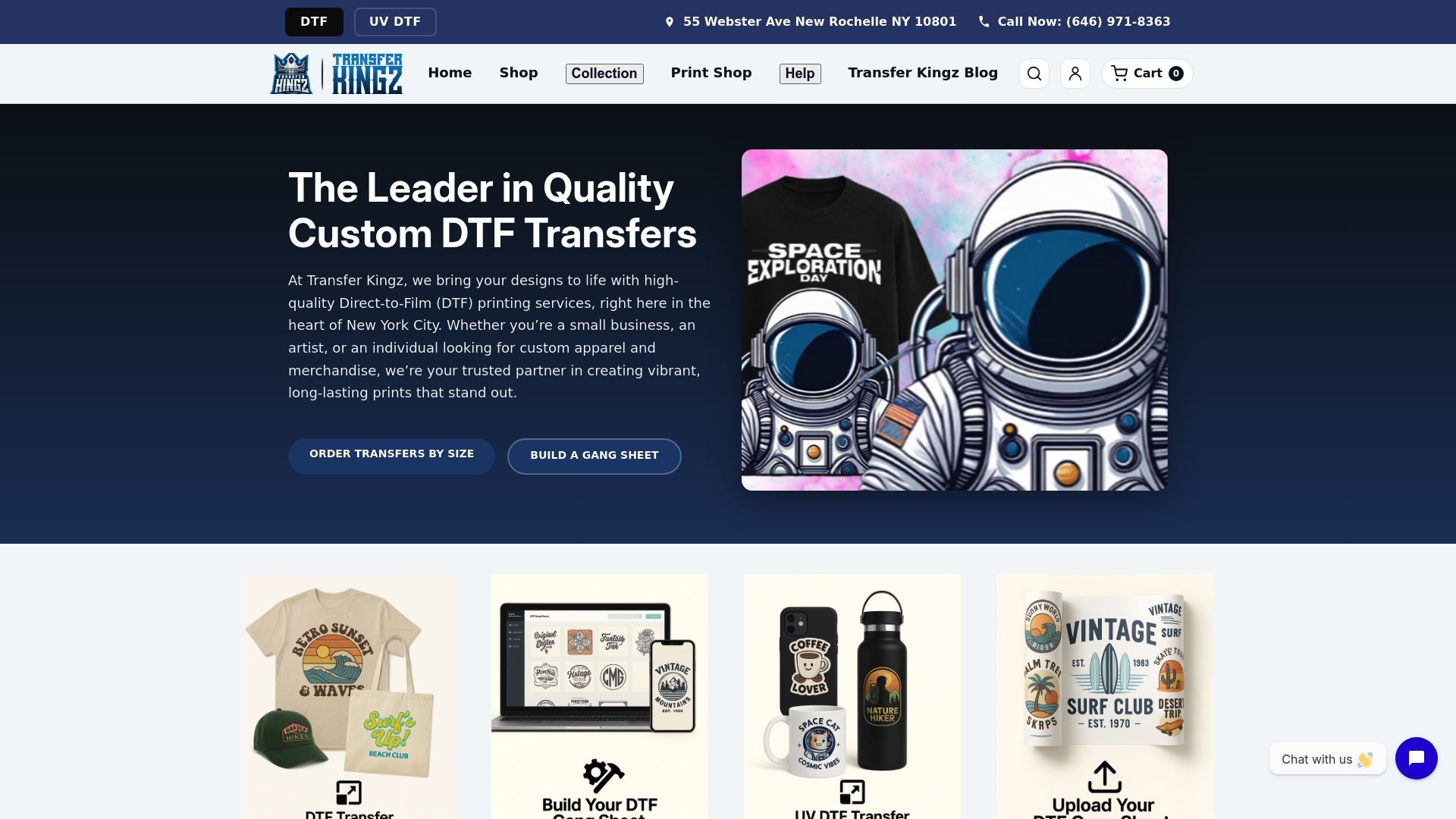
Transferkingz specializes in custom DTF transfers with no minimum order quantity, which means you can run a 12-piece pilot for a trade show or a 500-piece uniform rollout through the same platform. The gang sheet builder lets you mix multiple designs on a single transfer sheet, cutting per-unit cost on small batches. UV DTF transfers extend the same color fidelity to hard surfaces like water bottles, acrylic awards, and glass, so your branded merchandise program is not limited to fabric.
Turnaround is fast. Same-day local pickup is available, and nationwide shipping gets transfers to your heat press quickly. Premium inks and films mean the finished print holds up through repeated washes without cracking. Application guidance and support are built into the platform, so your team can press transfers confidently from day one.
Upload your artwork, use the online sheet builder, and request a sample run before committing to volume. That is the lowest-risk way to test the custom apparel advantages described in this article against your own brand and audience.
0 comments