

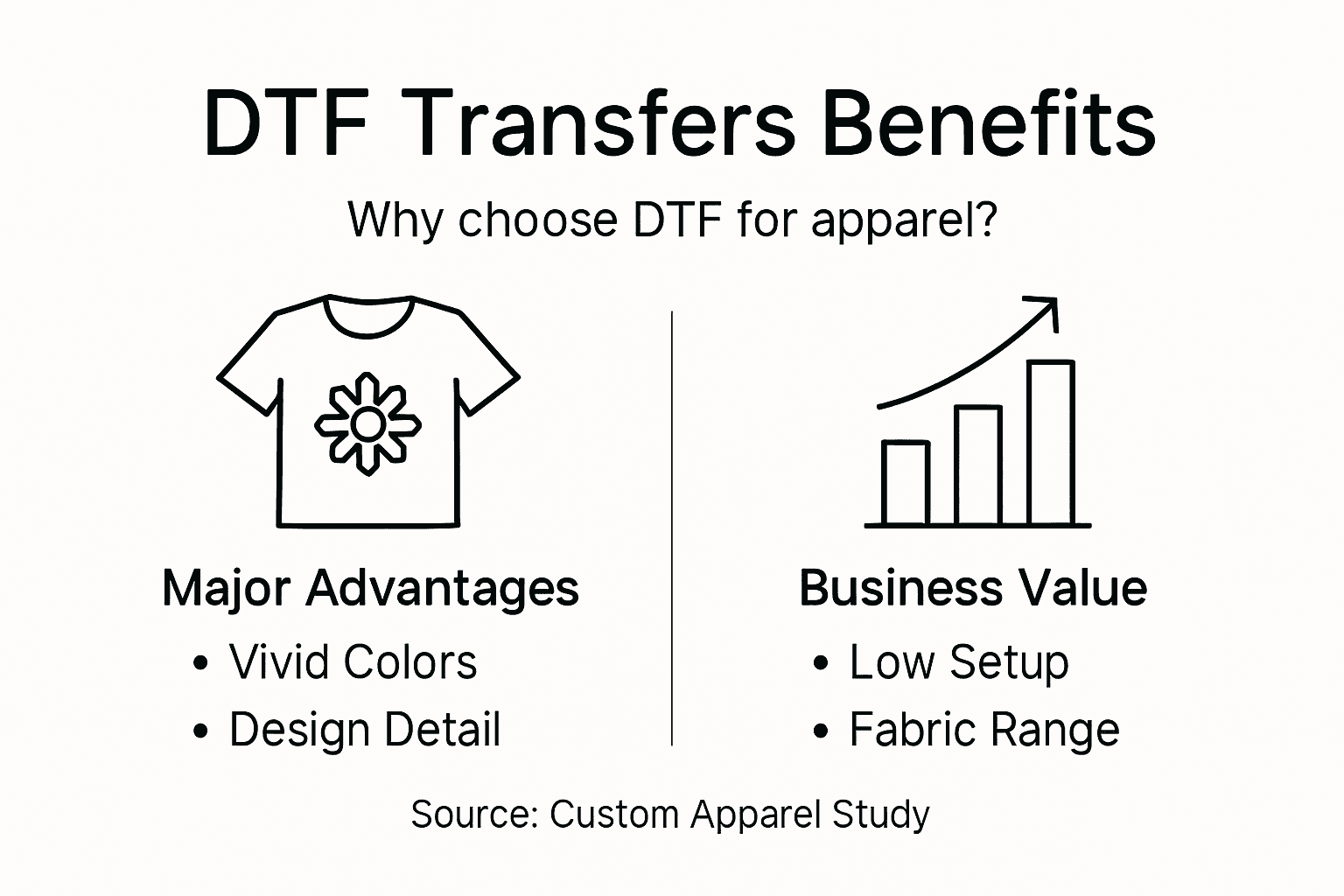
Most American small clothing businesses and independent designers now recognize that DTF transfers deliver a major advantage where traditional printing falls short. The demand for vivid, customized apparel is soaring, yet costs and complexity can hold back creativity. With more than 60 percent of startups worldwide searching for affordable print solutions, choosing the right DTF method gives you the flexibility and professional finish needed to compete confidently at any scale.
Table of Contents
- Defining DTF Transfers And Core Principles
- DTF Transfer Types And Printing Methods
- How DTF Transfers Work On Textiles
- Advantages Over Screen Printing And HTV
- Common Misconceptions And Mistakes To Avoid
Key Takeaways
| Point | Details |
|---|---|
| DTF Printing Technology | Direct-to-Film transfers enable vibrant, intricate designs on various fabrics with minimal setup and no minimum order quantities. |
| Versatile Application | DTF transfers can be used on cotton, polyester, and blends, making them ideal for complex multicolor designs across diverse textile types. |
| Cost-Effective Production | Compared to screen printing and HTV, DTF offers lower setup costs and superior design flexibility, benefiting small to medium-sized clothing businesses. |
| Common Mistakes | Proper design preparation and understanding specific fabric needs are crucial for achieving high-quality transfers, as general approaches may lead to poor results. |
Defining DTF Transfers and Core Principles
Direct-to-Film (DTF) transfers represent a cutting-edge digital printing technology transforming custom apparel production. Unlike traditional methods, DTF printing enables businesses to create intricate, vibrant designs with unprecedented flexibility and precision. The core principle involves printing graphics onto a specialized heat-transfer film, which can then be applied to various textile surfaces using heat and pressure.
The DTF process involves several critical steps that distinguish it from other printing techniques. First, designs are digitally printed using special water-based pigment inks onto a clear polyester film. These inks are specifically formulated to adhere effectively to the transfer medium and later bond with fabric substrates. Custom DTF transfers for business growth have revolutionized how small businesses approach garment decoration.
What sets DTF transfers apart is their remarkable versatility. They can be applied to multiple fabric types including cotton, polyester, and blended materials, with superior durability and color retention. Small clothing businesses can now produce complex multicolor designs without requiring expensive screen printing equipment or managing extensive inventory of pre-printed shirts. Each transfer allows for detailed graphics, photorealistic images, and intricate color gradients that were previously challenging or cost-prohibitive.
Pro tip: When starting with DTF transfers, invest in high-quality transfer films and practice application techniques to ensure consistent, professional results.
DTF Transfer Types and Printing Methods
DTF transfers encompass multiple specialized printing techniques that enable custom apparel producers to achieve remarkable design versatility. The primary methods include standard heat transfer, gang sheet printing, and custom-sized transfers, each serving unique production requirements. Bulk DTF transfers for businesses offer strategic advantages for small and medium-scale clothing enterprises.
The standard DTF transfer method involves printing designs directly onto a clear polyester film using specialized water-based pigment inks. This technique supports full-color graphics with exceptional detail, allowing businesses to reproduce complex images without color limitations. Manufacturers can choose between various film types, including standard transparent films for light fabrics and opaque white-backed films designed for darker textile surfaces.
Two primary printing configurations dominate the DTF transfer landscape: individual transfers and gang sheet printing. Individual transfers focus on single, precisely cut designs ideal for unique or limited-edition garments. Gang sheet printing, conversely, maximizes efficiency by printing multiple designs on a single transfer sheet, significantly reducing production costs and material waste. This method proves particularly advantageous for businesses producing multiple design variations or managing diverse product lines.
Below is a quick reference guide to DTF transfer types and their ideal business uses:
| DTF Transfer Type | Best For | Business Benefit |
|---|---|---|
| Standard Transfers | Simple, single runs | Fast turnaround, low setup costs |
| Gang Sheet Printing | Multiple designs per batch | Maximizes film use, reduces waste |
| Custom-Sized Transfers | Unique or large prints | Enables specialty or premium orders |
Pro tip: Invest in high-resolution digital designs and calibrate your printer settings to ensure optimal color accuracy and transfer quality.
How DTF Transfers Work on Textiles
DTF transfers represent a sophisticated printing technology that transforms digital designs onto textile surfaces through a precise multi-step process. At its core, the method involves printing graphics onto a specialized heat-transfer film that can adhere seamlessly to various fabric types. DTF shirt transfers revolutionize custom apparel by providing unprecedented design flexibility and superior image quality.
The transfer process begins with digital design preparation, where high-resolution graphics are printed onto a clear polyester film using water-based pigment inks. A critical step involves applying a powdered adhesive to the printed film, which acts as a binding agent between the design and textile surface. When heat and pressure are applied during the transfer process, this adhesive melts and creates a strong, durable bond that integrates the design directly into the fabric’s fibers.
Different textile compositions require specific temperature and pressure settings to ensure optimal transfer results. Cotton fabrics typically require different application techniques compared to synthetic materials like polyester or nylon. The versatility of DTF transfers allows for application on challenging fabric types that traditional screen printing methods struggle with, including performance wear, stretchy materials, and dark-colored textiles. This adaptability makes DTF transfers an ideal solution for businesses seeking to produce complex, multicolor designs across diverse fabric substrates.
Pro tip: Always conduct a test transfer on a small fabric sample to calibrate your heat press settings and ensure perfect design transfer quality.
Advantages Over Screen Printing and HTV
DTF transfers represent a revolutionary leap forward in custom apparel printing, offering significant advantages over traditional screen printing and heat transfer vinyl (HTV) methods. Affordable bulk DTF transfers demonstrate remarkable superiority across multiple production parameters, particularly for small to medium-sized clothing businesses seeking high-quality, cost-effective solutions.
Compared to screen printing, DTF transfers eliminate several critical limitations. Screen printing requires complex setup processes, separate screens for each color, and minimum order quantities that can be prohibitively expensive for small runs. DTF technology allows businesses to produce intricate, full-color designs without setup fees, color restrictions, or minimum order requirements. The transfers produce photorealistic images with exceptional color vibrancy and detail, something screen printing struggles to achieve consistently.
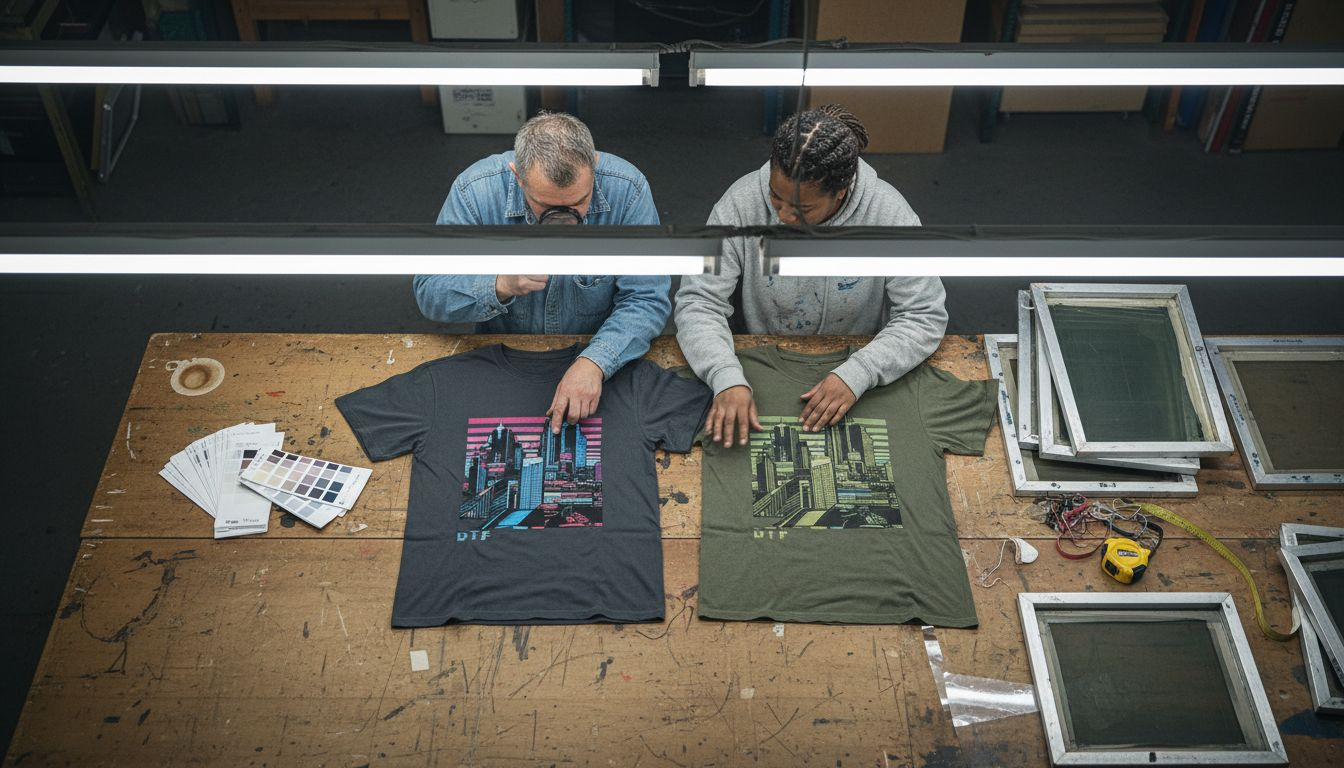
When contrasted with heat transfer vinyl (HTV), DTF transfers offer unparalleled flexibility and durability. HTV requires manual cutting, weeding, and often results in thick, rigid designs that crack or peel over time. DTF transfers create a thin, soft print that integrates directly into fabric fibers, providing superior washability and maintaining design integrity through multiple laundering cycles. The process supports complex multicolor designs on diverse fabric types, including performance wear, stretchy materials, and dark-colored textiles that traditional HTV methods cannot effectively decorate.
Here’s a side-by-side look at how DTF, screen printing, and HTV compare:
| Attribute | DTF Transfers | Screen Printing | Heat Transfer Vinyl (HTV) |
|---|---|---|---|
| Setup Time | Minimal prep required | Long setup, screens needed | Cutting and weeding required |
| Color Limitations | Supports full color, gradients | Limited by number of screens | Usually single color per layer |
| Fabric Compatibility | Cotton, polyester, blends | Mostly cotton, polyester | Works best on cotton and blends |
| Design Detail | Photorealistic images | Lower detail for complex images | Simple shapes and text |
| Durability | Soft, flexible, long-lasting | Good, but cracks with heavy use | Can peel or crack over time |
| Suitable Order Size | One-offs to bulk | Best for large quantities | Best for small to medium runs |
Pro tip: Experiment with test transfers on different fabric types to understand the unique performance characteristics of DTF technology for your specific product line.
Common Misconceptions and Mistakes to Avoid
Custom apparel businesses often encounter numerous misconceptions about DTF transfer technology that can significantly impact their production quality and efficiency. Master DTF transfers for custom apparel requires understanding and avoiding common pitfalls that can compromise design integrity and product durability.
One prevalent misconception is that DTF transfers work identically across all fabric types and temperatures. In reality, each textile substrate requires specific heat press settings, adhesive application techniques, and curing times. Entrepreneurs frequently make the mistake of using a single universal approach, resulting in poor transfer adhesion, color distortion, or premature design degradation. Cotton fabrics demand different temperature ranges compared to synthetic materials, and factors like fabric weight, weave density, and blend composition significantly influence transfer quality.
Another critical error involves underestimating the importance of design preparation and film selection. Many businesses assume that any digital design can be directly transferred without modifications. However, successful DTF transfers require high-resolution graphics, proper color profiling, and strategic file optimization. Low-quality source images, incorrect color management, and inadequate contrast can lead to blurry, washed-out designs that fail to capture the intended visual impact. Professionals must invest time in understanding color separation, image resolution requirements, and the specific capabilities of their DTF printing equipment.
Pro tip: Create a standardized testing protocol for different fabric types to develop consistent, reliable transfer techniques that minimize waste and maximize product quality.
Unlock the Full Potential of Your Custom Apparel with Premium DTF Transfers
Struggling with limited color options, high setup costs, or durability issues in your custom apparel business is a common challenge DTF transfers solve with ease. This innovative printing solution empowers you to create vibrant, photorealistic designs on a wide range of fabrics without expensive equipment or minimum order constraints. Whether you need intricate multicolor graphics or durable prints that withstand repeated washings, mastering DTF transfers elevates your brand and product quality.
Discover how you can simplify your production while achieving standout results with high-quality DTF transfers from Transfer Kingz.
Take action today and explore our extensive collection of customizable transfers, perfect for small businesses and hobbyists alike. Visit Transfer Kingz to start designing your next breakthrough apparel line now. For all your printing supplies and bulk options, browse our shop and turn your vision into reality with speed, quality, and affordability.
Frequently Asked Questions
What are the advantages of using DTF transfers for custom apparel?
DTF transfers offer significant advantages, including minimal setup time, the ability to produce intricate, full-color designs without color limitations, and excellent durability on various fabric types. They create soft prints that integrate directly into fabric fibers, resulting in flexible, long-lasting designs.
How do DTF transfers differ from screen printing?
DTF transfers provide greater versatility than screen printing, eliminating the need for complex setup processes and allowing for smaller order quantities. They also support photorealistic images with exceptional detail, which screen printing may struggle to achieve due to color limitations imposed by the number of screens used.
Can DTF transfers be applied to any fabric type?
Yes, DTF transfers can be applied to a wide range of fabric types, including cotton, polyester, and blends. However, it’s important to use appropriate temperature and pressure settings specific to each textile for optimal transfer results.
What common mistakes should I avoid when using DTF transfers?
Common mistakes include assuming that DTF transfers work the same across all fabric types and neglecting the importance of high-resolution design preparation. Each material requires specific settings, and low-quality source images can lead to poor transfer outcomes. It’s essential to develop a standardized testing protocol for different fabric types.
Recommended
- How dtf shirt transfers are Revolutionizing Custom Apparel – Transfer Kingz
- Unlock Custom Direct To Film Transfers for Your Business Growth – Transfer Kingz
- DTF Printing for Business Branding: How Custom DTF Transfers Boost Sma – Transfer Kingz
- DTF Printing for Business Branding: How Custom DTF Transfers Boost Sma – Transfer Kingz
- What Are the Disadvantages of Heat Transfer Printing? – Custom T-Shirts and Printed Merch in Utah | Pulse Merch
- Die grandiosen Vorteile eines Direktdruck – Teamdrucker
0 comments