

TL;DR:
- Selecting the right textile materials depends on matching fabric properties to product performance needs and sustainability standards.
- Measurable properties like GSM, fiber type, and abrasion ratings guide effective fabric choices for applications such as apparel, upholstery, and activewear.
Choosing textile materials is the process of selecting fabrics based on specific performance, durability, and sustainability criteria matched to your product’s intended use. The right fabric does more than look good. It determines how long a product lasts, how it feels in use, and whether it aligns with your brand’s values. Standards like GOTS and OEKO-TEX have made it easier to verify sustainability claims, while measurable properties like GSM and Martindale ratings give buyers objective tools for comparison. Whether you are making custom apparel or sourcing for a small business, material selection is a product development decision, not just a sourcing task.
How do fiber types and fabric properties influence textile selection?
Fabric selection reduces to five measurable properties: weight (GSM), drape, breathability, stretch, and texture. Each property connects directly to a fiber type and a use case. Getting this match right is the foundation of any good textile material guide.
Natural, synthetic, and regenerated fibers
Textile fibers fall into three main categories. Natural fibers include cotton, linen, wool, and silk. Synthetic fibers include polyester, nylon, and spandex. Regenerated fibers, sometimes called semi-synthetic, include viscose (rayon), modal, and lyocell (Tencel).
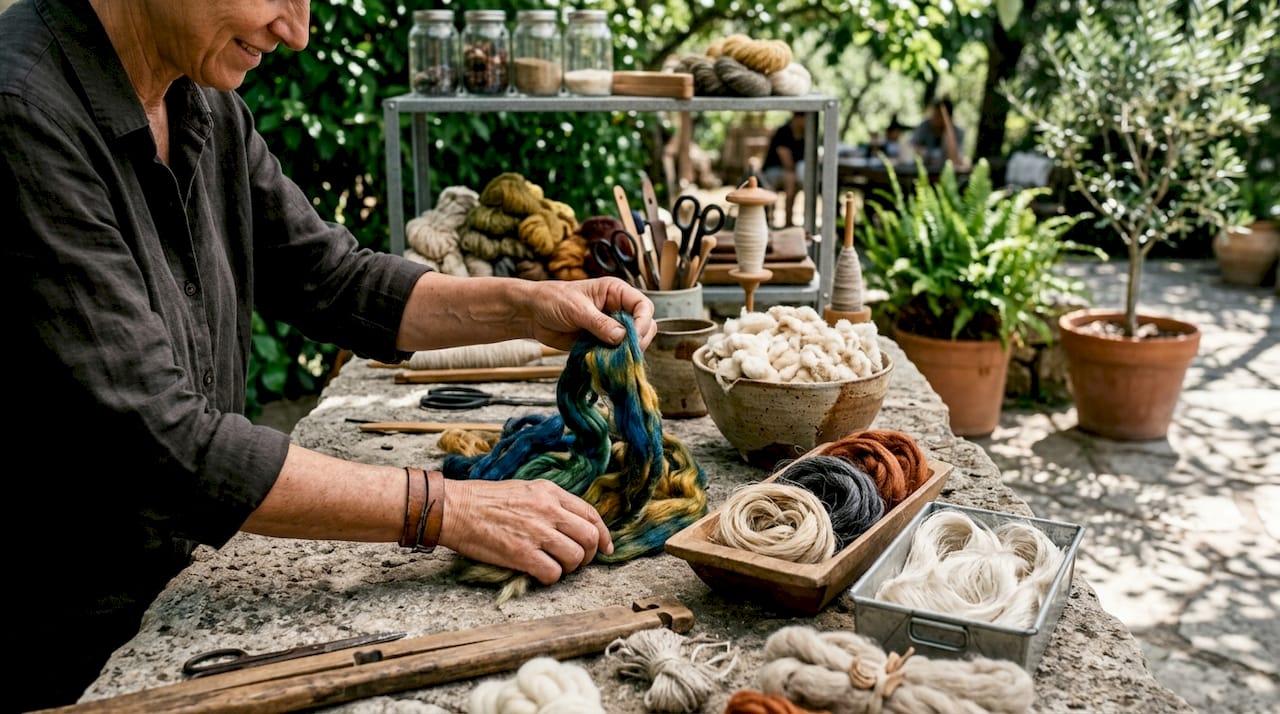
Each category behaves differently under stress, heat, and moisture. Cotton breathes well but shrinks. Polyester resists moisture and holds its shape but traps heat. Lyocell combines softness with moderate moisture management and biodegrades more readily than most synthetics.
GSM as a selection tool
GSM (grams per square meter) is the most practical single number for narrowing fabric choices. Fabrics under 100 GSM suit sheer layers and lightweight linings. Fabrics in the 100–200 GSM range cover most garments and home decor. Fabrics over 200 GSM handle upholstery and heavy outerwear.
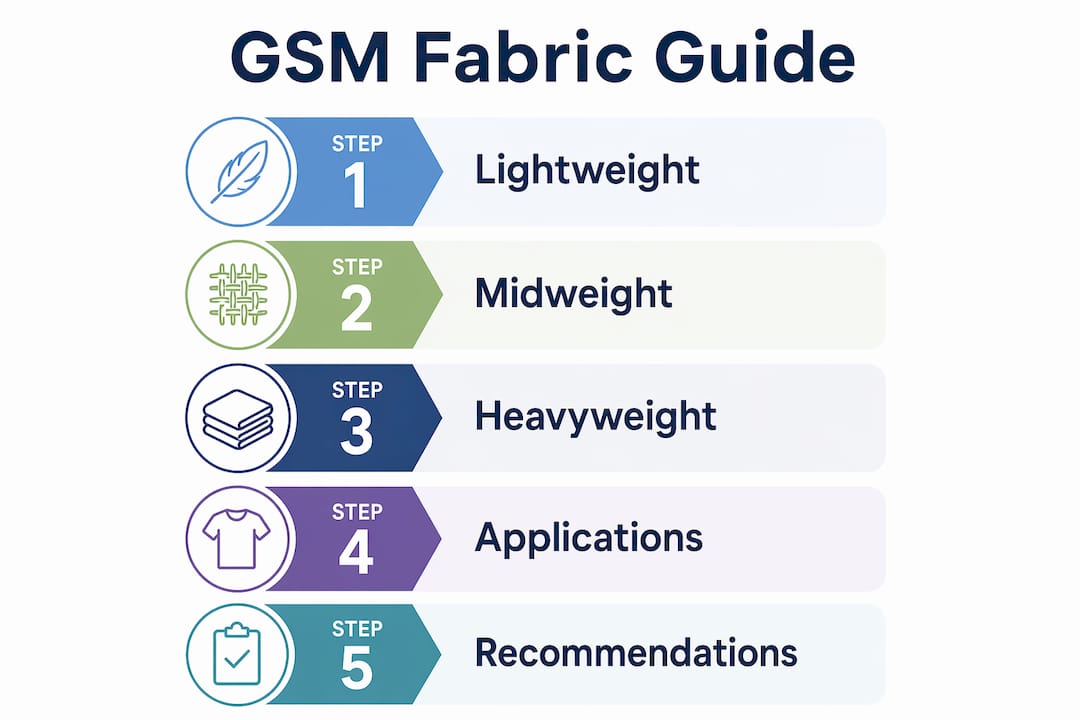
For apparel production specifically, GSM targets break down as follows: 120–150 GSM for linings, 160–190 GSM for midweight tees, 220–300 GSM for activewear, and 280–400+ GSM for heavy hoodies. These ranges give you a concrete starting point before you ever touch a swatch.
Pro Tip: Always request a physical swatch and confirm the GSM with a scale before committing to a bulk order. Supplier specs and actual fabric weight often differ by 10–15 GSM.
Fiber comparison at a glance
| Fiber type | Breathability | Durability | Cost | Sustainability |
|---|---|---|---|---|
| Cotton | High | Moderate | Low to moderate | High (if organic) |
| Polyester | Low | High | Low | Low |
| Wool | High | High | High | Moderate |
| Lyocell (Tencel) | Moderate to high | Moderate | Moderate | High |
| Nylon | Low | Very high | Moderate | Low |
Two fabrics with identical fiber content can behave very differently based on construction and weight. A tightly woven cotton canvas and a loosely knit cotton jersey share the same fiber but serve completely different purposes. Fabric weight and construction change drape and durability significantly.
What performance criteria should you prioritize for different applications?
Start from the product’s real use case to narrow viable fibers based on performance needs. Sportswear prioritizes stretch and moisture control. Formalwear prioritizes structure and drape. Home textiles prioritize washability and color retention. Upholstery prioritizes abrasion resistance above almost everything else.
Matching specs to use cases
-
Sportswear and activewear. Prioritize four-way stretch, moisture wicking, and fast drying. Fabrics like polyester-spandex blends (typically 80/20 or 88/12) deliver these properties reliably. Target GSM in the 220–300 range for structured performance pieces.
-
Formalwear and tailored garments. Prioritize drape, structure, and wrinkle resistance. Wool crepe, polyester suiting, and silk blends all perform well here. GSM typically falls in the 180–260 range depending on the season and silhouette.
-
Home textiles (bedding, curtains, cushions). Prioritize softness, washability, and color fastness. Cotton percale and linen blends are standard choices. GSM for bedding typically runs 130–180.
-
Upholstery and heavy-duty applications. Prioritize abrasion resistance above all else. The Martindale abrasion rating, aligned with ISO 12947, is the standard test for this. It simulates wear by counting rub cycles until breakdown or visible change occurs. Light commercial use requires a higher Martindale count than residential use. Always request the specific Martindale rating and confirm it references ISO 12947, because different abrasion standards are not directly comparable.
Pro Tip: When sourcing upholstery fabric, ask suppliers to confirm which standard their Martindale rating references. A number without a standard is not a reliable spec.
Understanding fabric compatibility for custom printing adds another layer to performance planning. Fabrics destined for DTF or screen printing need smooth, stable surfaces with enough fiber density to hold ink without bleeding.
How do sustainability certifications affect textile material choices?
Two certifications dominate the sustainable textile space: GOTS and OEKO-TEX Standard 100. They are not interchangeable, and confusing them leads to poor purchasing decisions.
GOTS: organic fiber and full supply chain
GOTS certification covers organic fibers with ecological and social criteria. It bans GMOs, certain chemicals, and child labor. Critically, it applies across every processing stage including spinning, knitting, dyeing, and manufacturing. A fabric labeled GOTS-certified has been verified at each step, not just at the farm level.
Buyers should confirm the certified scope when reviewing a GOTS claim. A supplier may hold GOTS certification for one product line but not another. Checking the GOTS public database by license number takes less than two minutes and removes all ambiguity.
- GOTS applies to: cotton, wool, silk, linen, and other natural fibers
- GOTS bans: azo dyes, formaldehyde finishes, heavy metal-based dyes, and GMO fiber
- GOTS requires: social compliance including fair wages and safe working conditions
OEKO-TEX Standard 100: chemical safety, not sustainability
OEKO-TEX Standard 100 independently tests textiles for harmful substances. It checks for formaldehyde, heavy metals, pesticides, and plasticizers. Thresholds vary by product class based on how close the fabric gets to skin. Baby products face the strictest limits. Decorative fabrics face the loosest.
OEKO-TEX Standard 100 is a safety certification, not a sustainability label. A polyester fabric can carry OEKO-TEX certification and still be environmentally costly to produce. Buyers who want both safety and sustainability need both certifications.
Pro Tip: If a supplier claims OEKO-TEX certification, ask for the certificate number and verify it at the OEKO-TEX label check portal. Certificates expire annually and must be renewed.
Organic fiber claims without certified processing are marketing, not verification. GOTS and OEKO-TEX Standard 100 are the two certifications that carry independent, audited weight in the textile industry.
For small businesses sourcing textile materials for DTF printing, certifications also signal fabric consistency. Certified fabrics tend to have tighter quality controls, which translates to more predictable print results.
What practical tips reduce risk when purchasing textile materials?
Appearance alone does not predict fabric performance. Choosing fabric based on looks leads to failures in fit, durability, and print quality. Detailed specifications and physical testing prevent the most common and costly mistakes.
-
Specify everything in writing. Your purchase order or tech pack should include fiber blend, knit or weave structure, target GSM with a tolerance (for example, 180 GSM ± 5), stretch percentage, and any surface finish. Explicit technical specifications produce the most reliable results and reduce costly misalignments with suppliers.
-
Add a shrinkage allowance. Build in roughly 10% extra fabric to account for shrinkage during washing or heat application. Where possible, choose preshrunk fabrics labeled Sanforized or Mercerized to reduce this risk. Fabric allowances protect your finished product from dimensional failures.
-
Inspect before cutting. Check every roll for visible defects including dye inconsistencies, dropped stitches, and fiber pulls. Defects found before cutting cost you fabric. Defects found after cutting cost you labor, time, and materials.
-
Factor in climate and care. A fabric that performs well in a dry climate may absorb moisture and lose shape in a humid one. Check care labels and test wash samples before committing to production runs.
-
Consider print compatibility. If your project involves custom printing, fabric surface texture and fiber content directly affect ink adhesion and color vibrancy. Smooth, tightly woven or knit fabrics with at least 50% natural fiber content generally produce the best results with DTF printing methods. Fabrics with heavy coatings, water-repellent finishes, or very open weaves create adhesion problems.
For crafters and small businesses sourcing fabric for mixed projects, textile and yarn suppliers often provide sample packs that let you test multiple fiber types before buying in bulk.
Key takeaways
Choosing textile materials correctly requires matching measurable fabric properties to specific performance needs before any other consideration.
| Point | Details |
|---|---|
| Start with end use | Define the product’s function before selecting any fiber type or fabric weight. |
| Use GSM as a filter | Match GSM ranges to application: 160–190 for tees, 220–300 for activewear, 280–400+ for hoodies. |
| Verify certifications | Confirm GOTS and OEKO-TEX certificates by number; claims without verification carry no weight. |
| Specify in writing | Include fiber blend, GSM tolerance, stretch, and finish in every purchase order to prevent supplier misalignment. |
| Test before committing | Request swatches, wash samples, and inspect for defects before placing bulk orders. |
What I’ve learned from watching fabric decisions go wrong
Most fabric mistakes I see come from the same place: someone picked a material because it looked right in a photo or felt good in a store. That approach fails reliably. The fabric that photographs beautifully in a supplier’s catalog may have a GSM 40 points lower than what the project actually needs.
The most useful shift I have seen small business owners make is treating fabric selection like a technical brief, not a shopping trip. When you write down the fiber blend, the GSM target, the stretch requirement, and the finish before you contact a supplier, the conversation changes completely. Suppliers respond to specifics. Vague requests produce inconsistent results.
Sustainability is the other area where I see well-intentioned buyers get misled. “Organic cotton” on a hang tag means nothing without a GOTS certificate number you can verify. I have seen fabrics marketed as eco-friendly that failed basic OEKO-TEX chemical thresholds. The certifications exist precisely because marketing language is not regulated the way audit results are.
For anyone producing custom printed apparel, fabric choice is also a print quality decision. The relationship between fabric substrates and print durability is direct and measurable. A fabric that holds ink well will make your transfers look better and last longer, which is ultimately what your customers are paying for.
— Anthony
Custom printing that works with your fabric choices
Once you have selected the right textile, the next question is how to print on it without losing quality or durability. Transferkingz specializes in Direct-to-Film (DTF) transfers that work across a wide range of fabric types, from cotton tees to polyester blends and mixed-fiber garments.
Transferkingz offers custom DTF printing services with no minimum order requirements, fast turnaround, and premium inks designed to bond with both natural and synthetic fibers. Whether you are running a small production batch or testing a new product line, the platform lets you upload artwork, build gang sheets, and order exactly what you need. Fabric selection and print quality are connected decisions. Transferkingz makes the printing side of that equation straightforward.
FAQ
What are the three main types of textile fibers?
Textile fibers fall into three categories: natural (cotton, wool, linen, silk), synthetic (polyester, nylon, spandex), and regenerated (viscose, modal, lyocell). Each category has distinct performance properties that determine its best applications.
What does GSM mean in fabric selection?
GSM stands for grams per square meter and measures fabric weight. Fabrics under 100 GSM suit lightweight layers, 100–200 GSM covers most garments, and over 200 GSM handles upholstery and heavy outerwear.
What is the difference between GOTS and OEKO-TEX Standard 100?
GOTS certifies organic fiber and full supply chain processing with ecological and social criteria. OEKO-TEX Standard 100 tests finished textiles for harmful chemical substances. A fabric can hold one certification without the other.
How do I reduce shrinkage risk when buying fabric?
Add roughly 10% extra fabric to your order as a shrinkage allowance, and choose preshrunk fabrics labeled Sanforized or Mercerized where available. Always wash a sample before cutting production fabric.
Which fabrics work best for DTF printing?
Smooth, tightly woven or knit fabrics with at least 50% natural fiber content generally produce the best DTF print results. Fabrics with water-repellent finishes or very open weaves reduce ink adhesion and color vibrancy.
0 comments