

TL;DR:
- Heat transfer peeling usually results from application errors involving temperature, pressure, or timing, not defective transfers.
- Correcting factors like proper heat, even pressure, and correct peel timing ensures strong, durable bonds, reducing failures.
Heat transfer peeling almost always traces back to one of eight application errors, not a defective transfer. The adhesive bond between a transfer and fabric depends on three variables working together: temperature, pressure, and timing. When any one of them is off, the bond fails. Here are the most common reasons it happens:
- Underheating prevents the adhesive from fully activating
- Insufficient pressure leaves air pockets between the transfer and fabric fibers
- Wrong peel timing disrupts the bond before it cures
- Moisture trapped in garment fibers creates a steam barrier
- Surface contamination from fabric softeners or factory sizing agents blocks adhesion
- Expired or incompatible transfer materials lose bonding capacity
- Improper cooling or harsh washing conditions break the cured bond
- Equipment miscalibration causes inconsistent temperature and pressure
Table of Contents
- 8 Common heat transfer peeling causes explained
- How to prevent peeling when applying heat transfers
- How Transferkingz DTF transfers help you avoid peeling
- Key Takeaways
- Get transfers that stick the first time with Transferkingz
8 Common heat transfer peeling causes explained
1. Underheating the adhesive layer
Low pressing temperature is the single most frequent cause of full design delamination. When the platen never reaches the required temperature, the adhesive layer stays partially liquid and never bonds to the fabric fibers. The transfer lifts cleanly off the garment, often in one piece, with little resistance. If your design peels immediately after you pull the carrier sheet, underheating is the first thing to check.
2. Insufficient or uneven pressure
Air pockets from insufficient pressure prevent full fiber contact and leave sections of the transfer unbonded. The problem gets worse on garments with seams, collars, or zippers. Those raised areas create pressure bridges, meaning the platen sits on the high point and barely touches the fabric on either side. Uneven surfaces cause edge lifting that is almost impossible to fix after the fact. A pressing pillow under the garment levels the surface and restores even force across the full design.
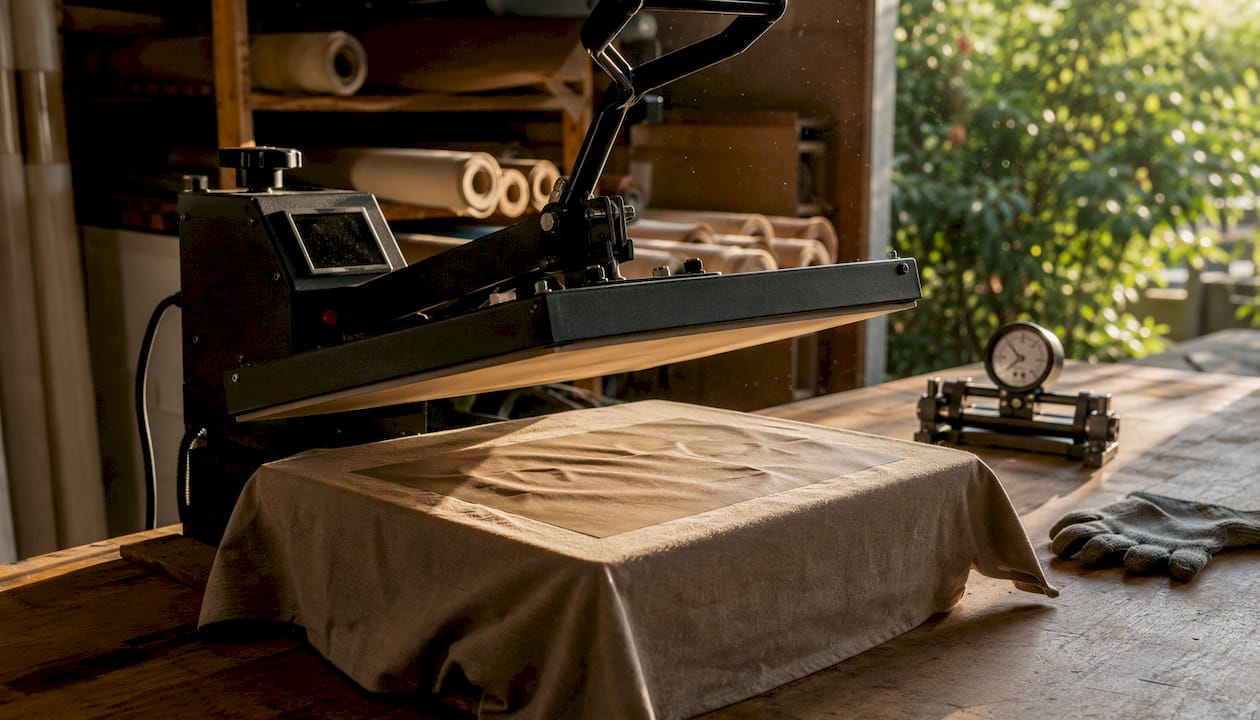
Pro Tip: Use a swing-away press instead of a clamshell when working near seams or collars. Swing-away presses distribute pressure more evenly across the full platen surface, which reduces edge lifting on structured garments.
3. Wrong peel timing
Every transfer material specifies either hot peel or cold peel, and mixing them up is a fast way to ruin a finished garment. Hot-peeling a cold peel vinyl before the adhesive cures pulls the glue layer off with the carrier sheet, leaving adhesive residue on the fabric and a design that won’t stick. Cold peel materials need to cool completely before you touch the carrier. Hot peel materials, on the other hand, must be peeled immediately while heat is still present.
4. Moisture trapped in garment fibers
Moisture is one of the most underdiagnosed heat transfer failure reasons. When a damp garment hits the platen, the heat converts that moisture to steam. That steam sits between the adhesive and the fabric, physically blocking the bond from forming. Pre-pressing for 5–10 seconds before applying the transfer removes this moisture entirely. Bubbling or blistering under the transfer after pressing is the visual signature of a moisture problem.
5. Surface contamination on the garment
Fabric softener residue, body oils, dust, and factory sizing agents all interfere with adhesion. New garments are especially prone to this because manufacturers apply sizing treatments to give fabric a crisp, fresh appearance. Those treatments create a chemical barrier between the adhesive and the fiber. Pre-washing without fabric softener removes most contaminants, and a quick pass with a lint roller before pressing catches anything left behind.
6. Expired or incompatible transfer materials
Most HTV and DTF materials expire after about two years, losing adhesive bonding capacity even with good storage, causing unexpected peeling failures. This is a frequent cause of otherwise unexplained peeling, especially when working from older stock. Check manufacture dates on rolls and sheets before pressing, and store materials in a cool, dry location away from direct sunlight.
7. Equipment miscalibration
Most peeling issues trace back to operator failure to calibrate press equipment, not the transfer itself. Built-in temperature sensors on heat presses drift over time and can read significantly higher than the actual platen temperature. A press displaying 320°F may be delivering 290°F at the platen surface. An external infrared thermometer or a calibrated temperature strip gives you the real number. Check calibration regularly, not just when problems appear.
8. Improper cooling and washing conditions
Washing in hot water above 105°F or tumble drying on high heat can reactivate some hot-melt adhesives, breaking the cured bond. Fabric softener in the wash degrades the adhesive layer incrementally across multiple cycles. Peeling that shows up after laundering rather than immediately after pressing points to either underheat during application or post-care errors. The fix is cold-water washing inside out, low-heat drying, and no fabric softener.
How to prevent peeling when applying heat transfers
Follow these steps on every press to avoid adhesion failures before they start.
- Pre-press the garment for 5–10 seconds to drive out moisture and flatten the fabric surface. This step alone eliminates the most common cause of bubbling and blistering. Check the beginner heat press checklist for a full pre-press walkthrough.
- Verify platen temperature with an external infrared thermometer before every session. Never rely solely on the press’s built-in sensor. Review heat press temperature settings for material-specific targets.
- Set pressure correctly and use a pressing pillow on any garment with seams, collars, or uneven surfaces. Consistent pressure across the full design is what separates a lasting bond from an edge-lifting failure.
- Follow manufacturer specs for temperature, dwell time, and pressure for your specific transfer type. Glitter, stretch, and metallic materials often require different settings than standard smooth HTV.
- Respect peel timing. Peel hot peel materials immediately. Let cold peel materials cool completely before touching the carrier sheet. Rushing this step is one of the fastest ways to pull the adhesive off with the carrier.
- Do not re-press failed transfers. Re-pressing a failed transfer rarely fixes it because the adhesive has already crystallized or scorched. Remove the transfer and start fresh with correct settings.
- Give post-care instructions to customers. Wash inside out in cold water, tumble dry on low or air dry, and skip fabric softener. Understanding heat press production best practices helps set realistic expectations for transfer durability.
Pro Tip: Build a one-page checklist for your workspace covering pre-press, temperature verification, pressure check, and peel timing. Operator error drops sharply when the steps are written down and followed consistently.
How Transferkingz DTF transfers help you avoid peeling
Direct-to-Film (DTF) transfers use a multi-layer system: ink printed onto a PET film, coated with a hot-melt adhesive powder, and cured before shipping. When pressed correctly, the adhesive melts into the fabric fibers and bonds at a molecular level, producing a flexible, wash-resistant print. The process is more forgiving than standard HTV on textured or blended fabrics.
- Transferkingz uses premium inks and films formulated for consistent adhesive activation across a wide range of fabric types, reducing the margin for error during pressing.
- Gang sheet building lets customers pack multiple designs onto a single sheet, which means every section of the platen gets used efficiently and pressure distribution stays consistent.
- Fresh materials ship fast. Transferkingz’s quick turnaround means customers receive transfers well within the usable shelf life, eliminating expired-stock failures before they start.
- Application guides and support resources from Transferkingz walk customers through correct temperature, pressure, and peel timing for every transfer type they carry.
For more on getting the most from your DTF prints, the 7-step DTF transfer checklist covers every stage from pre-press to post-care.
Key Takeaways
Peeling almost always comes from application errors, not the transfer itself. Getting temperature, pressure, and timing right the first time is the only reliable fix.
| Point | Details |
|---|---|
| Underheating causes delamination | Low platen temperature prevents adhesive activation, causing the full design to lift cleanly. |
| Pre-press removes moisture | Pressing the garment for 5–10 seconds before applying the transfer eliminates the steam barrier that blocks bonding. |
| Peel timing is material-specific | Hot peel materials must be peeled immediately; cold peel materials must cool completely before carrier removal. |
| Expired materials fail silently | Most HTV and DTF materials expire after about two years, losing adhesive bonding capacity even with good storage. |
| Transferkingz reduces peeling risk | Premium films, fresh stock, and application support from Transferkingz address the most common causes of adhesion failure. |
Get transfers that stick the first time with Transferkingz
Peeling is a solvable problem, and the material you start with matters. Transferkingz custom DTF transfers are printed with high-quality inks and adhesive films engineered for strong, flexible bonds across cotton, polyester, and blended fabrics. No minimum order, fast shipping, and clear application guidance mean you spend less time troubleshooting and more time producing.
Whether you’re running a small custom apparel shop or scaling up production, Transferkingz gives you fresh, press-ready transfers with the specs you need to get it right the first time. Place your order at Transferkingz and see the difference quality materials make from the very first press.
0 comments