

TL;DR:
- Choosing the correct apparel decoration method depends on order size, fabric type, and design complexity to avoid costly mistakes. Small runs with complex colors are best suited for DTF or DTG printing, while screen printing and embroidery suit larger, simpler orders; proper file preparation and sample approval are essential for professional results. Proper washing, storage, and matching techniques to fabric ensure the longevity of decorated garments and reduce waste.
Custom apparel decoration is the process of applying permanent designs, graphics, or text to garments using methods such as screen printing, embroidery, Direct-to-Film (DTF) transfers, Direct-to-Garment (DTG) printing, and sublimation. Each method produces different results in terms of durability, color vibrancy, and cost. Choosing the wrong technique for your fabric, design, or order size is the most common reason small businesses waste money on merchandise. This guide gives you a practical, method-by-method breakdown so you can make confident decisions from design file to finished product.
What is the best custom apparel decoration guide for your project?
No single decoration method is superior for every situation. The best choice depends on order size, fabric type, budget, and how long the garment needs to look good. Treating method selection as a technical decision rather than a stylistic one saves you from expensive reprints and unhappy customers.
Screen printing
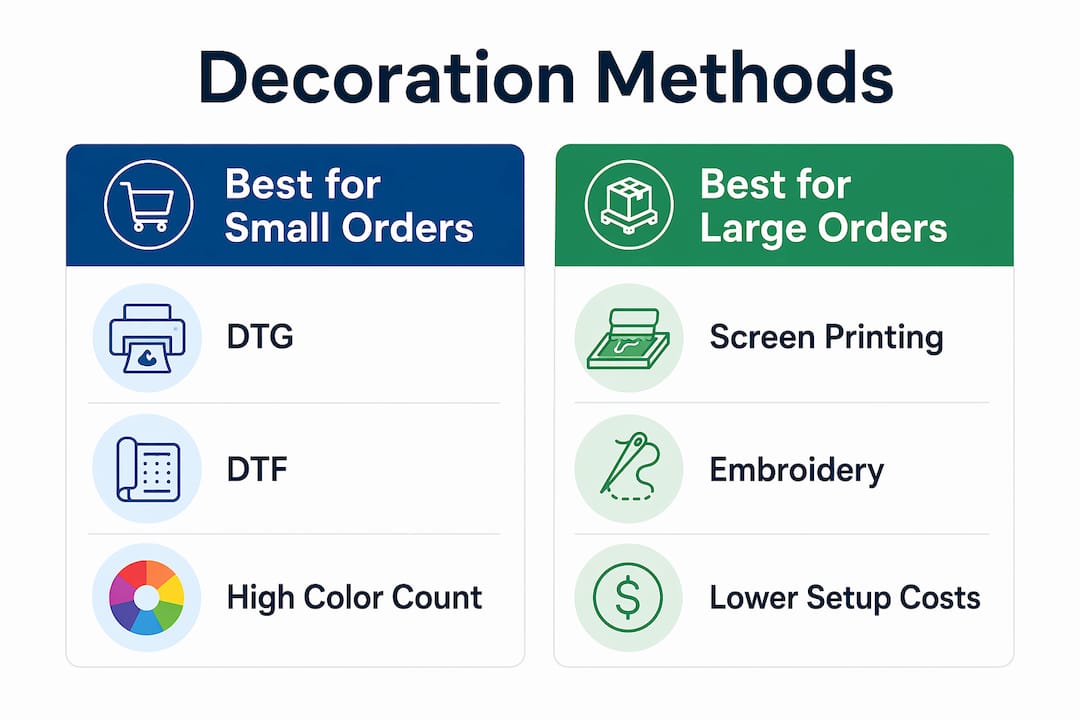
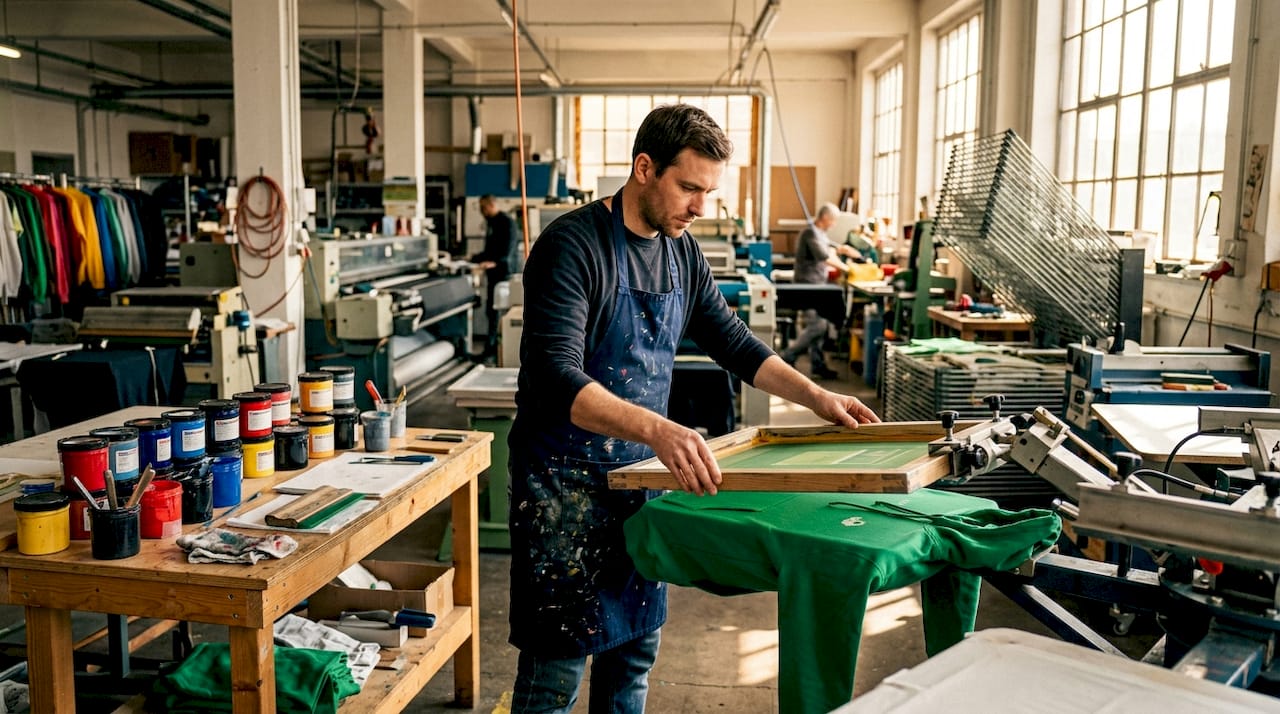
Screen printing is the most cost-effective option for orders of 12 or more items with 1–4 ink colors. Setup fees are high per unit at small quantities, but bulk orders of 72 or more units can reduce per-piece costs by 20–30% compared to a 12-unit run. Screen printing works best on 100% cotton t-shirts and high-volume event merchandise where bold, graphic-heavy designs are the goal.
Embroidery
Embroidery is the gold standard for professional apparel like polos, caps, and jackets. It requires a one-time digitizing setup fee, and complex logos with fine detail or gradients are often better suited to sublimation or DTF. Embroidery adds a premium, textured look that holds up well through repeated washing on structured garments.
DTG and DTF
DTG and DTF printing are the right call for runs of 1–11 items or designs with high color counts. DTF transfers provide a softer hand feel compared to screen printing and embroidery, which directly improves wearer comfort and how often promotional merchandise gets used. Transferkingz specializes in DTF transfers and offers no-minimum orders, making it a practical option for small businesses testing new designs. Learn more about how DTF printing works before committing to a production run.
Sublimation
Sublimation integrates color directly into synthetic fibers, producing designs with exceptional colorfastness. It performs better than embroidery on high-performance sportswear because the design becomes part of the fabric rather than sitting on top of it. The trade-off is that sublimation only works on polyester or polyester-blend fabrics, which limits its use on standard cotton garments.
Pro Tip: When comparing methods for a new product line, check the textile printing methods overview at Transferkingz to match technique to fabric before requesting quotes.
How do you prepare artwork for apparel decoration?
Production-ready design files are the single biggest factor separating clean, professional prints from blurry or misregistered ones. Getting your files right before you submit an order prevents costly reprints and production delays.
The core file requirements are straightforward:
- File format: Use vector files (AI, SVG, or EPS) as the professional standard. Vector artwork scales to any size without losing quality, which is critical when the same logo appears on a hat and a banner.
- Resolution: Raster files must be at least 300 DPI at the intended print size. Submitting a 72 DPI web image at print size produces a visibly blurry result.
- Color management: Screen printing requires Pantone color matching to keep colors consistent across runs. Limit your color count to 4 or fewer for screen printing to control setup costs.
- Font size: Keep fonts at 12pt or larger for heat transfers. Smaller text loses legibility and detail after washing.
- Design placement: Standard chest placement sits 3–4 inches below the collar. Left chest logos typically measure 3.5 x 3.5 inches. Oversized back prints can run 12 x 14 inches on adult sizes.
The most common mistakes are submitting low-resolution files, using RGB color mode instead of CMYK or Pantone, and embedding fonts rather than converting them to outlines. Converting fonts to outlines prevents font substitution errors when a print shop opens your file on a different system.
Pro Tip: Always send a layered file alongside your flattened print-ready version. If the printer needs to adjust placement or color, a layered file saves hours of back-and-forth.
For guidance on production file standards and what Transferkingz requires for DTF orders, their quality transfer page covers vector and DPI requirements in detail.
What is the step-by-step process to decorate custom apparel?
A clear production workflow prevents the most common and expensive mistakes in custom apparel. Follow these steps from garment selection to final delivery.
-
Choose your garment and fabric. Match the fabric to your decoration method first. Heat-sensitive fabrics and textured fabrics require specific approaches to avoid damage. Thin performance fabrics may not withstand high heat from screen printing or heat transfer presses. Fleece requires adjusted stitch densities for embroidery.
-
Plan your sizes and quantities. A common mistake for small businesses is ignoring garment size variations. Reviewing actual measurements before ordering prevents costly substitutions and shipping delays. Late size changes add costs and push back delivery dates.
-
Prepare and submit your design files. Use the file format and resolution standards covered in the previous section. Confirm color mode, placement dimensions, and any special instructions with your supplier before submitting.
-
Review your digital proof. Every reputable print shop provides a digital proof before production. Check placement, color accuracy, and text legibility carefully. Approve only when every element matches your intent.
-
Order a physical sample. Ordering a physical sample before a large bulk run is the industry best practice. Digital proofs cannot catch dye migration, ink absorption variation, or placement shifts that only appear on the actual garment. One sample can save you from reprinting hundreds of units.
-
Approve and release to production. Once the sample meets your standard, release the full order. Confirm the production timeline in writing. Standard turnaround for most print methods runs 7–14 business days, while DTF suppliers like Transferkingz often offer faster timelines.
-
Inspect the finished order. Check a representative sample from the shipment for color consistency, placement accuracy, and print adhesion before distributing or selling.
Pro Tip: Build sample review time into your project schedule. Rushing past the sample stage to meet a deadline is the fastest way to end up with a full run of unusable merchandise.
For a deeper look at how garment type affects production decisions, the Transferkingz guide on garment type and design is worth reading before you place your first bulk order.
How do you care for decorated apparel to make it last?
Proper care extends the life of any decorated garment significantly. The decoration method determines the right washing and drying approach, and ignoring those differences shortens the life of the print or embroidery.
Follow these care guidelines by method:
- Screen printing and DTG: Wash inside out in cold water on a gentle cycle. High heat breaks down ink bonds faster than any other factor. Tumble dry on low or hang dry.
- DTF transfers: Wash inside out in cold water. Avoid fabric softeners, which degrade the adhesive layer over time. Tumble dry on low heat.
- Embroidery: Machine wash cold on a gentle cycle. Use a mesh laundry bag to prevent snagging. Lay flat or hang to dry rather than using a dryer.
- Sublimation: Sublimated designs are the most wash-resistant of all methods because the dye bonds directly to the fiber. Standard machine washing in cold water is fine, but avoid bleach, which can strip color from synthetic fabrics.
Storage matters too. Fold printed garments with the design facing inward to reduce friction against other surfaces. Avoid storing decorated apparel in direct sunlight for extended periods, as UV exposure fades both inks and embroidery threads over time. For stains on embroidered areas, spot-treat gently with a soft cloth rather than scrubbing, which can pull threads loose.
Pro Tip: Print care instructions directly on a hang tag or inside label when selling decorated merchandise. Customers who follow the right care steps return fewer items and leave better reviews.
Key Takeaways
Choosing the right decoration method, preparing clean files, and following a disciplined production workflow are the three factors that determine whether custom apparel looks professional or ends up wasted.
| Point | Details |
|---|---|
| Match method to order size | Screen printing suits 12+ units; DTF and DTG work best for small runs or complex designs. |
| Use vector files at 300 DPI | Submit AI, SVG, or EPS files to prevent blurry or misregistered prints. |
| Always order a physical sample | Digital proofs miss dye migration and placement shifts that only appear on real garments. |
| Care instructions extend garment life | Wash inside out in cold water and avoid high heat to preserve screen-printed and DTF designs. |
| Fabric compatibility drives method choice | Heat-sensitive and textured fabrics require specific techniques to avoid damage. |
Why I think most people choose decoration methods for the wrong reasons
Most buyers pick a decoration method because it looks good in a catalog photo. That is the wrong starting point. After working with apparel decoration across dozens of product types, the clearest lesson is that technical compatibility always outweighs visual preference.
The most expensive mistake I see repeatedly is choosing embroidery for a design that has fine gradients or thin lines. Embroidery digitizing cannot reproduce photographic detail. The result looks muddy, and the client blames the printer when the real problem was the method selection. A quick review of embroidery vs. heat transfer trade-offs before the order would have caught it.
The trend I find genuinely interesting in 2026 is the shift toward soft hand feel as a purchasing criterion. Buyers used to accept stiff, heavy screen-printed designs on promotional shirts without complaint. Now, customers notice the difference between a DTF transfer that sits lightly on the fabric and a thick plastisol screen print that cracks after ten washes. That shift is pushing more small businesses toward digital transfer methods, and the quality gap has closed enough that the choice is easy for most short-run projects.
My honest advice: skip the sample at your own risk. Every time I have seen a business skip the physical proof stage to save a week, at least one production variable caused a problem that cost more to fix than the sample would have. The sample is not optional. It is the cheapest insurance you can buy in this process.
— Anthony
Transferkingz DTF printing for your next apparel project
Transferkingz brings together fast turnaround, premium inks, and no-minimum ordering for small businesses and individual creators who need professional-quality results without committing to large runs.
Whether you are decorating a single prototype or fulfilling a 500-piece order, Transferkingz handles the production side so you can focus on the design. Their custom DTF printing services in Dallas deliver vibrant, wash-resistant transfers ready to apply with a standard heat press. For Texas-based businesses, DTF transfers across Texas are available with regional shipping that keeps timelines tight. Upload your artwork, use the gang sheet builder to maximize material, and receive production-ready transfers with no setup fees.
FAQ
What decoration method works best for small orders?
DTF and DTG printing are the best options for orders of 1–11 items because they carry no screen setup fees and handle complex, multicolor designs without added cost.
What file format should I submit for custom apparel printing?
Submit vector files in AI, SVG, or EPS format for the highest quality results. If using raster files, they must be at least 300 DPI at the intended print size.
Is embroidery more durable than screen printing?
Embroidery is more durable on structured garments like polos and caps, but sublimation and specialized screen printing techniques outperform embroidery on high-performance sportswear because they integrate designs directly into the fibers.
Why do I need a physical sample before bulk production?
Digital proofs cannot catch real-world variables like dye migration, ink absorption differences, or placement shifts. A physical sample confirms the final product meets your standard before you commit to a full run.
How do I wash screen-printed or DTF-decorated garments?
Wash them inside out in cold water on a gentle cycle and tumble dry on low heat. Avoid fabric softeners on DTF transfers, as they degrade the adhesive layer over time.
0 comments