

TL;DR:
- DTF transfers offer high-quality, detailed, and full-color designs on various fabrics with no minimum order.
- Compared to screen printing and HTV, DTF provides better detail, color range, and flexibility for small runs.
- Using DTF enables small brands to rapidly produce and iterate custom apparel without large upfront costs.
Creating custom apparel that people actually remember is harder than it looks. With every small business and independent designer competing for attention, a generic logo on a blank tee simply does not cut it anymore. Direct-to-Film (DTF) transfers have changed the game entirely, giving you the ability to print bold, full-color designs with sharp detail on virtually any fabric. This article walks you through smart selection criteria, real-world design inspiration, a side-by-side method comparison, and specific situational guidance so you can make confident decisions for your brand.
Table of Contents
- Selection criteria for custom apparel designs
- Popular examples of custom apparel with DTF transfers
- Comparing DTF transfers to other custom apparel methods
- Situational recommendations for custom apparel
- The overlooked power of DTF transfers for growth
- Explore custom DTF apparel solutions
- Frequently asked questions
Key Takeaways
| Point | Details |
|---|---|
| DTF offers vibrant detail | DTF transfers yield high-quality, colorful designs suited for custom branding and merchandise. |
| Flexible for small businesses | Small brands and designers can use DTF to produce low-volume custom apparel without minimum order limits. |
| Comparison enables smarter choices | Understanding DTF vs. screen printing and HTV lets you select the best method for your brand needs. |
| Emerging technology increases quality | Advances like 9-color printers make custom apparel more detailed and eye-catching. |
Selection criteria for custom apparel designs
Before you place a single order, you need a clear framework for evaluating your options. Not every printing method suits every project, and making the wrong call early costs you time, money, and customer trust. When you evaluate customization methods, these criteria should guide your thinking:
- Design complexity: Can the method reproduce fine lines, gradients, or photographic detail without losing quality?
- Print vibrancy: Will colors stay bold wash after wash, or fade within a season?
- Durability: Does the print crack, peel, or wear at the edges after regular use?
- Cost per unit: Does the pricing model make sense for your typical order size?
- Substrate flexibility: Can you print on dark fabrics, polyester blends, or unusual cuts?
DTF transfers score high across all five criteria. According to the State of the DTF market report 2025, DTF transfers enable detailed, colorful prints that hold up on a wide range of apparel fabrics. That matters enormously when your brand relies on a signature look that needs to stay consistent across multiple garment types.
The process itself is straightforward. A design is printed onto a special film using CMYK inks plus white, then coated with a hot-melt adhesive powder and cured. The finished transfer sheet is then pressed onto fabric with a heat press. No screens, no weeding, no color limits. You get what you design, exactly as you designed it.
For branding decisions, this level of fidelity is critical. A gradient logo that looks sharp on screen but blocky on a hoodie destroys trust instantly. DTF eliminates that disconnect. If you want to understand how DTF stacks up on a technical level, this DTF vs screen printing breakdown covers the key differences clearly. For fabric-specific projects, the DTF vs HTV comparison is equally useful.
Pro Tip: When choosing between methods, ask yourself whether your design uses more than three colors or includes gradients. If yes, DTF is almost always the right call.
Popular examples of custom apparel with DTF transfers
With criteria in mind, let us explore actual examples you can use for inspiration. The range of apparel that works beautifully with DTF transfers is wider than most people expect.
Hoodies with brand logos are one of the strongest use cases. A hoodie is worn repeatedly, seen in public constantly, and often shared on social media. Full-color logo placement on the chest or sleeve becomes walking advertising. You can see compelling custom hoodies examples that show how bold graphic printing elevates an otherwise ordinary garment.
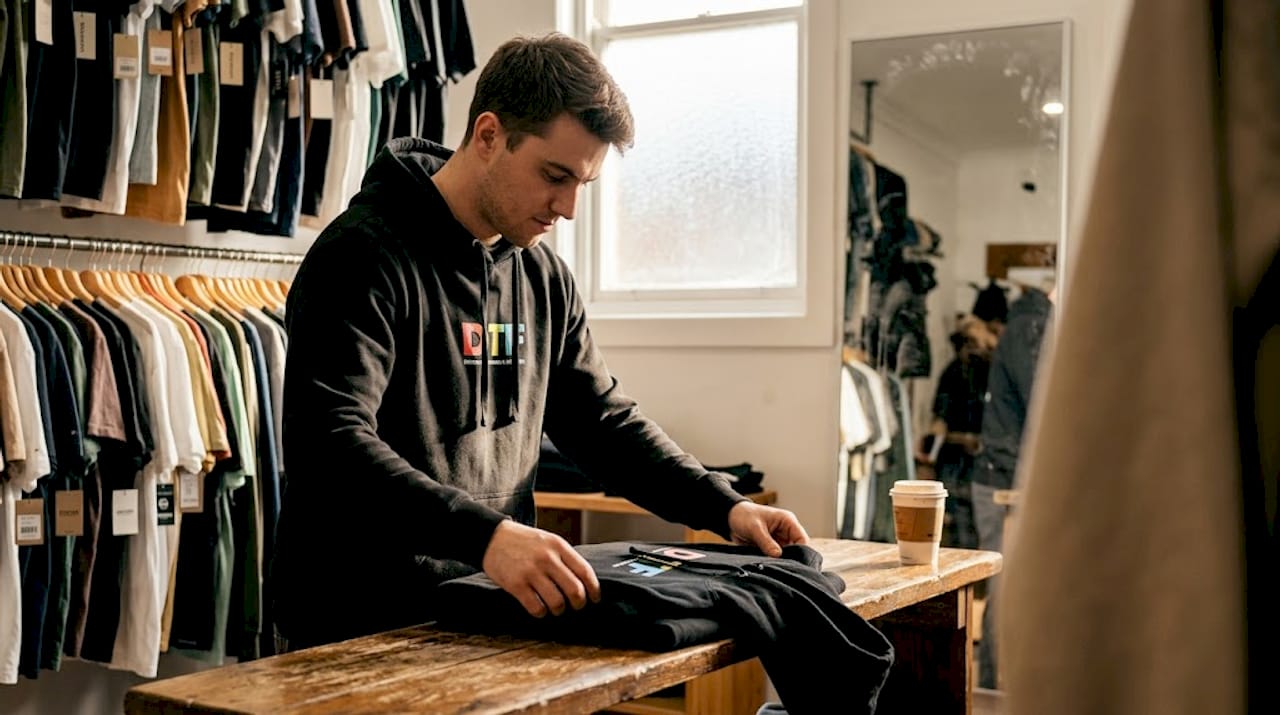
T-shirts with creative artwork remain the cornerstone of custom merch. Whether you are launching a limited-edition artist series or creating event shirts, DTF lets you reproduce complex illustrations without color limitations. Understanding how DTF printing works helps you prep your artwork files correctly for the best result.
Sweatshirts for seasonal campaigns hit differently when the design matches the mood. Holiday collections, back-to-school drops, or local event merchandise all benefit from the texture and weight of a crewneck. A custom sweatshirt example shows how a well-placed graphic transforms a basic blank into a covetable product.
Caps and hats are compact canvases that demand precise printing. DTF transfers handle the curved surface during pressing and deliver sharp results on structured hats, making them perfect for brand merchandise, sports teams, and promotional giveaways.
Great custom apparel does not start with the garment. It starts with the print quality. When the transfer is right, the product sells itself.
The technology behind these results keeps improving. The State of the DTF market report 2025 notes that 9-color DTF printers are now emerging, dramatically expanding the color range and sharpness available for apparel printing. That means richer skin tones in portrait designs, more accurate brand colors, and smoother gradients than ever before. For businesses investing in DTF printing for branding, this technological jump is genuinely exciting.
Pro Tip: Use a gang sheet to fit multiple smaller designs onto a single transfer sheet. It reduces cost per print and lets you test several design variations without committing to large quantities.
Comparing DTF transfers to other custom apparel methods
Seeing these creative examples, let us compare DTF transfers to other popular methods so you know when to use each one.
| Feature | DTF transfers | Screen printing | HTV (heat transfer vinyl) |
|---|---|---|---|
| Color range | Unlimited, full CMYK | Limited by screen count | Limited to solid colors |
| Detail level | Very high | Medium | Low to medium |
| Minimum order | No minimum | Usually 12 to 24 units | No minimum |
| Cost for small runs | Low | High per unit | Low |
| Cost for large runs | Competitive | Very cost-effective | Moderate |
| Durability | Excellent | Excellent | Good, prone to cracking |
| Fabric flexibility | Most fabrics | Cotton heavy | Cotton and some polyester |
| Setup complexity | Low | High | Low |
Screen printing is the traditional powerhouse. It produces extremely durable prints at a low cost per unit when you order in bulk. The limitation is that each color requires a separate screen, so complex multi-color designs become expensive fast. It works best for simple logos on large uniform orders.
HTV uses vinyl cut into shapes and pressed onto fabric. It is great for basic text and simple shapes but struggles with gradients and fine detail. The vinyl can crack over time with frequent washing, making it less ideal for garments that see daily wear.
DTF transfers sit in the sweet spot for most small business use cases. No setup fees, no minimums, and no color restrictions. The global DTF market grew from $2.72B to $2.89B between 2024 and 2025, reflecting genuine industry confidence in the method. For nuanced guidance, the DTF vs screen printing article is worth bookmarking. The DTF vs HTV pros and cons page is equally helpful if you are currently using vinyl.
For style-forward brands, looking at Japanese graphic tee examples shows how intricate layered designs require a printing method that can handle every detail. DTF is consistently the method that delivers.
- Best for photographic or illustrated artwork: DTF
- Best for high-volume uniform runs: Screen printing
- Best for DIY single-item personalization: HTV
Situational recommendations for custom apparel
Now let us look at how to choose based on specific business needs and situations. The best method is always the one that matches your actual workflow and goals.
| Situation | Recommended method | Reason |
|---|---|---|
| Small batch, complex art | DTF transfers | No minimums, full-color accuracy |
| Bulk orders, simple logo | Screen printing | Low cost per unit at volume |
| Single custom piece | HTV or DTF | Fast, low-cost, no setup |
| Fashion line launch | DTF transfers | Color range, quality, flexibility |
| Garment-dyed apparel | DTF transfers | Works on varied base colors |
| Event or promo giveaway | Screen printing or DTF | Depends on quantity and design |
Here is a numbered decision process to make your choice faster:
- Define your order size first. Under 50 units almost always favors DTF.
- Assess design complexity. More than three colors or any gradient? Use DTF.
- Check your fabric. For polyester, performance wear, or dark fabrics, DTF is the safer bet.
- Set a budget per unit. Factor in setup costs for screen printing before assuming it is cheaper.
- Think about reorders. DTF transfers are easy to reorder in small quantities without reprinting screens.
For fashion-forward operators, pairing DTF with a custom T-shirt printing approach on garment-dyed blanks creates the kind of vintage, premium feel that customers pay more for. Garment-dyed shirts have irregular tones that make standard screen printing inconsistent, but DTF adapts to the surface and still delivers crisp results.
The State of the DTF market report 2025 confirms that 9-color printer advances are making DTF even more reliable for demanding design use cases. For a broader view of how the process integrates into production, DTF in textile manufacturing and the DTF printing basics guide both offer strong foundational context.
The overlooked power of DTF transfers for growth
Most people treat DTF as a printing method. We see it as a business model enabler. That distinction matters.
Before DTF became accessible, launching a custom apparel line meant committing to large screen printing runs, tying up cash in inventory, and betting on designs before you knew if they would sell. That model punished small brands trying to test ideas. DTF changes the math completely. You can print ten hoodies, sell them, listen to your customers, tweak the design, and reorder twenty more. No wasted stock, no sunk costs.
The DTF market growth driven by technology advances is not just an industry story. It is a signal that independent brands and small operators now have access to the same print quality that larger manufacturers once monopolized. Understanding the DTF printing workflow means you can move faster, iterate cheaper, and build a real brand identity without waiting for minimum order windows to open up.
Speed and quality together create a compounding advantage. The brands winning in custom apparel right now are not the ones with the biggest budgets. They are the ones reacting fastest to what their audience wants.
Explore custom DTF apparel solutions
Ready to bring your apparel ideas to life? Transfer Kingz makes it simple to go from design file to finished transfer with no minimums, fast turnaround times, and print quality that holds up order after order.
Whether you are based locally and looking for Dallas DTF printing services or need broader access through Texas DTF printing options, Transfer Kingz has the infrastructure to support your production. For businesses looking for a streamlined fulfillment experience, the Print Point solutions platform connects your designs directly to finished products. Start small, scale fast, and keep your branding sharp at every step.
Frequently asked questions
What is a DTF transfer in custom apparel?
A DTF transfer is a direct-to-film printing method that applies vibrant, durable designs onto apparel using film and adhesive powders. The State of the DTF market report 2025 confirms that DTF enables detailed, colorful prints across a wide range of fabric types.
How do DTF transfers compare to screen printing?
DTF transfers allow finer detail and color gradients than screen printing, making them ideal for small runs and intricate designs. The State of the DTF market report 2025 notes that DTF is favored for quality on small runs while screen printing remains cost-effective for bulk jobs.
Can small businesses benefit from DTF transfers?
Yes, DTF transfers enable small businesses to offer high-quality, custom-branded apparel without minimum order constraints. The State of the DTF market report 2025 points out that DTF technology lowers barriers for small apparel brands significantly.
What apparel items are best suited for DTF transfers?
DTF transfers work well for hoodies, t-shirts, sweatshirts, and caps, especially when complex designs or full-color branding is required. Emerging 9-color DTF printers expand the range of apparel items that can be printed with exceptional accuracy.
Is DTF printing cost-effective for limited runs?
DTF printing is ideal for short runs due to low setup costs and flexibility, unlike traditional methods that prefer bulk ordering. The State of the DTF market report 2025 confirms that DTF transfers are efficient and affordable specifically for small batch production.
Recommended
- Custom apparel designs: 5 DTF transfer inspirations – Transfer Kingz
- DTF Printing for Business Branding: How Custom DTF Transfers Boost Sma – Transfer Kingz
- DTF Printing for Business Branding: How Custom DTF Transfers Boost Sma – Transfer Kingz
- DTF Printing for Business Branding: How Custom DTF Transfers Boost Sma – Transfer Kingz
- Best Golf Tournament Prize Packs – Custom Logo Gifts by Aiming Fluid Golf
0 comments