

Finding the right textile printing solution can feel complicated when every order demands quality, speed, and versatility. Small business owners and designers often struggle with outdated methods that limit fabric options or take too much setup time. Custom DTF transfers break those limits by making it possible to produce vibrant graphics on cotton, polyester, blends, and even challenging fabrics with minimal fuss. This guide shows how DTF technology helps apparel brands deliver professional results without costly delays or high minimum orders.
Table of Contents
- What Are Custom DTF Transfers?
- Main Types And Variations Explained
- Step-By-Step Custom Transfer Process
- Key Benefits And Apparel Applications
- Comparing DTF To Other Print Methods
- Common Pitfalls And Quality Mistakes
Key Takeaways
| Point | Details |
|---|---|
| Custom DTF Transfers Revolutionize Apparel Printing | DTF transfers allow vibrant, detailed designs on various fabric types and are cost-effective for small and large batches. |
| Design Flexibility and Precision | DTF technology supports complex, photorealistic graphics, offering unlimited color options with minimal design restrictions. |
| Comparative Advantages Over Other Methods | DTF transfers outperform traditional methods by being compatible with multiple fabrics and providing high durability without extensive setup costs. |
| Critical Process Steps | Each stage of the DTF production process requires precision, from design preparation to heat application, to ensure high-quality results. |
What Are Custom DTF Transfers?
Custom Direct-to-Film (DTF) transfers represent a revolutionary approach to apparel printing that enables small business owners and independent designers to create vibrant, detailed graphics on various textile surfaces. Unlike traditional printing methods, DTF transfers use specialized film and ink technology to produce high-quality, durable designs with remarkable color accuracy and intricate detail.
At its core, a custom DTF transfer involves printing a design onto a specialized transparent film using advanced digital printing technologies. The process involves several critical steps that distinguish it from other textile decoration techniques:
- Digitally printing the design onto heat-transfer film
- Applying a specialized powder adhesive
- Curing the transfer under precise temperature conditions
- Pressing the transfer directly onto fabric surfaces
These transfers offer significant advantages for businesses and designers seeking flexibility and high-quality results. Custom DTF transfers can be applied to virtually any fabric type, including cotton, polyester, blends, and even challenging materials like performance wear. The process allows for:
- Unlimited color options
- Photorealistic image reproduction
- Soft-hand feel with minimal fabric stiffness
- Durability through multiple wash cycles
- Cost-effective small and large batch production
The technology represents a significant leap forward for businesses looking to produce custom merchandise without massive upfront investments. Graphic designers and small apparel brands can now create complex, multicolor designs that were previously impossible or prohibitively expensive with traditional screen printing methods.
Pro tip: When designing for DTF transfers, always use high-resolution images and consider color contrast to ensure maximum transfer quality and visual impact.
Main Types and Variations Explained
Custom DTF transfers encompass a diverse range of styles and techniques designed to meet varying design and application requirements. Custom transfer variations offer designers and small business owners unprecedented flexibility in creating unique apparel graphics.
The primary types of DTF transfers can be categorized based on several key characteristics:
-
Full-Color Transfers
- Complex gradient designs
- Photorealistic image reproduction
- Maximum color depth and detail
-
Line Art Transfers
- Simple, clean graphic designs
- Ideal for minimalist artwork
- Precise line work and definition
Adhesive Variations represent another crucial dimension of DTF transfer technology, with two primary application methods:
-
Hot Peel Transfers
- Immediate transfer removal after pressing
- Quick production process
- Suitable for time-sensitive projects
-
Cold Peel Transfers
- Require cooling before film removal
- Enhanced adhesion to fabric
- Better long-term durability
DTF transfer variations allow designers to select the perfect technique for their specific textile decoration needs.
Advanced DTF transfer technologies also enable customization through specialized powder types and film bases. These variations provide solutions for different fabric compositions, including challenging materials like performance wear, athletic jerseys, and specialty textiles.
Pro tip: Select your DTF transfer type based on your specific design complexity, fabric type, and intended wear conditions to maximize graphic quality and longevity.
Step-by-Step Custom Transfer Process
Creating custom DTF transfers requires a precise, methodical approach that transforms digital designs into vibrant, durable textile graphics. DTF printing workflow involves multiple intricate stages that demand attention to detail and technical precision.
The custom transfer process can be broken down into essential sequential steps:
-
Digital Design Preparation
- Create high-resolution artwork
- Use professional RIP software
- Optimize color and ink settings
-
Printing Preparation
- Print design in reverse onto PET film
- Use specialized DTF pigment inks
- Apply white ink underbase for dark fabrics
-
Adhesive Application
- Immediately apply powder adhesive
- Remove excess powder
- Ensure even, consistent coverage
-
Curing Process
- Heat cure in dedicated oven
- Melt powder to bond with ink
- Maintain precise temperature control
-
Transfer Execution
- Position transfer on fabric
- Apply heat press at specific temperature
- Control pressing time and pressure
Precision in each step determines the final transfer quality and durability.
Advanced DTF transfer techniques require understanding complex interactions between ink, film, adhesive, and fabric. Professional operators must master temperature management, pressure control, and timing to achieve consistent, high-quality results.
Fabric Compatibility Considerations:
- Cotton materials
- Polyester blends
- Performance wear
- Synthetic fabrics
- Specialized textile surfaces
Pro tip: Invest in calibration tools and maintain consistent equipment settings to ensure repeatable transfer quality across different production runs.
Key Benefits and Apparel Applications
Custom DTF transfers have revolutionized the apparel printing landscape, offering unprecedented design flexibility and production efficiency for businesses of all sizes. Benefits of DTF transfers represent a game-changing approach to textile decoration that addresses multiple production challenges.
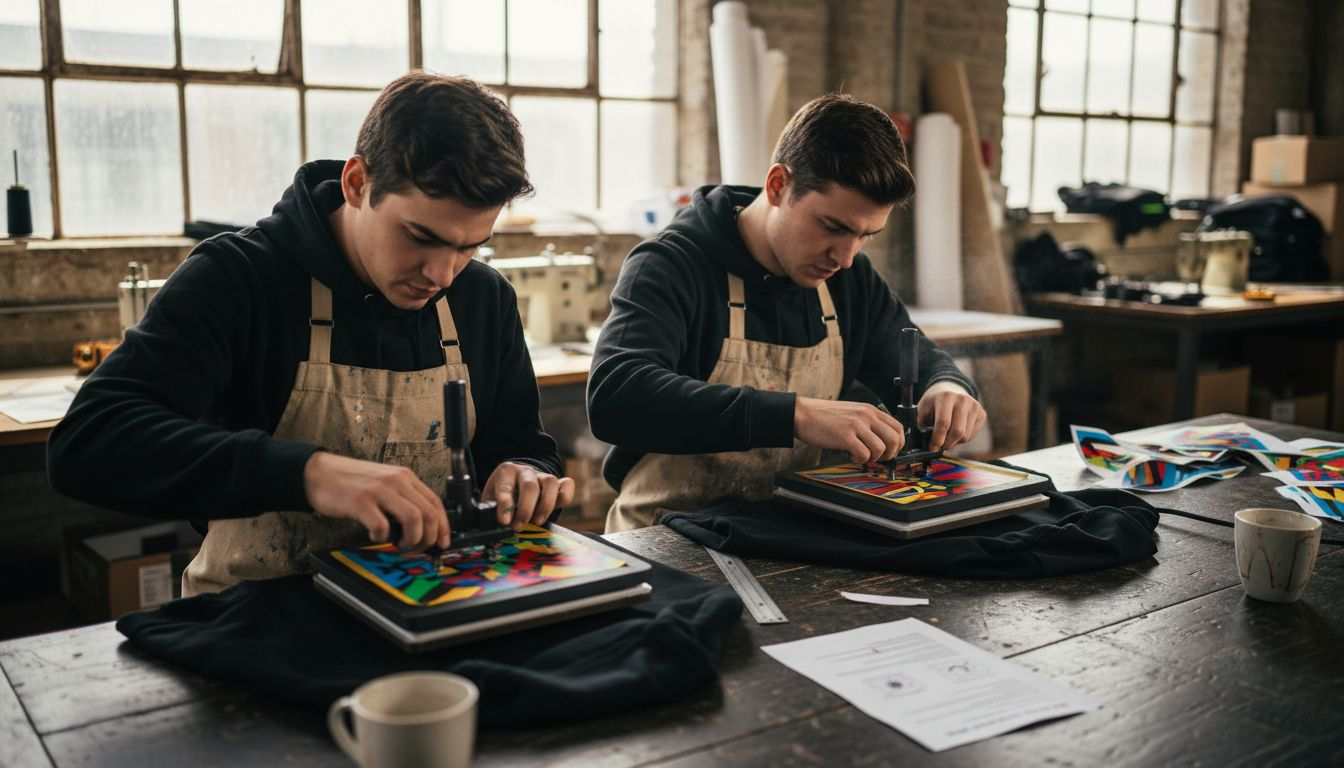
The key advantages of DTF transfers span several critical areas for apparel businesses:
Technical Advantages:
- Vibrant, full-color designs with exceptional detail
- Superior color reproduction across fabric types
- Soft hand feel with minimal ink thickness
- Durability through multiple wash cycles
- No color limitations or screen setup requirements
Design Flexibility:
- Support for complex, multi-color graphics
- Ability to print on diverse fabric compositions
- Seamless integration of photorealistic imagery
- Minimal design restrictions
- Cost-effective small and large batch production
Apparel Application Spectrum:
- Athletic and Performance Wear
- Corporate Merchandise
- Fashion Streetwear
- Promotional Clothing
- Custom Team Uniforms
- Specialty Textile Products
DTF transfers enable designers to transform creative visions into tangible, wearable art with unprecedented precision and quality.
The versatility of DTF transfers extends beyond traditional printing methods, allowing businesses to experiment with intricate designs, unique color combinations, and specialized fabric applications that were previously challenging or impossible.
Pro tip: Experiment with design complexity and fabric types to unlock the full potential of DTF transfer technologies for your specific market niche.
Comparing DTF to Other Print Methods
Custom textile printing technologies each offer unique advantages, but Direct-to-Film (DTF) transfers have emerged as a versatile solution that addresses many limitations of traditional methods. DTF printing comparison reveals significant technological advantages across multiple production scenarios.
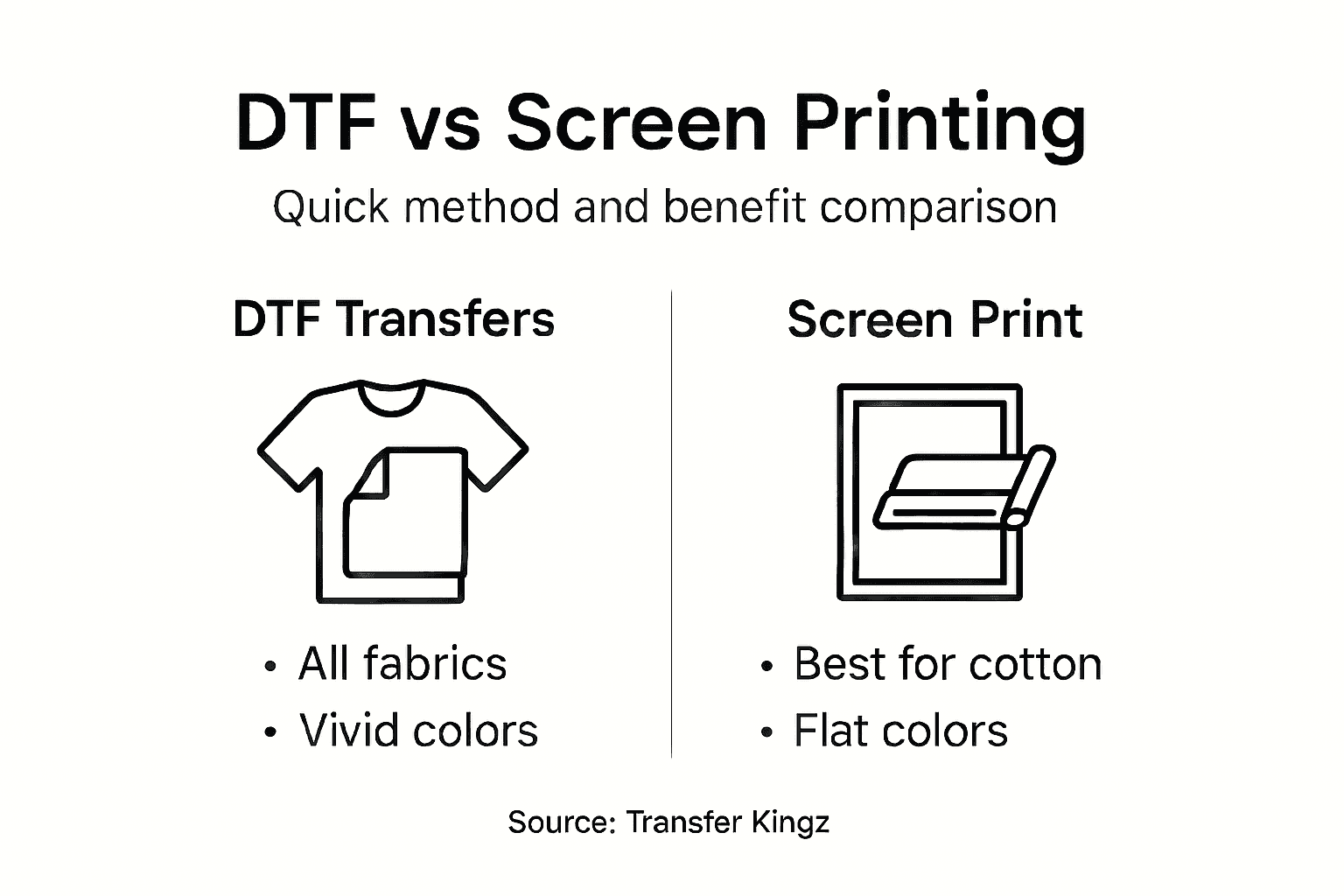
Comparing DTF with other popular printing techniques highlights its distinctive capabilities:
Direct-to-Garment (DTG) Comparison:
- DTF works on multiple fabric types
- No required pre-treatment
- Supports polyester, cotton, and blends
- More flexible print placement
- Better durability and stretch resistance
Screen Printing Comparison:
- DTF handles complex multi-color designs
- Lower setup costs
- More economical for small batches
- No screen preparation required
- Superior design intricacy
Sublimation Printing Comparison:
- DTF works on dark and light fabrics
- Supports cotton and synthetic materials
- Includes white ink capabilities
- More versatile fabric compatibility
- Enhanced color vibrancy
DTF transfers represent a revolutionary approach that combines the best attributes of multiple printing technologies.
Each printing method has specific strengths, but DTF offers unprecedented flexibility for businesses seeking high-quality, adaptable textile decoration solutions. The technology bridges gaps between traditional techniques, providing more design freedom and production efficiency.
To help clarify the distinctions among popular textile printing methods, see how they differ in key business-relevant areas:
| Printing Method | Suitable Fabrics | Setup Time | Design Complexity |
|---|---|---|---|
| DTF Transfers | Cotton, blends, synthetics | Fast, minimal | High: photorealistic, detailed |
| Screen Printing | Mostly cotton, blends | Long, complex | Limited: simple, solid colors |
| DTG Printing | Cotton, some blends | Medium | High: orders on demand |
| Sublimation | Polyester, light synthetics | Short | Moderate: limited on darks |
Pro tip: Consider your specific fabric types, design complexity, and production volume when selecting between DTF and alternative printing methods.
Common Pitfalls and Quality Mistakes
Successful DTF transfer production demands precision and technical expertise. Common DTF transfer mistakes can dramatically impact print quality, durability, and overall design performance.
Design and Artwork Errors:
- Insufficient image resolution
- Non-mirrored design files
- Low-contrast graphics
- Improper color management
- Incorrect file format selections
Technical Application Mistakes:
- Uneven powder adhesive application
- Incorrect curing temperatures
- Inconsistent heat press settings
- Inadequate fabric pre-treatment
- Poor transfer alignment
Production-Related Quality Issues:
- Incomplete powder melting
- Excessive adhesive thickness
- Unbalanced ink saturation
- Premature transfer degradation
- Color inconsistency between prints
Precision in every stage of the DTF transfer process determines the final print quality and longevity.
Most quality issues stem from overlooking critical details during design preparation, transfer production, and application. Professional operators must develop a systematic approach to minimize potential errors and maintain consistent, high-quality output.
Here’s a summary of common DTF production errors and their direct impact on finished products:
| Error Type | Typical Cause | Possible Impact |
|---|---|---|
| Design Preparation | Low-resolution images | Blurry or pixelated prints |
| Adhesive Application | Uneven powder coverage | Poor adhesion, flaking |
| Heat Pressing | Incorrect temperature | Reduced durability, color fade |
| Curing Process | Insufficient curing time | Transfer not bonding fully |
Potential Consequences of Poor Technique:
- Faded designs
- Cracking transfers
- Poor fabric adhesion
- Reduced wash durability
- Inconsistent color reproduction
Pro tip: Develop a standardized quality control checklist to systematically verify each DTF transfer before final production.
Unlock the Power of Custom DTF Transfers for Your Apparel Business
If you are facing challenges with creating vibrant, intricate designs that last through countless washes the world of custom DTF transfers offers the perfect solution. The article highlights crucial pain points such as achieving photorealistic imagery, working with diverse fabric types, and mastering precise application techniques that many small businesses and designers encounter. At Transfer Kingz we understand these hurdles and provide high-quality DTF transfers for custom apparel printing designed to help you bring your creative visions to life with ease.
Don’t let complex processes or high startup costs hold your business back. With Transfer Kingzs streamlined digital platform you can upload your artwork, use intuitive design tools, and order transfers without minimums. Experience fast turnaround times and premium materials backed by expert guidance to avoid common production pitfalls. Take the next step to transform your apparel printing business today by exploring our full selection at the Shop Collection and learn more about how our proven solutions fit your unique needs at Transfer Kingz. Start creating vibrant, durable custom transfers that elevate your products and delight your customers now.
Frequently Asked Questions
What are custom DTF transfers?
Custom DTF transfers are a method of print technology that allows creators to apply vibrant and detailed graphics on various fabrics using a digital printing process. This method provides flexibility for designers and businesses without requiring significant upfront costs.
What types of fabrics can DTF transfers be applied to?
DTF transfers can be applied to a wide range of fabrics, including cotton, polyester, blends, and even specialized materials like performance wear. This versatility makes them suitable for various apparel applications.
How do DTF transfers compare to screen printing?
DTF transfers offer advantages over screen printing, including the ability to manage complex multi-color designs without requiring extensive setup or preparation. They are also more economical for small batches, allowing businesses to produce high-quality prints without high initial costs.
What are the common mistakes to avoid in the DTF transfer process?
Common mistakes include using low-resolution images, improperly applying adhesive, and incorrect curing temperatures. These errors can lead to poor print quality and reduced durability of the transfers.
Recommended
- DTF Transfer Industry Trends: Shaping Apparel 2026 – Transfer Kingz
- Why Choose Custom DTF for Apparel Printing Success – Transfer Kingz
- Why Choose DTF Transfers for Apparel Printing – Transfer Kingz
- How dtf shirt transfers are Revolutionizing Custom Apparel – Transfer Kingz
- Role of Prints in Apparel—Boosting Style and Sales - fabric fabric
- Print Culture Explained: Legacy, Trends, and Impact – ChillStitchApparel
0 comments