

Expect to pay roughly $1 to $3 in consumables for a single DTF transfer, and somewhere between $4 and $15 for a finished, pressed shirt once you count the blank, labor, and overhead. That’s the range ColDesi’s cost calculator lands on after factoring in film, ink, powder, electricity, and waste, and it tracks with what most small shops actually see on their invoices.
The spread exists for a reason. Coverage area, design size, whether you’re printing a single transfer or nesting a gang sheet, and how much white ink your artwork demands all push that number up or down. A tiny logo on a gang sheet might cost you 80 cents in materials. A full back print bleeding white ink across 200 square inches can run past $3 before you even press it.
Here’s what moves the needle most:
- Design size and coverage — more surface area means more ink, period.
- White ink usage — it’s the most expensive component in almost every DTF job.
- Gang sheet vs. single transfer — nesting multiple designs per sheet drops your per-unit cost fast.
- Labor and waste — a few minutes of press time and a 5-10% reprint allowance add up over a month.
If you’re printing under 50 shirts a week, run the math yourself with a calculator before you commit to equipment. If you’re already scaling past that, order a sample gang sheet from a supplier like Transferkingz and compare the delivered cost against your own production numbers.
Key Takeaways
DTF cost per print typically runs $1 to $3 in consumables alone, while a fully-loaded finished shirt lands between $4 and $15 once blanks, labor, and overhead are counted.
| Point | Details |
|---|---|
| Know your two numbers | Track consumables-only cost per transfer and fully-loaded cost per finished shirt separately. |
| White ink drives cost | Heavy white ink coverage is usually the single biggest ink expense on any DTF job. |
| Nesting beats supplier shopping | Going from 8 to — transfers per sheet cuts per-transfer cost far more than switching film brands. |
| Buy vs. outsource has a threshold | Ownership rarely pays off below roughly 40 to 50 shirts printed per week. |
| Test before you invest | Transferkingz’s Print Point lets shops order sample gang sheets with no minimum to validate real pricing before buying equipment. |
Table of Contents
- DTF Cost per Print: Breaking Down Ink, Film, and Powder
- How Much Does DTF Printing Cost Per Shirt? Three Worked Examples
- Gang Sheet Economics: Why Nesting Changes Your Per-Transfer Cost
- Should You Buy a DTF Printer or Outsource? Setup Costs Explained
- What Should You Charge for a DTF Print? Markup and Quoting Guide
- Five Ways to Lower Your DTF Cost per Print
- A Straight Take on Where DTF Costs Actually Surprise Shops
- Try Print Point Before You Buy a Single Piece of Equipment
- Calculators and Guides to Run Your Own Numbers
- Sources
DTF Cost per Print: Breaking Down Ink, Film, and Powder
Every per-print number is really four numbers stacked together: ink, film, adhesive powder, and the small stuff nobody budgets for until it shows up on a supply invoice.
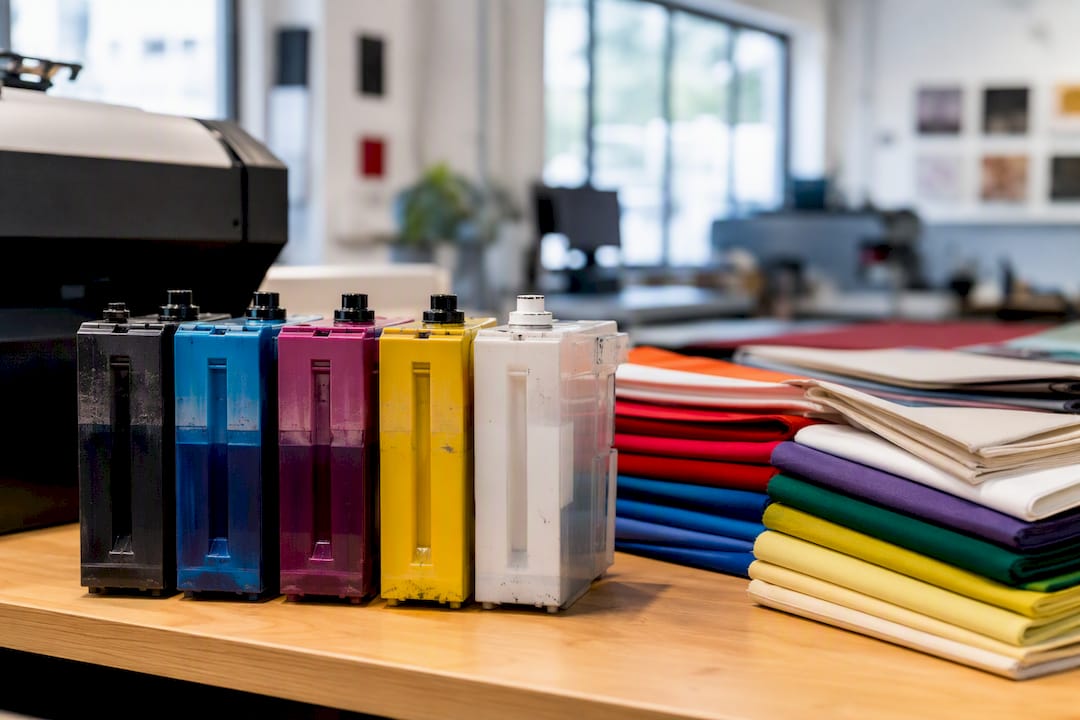
Ink is where most shops get surprised. White ink typically makes up the majority of ink cost per transfer because DTF printers lay down a white underbase before any color goes on top, and white cartridges are consumed far faster than CMYK. A design with heavy white coverage, think sports jerseys or dark-garment prints with light lettering, will always cost more than a colorful design of the same size with minimal white.
Film pricing depends heavily on whether you buy pre-cut sheets or roll-fed PET film. Pre-cut sheets are easier to price (you know the cost per sheet upfront), but roll-fed film usually works out cheaper per square inch once you’re running volume. To compare the two fairly, convert everything to cost per square inch: take the roll price, divide by total usable square inches, and you get an apples-to-apples number against a pre-cut sheet’s per-unit price.
Adhesive powder gets priced two ways in the industry: per bag or per kilogram. A shaker system that reclaims unused powder stretches a bag much further than manual sifting, which matters because powder waste is one of the easiest costs to control and one of the most commonly ignored. Castle Ink’s breakdown puts typical consumable cost per standard sheet at roughly $1 to $3, depending on coverage, and powder is a meaningful slice of that.
Small line items compound faster than shop owners expect:
- Cleaning fluid and printhead maintenance kits
- Electricity per sheet run through the curing oven
- A waste or reprint allowance (most calculators build in 5 to 10 percent)
A comprehensive cost calculator explicitly requires all of these inputs, film, ink, powder, labor, electricity, garment cost, and waste, because leaving any one out consistently undercounts what a print actually costs to produce. Skip the waste line and your pricing looks great on paper until a batch of misaligned prints eats your margin for the week.
If jargon like “cold-peel” or “hot-peel” film is slowing you down while you shop for supplies, it’s worth reviewing DTF printing terminology before you start comparing supplier quotes.
How Much Does DTF Printing Cost Per Shirt? Three Worked Examples
Numbers mean more when you can see the math. Here are three example jobs, small, medium, and large, run through the same formula: film plus ink plus powder plus electricity plus labor plus overhead plus a waste allowance, divided by transfers per sheet.
That sheet cost of roughly $128 sits right in the middle of the $118 to $138 range DTFGSA reports for a standard 22"×36" gang sheet, depending on whether the shop runs an AI-optimized nesting workflow or lays sheets out manually. Notice how the per-transfer cost swings from $5.33 to nearly $43 purely based on how many designs fit on the same sheet, not because any single input got more expensive.
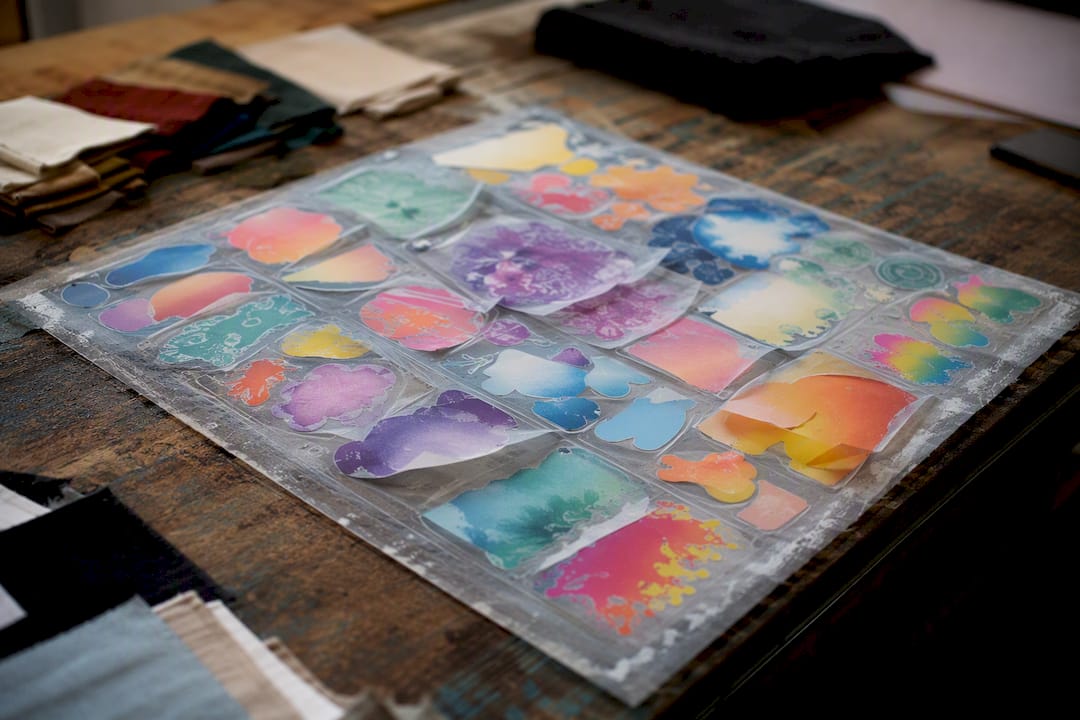
Pro Tip: Before you touch ink cost or film brand, check how many transfers you’re actually fitting per sheet. Going from 8 to 12 transfers per sheet on a medium job can cut your per-transfer cost by a third, faster than switching to a cheaper film supplier ever will.
For a quick materials-only sanity check, SilhouetteU’s example shows a 12"×12" design at 60% coverage running about $0.70 in raw materials, then jumping considerably once you add four minutes of press labor at $20 an hour. That gap between raw materials and fully-loaded cost is exactly why so many shops underprice their first few orders.
Gang Sheet Economics: Why Nesting Changes Your Per-Transfer Cost
A 22"×36" gang sheet is a fixed cost until you decide how many transfers go on it. That single decision does more to your per-transfer number than any supplier switch.
Run the math on one sheet priced around a typical industry range:
- With fewer transfers per sheet, you pay considerably more per transfer, which is expected for large, high-coverage designs.
- Medium transfer counts reduce the per-transfer cost to a reasonable level often suitable for mixed small-business orders.
- Higher transfer counts bring costs down substantially, achievable with small logos and tight nesting.
Nesting efficiency is the variable most shops leave on the table. Irregular shapes, wide safety margins, and manual layout all waste usable sheet area. Software and AI-assisted nesting tools tighten those margins and cut the labor time spent arranging designs, and DTFGSA’s own workflow comparison found AI-assisted layouts running roughly $15 to $20 cheaper per sheet than manual layout, almost entirely from labor savings rather than materials.
If you’re regularly building mixed orders, a few practical moves help: group similar-sized designs together to minimize wasted margin, rotate irregular shapes to interlock rather than stack in a grid, and batch smaller reorders onto a shared sheet instead of running a half-empty one. A gang sheet sizing guide walks through layout strategy in more detail if you’re building sheets by hand rather than through an automated builder.
Should You Buy a DTF Printer or Outsource? Setup Costs Explained
Entry-level DTF printer bundles start in the low thousands, while production-grade systems with dedicated dryers and shakers can run past $15,000 to $20,000. That gap alone should tell you the buy-versus-outsource decision depends entirely on your volume, not your ambition.
Run a simple payback estimate before committing capital:
- Entry setup around $3,000 (printer, curing station, basic shaker) at $4 profit per shirt needs 750 shirts sold to break even, roughly 15 weeks at 50 shirts a week.
- Mid-tier setup around $10,000 at $6 profit per shirt needs about 1,667 shirts, closer to 33 weeks at the same volume.
- Production setup near $18,000 demands sustained volume above 100 shirts a week to pay back inside a year.
A rough decision rule: if you’re consistently printing fewer than 40 to 50 shirts a week, outsourcing almost always beats owning, because idle equipment, ink shelf life, and maintenance eat into any theoretical savings. Cross that volume threshold consistently for two or three months running and the math starts favoring ownership. If DTF’s durability profile matters to your decision, it’s worth comparing DTF’s wash performance and setup cost advantages against other decoration methods before you buy anything.
What Should You Charge for a DTF Print? Markup and Quoting Guide
Once you know your true per-transfer cost, pricing becomes a matter of picking a multiplier and sticking to it. Industry norms suggest a retail markup of 2.5× to 4× your full per-transfer cost, while wholesale or bulk-account pricing typically runs 1.3× to 2×, thinner margin, but volume makes up for it.
- Retail single item: $5.33 per-transfer cost × 3× markup = $16 charged to the customer, plus your blank and press labor.
- Wholesale bulk order: same $5.33 cost × 1.5× markup = $8 per transfer, appropriate for a 100-plus piece account order.
- Per-shirt vs. per-transfer quoting: charging per finished shirt (blank plus transfer plus labor) is clearer for retail customers; charging per transfer works better for shops that press their own blanks and just need printed film.
A sample quote breakdown for a customer asking “why does this cost $18?” might read: transfer cost $5.33, blank shirt $4.50, labor and pressing $2.50, overhead and packaging $1.67, markup to reach $18. Showing that breakdown builds trust fast.
Pro Tip: Never quote a customer your material cost alone. If you don’t fold in labor and overhead on every quote, you’ll be profitable on paper and broke by the third month.
Five Ways to Lower Your DTF Cost per Print
Ranked by real impact, not by what sounds impressive:
- Optimize your gang sheet nesting first. It’s the single biggest lever, cutting per-transfer cost by 30 to 50 percent between loose and tight layouts.
- Switch to roll-fed PET film once your volume justifies it. Roll pricing per square inch consistently beats pre-cut sheets at scale.
- Automate powder application with a shaker system to cut waste and speed up production per sheet.
- Stay ahead of printhead maintenance. A clogged head that ruins a sheet costs more than the cleaning kit that would have prevented it.
- Buy consumables in bulk from a domestic supplier when storage and cash flow allow, watching shipping costs against minimum order quantities.
U.S.-based suppliers cut shipping time but sometimes carry higher minimum order requirements than importers. Weigh that trade-off against your storage space and how much cash you can tie up in inventory sitting on a shelf.
Pro Tip: Before your first trial run, confirm your ink levels, test one gang sheet for nesting waste, and calculate your break-even per shirt. Skipping this step is the most common reason first-month margins disappoint.
For a longer list of shop-tested tactics, the cost-saving tips guide covers workflow adjustments beyond what fits here.
A Straight Take on Where DTF Costs Actually Surprise Shops
The surprise isn’t usually the ink or the film. It’s labor creep. Shops that carefully price consumables often forget that pressing, weeding excess film, and quality-checking each transfer eats real minutes, and minutes cost money at scale. A sample run of 50 mixed-size transfers on a single gang sheet regularly turns up 3 to 5 misprints from nesting errors or peel issues, and that waste percentage rarely gets built into a first pricing pass.
Ordering pre-built gang sheets from a no-minimum supplier lets you test pricing and quality without the equipment risk, which matters most before you know your real volume. Run one trial sheet, track every cost against your actual invoice, then decide whether ownership makes sense.
— Anthony
Try Print Point Before You Buy a Single Piece of Equipment
Buying a production DTF printer for $18,000 makes sense once your volume is proven. It’s a bad bet while you’re still testing designs, markets, or pricing. Transferkingz built Print Point as the direct alternative: order transfers or full gang sheets with no minimum quantity, and get predictable per-transfer pricing without touching a curing oven or a shaker system.
Print Point makes the most sense when your weekly volume sits below that 40 to 50 shirt breakeven threshold this article walked through, or when you’re running a design you haven’t validated yet and don’t want $3,000 in idle hardware if it flops. Once you’re consistently pressing past that volume with proven designs, the ownership math starts to flip in your favor.
Start with a small sample gang sheet through Print Point, compare the delivered per-transfer cost against the worked examples above, and use that real number to build your own pricing before you commit to any equipment purchase.
Calculators and Guides to Run Your Own Numbers
Verify every figure in this article against your own supplier pricing using these resources:
- ColDesi’s DTF cost and ROI calculator builds a full per-shirt cost from film, ink, powder, labor, and overhead inputs.
- DTFGSA’s pricing calculator breaks down gang sheet totals and suggested markup ranges.
- SilhouetteU’s cost calculator offers a simple materials-plus-labor example for single designs.
- Essential DTF supplies overview compares consumable and supply options for U.S. shops.
- Transferkingz’s gang sheet sizing guide and cost-saving tips map directly to the nesting and workflow sections above.
Sources
- DTF Print Cost & ROI Calculator (Free) - ColDesi
- DTF Transfer Pricing: The Real Per-Transfer Cost (Plus a Calculator) | DTFGSA
- Free DTF Cost & Pricing Calculator | SilhouetteU
- How Much Does a DTF Printer Really Cost? Ink, Film & Powder Cost Breakdown - Castle Ink
0 comments