

TL;DR:
- Direct-to-film printing offers small brands flexibility and high-quality results without minimum orders in 2026. It enables diverse fabric use, detailed designs, and quick turnaround for effective brand building. Transferkingz provides reliable support and fast US shipping to help brands create limited editions and maintain consistent quality.
Direct-to-film (DTF) printing has become one of the most practical tools small clothing businesses and independent designers can use to build a recognizable brand in 2026. Unlike screen printing, DTF requires no screens, no minimums, and no pretreatment, so you can produce a single custom hoodie or a run of 200 tote bags with the same setup. The prints are vibrant, hold fine detail, and survive wash after wash without cracking or fading. For a small brand trying to stand out, that combination of flexibility and quality is hard to beat.
Core benefits of using DTF printing for brand building:
- No minimum order quantities, so you can test designs before committing
- Prints on cotton, polyester, blends, and specialty fabrics
- Reproduces gradients, fine lines, and multicolor artwork accurately
- Fast turnaround supports product drops and seasonal launches
- Lower per-unit cost than screen printing for short runs
- Transferkingz offers premium inks, films, and no-minimum ordering with fast US shipping
How to build a brand with DTF printing: core strategies
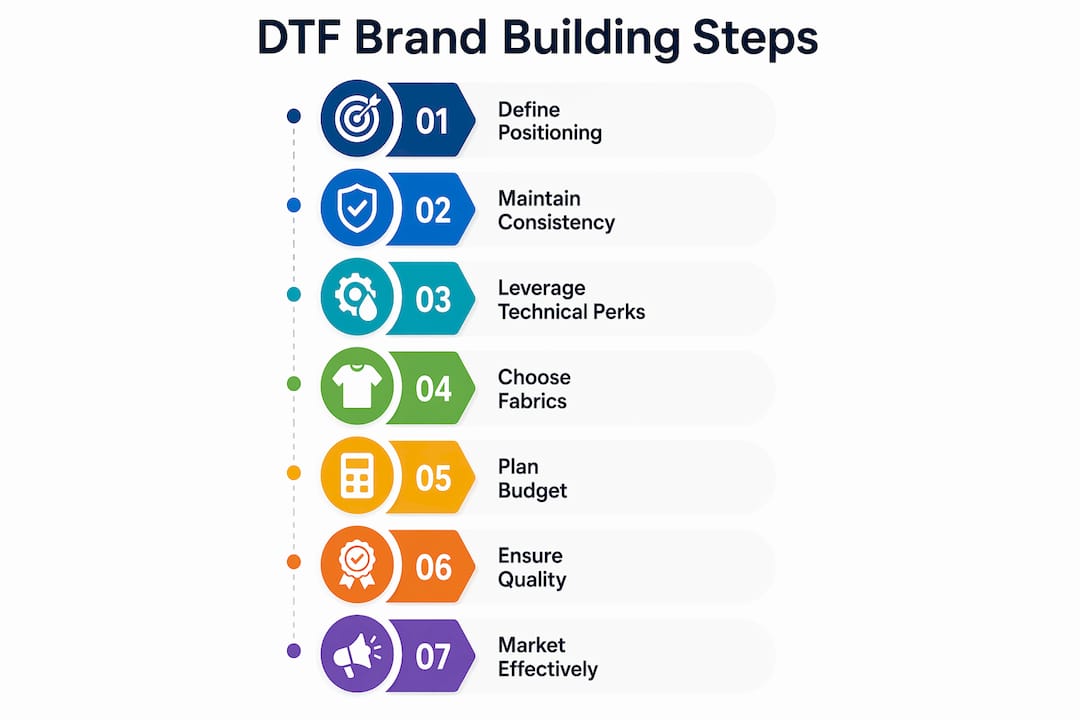
Clear brand positioning defines who you sell to and why they should choose you over every other apparel option. Before you design a single transfer, nail down your niche: athletic streetwear, cottagecore accessories, local pride gear, or whatever specific corner of the market you want to own. A focused identity makes every design decision easier and your marketing more effective.
Visual consistency is what turns a purchase into brand recognition. Your color palette, typography, and graphic style should appear across every product, your packaging, and your social media. DTF lets you reproduce that visual identity precisely, whether it’s a three-color logo on a black tee or a full-chest illustrated print on a natural canvas tote.
Pro Tip: Start with a signature mini collection of three to five pieces. A tight launch lets you control quality, gather real customer feedback, and refine your aesthetic before scaling.
Key brand-building strategies using DTF:
- Define a specific niche and customer persona before designing
- Build a consistent color palette and graphic style across all products
- Use brand storytelling in product descriptions, hang tags, and social captions
- Add custom neck labels and printed care tags to elevate perceived quality
- Keep messaging tone consistent across every customer touchpoint
- Test new designs with small runs before ordering larger quantities
Technical advantages of DTF transfers that benefit small brands
DTF printing works on cotton, polyester, nylon, and blended fabrics, which means one production method covers your entire product catalog. You are not locked into a single fabric type the way DTG printing limits you to cotton-heavy materials. That fabric versatility opens up product lines like performance wear, canvas bags, and nylon caps that other methods handle poorly.
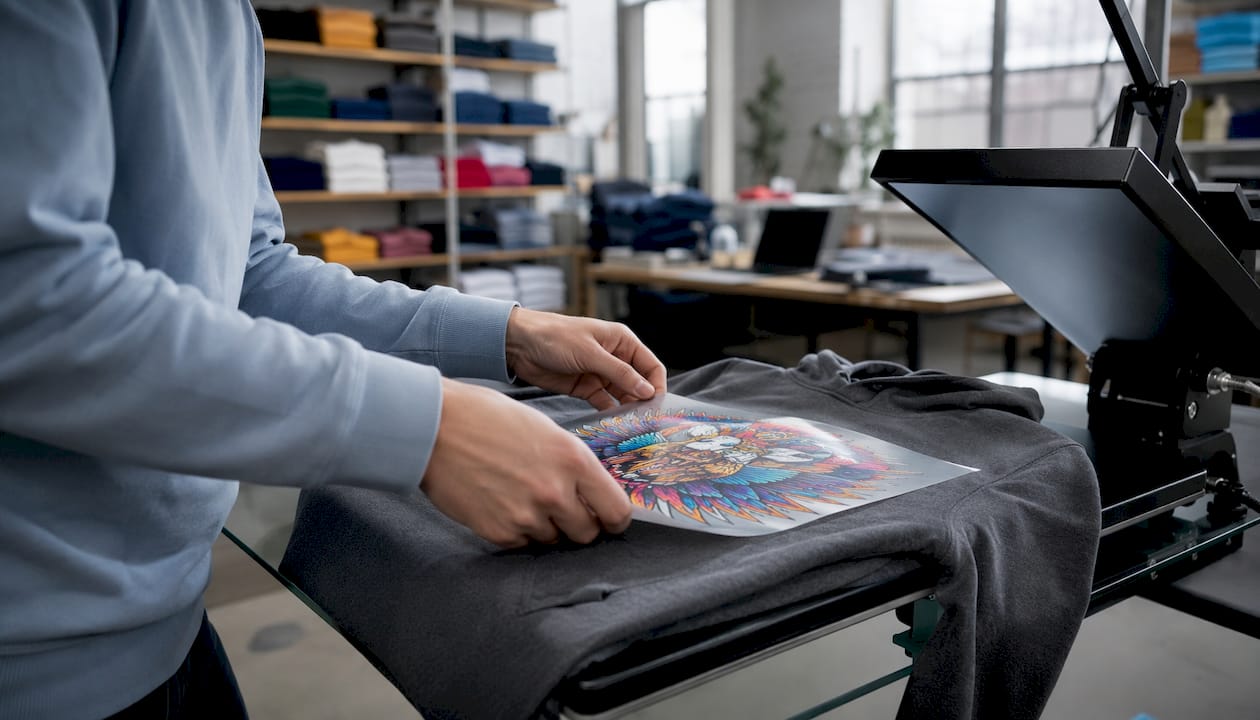
The prints themselves capture fine detail that screen printing struggles with, including gradients, photographic textures, and small text. There are no color separation costs and no screen fees, so a 12-color design costs the same to set up as a two-color one. Transferkingz uses premium inks and films that produce consistent color output, which matters when you are trying to match a brand palette across different garment colors.
Durability is another real advantage. DTF transfers adhere firmly to fabric fibers and resist cracking and fading through repeated washing, so customers keep wearing your branded pieces longer.
What fabrics can you print on with DTF transfers?
DTF transfers work on cotton, polyester, and blends, as well as performance fabrics and specialty textiles that other printing methods often reject. That range lets a small brand offer a genuinely diverse product lineup without switching suppliers or processes.
A few practical considerations by fabric type:
- 100% cotton: The most forgiving surface; produces rich, saturated color
- Polyester and performance fabrics: DTF adheres well where DTG fails; test heat settings to avoid scorching
- Cotton/poly blends: Reliable results; popular for hoodies and fleece
- Canvas and nylon (bags, caps): Works cleanly with proper heat press pressure
- Dark fabrics: DTF uses a white ink underbase, so designs stay vivid on black or navy garments
Product applications include t-shirts, hoodies, sweatpants, caps, tote bags, aprons, and patches. The wider your fabric range, the more gifting and lifestyle categories your brand can enter.
Why limited edition drops work so well with DTF production
No minimum orders are the single biggest structural advantage DTF gives small brands for product drops. You can announce a limited run of 30 pieces, print exactly that quantity, and sell out without holding dead inventory. Scarcity drives demand, and DTF makes scarcity genuinely easy to execute.
Small batch manufacturing builds exclusivity and audience engagement in ways that large production runs cannot replicate. A sold-out drop signals to your audience that your brand has real demand. That social proof compounds over time.
Steps for planning a small batch DTF drop:
- Choose a release date and set a firm quantity cap (30–100 units works well for early drops)
- Design the transfer artwork and order samples from Transferkingz first
- Photograph the samples on real models before the drop goes live
- Announce the drop date on Instagram and TikTok at least one week in advance
- Use a countdown timer on your product page to reinforce scarcity
- Ship within the promised window to protect your brand reputation
Why Transferkingz is a trusted partner for DTF brand building
Transferkingz is built specifically for the kind of production small apparel brands actually need: no minimums, fast US-based shipping, and premium inks and films that deliver consistent color across every order. You can upload artwork, use the gang sheet builder to maximize film usage, and receive ready-to-press transfers without managing any printing equipment yourself.
The educational resources on the Transferkingz site, including application guides and FAQs, mean you are not guessing at heat press settings or troubleshooting adhesion issues on your own. That support layer matters when you are building a brand and cannot afford to waste product on failed transfers.
Pro Tip: Use Transferkingz’s gang sheet builder to fit multiple designs on a single sheet. It cuts your per-print cost significantly on mixed small runs.
Key advantages of working with Transferkingz:
- No minimum order: order one transfer or one thousand
- Gang sheet builder reduces waste and cost on multi-design orders
- Premium inks produce vibrant, wash-resistant color
- Fast US shipping supports tight production timelines
- Application guides and FAQs reduce errors for new brands
- Supports both B2B wholesale and individual designer orders
How to budget for DTF printing in your brand
DTF is genuinely cost-effective for short runs compared to screen printing, which charges setup fees per color and per screen. For runs under roughly 50 pieces, DTF almost always wins on total cost. Above that threshold, screen printing can become competitive for simple designs, but DTF still wins on design complexity and flexibility.
Budget for three cost categories: transfers, blanks, and finishing. Transfers from Transferkingz scale with sheet size and quantity. Blank garments are your largest variable cost; 100% cotton tees in the 200–240g weight range are the most popular starting point. Finishing costs include hang tags, poly mailers, and any custom neck labels you add for brand polish.
Keep a simple spreadsheet tracking cost per unit at different order sizes. Knowing your break-even point before you price a product prevents the underpricing trap that kills many small apparel brands early.
How to maintain print quality and protect your brand reputation
Consistent print quality is what separates a brand from a side project. A single batch of cracked or faded transfers can generate negative reviews that follow your brand for months. Test every new design on a sample garment before fulfilling customer orders, and wash the sample at least twice before approving the run.
Check heat press temperature and pressure settings against Transferkingz’s application guidelines for each fabric type. Cotton and polyester require different settings, and even small deviations affect adhesion. Keep a log of settings that work for each garment style in your lineup so results stay consistent across batches.
How to find reliable DTF printing suppliers in the US
Working with a US-based supplier cuts shipping time dramatically compared to overseas alternatives, which matters when you are running time-sensitive drops. Transferkingz ships from within the US, so turnaround from order to delivery is fast enough to support weekly or biweekly product releases.
When evaluating any DTF supplier, check for consistent color output across repeat orders, clear application instructions, and responsive customer support. Order a sample run before committing to a large batch. A supplier that handles small orders well will handle larger ones the same way.
Marketing and distribution tactics for DTF merchandise
Instagram and TikTok are the two most effective channels for small apparel brands right now. Behind-the-scenes content showing the heat press process, design reveals, and packaging videos consistently outperform static product photos. For t-shirt design inspiration and brand storytelling ideas, pairing your DTF production content with design process videos builds both credibility and audience.
Etsy works well for original-design brands targeting gift buyers. Shopify gives you full control over customer data and margins. Pop-up markets and local events let customers touch the product, which converts skeptics into buyers faster than any online ad. Use all three channels at different stages of growth.
Sustainability considerations for DTF brand production
DTF printing uses water-based inks and produces no wastewater from screen washing, which gives it a cleaner environmental profile than traditional screen printing. Because you print only what you sell, there is no overproduction waste, which is one of the apparel industry’s biggest sustainability problems.
Choosing blanks from suppliers with ethical manufacturing certifications (such as GOTS for organic cotton or Fair Trade) adds another layer of credibility for customers who care about sourcing. Packaging choices matter too: recycled poly mailers and kraft paper hang tags signal that your brand’s values extend beyond the print.
Key Takeaways
DTF printing gives small apparel brands the production flexibility, print quality, and cost structure to build a recognizable brand without large upfront investment.
| Point | Details |
|---|---|
| No minimums enable testing | Order single samples or small runs to test designs before scaling. |
| Fabric versatility expands your catalog | DTF works on cotton, polyester, blends, nylon, and canvas. |
| Limited drops build demand | Small batch runs create scarcity that drives audience engagement and sell-outs. |
| Quality control protects reputation | Wash-test every new design on a sample before fulfilling customer orders. |
| Transferkingz supports small brands | Premium inks, gang sheet builder, and fast US shipping suit tight production timelines. |
Transferkingz makes it straightforward to put professional-quality DTF transfers in your hands fast, with no minimums and the detailed print capability your brand deserves. Whether you are launching your first collection or adding a new product line, start with a sample order and see the difference quality transfers make on your finished garments.
Recommended
- DTF printing guide for small fashion brands in 2026 – Transfer Kingz
- DTF Printing for Business Branding: How Custom DTF Transfers Boost Sma – Transfer Kingz
- DTF Printing for Business Branding: How Custom DTF Transfers Boost Sma – Transfer Kingz
- DTF Printing for Business Branding: How Custom DTF Transfers Boost Sma – Transfer Kingz
0 comments