

Most American apparel startups discover that print quality hinges on their choice of materials. In a fast-paced clothing market, vibrant colors and lasting designs set brands apart, especially for small labels competing on details and durability. Selecting high-grade films and inks for Direct to Film printing, and mastering the right production techniques, can mean fewer wasteful reprints and a stronger reputation. This guide uncovers practical strategies so independent designers and growing clothing brands can achieve sharper prints and improved efficiency with every order.
Table of Contents
- 1. Choose High-Quality Films and Inks for Vivid Results
- 2. Prepare Artwork Files for Optimal DTF Transfer Performance
- 3. Master Proper Powder Application for Durable Prints
- 4. Control Temperature and Pressure During Curing Process
- 5. Use Gang Sheets to Maximize Material and Cost Efficiency
- 6. Follow Correct Transfer Application Methods for Longevity
- 7. Maintain and Clean DTF Equipment for Consistent Output
Quick Summary
| Key Message | Explanation |
|---|---|
| 1. Use High-Quality Films and Inks | Invest in professional-grade films and inks to ensure vibrant colors, durable prints, and accurate color reproduction. |
| 2. Prepare Artwork Files Carefully | Ensure artwork meets required specifications like resolution and file format for optimal transfer results. |
| 3. Master Powder Application Technique | Apply powder consistently right after printing to create strong, durable transfers and minimize defects. |
| 4. Control Curing Temperature and Pressure | Maintain precise curing conditions to ensure ink adherence and longevity of the design on fabric. |
| 5. Implement Effective Gang Sheets | Strategic use of gang sheets consolidates designs, reducing material waste and improving printing efficiency. |
1. Choose High-Quality Films and Inks for Vivid Results
The quality of your Direct to Film (DTF) printing starts with selecting superior films and inks. Your final product’s vibrancy color accuracy and durability hinge critically on these fundamental materials.
When sourcing DTF supplies apparel brands need to prioritize professional grade materials that deliver consistent performance. Not all films and inks are created equal. Professional transfer films provide superior ink absorption heat transfer properties and overall print clarity. High end inks ensure your designs maintain sharp details brilliant colors and wash resistance.
Color reproduction demands precision. DTF transfer material selection impacts how accurately your original artwork translates onto fabric. Lower quality materials can result in color shifting faded prints or uneven ink distribution.
Apparel brands should look for specific characteristics when choosing DTF supplies:
Key Film Selection Criteria:
- Consistent thickness
- Smooth surface texture
- Optimal ink absorption rate
- Compatible with multiple fabric types
Critical Ink Characteristics:
- Pigment density
- Color gamut range
- UV resistance
- Elasticity after transfer
Research consistently demonstrates that investing in premium DTF materials reduces long term production costs by minimizing reprints and maintaining higher quality standards. Cheaper alternatives might seem financially attractive initially but often lead to subpar results that damage brand reputation.
Pro tip: Always request sample prints and conduct wash tests before committing to large production runs to validate ink and film performance.
2. Prepare Artwork Files for Optimal DTF Transfer Performance
Successful Direct to Film (DTF) printing starts with meticulously prepared artwork files. Your digital design serves as the critical foundation for achieving stunning transfer results.
Artwork preparation involves strategic technical considerations that directly impact print quality and final product appearance. Professional designers understand that DTF transfers require specific file specifications to ensure crisp image reproduction and color accuracy.
Key Digital File Requirements:
- Minimum 300 dpi resolution
- Transparent PNG format preferred
- Vectorized graphics when possible
- RGB color mode
- Clean high contrast edges
Color management plays a pivotal role in custom direct to film transfers. Professional designers recommend converting images to sRGB color profile to maintain consistent color representation across different printing environments.
Designers should eliminate unnecessary background elements and optimize image contrast. Complex designs require careful layer management and precise pixel level adjustments. Avoid low resolution graphics or heavily compressed image formats that can introduce artifacts or blurring during transfer.
Graphic complexity impacts transfer performance. Simple designs with clean lines and bold color separation typically produce superior results compared to intricate photorealistic images. Understanding these technical nuances helps apparel brands achieve professional looking printed products.
Pro tip: Always create a test print using your artwork file to validate image quality and color accuracy before committing to full production.
3. Master Proper Powder Application for Durable Prints
Powder application represents the critical bridge between printing and transferring your design onto fabric. DTF transfer suppliers understand that precise powder coating determines print durability and quality.
The powder application process is far more nuanced than simply sprinkling powder across wet ink. Uniform powder distribution creates a strong adhesive foundation that ensures your design bonds perfectly with fabric fibers. Uneven powder application can lead to patchy prints weak transfer points and premature design deterioration.
Essential Powder Application Steps:
- Apply powder immediately after printing
- Use consistent gentle motion
- Remove excess powder carefully
- Ensure complete ink coverage
- Maintain even powder layer thickness
Professional printers recommend using specialized powder shakers that distribute adhesive powder with mechanical precision. These tools help achieve a consistent micron thickness that traditional manual methods cannot match. The goal is creating a thin uniform layer that bonds ink without adding significant weight or texture to the final print.
Temperature and humidity significantly impact powder performance. Most high quality powders work best between 68 to 75 degrees Fahrenheit with moderate humidity levels. Apparel brands should establish a controlled environment for optimal powder application consistency.
Technical considerations extend beyond basic powder distribution. Understanding powder melting points adhesive composition and interaction with specific fabric types allows designers to fine tune their transfer process.
Pro tip: Invest in a digital powder applicator with adjustable settings to maintain consistent coverage and minimize material waste.
4. Control Temperature and Pressure During Curing Process
The curing stage represents the make or break moment for Direct to Film transfers where precise temperature and pressure transform your design from wet ink to a permanent fabric decoration. DTF transfer temperature control demands scientific precision and technical expertise.
Temperature and pressure work in tandem to activate adhesive powder create strong fabric bonding and prevent potential print defects. Professional apparel brands understand that inconsistent curing can result in transfer failure poor design durability or fabric damage.
Critical Curing Parameters:
- Optimal temperature range: 160 to 180 degrees Celsius
- Recommended pressing time: 15 to 25 seconds
- Consistent pressure application
- Even heat distribution
- Material specific adjustments
Modern heat presses offer digital controls allowing minute adjustments for different fabric compositions. Synthetic materials require lower temperatures compared to cotton blends. Designers must calibrate equipment to match specific fabric characteristics preventing scorching or incomplete adhesion.
Pressure plays an equally crucial role in transfer quality. Uneven pressure creates weak transfer points or design distortion. Professional grade heat presses feature adjustable pressure settings and silicone pad technologies to ensure uniform force distribution across the entire transfer surface.
Environmental factors like ambient humidity and altitude can subtly impact curing performance. Professionals recommend maintaining a consistent workshop environment with stable temperature and minimal humidity fluctuations to guarantee repeatable transfer quality.
Pro tip: Invest in a digital infrared thermometer to verify actual platen temperatures and validate your heat press calibration settings.
5. Use Gang Sheets to Maximize Material and Cost Efficiency
Gang sheets represent a strategic approach to DTF printing that transforms production economics by consolidating multiple designs onto a single film. DTF gang sheet optimization allows apparel brands to dramatically reduce material waste and increase printing efficiency.
The fundamental principle behind gang sheets involves intelligent design placement maximizing every square inch of printable film. By carefully arranging multiple graphics professional printers can significantly lower per transfer production costs and minimize material consumption.
Strategic Gang Sheet Considerations:
- Maximize usable film area
- Minimize design spacing
- Maintain consistent margin requirements
- Optimize design orientation
- Ensure uniform print quality
Advanced digital tools now provide automated gang sheet builders that calculate optimal layout configurations. These sophisticated platforms analyze design dimensions graphic complexity and print parameters to generate the most efficient sheet arrangement possible.
Production efficiency extends beyond simple material savings. Consolidated printing reduces overall machine runtime decreases setup time and supports batch processing workflows. Small to medium sized apparel brands can transform their economic model by implementing intelligent gang sheet strategies.
Effective gang sheet design requires understanding technical constraints. Designers must consider factors like minimum spacing requirements design bleed areas and potential cutting considerations to ensure seamless post print processing.
Pro tip: Invest in gang sheet software that provides real time material utilization percentage calculations to continuously optimize your printing workflow.
6. Follow Correct Transfer Application Methods for Longevity
Successful DTF transfer application requires precision technique that transforms a printed design into a durable fabric decoration. DTF transfer application techniques demand careful attention to multiple critical parameters.
The transfer application process is a delicate balance of temperature pressure and timing that determines the ultimate quality and durability of your printed design. Professional apparel brands understand that each fabric type requires nuanced application strategies to achieve optimal results.
Critical Transfer Application Parameters:
- Precise heat press temperature: 140 to 160 degrees Celsius
- Consistent dwell time: 10 to 20 seconds
- Medium to firm pressure application
- Fabric specific adjustment protocols
- Careful peeling technique selection
Transfer application methods vary depending on fabric composition. Cotton blends synthetic materials and performance wear each demand specific heat press configurations. Professional printers develop detailed matrices that outline exact temperature and pressure requirements for different textile types.
Peeling technique represents another crucial element of successful transfer application. Some films require hot peeling while others perform better with cold peeling methods. Understanding manufacturer specifications prevents potential design damage and ensures maximum print adhesion.
Technical precision extends beyond basic mechanical parameters. Factors like ambient humidity fabric moisture content and heat press calibration all contribute to transfer quality. Experienced designers develop a holistic understanding of these interconnected variables.
Pro tip: Create a detailed reference chart documenting optimal transfer settings for each fabric type in your production workflow to ensure consistent high quality results.
7. Maintain and Clean DTF Equipment for Consistent Output
Direct to Film printing equipment represents a significant investment that requires meticulous maintenance to preserve performance and print quality. DTF transfer supplies are only as good as the equipment used to process them.
Regular equipment maintenance prevents unexpected downtime reduces long term repair costs and ensures consistent high quality print output. Professional apparel brands treat their DTF printing systems like precision instruments demanding careful attention and systematic cleaning protocols.
Critical Maintenance Checklist:
- Daily printer head cleaning
- Weekly comprehensive system inspection
- Monthly lubrication of mechanical components
- Quarterly calibration of temperature and pressure settings
- Annual professional equipment servicing
Printer head maintenance represents the most critical aspect of DTF equipment care. Ink residue buildup can cause clogging reduced print quality and potentially permanent damage to expensive printing components. Professional printers recommend using manufacturer approved cleaning solutions and following precise cleaning sequences.
Environmental factors significantly impact equipment performance. Dust humidity and temperature fluctuations can degrade printer components. Establishing a controlled workshop environment with proper air filtration and stable temperature helps protect sensitive printing machinery.
Documentation plays a crucial role in systematic equipment maintenance. Creating detailed logs tracking cleaning procedures equipment performance and maintenance intervals helps identify potential issues before they become expensive problems.
Pro tip: Create a digital maintenance calendar with automated reminders for cleaning schedules and performance checks to ensure consistent equipment performance.
Below is a comprehensive table summarizing the key methods and considerations for successful Direct to Film (DTF) printing discussed in the article.
| Aspect | Key Recommendations | Benefits/Outcomes |
|---|---|---|
| Material Selection | Choose high-quality DTF films and inks with consistent thickness and UV resistance properties. | Ensures vibrant, durable, and precise color reproduction in prints. |
| Artwork Preparation | Create digital designs meeting technical standards such as high resolution (300 dpi) and transparent PNG format. | Enables accurate and sharp image reproduction on fabric. |
| Powder Application | Apply adhesive powder evenly and immediately after printing using consistent techniques. | Enhances adhesion quality and print longevity. |
| Curing Process | Maintain optimal heat press temperature (160-180°C) and uniform pressure during curing. | Prevents defects and ensures durable transfer results. |
| Gang Sheet Usage | Optimize gang sheet layouts to consolidate multiple designs, reducing material waste. | Reduces production cost and maximizes print efficiency. |
| Equipment Maintenance | Regularly clean and service DTF equipment, such as printer heads and mechanical parts. | Prolongs equipment lifespan and maintains consistent print quality. |
Elevate Your Apparel Brand with Expert DTF Printing Solutions
Struggling to master the essential practices for high-quality DTF printing? Whether it is selecting premium films and inks, perfecting powder application, or controlling temperature and pressure during curing, these challenges can make or break your finished products. Transfer Kingz specializes in providing professional grade DTF transfers designed to help apparel brands achieve vibrant, durable, and consistent prints every time. Explore our collection of DTF transfers, custom apparel printing, heat transfers, and t-shirt printing tailored for businesses striving for excellence.
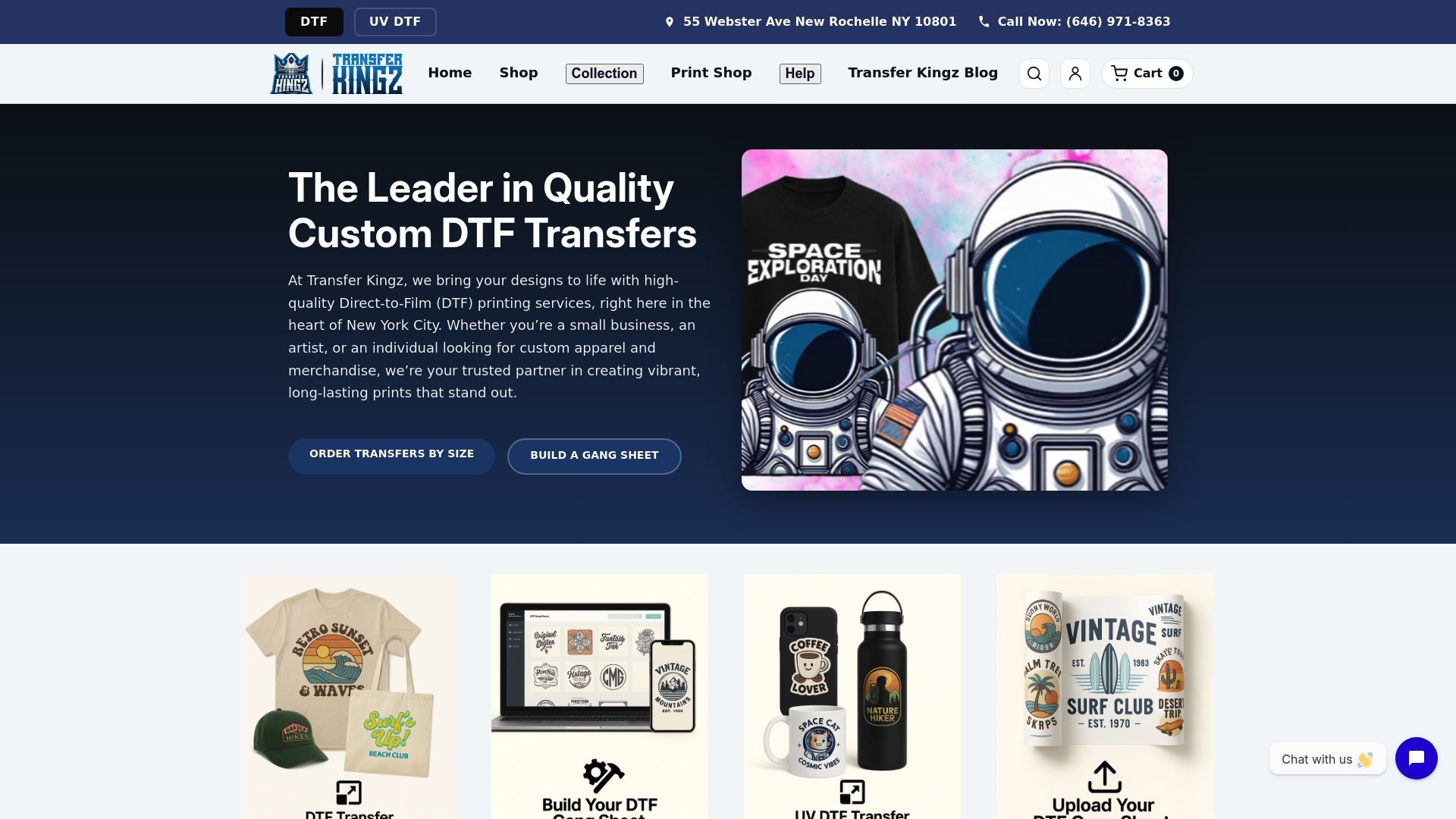
Don’t let production hurdles hold you back. With Transfer Kingz, you gain access to premium materials, advanced gang sheet capabilities, and clear application guidelines that simplify complex processes and reduce costly errors. Start creating stunning custom apparel by visiting our homepage and browsing our full range of DTF printing supplies today. Take control of quality and efficiency now—unlock your brand’s full potential with Transfer Kingz.
Frequently Asked Questions
What materials should I choose for high-quality DTF printing?
Selecting high-quality films and inks is crucial for vibrant results in DTF printing. Prioritize professional-grade materials that ensure precise ink absorption and color accuracy. Always test different materials before large production runs to validate their performance.
How can I prepare artwork files for optimal DTF transfer quality?
To achieve the best transfer results, ensure your artwork files meet specific requirements, such as a minimum resolution of 300 dpi and being in transparent PNG format. Consider vectorizing graphics and using the RGB color mode for accurate color representation. Conduct a test print to check for image clarity and color fidelity before full production.
What steps are involved in proper powder application for DTF prints?
Effective powder application involves applying adhesive powder immediately after printing and ensuring an even layer across the design. Use a gentle motion and remove any excess powder carefully. For best results, maintain a controlled environment with consistent temperature and humidity levels during this process.
What are the key parameters for curing DTF transfers?
Proper curing of DTF transfers requires maintaining a temperature range between 160 to 180 degrees Celsius and consistent pressure application for 15 to 25 seconds. Calibrate your heat press to match the specific fabric types to prevent fabric damage. Utilize a digital infrared thermometer to confirm accurate temperatures during the curing process.
How can I maximize material efficiency using gang sheets in DTF printing?
Using gang sheets allows you to consolidate multiple designs onto a single film, enhancing material efficiency. Carefully arrange your designs to minimize spacing and maximize the usable film area. Invest in gang sheet software to automate the layout and optimize material utilization.
What maintenance practices are essential for DTF printing equipment?
Regular maintenance is crucial for DTF printing equipment to ensure consistent output and reduce repair costs. Establish a maintenance checklist that includes daily printer head cleaning and monthly temperature and pressure calibration. Keep detailed logs of all maintenance activities to identify issues before they escalate.
Recommended
- DTF Printing for Business Branding: How Custom DTF Transfers Boost Sma – Transfer Kingz
- DTF Printing for Business Branding: How Custom DTF Transfers Boost Sma – Transfer Kingz
- DTF Printing for Business Branding: How Custom DTF Transfers Boost Sma – Transfer Kingz
- How dtf shirt transfers are Revolutionizing Custom Apparel – Transfer Kingz
- Why Choose High-Quality Printing for Lasting Impact – Custom T-Shirts and Printed Merch in Utah | Pulse Merch
0 comments