

Choosing the right printing method can feel daunting for any small clothing business or independent designer aiming for standout merchandise. Direct-to-Film printing offers a path to vivid, durable transfers, but its technical jargon often confuses newcomers. By breaking down and clearly explaining essential DTF terminology, you gain the practical knowledge needed to confidently produce high-quality apparel and avoid costly production mistakes in your designs.
Table of Contents
- Direct-to-Film Printing Glossary Essentials
- Key Types of DTF Transfers and Inks
- Core DTF Workflow and Equipment Terms
- Common Application Issues and Solutions
- Critical Safety and Material Considerations
Key Takeaways
| Point | Details |
|---|---|
| Understanding DTF Terminology | Familiarizing yourself with DTF printing terms is essential for effective production and high-quality transfers. |
| Importance of Transfer Types | Select the appropriate transfer type based on fabric color and design complexity for optimal results. |
| Workflow Mastery | A systematic workflow is crucial for consistency and quality in DTF printing; ensure all equipment is properly calibrated. |
| Safety Protocols | Implement rigorous safety measures, including PPE and workspace controls, to ensure a safe printing environment. |
Direct-to-Film Printing Glossary Essentials
Direct-to-Film (DTF) printing represents a revolutionary digital textile decoration technique that enables small business owners and independent designers to produce vibrant, high-quality custom transfers. Understanding the fundamental terminology is crucial for mastering this advanced printing method. From specialized equipment to intricate printing processes, the DTF world contains numerous technical terms that can seem overwhelming at first glance.
To help demystify this printing approach, we’ve curated an essential glossary covering key components and processes. DTF terminology provides critical insights into how these sophisticated printing techniques actually work. Understanding these terms will empower you to make informed decisions about your custom merchandise production.
Here are the most critical DTF printing terms every designer and small business owner should know:
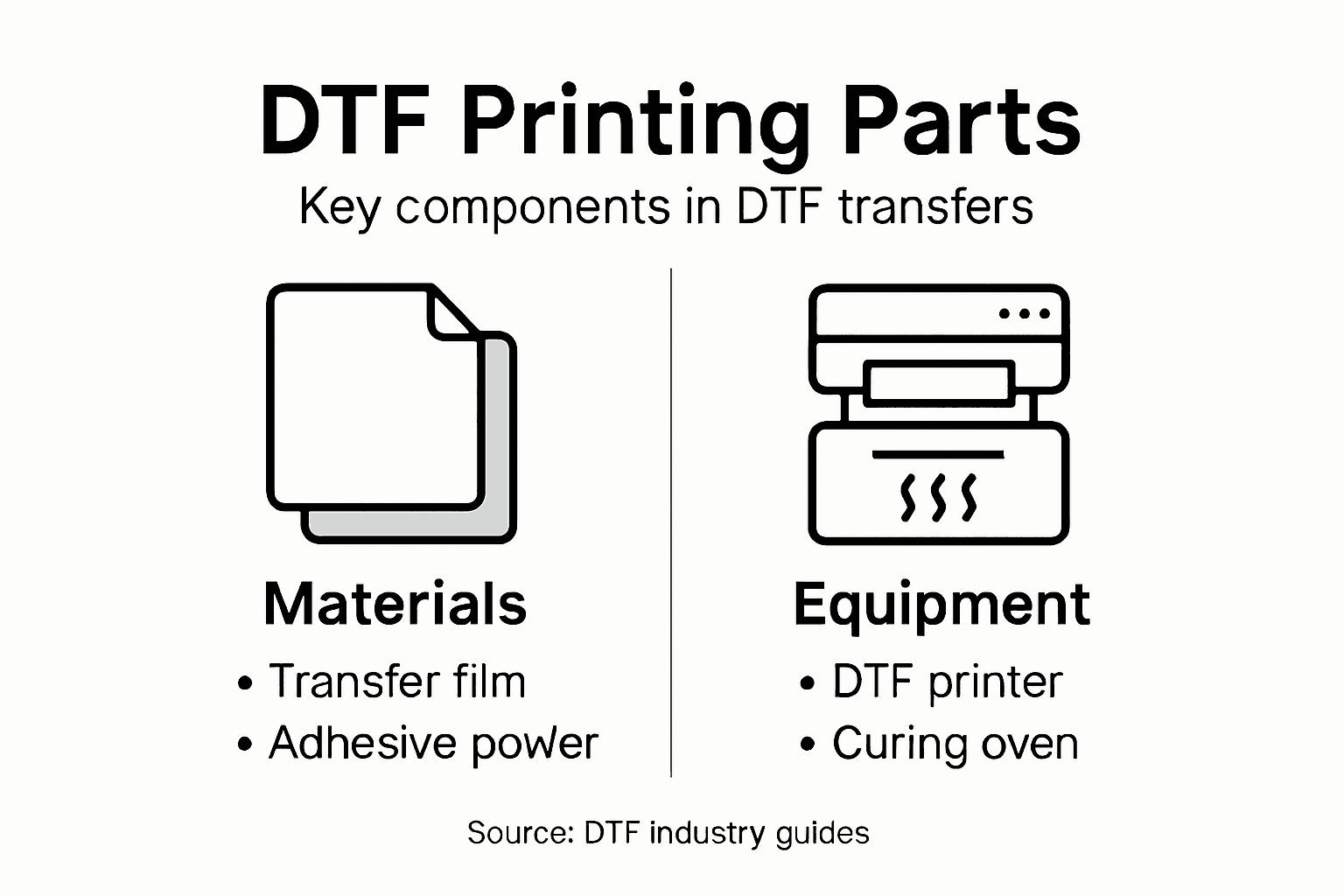
- Adhesive Powder: A specialized substance applied to transfers that enables secure bonding between the printed design and fabric surface
- CMYK Inks: Four-color printing system using Cyan, Magenta, Yellow, and Black to create comprehensive color ranges
- Cold Peel: A transfer method where the film is removed after the printed garment completely cools down
- Blocking Film: A protective layer used during the printing process to prevent ink bleeding or unwanted transfer
- Air Purging: A technical process of removing trapped air bubbles from printing equipment to ensure smooth, consistent transfers
Each of these components plays a crucial role in creating professional-grade DTF transfers. The precise interaction between adhesive powder, specialized inks, and transfer films determines the final print quality and durability.
Pro tip: Always test your DTF transfers on a small sample fabric before full production to ensure optimal color reproduction and adhesion.
Key Types of DTF Transfers and Inks
Direct-to-Film (DTF) printing relies on specialized transfer types and high-performance inks to create stunning custom apparel designs. Understanding the nuanced differences between various DTF transfer options can significantly impact your printing results and product quality.
The world of DTF transfers encompasses several critical categories that small business owners and designers should understand thoroughly. Each transfer type offers unique characteristics that influence design durability, color vibrancy, and overall print performance.
Here are the primary types of DTF transfers you’ll encounter:
- Standard White Transfer: Perfect for dark-colored fabrics, providing excellent color opacity
- Color Transfer: Ideal for light-colored fabrics with intricate, multicolor designs
- Metallic Transfer: Offers shimmer and special effects for premium merchandise
- Glitter Transfer: Creates eye-catching designs with sparkling texture
- Stretch Transfer: Designed for fabrics requiring maximum flexibility
When selecting DTF inks, consider these essential characteristics:
- Pigment Composition: Determines color intensity and longevity
- Adhesion Properties: Ensures strong bonding between ink and fabric
- Color Gamut: Defines the range of reproducible colors
- Wash Resistance: Impacts the transfer’s durability through multiple wash cycles
Successful DTF printing requires matching the right transfer type with appropriate ink systems. The interaction between transfer film, ink chemistry, and fabric substrate determines the final print quality.
Pro tip: Invest in high-quality ink and perform multiple test prints to understand how different transfer types perform with your specific design requirements.
Core DTF Workflow and Equipment Terms
Direct-to-Film (DTF) printing involves a complex workflow that requires specialized equipment and precise technical understanding. DTF printing processes demand carefully coordinated steps to ensure high-quality custom apparel transfers.
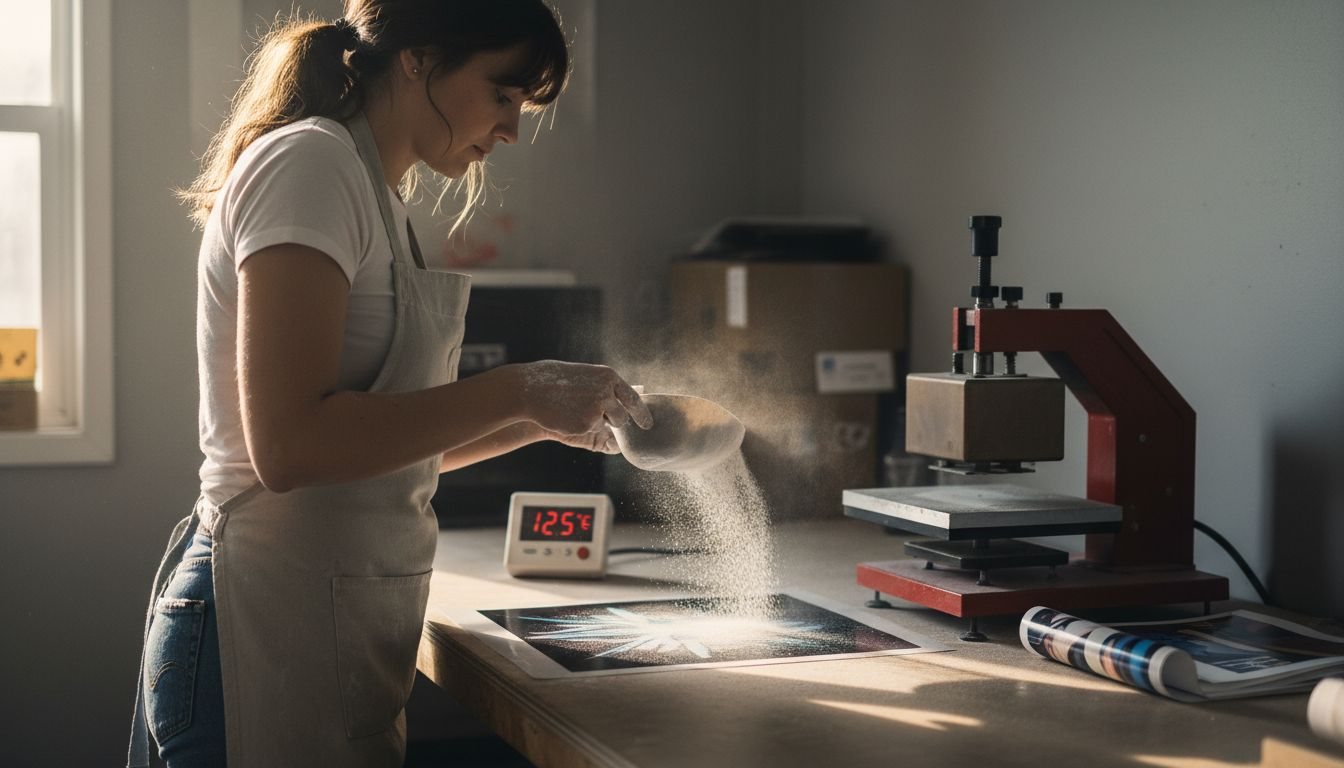
The core equipment and workflow components form the backbone of successful DTF printing. Professional operators must understand each stage and the corresponding machinery that enables seamless production.
Here are the critical equipment terms every DTF printer should know:
- DTF Printer: Specialized digital printer designed specifically for film-based transfer printing
- Powder Shaker: Automated machine that evenly distributes adhesive powder across printed transfers
- Heat Press: Essential equipment for applying transfers onto fabric surfaces
- Curing Oven: Device used to set and stabilize ink and adhesive after printing
- RIP Software: Specialized printing management software for color separation and print optimization
The DTF workflow typically follows these sequential stages:
- Digital Design Preparation
- Film Printing
- Powder Application
- Curing and Drying
- Heat Transfer
- Final Finishing
Each stage requires precise equipment calibration and operator skill to produce consistent, high-quality custom transfers. Understanding the intricate relationship between machinery, ink chemistry, and transfer materials is crucial for achieving professional results.
Pro tip: Regularly calibrate your DTF equipment and maintain a consistent maintenance schedule to ensure optimal print quality and machine longevity.
Common Application Issues and Solutions
DTF printing comes with numerous technical challenges that can impact transfer quality and production efficiency. Common DTF printing challenges require strategic troubleshooting and systematic problem-solving approaches.
Understanding these potential issues empowers small business owners and designers to maintain high-quality production standards. Proactive identification and resolution of printing problems can significantly reduce waste and improve overall transfer performance.
Here are the most frequent DTF printing application issues and their targeted solutions:
-
Ink Adhesion Problems:
- Check printer calibration
- Verify ink temperature
- Ensure proper powder coverage
- Test different adhesive powder quantities
-
White Ink Consistency Issues:
- Regularly shake white ink cartridges
- Clean print head frequently
- Monitor ink viscosity
- Use high-quality white ink formulations
-
Uneven Powder Application:
- Calibrate powder shaker
- Use anti-static devices
- Maintain consistent powder layer thickness
- Check powder distribution mechanisms
-
Transfer Film Handling Errors:
- Store film in controlled environment
- Avoid humidity and direct sunlight
- Handle film with clean, dry hands
- Use protective packaging
-
Curing and Heat Transfer Challenges:
- Maintain consistent temperature
- Use accurate heat press settings
- Monitor transfer time
- Adjust pressure according to fabric type
Detailed documentation of each printing issue can help identify recurring problems and develop targeted solutions. Systematic tracking enables continuous improvement of your DTF printing workflow.
Pro tip: Create a dedicated troubleshooting log to track print defects, identifying patterns that can help you refine your DTF printing process over time.
Critical Safety and Material Considerations
DTF printing involves complex chemical interactions and equipment processes that demand rigorous safety protocols. DTF printing safety guidelines are essential for protecting both workers and end-users throughout the production process.
Operators must understand the potential health risks associated with printing materials, equipment interactions, and workplace environmental conditions. Comprehensive safety measures help mitigate potential hazards and ensure long-term operational sustainability.
Key safety considerations for DTF printing include:
-
Personal Protective Equipment (PPE):
- Chemical-resistant gloves
- Safety goggles
- Respiratory masks with appropriate filtration
- Protective aprons or clothing
-
Workspace Environmental Controls:
- Adequate ventilation systems
- Temperature and humidity monitoring
- Dedicated printing area with restricted access
- Controlled dust and powder management
-
Material Safety Requirements:
- Request Safety Data Sheets (SDS) for all chemicals
- Store materials in sealed, labeled containers
- Keep incompatible materials separate
- Implement proper waste disposal protocols
-
Equipment Safety Protocols:
- Regular maintenance checks
- Electrical safety inspections
- Heat press safety guards
- Emergency shutdown procedures
-
Regulatory Compliance Considerations:
- Follow local occupational safety regulations
- Obtain necessary certifications
- Conduct periodic safety training
- Document workplace safety procedures
Successful DTF printing operations require a holistic approach to safety that integrates equipment, materials, and human factors. Continuous education and proactive risk management are fundamental to maintaining a safe working environment.
Pro tip: Create a comprehensive safety manual specific to your DTF printing workflow, detailing equipment-specific risks and mitigation strategies.
Master Your DTF Printing with Premium Transfers from Transfer Kingz
Understanding essential DTF printing terms like adhesive powder, curing oven, and powder shaker is just the first step to overcoming common challenges in producing vibrant, durable custom apparel. Many designers and small business owners face hurdles with ink adhesion, transfer film handling, or achieving consistent print quality. Transfer Kingz offers a trusted solution to these pain points by providing high-quality DTF transfers, custom apparel printing, heat transfers, t-shirt printing, high-quality prints. – Transfer Kingz that simplify your process and boost your product’s professional look and feel.
Take control of your printing success today by exploring our diverse catalog of premium transfers and printing supplies at Transfer Kingz. Whether you are a hobbyist or managing large production, our easy ordering, quick turnarounds, and expert support empower you to create flawless designs with confidence. Get started now to transform your ideas into high-impact custom apparel with industry-leading DTF solutions from Transfer Kingz.
Frequently Asked Questions
What is Direct-to-Film (DTF) printing?
DTF printing is a digital textile decoration method that uses specialized transfers to apply vibrant designs onto fabrics, enabling high-quality custom apparel production.
What are the benefits of using DTF printing?
DTF printing allows for vivid color reproduction, offers flexibility with different fabric types, and enables small businesses and designers to produce professional-grade custom transfers efficiently.
How does the DTF printing process work?
The DTF printing process includes digital design preparation, film printing, powder application, curing and drying, heat transfer, and final finishing, each requiring specific equipment and precision.
What should I do if I experience ink adhesion problems with DTF printing?
To resolve ink adhesion issues, verify printer calibration, check ink temperature, ensure proper powder coverage, and test different quantities of adhesive powder for optimal results.
0 comments