

TL;DR:
- DTF printing allows small brands to produce vibrant, durable designs without minimum order requirements.
- It offers low setup costs, quick turnaround times, and broad fabric compatibility, ideal for on-demand production.
- High-quality DTF prints maintain color and flexibility after many washes, enhancing brand reputation and customer loyalty.
Running a small clothing brand means constantly choosing between quality and cost. You want standout designs that hold up wash after wash, but screen printing minimums can eat your budget before you sell a single shirt. Direct-to-Film (DTF) printing is changing that equation fast. This guide breaks down exactly what DTF is, why it works so well for independent designers, and how you can start using it to produce vibrant, durable custom apparel without the overhead that used to be reserved for bigger operations.
Table of Contents
- What is DTF and how does it work?
- Why DTF suits emerging brands and independent designers
- Vibrancy and durability: What makes DTF stand out for fashion
- How to implement DTF in your brand’s workflow
- Why DTF is redefining success for small fashion brands
- Upgrade your apparel with custom DTF transfers
- Frequently asked questions
Key Takeaways
| Point | Details |
|---|---|
| DTF defined simply | DTF is a modern print method that uses film transfers for vibrant, easy custom apparel. |
| Game-changer for small brands | Low setup costs and no minimums help independents create short-run, high-impact designs affordably. |
| Outstanding print quality | DTF achieves bright colors and flexible durability on many fabrics, perfect for standout collections. |
| Easy to implement | Small brands can test and scale DTF with minimal risk using trusted print partners. |
What is DTF and how does it work?
If you’re new to what DTF printing is, here’s the short version: DTF stands for Direct-to-Film. Designs are printed onto a clear PET film using specialized inks, then coated with a hot-melt adhesive powder, cured with heat, and finally pressed onto fabric using a heat press. The result is a full-color, flexible transfer that bonds tightly to the material.
Understanding the DTF print workflow helps you set realistic expectations for your production timeline. Here’s how the process works from start to finish:
- Design preparation: Your artwork is set up in a compatible file format (PNG with transparent background is ideal) at 300 DPI or higher.
- Film printing: A DTF printer lays down CMYK inks plus a white underbase directly onto the transparent film.
- Powder adhesive application: Hot-melt adhesive powder is applied evenly over the wet ink while it’s still tacky.
- Curing: The coated film passes through a curing oven or under a heat source to bond the powder to the ink.
- Heat pressing: The finished transfer is placed on the garment and pressed at the correct temperature and pressure for 10 to 15 seconds.
- Peel and finish: Once cooled, the film peels away, leaving a clean, vibrant print on the fabric.
One of DTF’s biggest practical advantages is fabric compatibility. Unlike some methods that struggle with synthetic fibers, DTF adheres well to cotton, polyester, nylon, blends, and even performance fabrics. That flexibility matters when you’re designing across a full collection with different material choices.
As a strategic advantage in apparel manufacturing, DTF excels for small brands because it requires no minimums, carries low setup costs, and delivers quick turnaround for custom runs compared to screen printing, making it ideal for on-demand production.
Pro Tip: Always submit your artwork as a PNG file with a transparent background and a resolution of at least 300 DPI. Soft gradients and fine details reproduce better in DTF than in almost any other transfer method, so don’t simplify your design just to make it work.
Why DTF suits emerging brands and independent designers
Once you understand how DTF works, the business case becomes obvious. Traditional print methods were built for volume. Screen printing, for example, requires creating a separate screen for each color, which means setup costs can run $25 to $50 per color before a single shirt is printed. That model punishes small runs. DTF flips that dynamic entirely.
Here’s a quick comparison of the three most common methods for small brand owners:
| Feature | DTF | Screen printing | DTG |
|---|---|---|---|
| Minimum order | None | Often 12 to 24 units | None |
| Setup cost | Low | High (per color) | Low |
| Color range | Unlimited | Limited by screens | Unlimited |
| Fabric compatibility | Very broad | Cotton-heavy | Cotton-heavy |
| Turnaround speed | Fast | Slower | Moderate |
| Cost per unit (small run) | Low | High | Moderate |
For independent designers, the advantages stack up quickly. Lower setup than screen and DTG printing suits small runs, which means you can test a design on five shirts before committing to fifty. That’s a game-changer for managing cash flow.
Core benefits for small brands include:
- No minimum orders: Print one piece or a hundred without penalty.
- Lower upfront investment: No screens, no setup fees per color.
- Fast turnaround: Many providers ship transfers within 24 to 48 hours.
- Unlimited color options: Photorealistic art, gradients, and fine lines all print cleanly.
- Broad fabric compatibility: Works across your whole product line.
Imagine you’re preparing a pop-up collection with six different graphic tees, each in a limited run of 15 units. With DTF vs screen printing, the math is clear: DTF lets you produce all six designs without paying setup fees for each one, keeping your total production cost manageable.
DTF also pairs perfectly with lean inventory models. You can order transfers in advance, hold blank garments, and press on demand when orders come in. This approach, explored further in cost-effective merch production, reduces overstock risk significantly. With fashion trends and sustainability pushing brands toward smaller, smarter production runs, DTF fits the moment perfectly.
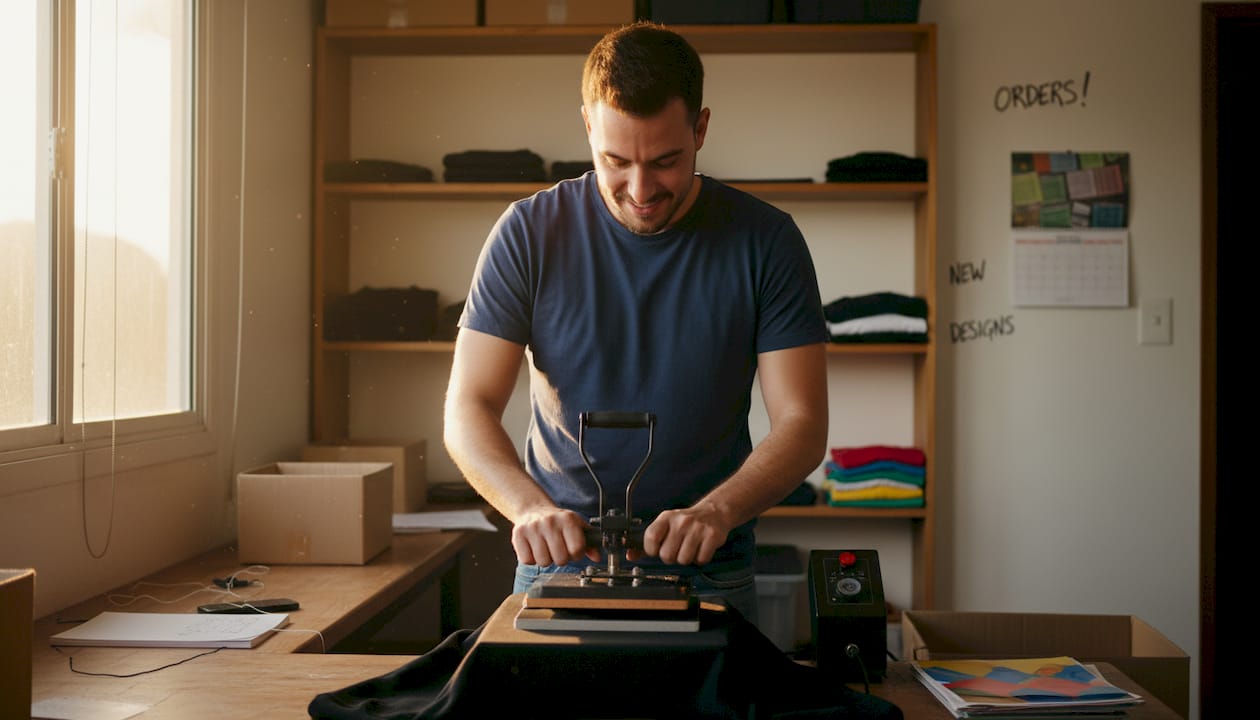
Pro Tip: Combine DTF transfers with a print-on-demand fulfillment model. Keep a stock of blank garments and a heat press, then apply transfers only when you receive an order. This keeps your working capital free and your inventory lean.
Vibrancy and durability: What makes DTF stand out for fashion
Quality is where DTF really earns its place in fashion. Customers judge a brand by how a shirt looks after 20 washes, not just on the day they buy it. DTF delivers on both counts.
Here’s how DTF holds up across wash cycles compared to alternatives:
| Wash cycles | DTF | Screen printing | Heat transfer vinyl |
|---|---|---|---|
| 15 cycles | No change | Minor fading | Slight edge lift |
| 30 cycles | Minimal fading | Moderate fading | Noticeable cracking |
| 50 cycles | Color intact, flexible | Significant fading | Heavy cracking |
The numbers tell a clear story. DTF prints stay flexible and color-rich well past the 50-wash mark when applied correctly. That kind of longevity builds the brand trust that keeps customers coming back.
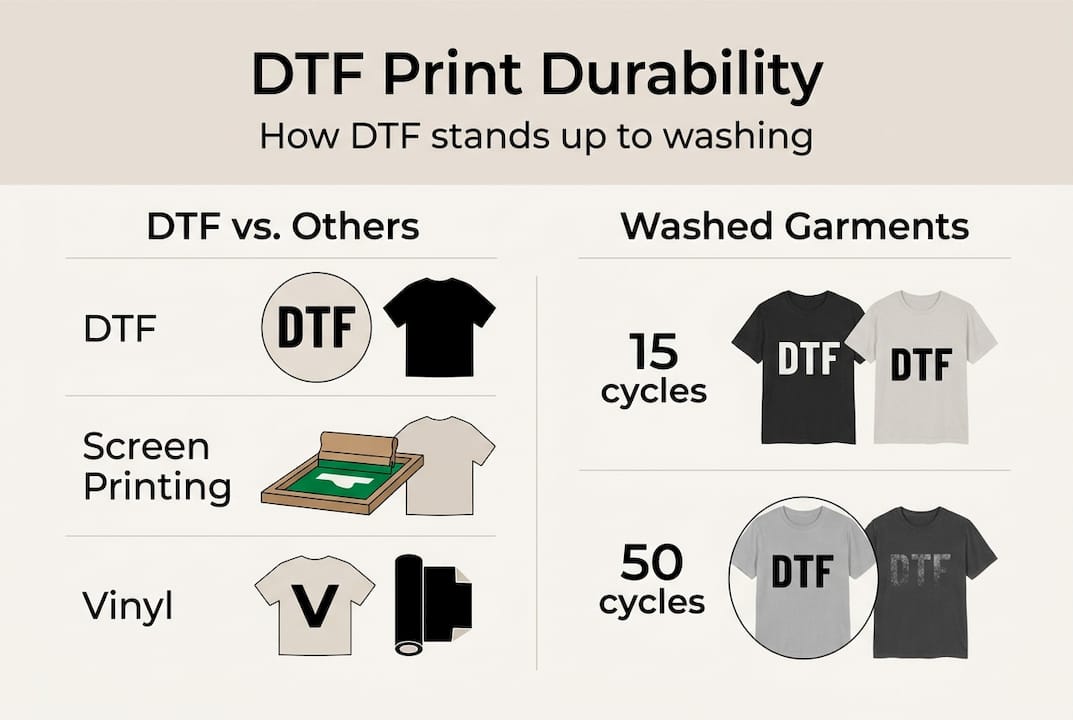
Vibrant, high-durability prints are one of DTF’s defining advantages over traditional methods, and that quality directly supports your brand’s reputation for premium apparel.
DTF is especially strong for these fashion use cases:
- Limited edition drops: Photorealistic artwork and complex gradients reproduce with stunning clarity.
- Gradient and ombre designs: DTF handles smooth color transitions that screen printing simply can’t replicate.
- Photorealistic prints: Detailed imagery, portraits, and fine-line illustrations all transfer cleanly.
- Mixed-fabric collections: One process works across your entire product range.
For DTF for business branding, durability isn’t just a quality metric, it’s a marketing tool. When a customer wears your shirt for two years and it still looks great, that’s free advertising every single time.
The DTF design process also gives you creative freedom that other methods restrict. You’re not limited by color counts or fabric type, which means your creative vision doesn’t have to be watered down to fit a production constraint.
“Durability is the silent salesperson for any apparel brand. When a customer’s shirt holds its color and shape after dozens of washes, they come back, and they bring friends.”
How to implement DTF in your brand’s workflow
Knowing DTF’s advantages is one thing. Building it into your actual production process is another. Here’s a practical path to get started without disrupting what’s already working.
- Assess your needs: Identify which designs and products would benefit most from DTF. Start with your highest-margin or most design-heavy pieces.
- Choose a print partner: Look for a provider with fast turnaround, transparent pricing, and no minimums. Check reviews and request samples before committing to a large order.
- Prepare your files correctly: Use PNG format with transparent backgrounds, 300 DPI minimum, and RGB color mode for the most accurate color output.
- Plan your placement options: Decide on chest, back, sleeve, or all-over placement before ordering. Placement affects transfer size and cost.
- Test with a small batch: Order transfers for 5 to 10 pieces first. Press them, wash them multiple times, and evaluate quality before scaling up.
- Scale based on results: Once you’re confident in the output, expand your DTF use to more designs and larger runs.
Common mistakes to avoid when you’re starting out:
- Submitting low-resolution artwork (under 300 DPI produces blurry prints)
- Using JPEG files with white backgrounds instead of transparent PNGs
- Skipping the wash test before launching a product
- Pressing at incorrect temperature or pressure, which affects adhesion
- Ordering large quantities before testing a new design
The ability to adapt to the needs of small brands with quick turnaround is one of DTF’s most underrated strengths. You can go from a design idea to a finished, sellable product in days, not weeks.
For a deeper look at how DTF supports long-term growth, DTF printing and business growth covers strategies for scaling your operation without sacrificing quality or margins.
Why DTF is redefining success for small fashion brands
Here’s the perspective that most guides won’t give you: DTF isn’t just a cheaper printing method. It’s a structural shift in who gets to compete at a high level in fashion.
For decades, high-quality custom apparel required volume. Volume required capital. Capital required either investors or years of slow growth. That barrier kept countless talented designers on the sidelines. DTF removes it. A designer with a great eye and a laptop can now produce a limited-edition drop that looks as polished as anything a major label puts out.
What’s more interesting is the creative freedom this unlocks. When you’re not locked into minimum orders, you can take risks. You can test a bold, niche design on 10 pieces, see how it sells, and scale only the winners. That’s how DTF’s role in small business branding becomes a genuine competitive advantage, not just a cost-saving measure.
The brands that win in 2026 won’t be the ones with the biggest budgets. They’ll be the ones that move fastest, test smartest, and deliver quality that builds real loyalty. DTF is the tool that makes all three possible at the same time.
Upgrade your apparel with custom DTF transfers
You’ve seen how DTF works, why it fits small brand economics, and what kind of quality it delivers. The next step is putting it into practice with a provider you can trust.
At Transfer Kingz, we specialize in high-quality DTF transfers with no minimums, fast turnaround, and premium inks that hold up wash after wash. Whether you’re based locally and need custom DTF printing in Dallas or you’re looking for custom transfers in Texas for your next collection, we make it easy to go from artwork to finished transfer quickly. Upload your design, choose your size, and get production-ready transfers delivered to your door.
Frequently asked questions
What does DTF mean in fashion printing?
DTF stands for Direct-to-Film printing, a process where designs are printed onto a film and then transferred to apparel using heat and pressure. It’s one of the most versatile and accessible printing methods available to small brands today.
Is DTF better than screen printing for small orders?
Yes. DTF suits small runs better than screen printing because it has lower setup costs, no minimums, and faster turnaround, making it the smarter choice for custom pieces and limited-edition drops.
How durable are DTF prints on clothing?
DTF offers enhanced durability for apparel, maintaining color and flexibility after 50 or more wash cycles when applied at the correct temperature and pressure.
Can DTF be used on any fabric type?
DTF is compatible with a wide range of fabrics, including cotton, polyester, nylon, blends, and performance wear, making it one of the most flexible options for multi-product collections.
Recommended
- DTF Printing Industry Trends: Boosting Apparel Brands – Transfer Kingz
- DTF printing drives small business growth in 2026 – Transfer Kingz
- DTF printing: cost-effective merch production for small brands – Transfer Kingz
- DTF Printing for Business Branding: How Custom DTF Transfers Boost Sma – Transfer Kingz
- High-End Fashion Trends 2026 60 Embrace Sustainability
0 comments