

Most American eco-conscious clothing brands face the challenge of balancing creative freedom with genuine sustainability as global demand for ethical fashion rises. The shift to sustainable Direct-to-Film (DTF) printing offers small business owners and independent designers new ways to make their apparel eco-friendly without sacrificing quality or style. With DTF technology, brands can sharply reduce waste and energy use while building a greener reputation that sets them apart in a competitive international marketplace.
Table of Contents
- Dtf Printing Sustainability Explained
- Eco-Friendly Inks And Materials
- Energy Consumption And Waste Reduction
- Comparing Dtf With Other Methods
- Common Pitfalls In Eco-Friendly Dtf
Key Takeaways
| Point | Details |
|---|---|
| Sustainable Production | DTF printing reduces waste and resource consumption compared to traditional methods, making it a more eco-friendly choice for small brands. |
| Eco-Friendly Materials | Utilizing eco-certified films and water-based inks minimizes environmental impact and appeals to conscious consumers. |
| Operational Efficiency | DTF technology streamlines production processes, allowing for smaller runs without excess waste and lower energy consumption. |
| Avoiding Greenwashing | Brands must ensure materials and practices genuinely enhance sustainability to avoid misleading environmental claims. |
DTF Printing Sustainability Explained
Direct-to-Film (DTF) printing is rapidly transforming the textile decoration landscape, offering small brands unprecedented opportunities to create sustainable and eco-conscious merchandise. Unlike traditional screen printing methods, DTF technology presents a more environmentally friendly approach to garment customization by significantly reducing waste and resource consumption.
The sustainability advantages of DTF printing stem from its unique production process. Traditional printing techniques often require multiple screens, extensive water usage, and substantial chemical treatments. In contrast, DTF transfer material suppliers have developed innovative solutions that minimize environmental impact. DTF printing uses precise ink application, reducing excess material waste and enabling smaller production runs with minimal setup requirements.
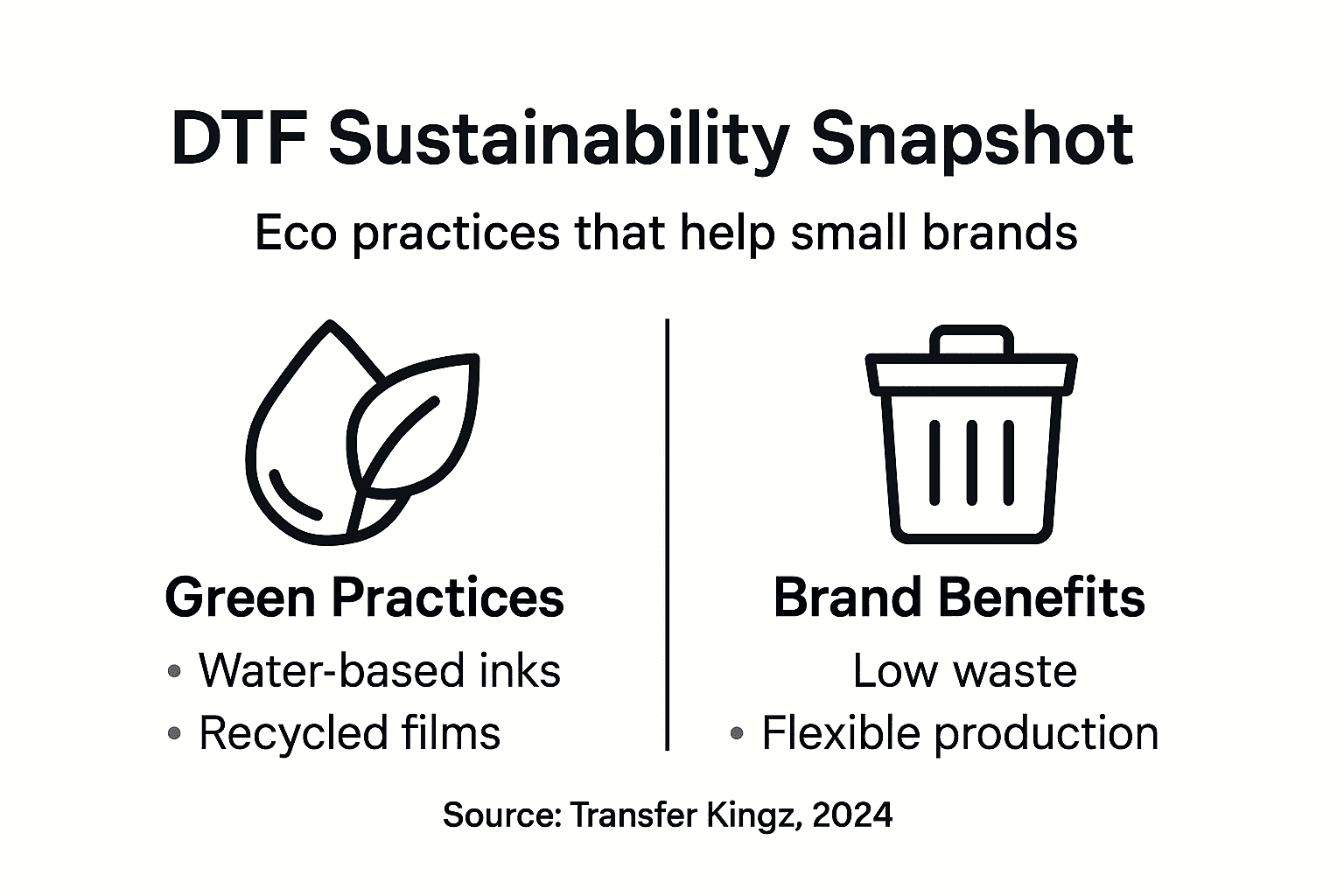
Small brands can leverage DTF printing’s sustainability features through strategic practices. This includes selecting eco-friendly films, utilizing water-based inks, optimizing design efficiency, and implementing responsible inventory management. By carefully selecting materials and production techniques, independent designers can reduce their carbon footprint while maintaining high-quality, vibrant product designs that meet contemporary environmental standards.
Below is a summary of key eco-friendly practices for small brands using DTF printing:
| Practice | Environmental Benefit | Business Advantage |
|---|---|---|
| Eco-certified films | Reduces plastic pollution | Improves brand reputation |
| Water-based inks | Lowers hazardous VOC emissions | Meets customer expectations |
| Efficient design workflows | Minimizes excess material consumption | Cuts operational costs |
| Responsible inventory management | Prevents surplus product and waste | Enhances profit margins |
Pro Tip: When sourcing DTF printing materials, prioritize suppliers who demonstrate transparent environmental certifications and sustainable manufacturing practices.
Eco-Friendly Inks and Materials
The evolution of Direct-to-Film (DTF) printing has brought significant advancements in sustainable textile decoration, particularly in the development of eco-friendly inks and materials. Eco-friendly inks with biodegradable components represent a groundbreaking approach to reducing environmental impact in the printing industry, offering small brands a responsible alternative to traditional printing methods.
Modern DTF printing technologies now incorporate water-based inks that dramatically reduce volatile organic compound (VOC) emissions. These innovative ink formulations are engineered to minimize hazardous waste while maintaining exceptional print quality and durability. Small brands can now choose from a range of sustainable ink options that include non-toxic dyes, recyclable film substrates, and biodegradable components that significantly lower the carbon footprint of textile production.
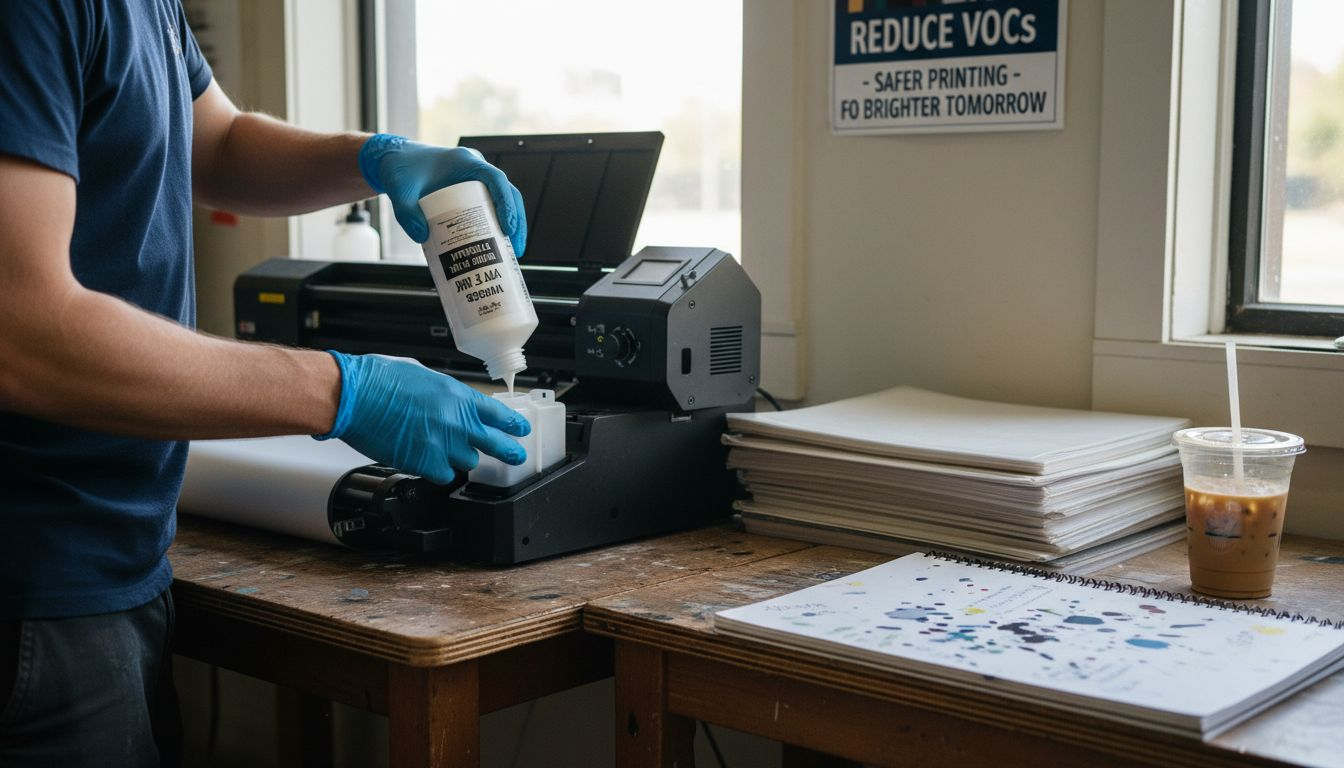
The material selection process for eco-conscious DTF printing involves careful consideration of several key factors. Sustainable film choices now include recyclable plastics and biodegradable materials that provide the same high-performance characteristics as traditional substrates. By selecting high-quality DTF ink solutions, small brands can create vibrant, long-lasting designs while demonstrating a commitment to environmental responsibility. This approach not only reduces waste but also appeals to environmentally conscious consumers who value sustainable production practices.
Pro Tip: Request detailed environmental certifications from your DTF ink and material suppliers to ensure genuine sustainability claims and verify their ecological impact.
Energy Consumption and Waste Reduction
Direct-to-Film (DTF) printing represents a transformative approach to reducing energy consumption and minimizing waste in textile decoration. Unlike traditional screen printing methods that require extensive setup, multiple screens, and significant material consumption, DTF technology offers a more streamlined and efficient production process. Affordable bulk DTF transfers enable small brands to optimize their production workflows while simultaneously reducing environmental impact.
The energy efficiency of DTF printing stems from its innovative production methodology. Traditional printing techniques often involve complex multi-stage processes that consume substantial electricity and generate considerable waste. DTF printing, in contrast, requires fewer production steps, uses precise digital printing techniques, and allows for more accurate material usage. Small brands can significantly reduce their carbon footprint by adopting this technology, which enables on-demand printing, eliminates screen preparation waste, and minimizes excess ink consumption.
Waste reduction is a critical advantage of DTF printing for environmentally conscious small brands. The technology allows for precise image transfer with minimal material loss, enabling businesses to print exact quantities needed without creating excess inventory. Digital design capabilities mean reduced material waste during setup, lower chemical usage, and the ability to create intricate designs without multiple screen setups. By implementing strategic production planning and leveraging DTF printing’s efficiency, small brands can dramatically reduce their environmental impact while maintaining high-quality product standards.
Pro Tip: Implement a digital inventory management system to track precise material usage and optimize your DTF printing production to minimize waste and energy consumption.
Comparing DTF With Other Methods
Small brands navigating the textile printing landscape face critical decisions when selecting production methods. Direct-to-Film (DTF) printing emerges as a revolutionary technique that distinctly outperforms traditional printing approaches like screen printing, heat transfer, and sublimation. Affordable bulk DTF transfers demonstrate the technology’s superior economic and technical advantages across multiple production scenarios.
Compared to screen printing, DTF offers remarkable flexibility and efficiency. Screen printing requires extensive setup, multiple screens per design, and significant material waste. In contrast, DTF printing enables digital design transfer with minimal preparation, allowing small brands to produce intricate, multi-color designs without complex screen creation. The digital workflow reduces labor costs, accelerates production times, and provides unprecedented design complexity that traditional methods cannot match.
Heat transfer and sublimation techniques pale in comparison to DTF’s capabilities. While heat transfer methods often result in thick, uncomfortable print layers and limited color ranges, DTF printing produces soft, vibrant transfers that seamlessly integrate with fabric. Sublimation printing works only on polyester materials, whereas DTF transfers can be applied to various fabric types including cotton, blends, and synthetic materials. This versatility allows small brands to diversify their product offerings without investing in multiple printing technologies, making DTF a more sustainable and economically intelligent choice.
Here is a comparison of textile printing methods and their sustainability impacts:
| Printing Method | Sustainability Impact | Versatility | Production Efficiency |
|---|---|---|---|
| DTF (Direct-to-Film) | Low waste, uses eco-inks | Most fabric types | High, minimal setup required |
| Screen Printing | High waste, uses chemicals | Limited by screen size | Labor intensive, slow setups |
| Heat Transfer | Moderate waste, limited inks | Few fabric types | Moderate, manual processes |
| Sublimation | Low waste, polyester only | Only for synthetics | Good for large runs |
Pro Tip: Conduct side-by-side print tests with different methods to objectively evaluate DTF’s superior print quality, durability, and cost-effectiveness for your specific product line.
Common Pitfalls in Eco-Friendly DTF
Navigating the complex landscape of sustainable DTF printing requires small brands to be aware of potential environmental and operational challenges. Greenwashing represents a significant risk, where brands might inadvertently overstate their eco-friendly credentials without substantive environmental improvements. Affordable bulk DTF transfers can help mitigate some sustainability challenges, but careful evaluation of the entire production process remains crucial.
One common pitfall involves selecting materials without comprehensive environmental assessment. Many small brands mistakenly assume all DTF supplies are equally sustainable, overlooking critical factors like ink composition, film recyclability, and manufacturing processes. Truly eco-friendly DTF printing demands rigorous supplier vetting, understanding complete material lifecycles, and prioritizing components with verifiable low environmental impact. Brands must look beyond surface-level marketing claims and request detailed sustainability documentation from their material suppliers.
Technical inefficiencies can also undermine eco-friendly DTF printing efforts. Improper machine calibration, excessive ink usage, and inefficient design workflows can negate potential environmental benefits. Small brands must invest in precise digital design techniques, optimize print runs to minimize waste, and implement systematic inventory management. By adopting a holistic approach that considers energy consumption, material efficiency, and waste reduction, businesses can transform potential sustainability pitfalls into opportunities for meaningful environmental responsibility.
Pro Tip: Develop a comprehensive sustainability audit checklist that evaluates every aspect of your DTF printing process, from material sourcing to final product delivery.
Elevate Your Small Brand with Sustainable DTF Printing Solutions
Understanding the challenges of reducing waste and energy consumption in textile decoration is vital for small brands committed to sustainability. If you want to minimize excess materials while producing vibrant and durable designs with eco-friendly inks and films, DTF printing offers an innovative path forward. By selecting the right materials and optimizing your production, you can significantly lower your environmental impact and build a strong reputation for quality and responsibility.
Explore our range of DTF transfers, custom apparel printing, heat transfers, t-shirt printing, high-quality prints designed to support sustainable production practices.
Take the next step toward eco-friendly printing with Transfer Kingz. Benefit from premium inks, recyclable films, and efficient application methods tailored for small businesses like yours. Visit Transfer Kingz now to access affordable bulk orders, fast turnaround, and expert resources. Unlock the potential of sustainable DTF printing and watch your brand thrive while respecting the planet.
Don’t wait to make a positive change—start your sustainable printing journey today with DTF transfers, UV DTF Permastickers, custom printing supplies, heat transfers, bulk printing.
Frequently Asked Questions
What are the environmental benefits of DTF printing for small brands?
DTF printing significantly reduces waste and resource consumption compared to traditional printing methods. It minimizes excess material usage, allows for on-demand printing, and utilizes eco-friendly inks, leading to lower carbon footprints for small brands.
How can small brands ensure they are using eco-friendly materials in DTF printing?
Small brands should prioritize eco-certified films and water-based inks. They should also critically evaluate supplier claims, requesting detailed environmental certifications and ensuring materials used have low ecological impact.
Why does DTF printing offer a competitive advantage over screen printing and other methods?
DTF printing allows for intricate, multi-color designs without the extensive setups required by screen printing. It also adapts to various fabric types, offers reduced labor costs, and minimizes material waste, providing small brands with a more sustainable and economically advantageous method.
What are common pitfalls to avoid when implementing eco-friendly DTF printing?
Common pitfalls include selecting materials without thorough environmental assessments and neglecting technical efficiencies in the printing process. To truly achieve sustainability, brands should conduct supplier vetting and optimize design workflows to minimize waste.
0 comments