

Most small clothing brands struggle to master Direct-to-Film printing techniques that American designers use to achieve vibrant, durable results. With over 60 percent of custom apparel businesses reporting issues with print quality, understanding the essentials matters more than ever. This guide uncovers make-or-break terms and techniques so you can confidently produce standout products for your clients.
Table of Contents
- Direct-to-Film Printing Essentials Defined
- Types of DTF Film, Ink, and Powder
- How the DTF Transfer Process Works
- Gang Sheets, RIP Software, and Workflow Terms
- Mistakes to Avoid in DTF Printing Workflows
Key Takeaways
| Point | Details |
|---|---|
| Understanding DTF Components | Successful DTF printing relies on quality film, compatible inks, and adhesive powders, which all influence final print quality and durability. |
| Importance of Process Control | Precise temperature control and careful adhesive distribution during the transfer process are crucial for achieving professional results. |
| Utilizing Gang Sheets and Software | Implementing gang sheets and advanced RIP software can optimize material use and enhance workflow efficiency in DTF printing. |
| Preventing Common Pitfalls | Regular equipment maintenance and meticulous calibration are essential for avoiding common printing issues, ensuring high-quality outputs. |
Direct-to-film printing essentials defined
Direct-to-film (DTF) printing represents a revolutionary custom apparel decoration technique that enables small business owners and independent designers to create vibrant, professional-quality transfers on multiple fabric types. At its core, DTF printing involves transferring digital designs directly onto a specialized film before applying them to textiles using heat and pressure. Understanding the fundamental components is crucial for achieving exceptional print results.
The essential components of DTF printing involve a precise interaction between film quality, adhesive powders, specialized DTF inks, and heat press settings. DTF printing essentials require meticulous attention to each element. The film serves as the critical carrier medium, acting like a temporary canvas that holds your design before permanent transfer. High-quality polyester-based films with excellent ink receptivity are paramount, as they directly impact color vibrancy, transfer sharpness, and overall print durability.
Successful DTF printing depends on selecting compatible materials and understanding the technical nuances of the process. Designers must consider factors like ink opacity, adhesive powder distribution, and precise temperature control during heat transfer. The workflow typically involves printing the design onto the film, applying a powdered adhesive, curing the transfer, and then pressing it onto the fabric surface using controlled heat and pressure. Professional results demand consistent technique and careful equipment calibration.
Pro tip: Invest in high-quality, calibrated testing materials to practice your DTF printing technique before launching full production runs, allowing you to refine your process and minimize potential material waste.
Types of DTF film, ink, and powder
Direct-to-film (DTF) printing requires a sophisticated combination of specialized materials that work together to create high-quality custom transfers. The three primary components - film, ink, and powder - each play a critical role in determining the final print quality and durability. Understanding the nuanced characteristics of these materials is essential for small business owners and independent designers seeking professional-grade results.
The first critical component is DTF film, which serves as the transfer medium. These films are typically made from polyester-based materials with specialized coatings that enhance ink adhesion and transfer properties. Top DTF transfer materials come in various thicknesses and qualities, with professional-grade films offering superior transparency, heat resistance, and precise design reproduction. The film’s surface must be engineered to accept DTF inks uniformly while maintaining color vibrancy and sharpness during the transfer process.
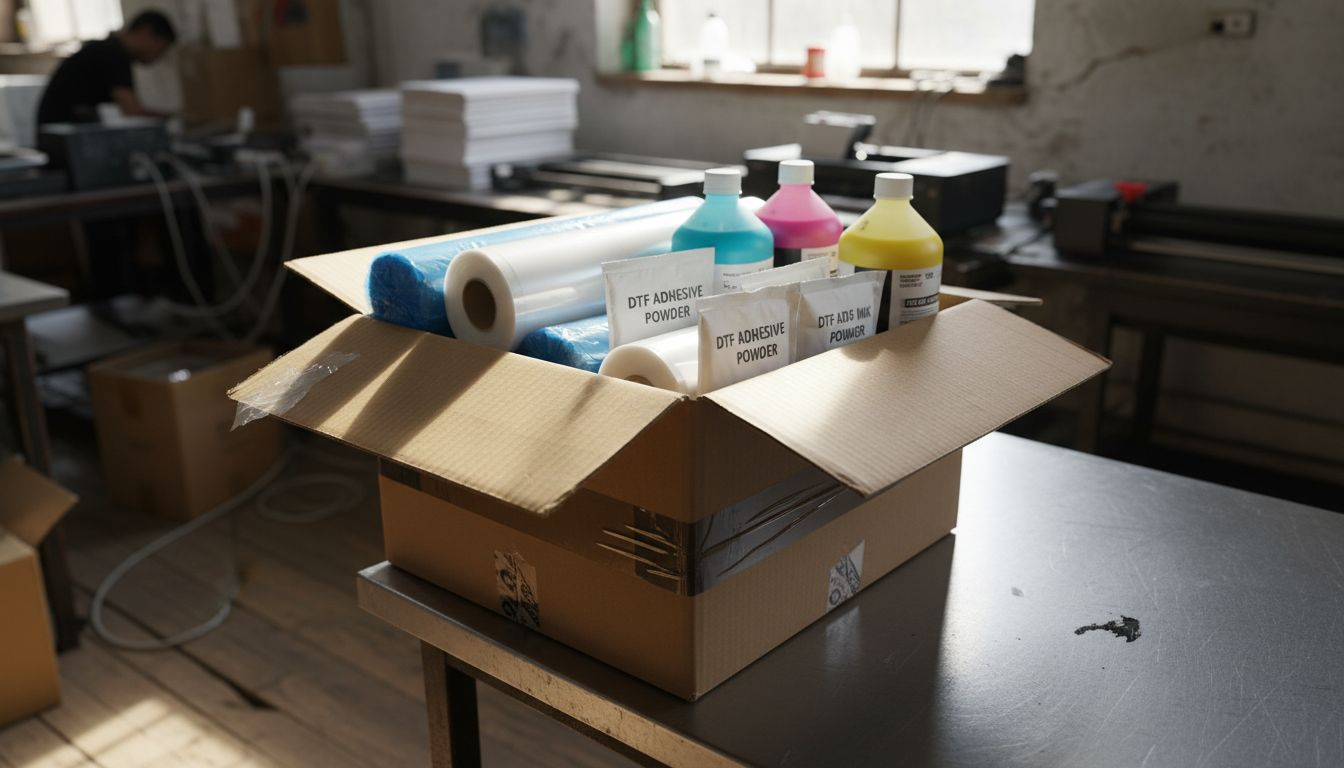
DTF inks and adhesive powders represent the next crucial elements in the printing workflow. Specialized DTF inks are formulated to provide exceptional color saturation and durability, with pigment-based compositions that ensure vibrant, long-lasting prints. The adhesive powder acts as a critical bonding agent, melting during the heat transfer process to create a strong, flexible connection between the design and the fabric surface. Designers must carefully select compatible ink and powder combinations to achieve optimal transfer quality and washability.
Pro tip: Always purchase DTF materials from reputable suppliers and conduct small-scale test prints to validate the compatibility of your film, ink, and powder combination before launching full production runs.
Here’s a summary of how DTF film, ink, and powder each impact print outcomes:
| Component | Key Role in DTF Printing | Impact on Final Print |
|---|---|---|
| Polyester Film | Holds and releases the design | Influences sharpness, durability |
| DTF Ink | Delivers color to the film | Affects saturation and longevity |
| Adhesive Powder | Bonds design to textile | Determines flexibility, washability |
How the DTF transfer process works
Direct-to-film (DTF) printing is a sophisticated digital transfer technique that transforms digital designs into vibrant, durable fabric decorations through a carefully orchestrated multi-step process. This innovative method has revolutionized custom apparel production by offering unprecedented flexibility and precision for small business owners and independent designers seeking professional-grade results.
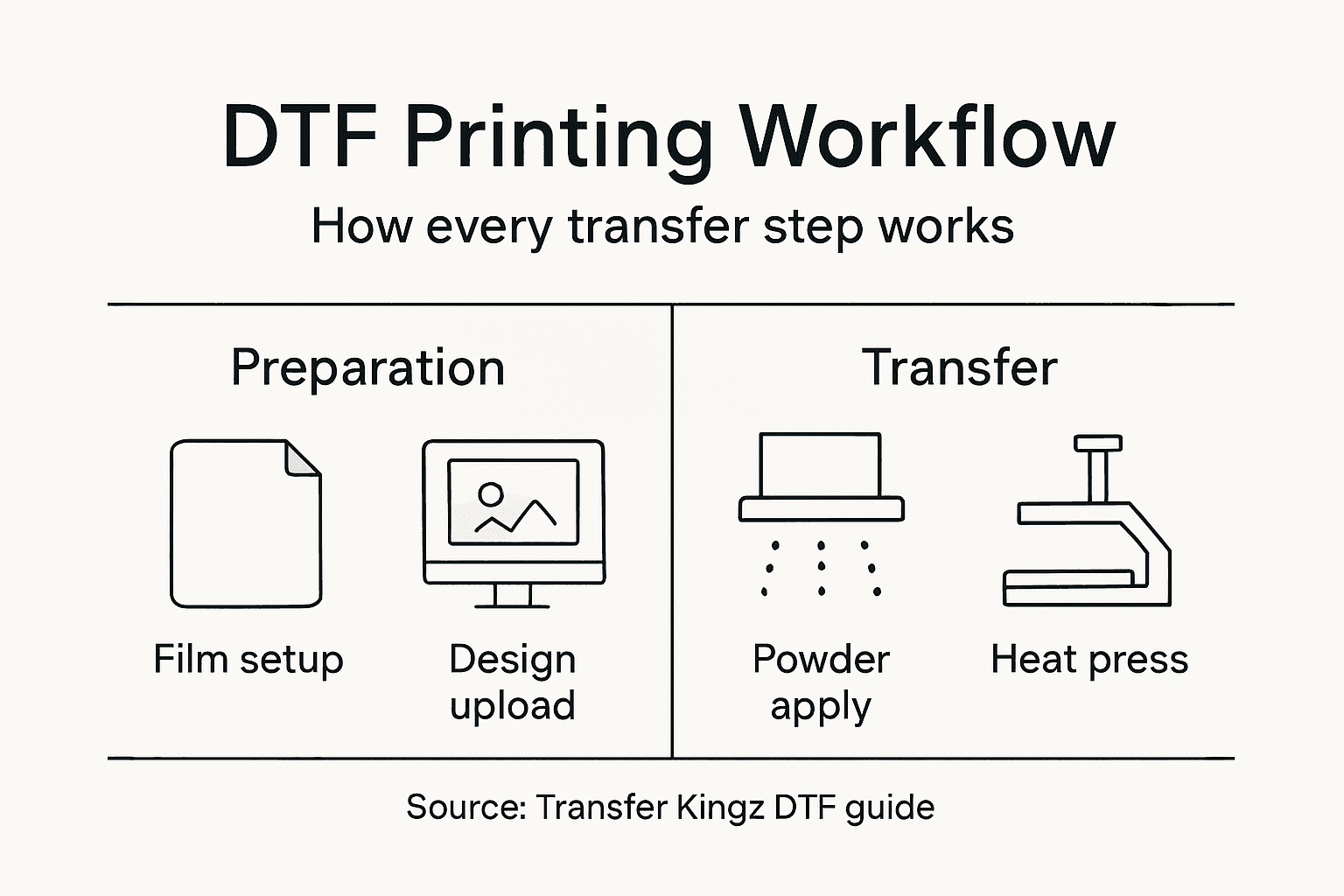
The DTF transfer process begins with digital design preparation, where high-resolution graphics are created or imported into specialized graphic software. DTF printing process involves printing the design in reverse onto a specialized polyethylene terephthalate (PET) film using precise DTF inks. This critical first step ensures that when transferred, the image appears correctly oriented on the final fabric surface. The reverse printing technique allows for exceptional detail reproduction and color vibrancy.
After printing, the design undergoes a crucial adhesive powder application stage. While the ink is still wet, a fine layer of adhesive powder is carefully distributed across the film surface. This powder will ultimately create the bonding mechanism between the design and fabric. The film with its powdered design is then cured using a specialized heat treatment, which melts and sets the powder, creating a seamless connection between ink and adhesive. The final stage involves heat pressing the prepared transfer onto the target fabric, where precise temperature, pressure, and timing are essential to achieve a durable, high-quality print that can withstand multiple wash cycles.
Pro tip: Invest in a digital thermometer and pressure gauge to ensure consistent heat press settings, as even slight variations can significantly impact transfer quality and longevity.
Gang sheets, RIP software, and workflow terms
In the world of Direct-to-Film (DTF) printing, understanding specialized terminology and workflow tools is crucial for optimizing production efficiency and print quality. Small business owners and independent designers must become familiar with key concepts that streamline their digital printing processes and maximize resource utilization.
Gang sheet creation techniques represent a fundamental strategy for maximizing material efficiency in DTF printing. Gang sheets are comprehensive digital layouts that combine multiple individual designs onto a single transfer film, allowing designers to print numerous graphics simultaneously. This approach significantly reduces material waste and increases overall production speed. Professional RIP (Raster Image Processing) software plays a critical role in gang sheet management, enabling precise design placement, color profile calibration, and white ink layering optimization.
The technical workflow for creating effective gang sheets involves several intricate steps. RIP software serves as the critical bridge between graphic design files and the physical printing process, translating digital designs into printer-specific instructions. These sophisticated programs handle complex tasks like color management, ink density control, and precise design scaling. Advanced RIP solutions offer features such as automatic nesting (arranging designs to minimize unused film space), color profile matching, and intelligent white ink underbase generation, which are essential for achieving consistent, high-quality DTF transfers.
Pro tip: Invest in professional RIP software with gang sheet building capabilities and practice creating compact, efficient layouts to minimize material costs and maximize print productivity.
Compare key workflow software features that boost DTF printing efficiency:
| Software Feature | Purpose | Benefit to Workflow |
|---|---|---|
| Gang Sheet Builder | Combines multiple designs | Cuts material waste, increases speed |
| Color Profile Calibration | Optimizes digital-to-print colors | Ensures consistent color results |
| White Ink Underbase | Adds background for color pop | Improves image vibrancy and detail |
Mistakes to avoid in DTF printing workflows
Direct-to-Film (DTF) printing demands precision and technical expertise. Even experienced designers and small business owners can encounter workflow challenges that compromise print quality, increase material waste, and reduce overall production efficiency. Understanding and proactively addressing these common pitfalls is crucial for maintaining professional-grade transfer results.
Common DTF printing issues frequently stem from equipment maintenance and environmental control challenges. Printhead clogging represents one of the most prevalent technical problems, which can occur when printers are not regularly cleaned or when low-quality inks are used. Inconsistent temperature during curing and pressing stages can lead to poor powder adhesion, resulting in transfers that peel, crack, or fail to bond properly with fabric surfaces. Color misalignment is another critical issue that can dramatically impact design quality, often caused by improper RIP software calibration or mechanical printer misalignments.
Successful DTF printing workflows require meticulous attention to multiple technical parameters. Designers must establish controlled environmental conditions, invest in high-quality inks and powders, and develop systematic maintenance protocols for their printing equipment. Critical workflow considerations include regular printhead cleaning, precise temperature calibration, consistent powder distribution, and careful design file preparation. Professional-grade RIP software can help mitigate many potential errors by offering advanced color management, automatic design scaling, and intelligent white ink underbase generation.
Pro tip: Create a standardized equipment maintenance checklist and calibration log to track and prevent recurring technical issues in your DTF printing workflow.
Master DTF Printing Terminology with Transfer Kingz
Understanding the complex terms and processes in DTF printing is essential for overcoming common challenges like film selection, ink compatibility, and precise heat press settings. This article highlights critical concepts such as gang sheets, RIP software, and adhesive powders that shape your print quality and workflow efficiency. If you are seeking to master every step and eliminate guesswork from your production, having reliable, high-quality resources is key.
Explore our range of premium DTF transfers, custom apparel printing, heat transfers, t-shirt printing, high-quality prints designed to simplify your printing process while delivering vibrant and durable results.
Take control of your DTF printing journey today and turn technical terminology into practical success. Visit Transfer Kingz now to access user-friendly digital printing solutions, shop essential supplies, and streamline your workflow with powerful tools tailored to your needs. Start creating standout custom apparel with confidence and speed.
Frequently Asked Questions
What is DTF printing?
DTF printing, or Direct-to-Film printing, is a custom apparel decoration technique that transfers digital designs directly onto a specialized film before applying them to fabrics using heat and pressure.
What materials are essential for DTF printing?
The essential materials for DTF printing include high-quality polyester film, specialized DTF inks, and adhesive powders. These components interact to create vibrant and durable transfers.
How does the DTF transfer process work?
The DTF transfer process involves several steps: preparing the digital design, printing the design in reverse onto a polyester film, applying adhesive powder, curing the transfer, and finally heat pressing it onto the fabric to achieve a permanent bond.
What are common mistakes to avoid in DTF printing workflows?
Common mistakes in DTF printing include printhead clogging, inconsistent temperature during curing and pressing, and color misalignment. Establishing controlled conditions and regular maintenance can help mitigate these issues.
0 comments