

Choosing the right decoration method can make or break a clothing collection’s success. For independent brands seeking vibrant designs without the drawbacks of pretreatment or limited fabric choices, Direct-to-Film printing delivers unmatched adaptability and quality. With exceptional washability and durability across cotton, blends, and synthetics, DTF transfers empower designers to achieve professional results while maintaining lower production costs and rapid turnaround times.
Table of Contents
- Direct-to-film Transfer Fundamentals Clarified
- Types of DTF Films, Inks, and Adhesives
- How DTF Transfer Process Impacts Results
- Durability and Washability Factors
- Common Quality Pitfalls and How to Avoid
- Premium DTF vs Other Transfer Methods
Key Takeaways
| Point | Details |
|---|---|
| Understanding DTF Printing | Direct-to-Film printing allows for vibrant, intricate designs on various fabric types without the need for pretreatment, making it ideal for custom apparel. |
| Components’ Impact on Quality | The quality of DTF transfers hinges on the compatibility of films, inks, and adhesives, demanding careful selection for optimal results. |
| Challenges in Execution | Precision in the transfer process, including temperature, pressure, and timing, is crucial for achieving high-quality, durable prints. |
| Advantages Over Traditional Methods | DTF printing offers superior color reproduction, design flexibility, and faster production times compared to screen printing and heat transfer vinyl. |
Direct-to-film transfer fundamentals clarified
Direct-to-film (DTF) printing represents an innovative textile decoration technique that transforms how custom apparel designs are applied. This advanced method enables clothing brands to produce vibrant, intricate graphics with exceptional durability and flexibility across multiple fabric types.
Understanding DTF printing involves examining its core process. Direct digital printing on specialized films involves several precise steps:
- Designs are printed directly onto coated PET films
- Special multi-color inks are utilized, including white ink for enhanced visibility
- A hot-melt adhesive powder is applied while ink remains wet
- The transfer is heat-cured to activate the adhesive
- Final heat-pressing transfers the design onto fabric
The versatility of DTF printing distinguishes it from traditional decoration methods. Unlike screen printing or heat transfer vinyl, DTF works seamlessly across diverse fabric compositions - from 100% cotton to synthetic blends, nylons, and performance materials. This adaptability makes it particularly attractive for small batch production and custom merchandise creators.
Key advantages of DTF transfers include:
- Exceptional color reproduction
- No fabric pretreatment required
- Superior washability
- Complex multi-color designs possible
- Compatible with various fabric types
- Lower production costs compared to traditional methods
Pro tip: Test your DTF transfers on a small fabric sample first to confirm color accuracy and adhesion quality before full production runs.
Types of DTF films, inks, and adhesives
Understanding the components of Direct-to-Film (DTF) printing requires a deep dive into its three critical elements: films, inks, and adhesives. Each component plays a crucial role in determining the final print quality and durability of custom apparel designs. Transfer film selection represents the foundational starting point for successful DTF printing.
DTF Film Types vary based on several key characteristics:
- Thickness ranges from 50-75 microns
- Polyethylene terephthalate (PET) base material
- Specialized coating for ink adhesion
- Transparent or semi-transparent surfaces
- Available in roll or sheet formats
Ink Compositions for DTF printing are uniquely formulated to ensure optimal transfer and durability:
- Water-based pigment inks
- Special white ink for underbase printing
- Color-specific formulations
- Quick-drying properties
- High color vibrancy and saturation
The adhesive powder represents the critical bonding agent in DTF transfers. Different adhesive types include:
- Hot-melt adhesive powders
- Temperature-sensitive formulations
- Varying particle sizes for different fabric types
- Specialized adhesives for synthetic and natural fabrics
- Different melting point ranges
DTF printing success depends on perfectly balanced interactions between film, ink, and adhesive components.
Apparel brands and custom print shops must carefully select compatible film, ink, and adhesive systems to achieve consistent, high-quality transfers. Matching these components requires technical knowledge and precise understanding of their individual characteristics.
Here’s how DTF films, inks, and adhesives influence overall print quality:
| Component | Role in Transfer Quality | Common Pitfall | Best Practice Suggestion |
|---|---|---|---|
| DTF Films | Foundation for ink application | Film too thick or thin | Match thickness to apparel type |
| DTF Inks | Enable vivid, durable colors | Poor color saturation | Use high-quality, compatible ink |
| Adhesive Powders | Secure bonding to fabric | Incomplete melting or adhesion | Adjust powder and curing method |
Pro tip: Invest in small test batches to evaluate film, ink, and adhesive compatibility before committing to large-scale production runs.
How DTF transfer process impacts results
The Direct-to-Film (DTF) transfer process is a complex sequence of precise interactions that dramatically influence the final print quality and durability. DTF transfer workflow requires meticulous attention to multiple critical stages that collectively determine the success of custom apparel printing.
Key stages impacting transfer results include:
- Print design preparation
- Film printing quality
- Powder application technique
- Curing and melting parameters
- Heat transfer execution
- Post-transfer cooling and stabilization
Each stage presents unique challenges and opportunities for optimizing print quality. The printing phase demands precise ink deposition, with factors like resolution, color saturation, and white ink underbase playing crucial roles. Uneven ink distribution or improper white ink layering can result in diminished transfer clarity and vibrancy.
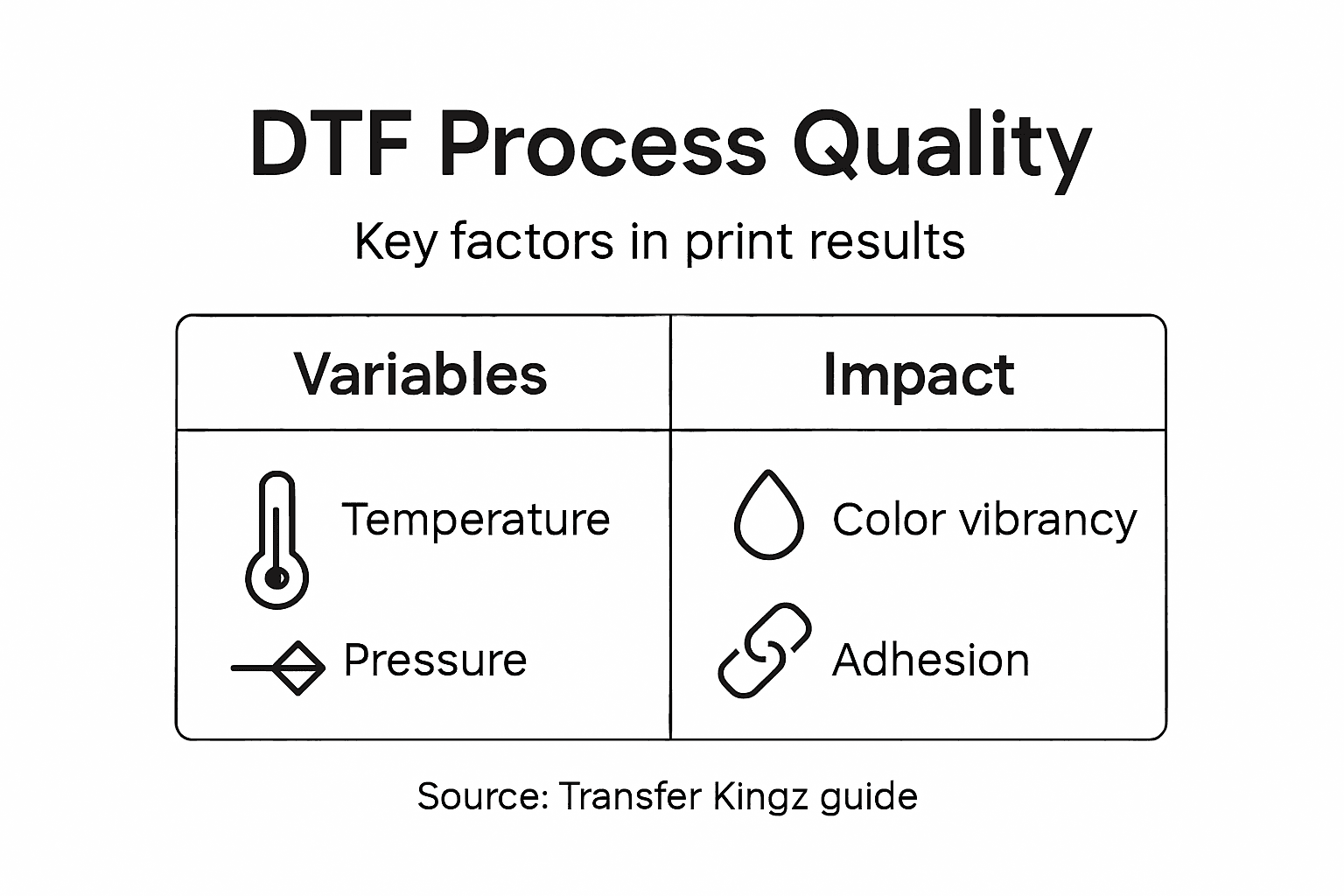
Temperature and pressure considerations are equally critical during the heat transfer stage:
- Incorrect temperature can cause:
- Incomplete adhesive melting
- Fabric damage
- Design distortion
- Inconsistent pressure leads to:
- Uneven transfer
- Poor design adhesion
- Potential fabric warping
Precision in every step transforms a standard print into a professional, long-lasting design.
Successful DTF transfers require understanding how each process variable interacts. Subtle adjustments in temperature, pressure, and timing can significantly impact print quality, wash durability, and overall apparel aesthetics.
Pro tip: Maintain a detailed log of transfer parameters for each fabric type to develop a comprehensive reference guide for consistent, high-quality results.
Durability and washability factors
The longevity of Direct-to-Film (DTF) transfers depends on intricate interactions between print technologies, fabric characteristics, and maintenance practices. DTF transfer washability represents a complex interplay of material science and printing precision.
Key durability determinants include:
- Ink quality and composition
- Adhesive performance
- Heat press parameters
- Fabric fiber type
- Post-transfer curing process
- Washing and care practices
The chemical composition of DTF inks plays a critical role in transfer longevity. Specialized formulations with enhanced resistance to mechanical stress and detergent exposure can significantly extend print life. Prints with protective topcoats demonstrate superior protection against fading, cracking, and abrasion.
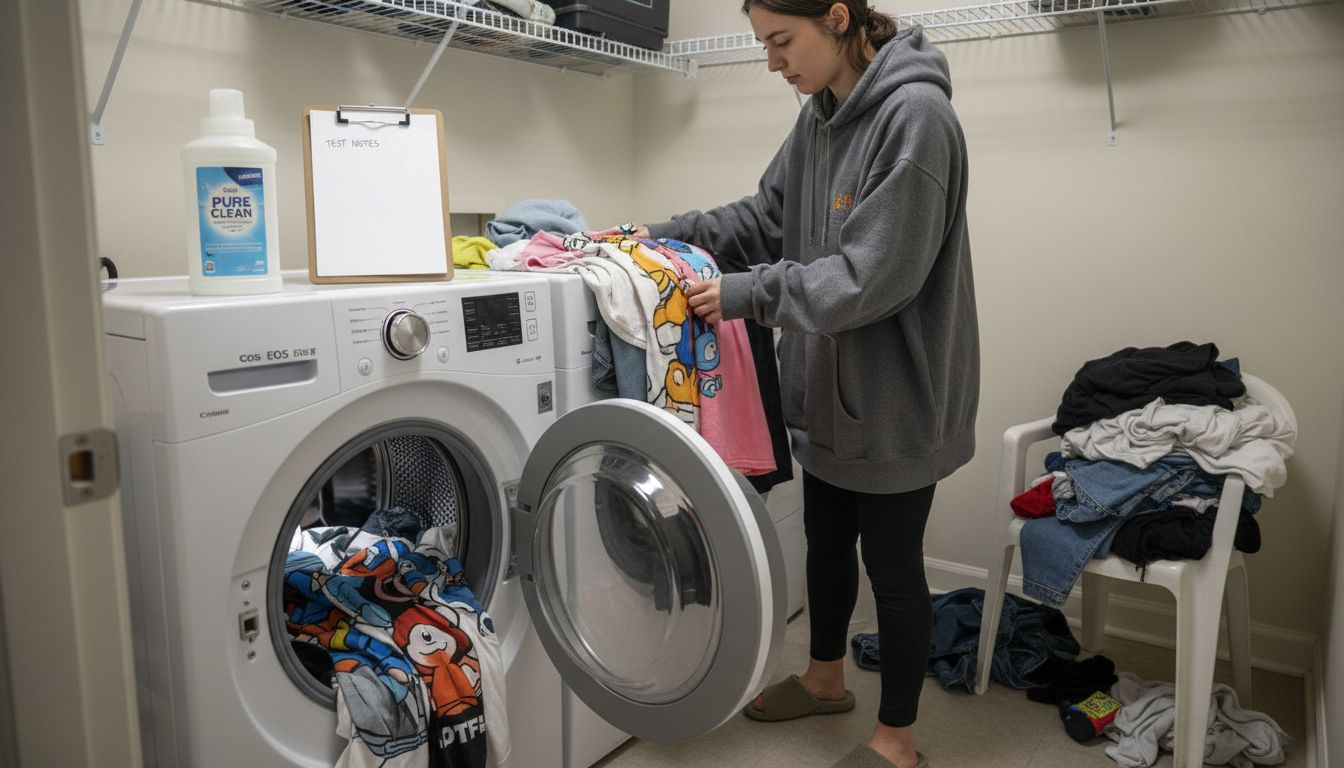
Washing recommendations for maximizing DTF transfer lifespan:
- Use cold water settings
- Avoid harsh detergents
- Turn garments inside out
- Select gentle wash cycles
- Tumble dry on low heat
- Avoid direct ironing on print area
Proper care can extend DTF print quality beyond 50 wash cycles.
Fabric composition significantly influences transfer durability. Synthetic and blended materials interact differently with DTF inks compared to pure cotton, requiring nuanced application techniques and specific ink formulations to ensure optimal adhesion and long-term performance.
Pro tip: Develop a standardized washing protocol for each fabric type to maintain consistent print quality and minimize degradation.
Common quality pitfalls and how to avoid
Navigating the complex landscape of Direct-to-Film (DTF) printing requires understanding and preempting common quality challenges. DTF printing troubleshooting demands a systematic approach to identifying and resolving potential issues before they compromise print quality.
Primary quality pitfalls include:
- Inconsistent white ink coverage
- Design adhesion problems
- Color bleeding or distortion
- Premature transfer cracking
- Uneven powder application
- Environmental sensitivity
Design adhesion represents one of the most critical challenges in DTF printing. Inadequate powder curing or incorrect heat press settings can lead to premature peeling or incomplete bonding. Manufacturers must meticulously calibrate temperature, pressure, and timing to ensure optimal transfer integrity.
Strategies for preventing common DTF printing issues:
- Maintain consistent printer calibration
- Use high-quality, compatible ink and powder systems
- Control environmental humidity levels
- Perform regular equipment maintenance
- Conduct frequent test prints
- Monitor heat press parameters precisely
Systematic quality control prevents 90% of potential printing defects.
Environmental factors like humidity and temperature significantly impact DTF print quality. Workshops must maintain stable conditions, using dehumidifiers or climate control systems to minimize variations that could compromise transfer performance.
Pro tip: Develop a standardized diagnostic checklist to systematically identify and resolve DTF printing inconsistencies before they escalate.
Premium DTF vs other transfer methods
The landscape of custom apparel decoration has been dramatically transformed by Direct-to-Film (DTF) printing, offering significant advantages over traditional transfer techniques. Custom DTF printing techniques represent a quantum leap in design flexibility and print quality.
Comparative advantages of DTF over traditional methods:
- Superior color reproduction
- No fabric pretreatment required
- Works on multiple fabric types
- Enhanced design detail
- Lower production costs
- Faster turnaround times
Unlike screen printing, which requires separate screens for each color and limits design complexity, DTF enables intricate multi-color designs with exceptional precision. Heat transfer vinyl (HTV) methods restrict design size and require manual cutting, whereas DTF allows full-color, seamless graphics printed directly onto transferable films.
Key performance differences between transfer methods:
- Screen Printing
- Limited color complexity
- Higher setup costs
- Thick, less detailed designs
- Heat Transfer Vinyl
- Small design limitations
- Manual weeding required
- Fewer fabric compatibility options
- DTF Printing
- Unlimited color options
- Soft, flexible designs
- Wide fabric compatibility
DTF technology bridges the gap between design imagination and textile reproduction.
Substrate versatility sets DTF apart from other transfer methods. While traditional techniques struggle with synthetic fabrics, DTF transfers seamlessly apply to cotton, polyester, blends, and performance materials without compromising design integrity or fabric feel.
Compare key differences between DTF and traditional transfer methods in one glance:
| Method | Setup Requirements | Design Complexity | Fabric Compatibility |
|---|---|---|---|
| DTF Printing | Minimal, fast setup | Unlimited, intricate | Works on most fabrics |
| Screen Printing | Multiple screens needed | Limited, per color | Mostly cotton/poly blends |
| Heat Transfer Vinyl | Manual, moderate effort | Simple, single color | Cotton and some synthetics |
Pro tip: Conduct side-by-side print tests comparing DTF with alternative methods to demonstrate superior quality and versatility to potential clients.
Elevate Your Apparel Quality with Premium DTF Transfers
Struggling to achieve consistent, vibrant prints that last on various fabric types? The challenges of mastering DTF transfer quality—such as balancing film, ink, and adhesive compatibility and perfecting heat press parameters—can limit your apparel’s appeal and durability. At Transfer Kingz, we understand these obstacles and offer a seamless solution with our DTF transfers, custom apparel printing, heat transfers, t-shirt printing, high-quality prints. – Transfer Kingz collection designed to deliver outstanding color vibrancy, flexible durability, and easy application across cotton, polyester, blends, and more.
Step up your production game with Transfer Kingz’s expert digital printing platform. Whether you are a small business or large shop, our quick turnaround times, premium inks, and films help you avoid common pitfalls described in this article like color bleeding or adhesion problems. Explore our user-friendly online tools to upload or create your artwork and enjoy no minimum order restrictions. Visit Transfer Kingz today and discover why countless apparel decorators trust us for flawless, long-lasting DTF prints. Ready to boost your apparel appeal? Start your custom order now and experience professional-grade results with every transfer.
Frequently Asked Questions
What are the key advantages of Direct-to-Film (DTF) printing?
DTF printing offers exceptional color reproduction, no fabric pretreatment is required, and it allows for superior washability. It also supports complex multi-color designs across various fabric types and has lower production costs compared to traditional methods.
How does the DTF transfer process impact the final print quality?
Each stage of the DTF transfer process, including print design preparation, powder application, and heat transfer execution, affects the final print quality. Precision in temperature, pressure, and timing can significantly influence durability and appearance.
What factors influence the durability and washability of DTF transfers?
Durability of DTF transfers is influenced by ink quality, adhesive performance, heat press parameters, and fabric type. Proper washing and care practices, such as avoiding harsh detergents and using cold water, can extend the lifespan of the print.
How does DTF printing compare to other transfer methods like screen printing and heat transfer vinyl?
DTF printing provides unlimited color options and intricate designs without the need for multiple screens or manual cutting, unlike screen printing and heat transfer vinyl, which have limitations in design complexity and fabric compatibility.
Recommended
- How dtf shirt transfers are Revolutionizing Custom Apparel – Transfer Kingz
- dtf transfer workflow for flawless custom prints – Transfer Kingz
- What Is DTF Printing: Transforming Custom Apparel – Transfer Kingz
- What Is DTF Printing: Transforming Custom Apparel – Transfer Kingz
- Modern Streetwear Styling Guide for Elevated Urban Looks – DRYX
0 comments