

Every small clothing brand or independent print shop wants high-quality custom prints without sacrificing profit or speed. As apparel customers in countries like the United States and Canada demand both vibrant colors and eco-friendly production, new DTF transfer technology offers real answers for 2026. This article outlines how innovations in water-based pigment inks and automated workflows give you a practical edge for producing durable designs on any material, meeting market needs and sustainability standards.
Table of Contents
- Defining Dtf Transfer Technology In 2026
- Key Innovations And Latest Film Types
- Automation, Uv Dtf, And Workflow Integration
- Sustainability And Compliance In Dtf Printing
- Comparing Dtf With Dtg And Other Alternatives
Key Takeaways
| Point | Details |
|---|---|
| DTF Technology Advantages | DTF offers high-resolution, durable prints on diverse fabrics without minimum order requirements, providing flexibility for small-run production. |
| Innovations in DTF Films | New film types improve adhesion and durability, allowing prints to withstand multiple washes and reduce waste during production. |
| Automation and Workflow Integration | Automation reduces manual tasks and error rates, speeding up production cycles significantly, while workflow integration minimizes bottlenecks. |
| Sustainability Compliance | Eco-friendly inks and compliance certifications enhance market access and appeal to environmentally conscious customers, potentially increasing profit margins. |
Defining DTF Transfer Technology in 2026
DTF transfer technology has evolved significantly, becoming a cornerstone solution for independent print shops and clothing brands. At its core, DTF stands for Direct-to-Film printing, a method that produces vibrant, durable designs on fabric without minimum order requirements. Understanding how this technology works positions your business for competitive advantage in 2026.
The DTF process starts with printing digital images onto specialized polyester film using water-based pigment inks. Your design appears crisp and colorful on the film surface, capturing every detail with precision. This is where the magic begins for small-run production.
After printing, hot-melt adhesive powder gets applied to the entire printed surface. The powder sticks to the wet ink, creating a bonding layer. Heat curing then fixes this powder permanently to the film, preparing it for transfer.
The final step involves transferring your design to the garment using a heat press. The adhesive melts under controlled heat and pressure, bonding the design directly to the fabric. Within seconds, your transfer adheres permanently to cotton, polyester, or blended materials.
Here’s what makes DTF stand out for your operation:
- High-resolution prints with vibrant color reproduction
- Works on diverse fabric types without pre-treatment
- Scalable for small batches or bulk orders
- Fast turnaround times compared to traditional methods
- Cost-effective for custom runs without minimums
- Durable prints that withstand multiple washes
Unlike screen printing, DTF requires no separate setup for each color variation. Unlike direct-to-garment printing, DTF transfers maintain crispness on darker fabrics. This flexibility lets you accept orders you couldn’t handle before.
DTF technology in 2026 eliminates the choice between fast, affordable, or high-quality—you get all three.
The water-based inks used in DTF are environmentally friendlier than solvent-based alternatives, appealing to eco-conscious customers. Your prints also resist fading, cracking, and peeling better than heat transfer vinyl when applied correctly. The adhesive powder creates a permanent molecular bond rather than a surface application.
Your ability to produce single custom orders profitably gives you competitive leverage. Brands can test designs with minimal investment. Print shops can accept rush orders without financial risk. This agility reshapes how you operate in the custom apparel market.
Pro tip: Store your DTF films in a cool, dry environment away from humidity and direct sunlight to maintain ink adhesion quality and prevent premature powder activation before heat pressing.
Key Innovations and Latest Film Types
DTF film technology has undergone dramatic improvements heading into 2026, directly impacting your production quality and profit margins. The latest advances focus on three critical areas: ink performance, film chemistry, and adhesive formulations. Understanding these innovations helps you select the right materials for your specific production needs.
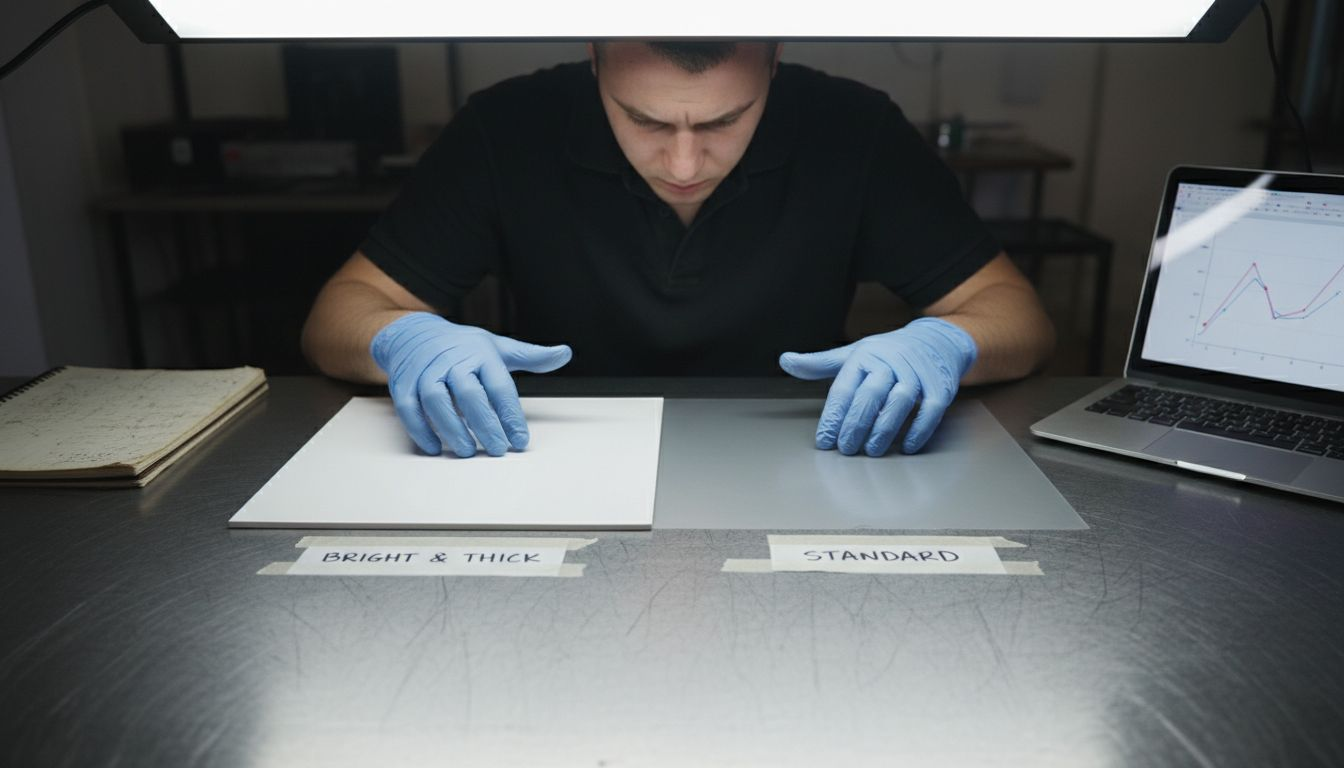
White ink performance has seen the most significant leap forward. Modern formulations deliver brighter whites on dark fabrics with a noticeably softer hand feel. This means your prints don’t crack or feel stiff when customers wear the garment. The softer texture rivals traditional screen printing results while maintaining DTF’s speed and affordability.
Film coatings have evolved considerably to improve ink adhesion and durability. Better coating technologies ensure your designs survive multiple wash cycles without fading or peeling. The film releases more cleanly from the backing, reducing waste and cleanup time. This consistency translates directly to fewer reprints and higher profit per order.
New film variants address specific fabric challenges you face regularly:
- Athletic wear films grip moisture-wicking synthetics securely
- Fashion textile films work on delicate fabrics without damage
- Blend-compatible films adapt to cotton-polyester combinations
- High-release films separate cleanly for faster production
- Enhanced adhesion films perform on difficult substrates
Automation advances in film handling and curing processes boost your scalability significantly. Modern curing systems reduce heat exposure time while maintaining adhesive activation. This speeds production without sacrificing quality. Your ability to handle larger batches without staffing increases translates to better margins on volume orders.
Reduced waste stands out as a practical benefit. Improved film consistency means fewer failed transfers that end up in the trash. Better release characteristics prevent film tearing during application. Over the course of a month, these small improvements compound into meaningful cost savings.
The latest film innovations in 2026 eliminate the trade-off between speed, quality, and soft hand feel—you achieve all three simultaneously.
Substrate compatibility has expanded dramatically. You can now confidently accept orders on athletic gear, fashion pieces, and specialty textiles that would have been risky just two years ago. This opens new revenue streams without requiring additional equipment investments.
Pro tip: Test new film types on sample orders first to verify hand feel and durability on your specific heat press before committing to large batches, ensuring consistency with your quality standards.
Automation, UV DTF, and Workflow Integration
Automation and UV DTF technology are reshaping how print shops operate in 2026. These advances eliminate repetitive manual tasks, freeing your team to focus on customer service and business growth. Understanding what these technologies do positions your shop for competitive advantage.
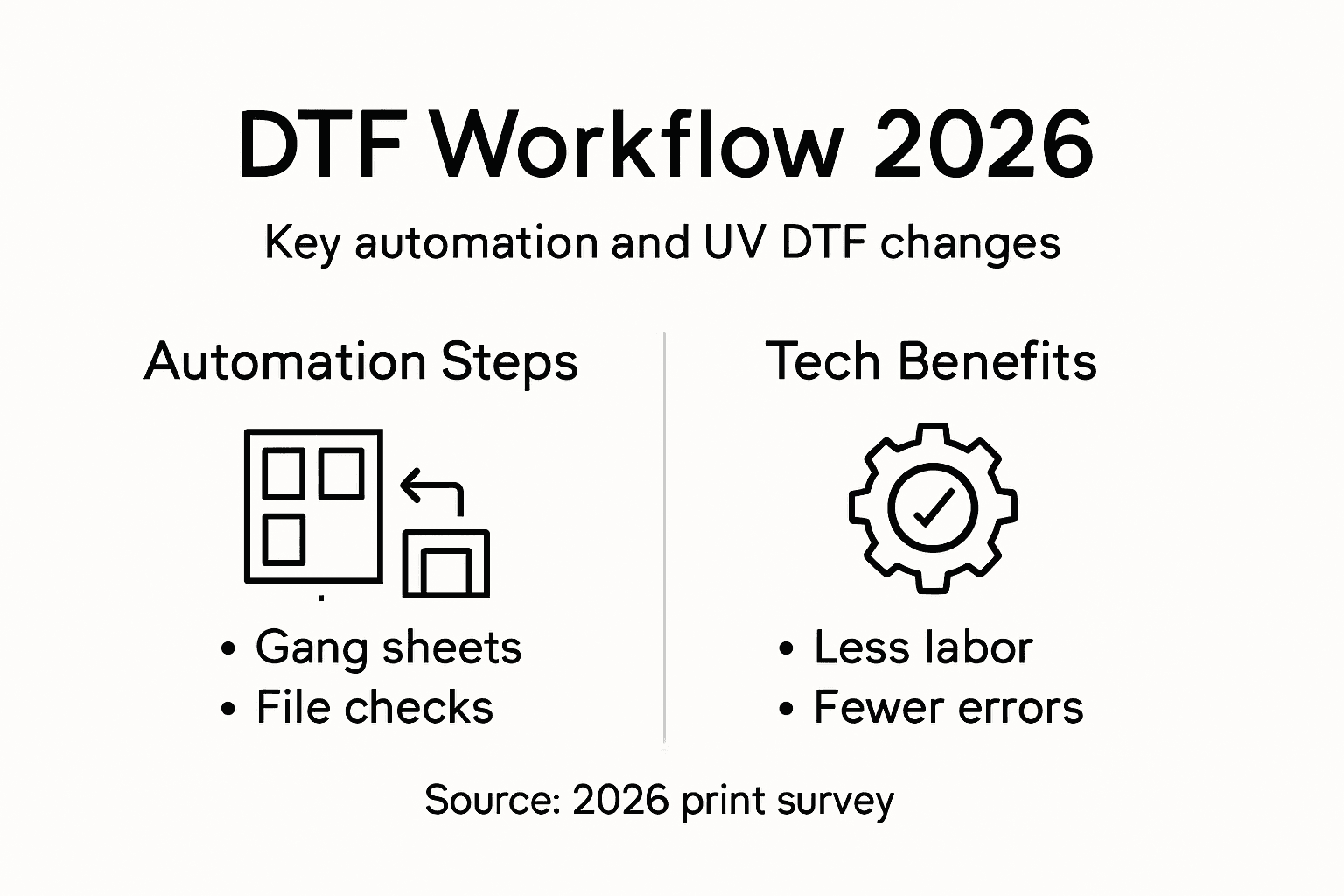
Automation in DTF workflows starts before the printer even fires. Intelligent sensors detect file errors and inconsistencies automatically. AI-driven printhead calibration maintains color accuracy across hundreds of prints without manual adjustment. Your RIP software now communicates directly with order management systems, reducing data entry errors dramatically.
Pre-print automation handles tedious tasks that previously consumed hours:
- Automated file processing converts customer designs to print-ready files
- Gang sheet optimization arranges multiple designs efficiently on film
- Real-time color management adjusts for substrate variations
- Digital asset organization prevents duplicate orders and mistakes
- Batch scheduling assigns jobs based on ink availability
These automations reduce manual labor significantly. Your staff spends less time correcting errors and more time fulfilling orders. This translates directly to faster turnaround times and higher profit margins.
UV DTF technology represents a fundamental shift in curing methods. Traditional DTF uses heat curing, which requires time and controlled temperature. UV DTF uses ultraviolet-curable inks cured instantly by UV light, enabling dramatically faster printing speeds. Ink dries in seconds rather than minutes, accelerating your entire production cycle.
UV DTF offers distinct advantages for your operation:
- Faster cure times reduce job completion intervals
- Enhanced durability on textiles, plastics, and metals
- Wider substrate compatibility expands market opportunities
- Lower heat exposure prevents fabric damage on delicate materials
- Consistent curing across all print areas eliminates soft spots
Workflow integration ties everything together seamlessly. Your order arrives, gets processed automatically, prints without manual intervention, and queues for the next station. Gang sheets optimize film usage automatically. Color management adjusts in real time. The result is fewer bottlenecks and faster throughput.
Integrated automation reduces production time by up to 40% while simultaneously decreasing error rates—you move faster without sacrificing quality.
Small shops benefit enormously from these technologies. You can accept larger volume orders without proportional staffing increases. Rush orders become profitable instead of chaotic. Your ability to compete against larger competitors improves significantly.
Pro tip: Start by automating your gang sheet optimization and file processing first—these changes deliver the fastest return on investment and free staff time for customer-facing tasks immediately.
Sustainability and Compliance in DTF Printing
Sustainability and regulatory compliance are no longer optional considerations for DTF printing in 2026. Customers increasingly demand eco-friendly products, while governments enforce stricter standards. Meeting these requirements protects your business from liability and opens doors to environmentally conscious markets.
Compliance starts with your inks. Inks must carry certifications such as OEKO-TEX Eco Passport and REACH to confirm the absence of harmful substances. These certifications verify that your inks won’t harm skin or the environment. Children’s apparel requires OEKO-TEX Class I certification, the highest safety standard for skin-contact textiles. This single requirement can unlock significant revenue from family-focused brands.
Key compliance requirements for your DTF operation:
- OEKO-TEX Eco Passport for general textile safety
- REACH certification to limit hazardous chemical exposure
- OEKO-TEX Class I for children’s clothing lines
- California Prop 65 compliance to address carcinogenic substances
- VOC emission management for worker protection
Hybrid water-based eco-solvent inks represent the sustainability sweet spot. They balance performance with environmental responsibility. These inks cure reliably, produce vibrant colors, and meet modern regulatory standards. They’re becoming the default choice for conscientious shops.
Volatile organic compound emissions during curing require careful management. Your workspace needs proper ventilation to protect worker health and meet regulatory limits. This isn’t just compliance—it’s protecting your team from long-term exposure risks. Upgrading ventilation systems pays dividends in worker safety and productivity.
DTF shops that prioritize sustainability certification now gain competitive advantage as consumer demand for eco-friendly apparel accelerates in 2026.
DTF printing sustainability initiatives directly impact your brand positioning. Eco-conscious customers pay premiums for certified sustainable products. Brands seeking sustainable printing partners actively seek shops with documented compliance. This positioning attracts higher-margin orders from premium customers.
Documentation matters enormously. Keep certified ink documentation, ventilation records, and compliance certificates organized and accessible. Customers request proof of compliance before placing large orders. Brands manufacturing for major retailers require documented compliance. Your organized records streamline these conversations and close deals faster.
Small shops gain advantage through agility. You can switch to sustainable inks faster than larger competitors locked into expensive equipment. You can achieve compliance certifications without massive capital investment. This positions you as the sustainable choice in your market.
The following table summarizes key compliance requirements and their impact for DTF shops:
| Certification | Required For | Impact on Business | Market Access |
|---|---|---|---|
| OEKO-TEX Eco Passport | General textiles | Reduces liability | Broader apparel sales |
| REACH | Hazardous substance limits | Meets EU regulations | European customers |
| OEKO-TEX Class I | Children’s garments | Unlocks family-focused brands | Kidswear retailers |
| California Prop 65 | US-based production | Avoids carcinogen penalties | California market |
Pro tip: Start with OEKO-TEX certification and document everything—these two actions satisfy most customer compliance requirements and position your shop as a trusted sustainable supplier.
Comparing DTF with DTG and Other Alternatives
Choosing between DTF and competing technologies shapes your entire business model. Each method serves different markets, fabric types, and production volumes. Understanding these distinctions helps you select the right technology for your target customers.
DTF versus DTG represents the most common decision for independent shops. DTF works across fabric types including cotton, polyester, blends, and dark garments without pre-treatment. DTG printing excels with 100 percent cotton and light-colored fabrics but requires expensive pretreatment for dark shirts. This fundamental difference shapes which customer orders you can profitably accept.
Key differences between DTF and DTG:
- DTF: Works on dark fabrics naturally, DTG: Requires pretreatment for darks
- DTF: Slightly textured, durable feel; DTG: Soft, ink-absorbed into fibers
- DTF: Vibrant colors on all fabrics; DTG: Photo-quality prints on cotton only
- DTF: Lower setup costs for small batches; DTG: Higher upfront investment
- DTF: Faster production; DTG: Slower curing process
Print durability favors DTF significantly. The adhesive powder creates a molecular bond that resists washing and wearing. DTG prints soften the fabric with absorbed ink, creating a natural feel but less durability. For customers buying workwear or athletic gear, DTF’s durability wins every time.
Hand feel matters for fashion-conscious brands. DTG creates a softer, more natural fabric feel since ink absorbs into fibers. DTF produces slightly textured prints that some customers perceive as premium. Your target market determines which feel they prefer.
Heat transfer vinyl represents an older alternative still used for simple designs. It requires precise cutting and weeding, consuming significant labor time. Heat transfer vinyl works well for small runs of single-design shirts but becomes expensive at scale. DTF eliminates these limitations while matching or beating heat transfer vinyl pricing.
DTF’s versatility across fabric types and colors gives independent shops competitive advantage over specialized printing methods limited to specific applications.
Screen printing remains relevant for massive volume orders but requires high minimum quantities. Setup costs are substantial, making small orders unprofitable. DTF’s minimum order flexibility lets you compete for orders screen printing shops reject.
Production volume determines technology fit. High-volume cotton-only orders favor DTG’s photo quality. Mixed fabric orders, dark garments, and small batches favor DTF. Your ability to accept diverse orders with DTF expands your addressable market significantly.
Here’s a comparison of DTF, DTG, Heat Transfer Vinyl, and Screen Printing for apparel production in 2026:
| Method | Best For | Setup Cost | Fabric Compatibility | Durability |
|---|---|---|---|---|
| DTF Transfer | Custom runs, blends | Low | Cotton, polyester, blends | High, resists washes |
| DTG Printing | Cotton, photo quality | Medium-High | Cotton only | Moderate, soft feel |
| Heat Transfer Vinyl | Simple designs, small | Moderate | Most fabrics | Moderate, can peel |
| Screen Printing | Large volume orders | High | Cotton, polyester | Excellent, mass use |
Pro tip: Position DTF for dark apparel, blends, and rush orders while referring cotton-only photo-quality jobs to DTG partners—this positions you as the versatile solution shops turn to first.
Unlock the Full Potential of DTF Transfer Technology with Transfer Kingz
The 2026 trends in DTF transfer technology point to incredible opportunities for print shops and brands ready to scale quickly and deliver premium quality prints on diverse fabrics without minimum order limits. If you want to overcome challenges like long turnaround times, expensive setup costs, and limited fabric compatibility, Transfer Kingz provides exactly what you need. Our advanced digital platform offers vibrant, durable transfers with premium inks and the latest film innovations that resist fading and cracking.
Experience the power of automation and high-quality materials by partnering with Transfer Kingz. Upload your artwork, use our gang sheet builder, and place orders that meet your production speed and sustainability demands. Whether you produce small custom runs or bulk orders, our quick turnaround and straightforward application methods put control in your hands. Start elevating your apparel printing by visiting Transfer Kingz today and unlock the future of versatile, affordable DTF transfers that customers trust.
Frequently Asked Questions
What is DTF transfer technology?
DTF (Direct-to-Film) transfer technology is a printing method that allows printers to create vibrant, durable designs on fabric without minimum order requirements. It uses water-based pigment inks to print designs on specialized polyester film, which are then transferred to garments using heat presses.
How does DTF printing compare to direct-to-garment (DTG) printing?
DTF printing allows for better adaptability across various fabric types, including dark garments and blends, without the need for pretreatment, unlike DTG which primarily works on 100% cotton and requires pretreatment for dark fabrics. DTF also offers faster production times and higher durability for printed designs.
What are the benefits of using DTF transfer technology for small print shops?
DTF transfer technology enables small print shops to produce high-resolution, durable prints with no minimum order quantities, making it cost-effective for custom jobs. It allows for quick turnaround times and offers flexibility in accepting a wide range of fabric orders, including blends and athletic wear.
How can sustainability be ensured in DTF printing?
Sustainability in DTF printing can be achieved by using hybrid water-based eco-solvent inks that comply with regulations and certifications such as OEKO-TEX Eco Passport and REACH. Proper ventilation in the workspace to manage VOC emissions is also essential for worker safety and meeting regulatory standards.
0 comments