

Choosing between DTF and DTG printing can feel overwhelming when your business depends on delivering quality custom apparel quickly and affordably. Many small business owners and independent decorators struggle with this decision, unsure how these two popular methods differ in cost, speed, and results. Understanding the distinction between Direct to Film (DTF) and Direct to Garment (DTG) printing directly impacts your startup investment, production efficiency, and final product quality. This guide breaks down the key differences to help you make informed decisions that enhance your custom print projects and streamline your operations.
Table of Contents
- Key takeaways
- What are DTF and DTG printing methods?
- Comparing costs, speed, and maintenance between DTF and DTG
- Print quality, durability, and fabric compatibility: what to expect
- Choosing the right printing method for your business needs
- Discover custom printing solutions with Transfer Kingz
- Frequently asked questions about DTF and DTG printing
Key Takeaways
| Point | Details |
|---|---|
| Startup cost gap | DTF systems cost significantly less upfront than DTG printers, making it easier for startups and small businesses to enter the market. |
| Speed advantage for small runs | DTF transfers can be printed and applied quickly, which helps fulfill rush orders without long pretreatment delays. |
| Maintenance demands differ | DTG requires ongoing pretreatment and routine maintenance such as printhead cleaning and ink circulation, increasing daily workload. |
| Cost per print comparison | DTF transfers typically cost about $1.50 to $5 per print, while DTG costs about $2 to $8 per garment. |
What are DTF and DTG printing methods?
Direct to Film printing creates custom designs by printing onto a special film transfer that you then apply to garments using heat and pressure. The process involves printing your design, applying adhesive powder, curing the transfer, and pressing it onto fabric. DTF requires no pretreatment and produces transfers that can be applied to various fabrics, making it versatile for different textile projects.
Direct to Garment printing works differently by spraying water-based ink directly onto the fabric surface, similar to how an inkjet printer works on paper. Most garments need pretreatment solution applied before printing to help the ink bond properly and create vibrant colors. DTG excels at producing photorealistic images and complex designs with smooth color gradients on natural fiber fabrics.
Both methods offer unique advantages depending on your business model and production needs:
- DTF transfers can be stored and applied later, offering inventory flexibility
- DTG provides immediate results with no intermediate transfer step
- DTF works on light and dark fabrics without significant process changes
- DTG creates softer prints that feel more integrated into the fabric
- DTF supports a wider range of fabric types including synthetics
- DTG requires specific fabric content for optimal results
Understanding how DTF printing works helps you recognize why it has become increasingly popular for small to medium production runs. The ability to print transfers in advance and apply them on demand gives decorators significant operational flexibility that traditional methods cannot match.
Comparing costs, speed, and maintenance between DTF and DTG
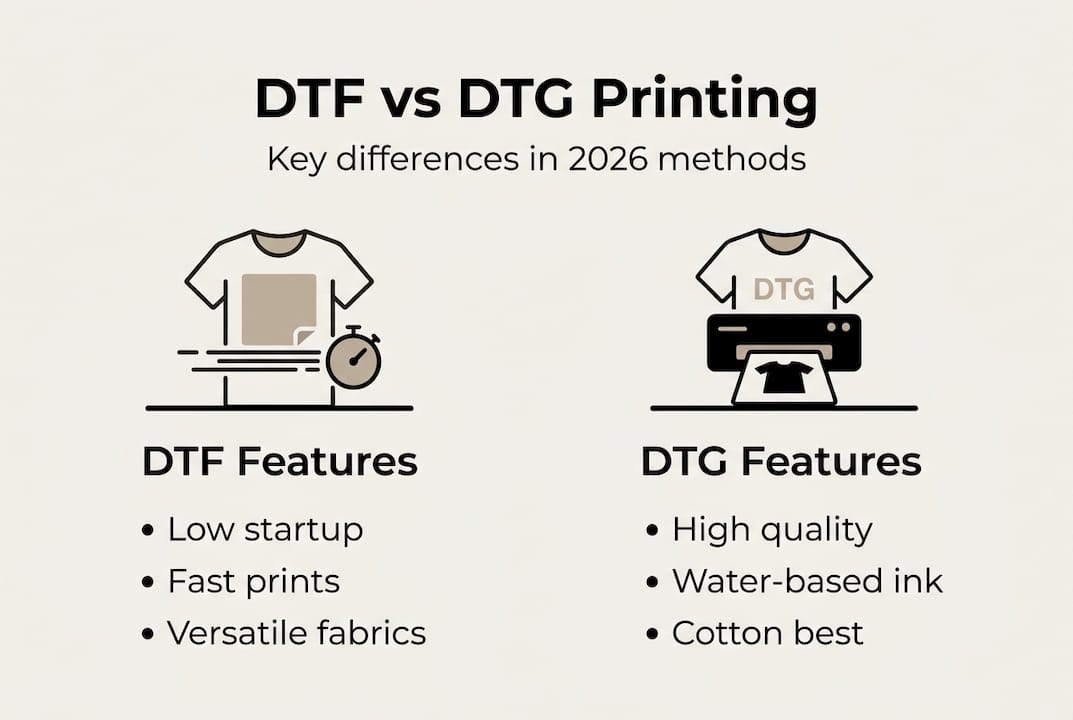
Startup investment represents one of the most significant differences between these two printing technologies. DTF systems range from $500 to $15,000 while DTG printers typically cost between $10,000 and $50,000 or more, making DTF far more accessible for startups and small businesses testing the custom apparel market.
Per-print economics tell an equally important story. DTF transfers cost approximately $1.50 to $5 per print depending on size and complexity, while DTG printing runs $2 to $8 per garment. The catch with DTG is that pretreatment costs push small run expenses higher, making it less economical until you reach significant production volumes where the per-unit cost advantage materializes.
| Cost Factor | DTF | DTG |
|---|---|---|
| Equipment investment | $500 to $15,000 | $10,000 to $50,000+ |
| Per print cost | $1.50 to $5 | $2 to $8 |
| Pretreatment expense | None | Adds cost per garment |
| Maintenance frequency | Low | High |
Production speed differences matter significantly for businesses handling rush orders or just-in-time production. DTF takes approximately 5 to 8 minutes per transfer from start to finish, with no pretreatment delays. DTG requires 6 to 13 minutes per garment when you factor in pretreatment application, drying time, and the actual printing process. For small runs of 10 to 50 pieces, DTF’s speed advantage compounds quickly.
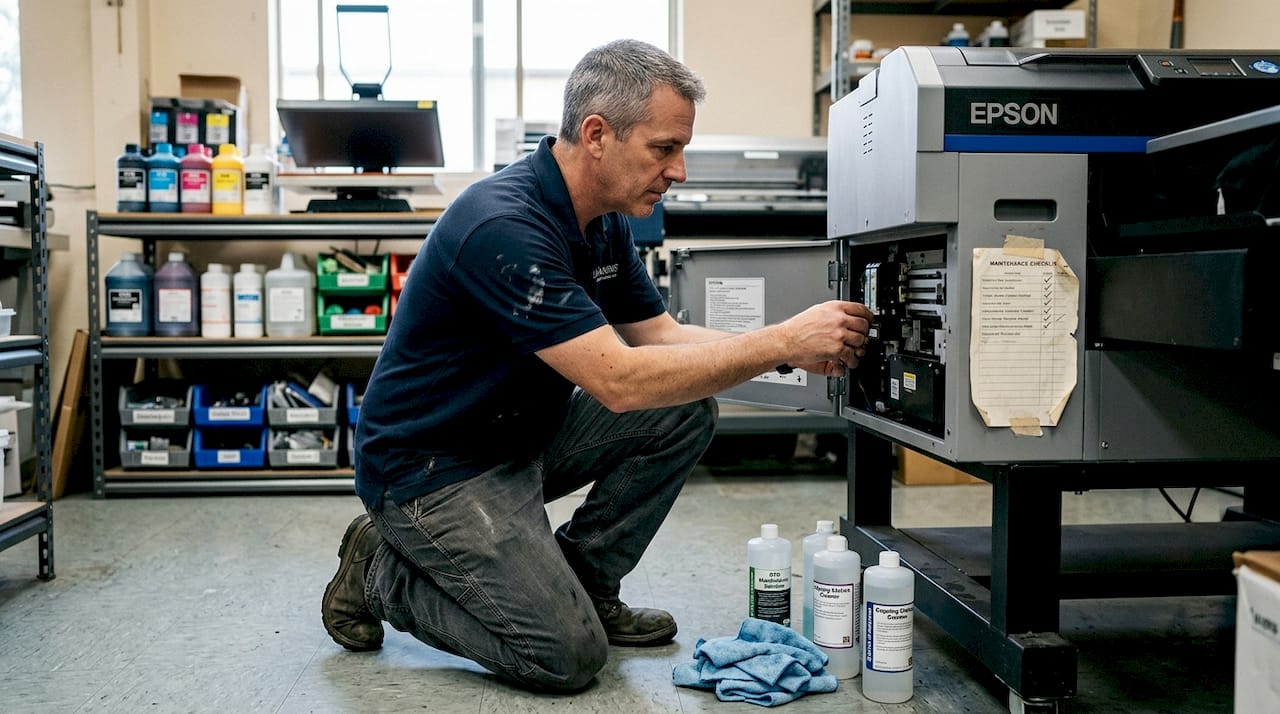
Maintenance requirements create ongoing operational differences that affect your daily workflow. DTF has lower maintenance demands with no pretreatment equipment to clean and minimal ink clogging issues. DTG systems need constant attention, including daily white ink circulation, regular printhead cleaning, and pretreatment machinery upkeep. This maintenance burden translates to both time and money, especially for smaller operations without dedicated technical staff.
Pro Tip: Calculate your expected monthly order volume and average order size before choosing a method. If you typically handle orders under 50 pieces with quick turnarounds, DTF printing’s lower setup costs and faster production speed will likely serve your business better than the higher investment and maintenance demands of DTG.
The cost and speed advantages of each method shift depending on your specific production scenario, making it essential to match the technology to your actual business patterns rather than theoretical capabilities.
Print quality, durability, and fabric compatibility: what to expect
Print quality characteristics differ noticeably between DTF and DTG methods, affecting both visual appeal and customer satisfaction. DTF prints create vibrant, durable transfers that work well on various fabric types including cotton and polyester blends. The transfers sit slightly on top of the fabric, creating a noticeable texture that some customers prefer for its bold appearance and substantial feel.
DTG printing produces softer prints that integrate more naturally into the fabric surface, making them ideal when a subtle, vintage look is desired. However, DTG is preferred for soft hand-feel prints and best on 100% cotton garments, but less ideal for dark or synthetic fabrics without extra treatment. The water-based inks absorb into natural fibers, creating prints that breathe better and feel less like an added layer.
Durability varies based on application method, fabric type, and care instructions:
- DTF transfers typically withstand 50+ wash cycles when properly applied
- DTG prints on cotton maintain quality through 40 to 50 washes with proper care
- DTF works better on performance fabrics and polyester blends
- DTG excels on natural fibers but fades faster on synthetics
- Both methods require inside-out washing and low heat drying for maximum longevity
Fabric compatibility represents a crucial decision factor for businesses working with diverse textile types. DTF transfers adhere successfully to cotton, polyester, cotton-poly blends, nylon, and even leather or certain plastics. This versatility makes DTF ideal for businesses producing everything from t-shirts to athletic wear to promotional products. The benefits of DTF transfers become especially apparent when you need one printing method that handles multiple fabric types without process changes.
DTG printing achieves its best results on 100% cotton and high-cotton-content blends, typically requiring at least 80% cotton for optimal ink absorption and color vibrancy. Printing on dark garments requires white ink underbase, which adds production time and can create a slightly stiffer feel. Synthetic fabrics present challenges for DTG because the water-based inks do not bond as effectively, leading to faster fading and potential cracking.
Pro Tip: Match your printing method to your target fabric types and customer expectations for best results. If your business focuses on premium cotton tees with soft vintage aesthetics, DTG delivers superior hand feel. If you need to offer diverse product lines including performance wear and varied fabric types, understanding what DTF printing offers helps you serve more customer segments with a single production method.
Choosing the right printing method for your business needs
Selecting between DTF and DTG requires evaluating your specific business model, customer base, and operational priorities. The right choice depends on multiple factors that interact in ways unique to your situation.
Follow these steps to determine which printing method aligns with your business:
-
Assess your typical order volume and size. If you regularly handle orders under 100 pieces with varied designs, DTF’s flexibility and speed offer clear advantages. Businesses processing hundreds of identical prints daily may benefit from DTG’s streamlined workflow once the higher startup investment is justified.
-
Evaluate your budget realistically, including startup costs, ongoing maintenance, and per-print expenses. Calculate your break-even point for each method based on projected monthly volume. Remember that DTF’s lower entry cost lets you start generating revenue faster while testing market demand.
-
Identify the fabric types you plan to print on most frequently. If your product line includes performance wear, polyester blends, or diverse textile types, DTF provides the versatility you need. Businesses focused exclusively on premium cotton apparel may prefer DTG’s soft hand feel and integrated look.
-
Consider your production space and technical capabilities. DTG systems require more maintenance expertise and dedicated space for pretreatment equipment. DTF setups work in smaller spaces and demand less technical knowledge for daily operations.
-
Determine your priority between production speed and print characteristics. Custom DTF printing excels when quick turnarounds matter most. DTG suits businesses where print softness and a barely-there feel justify longer production times.
-
Factor in your growth plans and scalability needs. DTF systems scale easily by adding heat presses and printing transfers in batches. DTG scaling requires purchasing additional expensive printers, making expansion more capital intensive.
Many successful apparel decorators eventually adopt both methods, using each for its ideal applications. Starting with DTF often makes financial sense because the lower investment and operational simplicity let you build revenue and experience before adding DTG capabilities. The role of DTF in apparel businesses continues expanding as the technology improves and more decorators recognize its versatility.
Your customer base also influences method selection. Customers ordering small quantities with varied designs benefit from DTF’s efficiency, while clients needing large runs of identical designs on cotton may prefer DTG’s soft finish. Understanding these preferences helps you position your services effectively and set appropriate customer expectations.
Discover custom printing solutions with Transfer Kingz
Now that you understand the key differences between DTF and DTG printing, you can make informed decisions that improve your custom apparel business. Transfer Kingz specializes in high-quality DTF transfers that deliver the vibrant colors, durability, and versatility your projects demand. We support small businesses, independent artists, and apparel decorators with premium inks, fast turnaround times, and no minimum order requirements.
Our gang sheet builders and straightforward application methods make it easy to start producing professional custom prints immediately, even if you’re new to DTF technology. Whether you’re testing the market or scaling an established operation, Transfer Kingz provides the custom printing solutions and expert guidance you need to succeed in the competitive custom apparel industry.
Frequently asked questions about DTF and DTG printing
What fabrics work best with each method?
DTF transfers work excellently on cotton, polyester, blends, nylon, and even leather, making them the most versatile option for diverse product lines. DTG printing achieves optimal results on 100% cotton or high-cotton-content fabrics, typically requiring at least 80% cotton for vibrant, durable prints.
Can I switch between DTF and DTG for different orders?
Yes, many successful apparel businesses use both methods strategically, applying DTF for small runs, synthetic fabrics, and rush orders while using DTG for large cotton orders where soft hand feel matters most. This hybrid approach maximizes efficiency and quality across different customer requirements.
Which method is more eco-friendly?
DTG generally has a smaller environmental footprint because it uses water-based inks and prints only what’s needed directly on garments, reducing waste. DTF involves film and adhesive powder that create more material waste, though both methods have improved sustainability through better ink formulations and waste reduction practices.
How does pretreatment affect DTG costs?
Pretreatment adds significant cost and time to DTG printing, requiring solution purchase, application equipment, and drying time before printing begins. For small orders, these pretreatment expenses can increase per-garment costs by $0.50 to $1.50, making DTG less economical than DTF until you reach higher production volumes.
Is one method better for printing complex designs?
Both methods handle complex designs well, but DTF excels at intricate details, fine lines, and designs with many colors because the film captures precise detail without ink bleeding. DTG produces excellent photorealistic images and smooth gradients on cotton but may struggle with very fine details on textured fabrics.
0 comments