

The methods that cut environmental impact fastest are digital, on-demand printing for short runs, LED-UV or waterless offset for higher-volume jobs, and a switch to recycled or FSC-certified stock paired with water-based or vegetable-based inks. If you do nothing else this week, set your printers to duplex by default, switch office documents to black-and-white unless color is required, and start asking your print vendor for proof of FSC certification or recycled content.
Those three moves cost nothing and take less than an hour to implement. Duplex printing alone can cut paper consumption by roughly 50% when it’s paired with print-management software that actually tracks whether the setting sticks. That single change, from a manufacturer’s own operational data, is the kind of low-effort, high-return fix most offices skip because nobody assigned it to anyone.
Here’s what the rest of this guide covers: which printing methods and technologies genuinely reduce waste and emissions, how to read a paper or ink label without falling for greenwashing, what a credible green print vendor actually looks like, and where textile printing specifically (DTF, DTG, screen, sublimation) fits into all of this. Prioritized action steps:
- Enable duplex and black-and-white defaults on every shared printer today.
- Request FSC chain-of-custody documentation from your current paper supplier this week.
- Pilot one product line with a lower-impact method (digital on-demand or a recycled substrate) before committing your full catalog.
- Short runs and variable content: digital, on-demand printing
- High-volume runs: LED-UV or waterless offset
- Textiles and apparel: DTF or screen printing with water-based inks, depending on order size
Key Takeaways
The fastest path to lower-impact printing combines behavioral defaults (duplex, B&W), method selection matched to run length, and verified materials over marketing claims.
| Point | Details |
|---|---|
| Set duplex by default | Combined with tracking software, this can cut paper use by about 50% at no cost. |
| Match method to run length | Choose digital or DTF for short runs; save LED-UV or offset for high-volume jobs. |
| Verify, don’t trust labels | Ask suppliers for FSC certificate numbers and third-party audit reports, not just logos. |
| Pilot before scaling | Test one substrate, ink, or method change on one product line before a full rollout. |
| Transferkingz for textile transfers | No minimum order DTF transfers with on-demand production reduce overprinting waste for apparel runs. |
Table of Contents
- What Are the Main Eco-Friendly Printing Methods?
- Which Papers and Inks Are Actually Low-Impact?
- How Do Energy and Process Changes Cut Impact?
- What Operational Changes Reduce Waste Right Away?
- Which Certifications Actually Verify Green Claims?
- How Do You Choose a Green Print Vendor?
- What Do Greener Printing Changes Cost, and How Fast Do They Pay Off?
- Which Textile Printing Method Is the Greenest Choice?
- What Actually Counts as Eco-Friendly Printing?
- How Should You Handle Paper and Cartridge Recycling?
- Where Should a Sustainability Program Actually Start?
- Where Do Sustainable DTF Transfers Fit Into This Checklist?
- Frequently Asked Questions
- Sources
What Are the Main Eco-Friendly Printing Methods?
Six methods cover most of what businesses and individuals actually use, and each one earns its “green” label under different conditions. None of them is universally best. The right choice depends on run length, substrate, and how much waste a mistake generates.
Digital printing prints directly from a file with no plates, so a run of 50 sheets produces roughly the same waste ratio as a run of 5,000. It’s the greenest option for short runs and variable content because there’s no setup waste and no unused inventory sitting in a warehouse.
LED-UV and UV-LED curing dries ink almost instantly using light-emitting diodes instead of heat lamps or solvent evaporation. The lamps switch on and off instantly, which means no idle energy draw between jobs, and the process avoids the VOC-heavy solvents traditional UV curing sometimes requires.
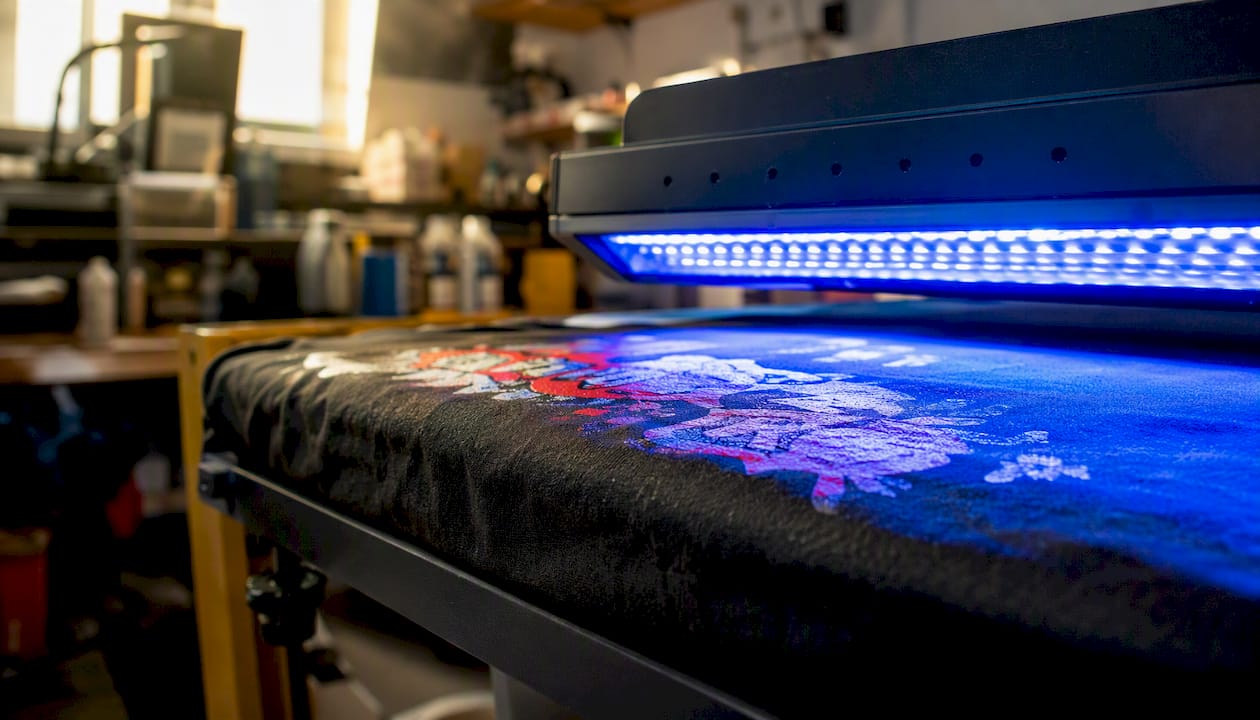
Waterless offset removes the fountain solution (a water and chemical mix) that conventional offset presses use to keep non-image areas ink-free. Less water means fewer chemicals down the drain and, according to industry coverage of sustainable printing technologies, a meaningfully smaller wastewater footprint per run.
Flexography, especially modernized setups with water-based inks and reusable sleeves, has become one of the more sustainable choices for flexible packaging. Industry analysis comparing print methods notes that gravure and traditional screen printing tend to score lower on sustainability at large production volumes, mostly due to solvent use and plate waste.
DTF (direct-to-film) and DTG (direct-to-garment) apply ink or transfer film directly to fabric with no screens to reclaim and no minimum order to hit. Screen printing with eco-formulated inks still makes sense for very large, single-design apparel runs where its per-unit cost drops below digital methods.
Pro Tip: Match the method to the run length before you shop for “green” claims. A vendor’s most eco-friendly process on paper can still be the wrong choice if it forces you into minimum order quantities that generate unsold inventory.
Operational software like PaperCut doesn’t replace any of these methods, but it makes the difference visible: it tracks which jobs actually run duplex, which don’t, and where waste concentrates.
Which Papers and Inks Are Actually Low-Impact?
Not all “eco” paper is equal, and the label on a ream tells you less than the fiber content does. Here’s the substrate hierarchy that actually matters for recyclability and lifecycle impact:
- 100% post-consumer recycled (PCR) paper: the lowest-impact mainstream option; slightly higher cost, comparable print quality on modern presses.
- Pre-consumer recycled paper: made from mill scraps rather than used paper; less impactful than PCR but still better than virgin fiber.
- FSC-certified virgin fiber: sourced from responsibly managed forests with documented chain of custody; the right call when recycled stock isn’t available in the weight or finish you need.
- Tree-free stocks (bamboo, hemp): fast-growing and low-input, but availability and cost vary by region.
- Bagasse and sugarcane paper: a byproduct of sugar production, genuinely low-impact, but limited in coated finishes.
- Seed paper: compostable and plantable, useful for marketing pieces, not viable for anything requiring durability.
Ink choice matters just as much as substrate. Water-based and vegetable-based inks lower VOC emissions substantially compared to petroleum-solvent inks, and they’re easier to de-ink during the paper recycling process, which matters if your printed material is meant for a circular life.
| Ink type | Recyclability trade-off | VOC footprint |
|---|---|---|
| Water-based | Easy de-inking, recycles cleanly | Low |
| Soy/vegetable-based | Good de-inking, some formulations vary | Low to moderate |
| UV/LED-cured | Depends on formulation; some resist de-inking | Low (no solvent evaporation) |
| Plastisol/PVC | Poor de-inking, contaminates recycling stream | High |
When you’re vetting a supplier, ask for the specific certification, not a general claim. FSC certification confirms fiber sourcing. Blue Angel and Cradle to Cradle go further, addressing toxicology and full-material recyclability, which matters more for packaging and textile substrates than for standard office paper.
How Do Energy and Process Changes Cut Impact?
Process technology is where the sustainability conversation has moved fastest over the past few years, shifting from single-issue fixes (just use recycled paper) toward full-process optimization across energy, ink, and workflow. That shift toward whole-process thinking is now standard guidance across the commercial print industry.
LED-UV and UV-LED curing systems draw power only when actively curing ink, unlike traditional UV lamps that stay warmed up between jobs. That instant on/off behavior matters most for shops running frequent short jobs throughout the day, where idle-lamp energy waste used to add up fast.
Waterless offset cuts water use at the press itself, and digital workflows cut waste further upstream by eliminating the “make-ready” process, the test sheets and calibration runs that conventional offset presses require before a job even starts. A digital press skips that step entirely.
Statistic Callout: Enabling duplex printing as a company-wide default, paired with print-management software to enforce it, can cut paper consumption by about 50%. That’s before touching press technology at all.
Renewable electricity sourcing is the lever most businesses overlook because it happens at the manufacturer level, not the print shop. Ask your paper and press suppliers whether their production facilities run on renewable power. Some already match a portion of production electricity with renewable sources, and that detail rarely shows up unless you ask directly.
What Operational Changes Reduce Waste Right Away?
Behavior and workflow controls are the cheapest lever in this entire guide, and most organizations skip straight to buying new equipment before trying them. Print-management software and simple default changes routinely outperform hardware upgrades on cost-per-impact.
- Set duplex printing as the default on every networked printer, not just the main office copier.
- Set black-and-white as the default print mode, reserving color for jobs that need it.
- Turn on secure/hold-and-release printing so jobs only print when the person is physically at the printer, which eliminates abandoned print jobs.
- Apply print quotas or departmental chargebacks to discourage “just in case” printing.
- Move toward on-demand and short-run production instead of pre-printing inventory that might not sell or get used.
NYU’s sustainability guidance lists these same behavior changes as the most effective first-line measures for any office, precisely because they require no capital investment.
A practical rollout looks like this:
- Week 1 (IT): Change default settings on all networked printers to duplex and B&W.
- Week 2 to 4 (IT/procurement): Deploy tracking software like PaperCut to establish a baseline and flag high-volume users or departments.
- Month 2 (operations): Introduce quotas or a simple approval step for large color jobs.
- Ongoing (procurement): Set up cartridge and toner take-back programs with your supplier; most major manufacturers, including Konica Minolta, offer recycling programs for spent cartridges and plates.
Track results monthly. Software like PaperCut doesn’t just enforce rules, it shows you exactly which floor, department, or job type generates the most waste, so you can target fixes instead of guessing.
Which Certifications Actually Verify Green Claims?
FSC certification is the one to ask for first. It confirms the wood fiber in your paper came from a responsibly managed forest and traveled through a documented chain of custody from forest to finished product. FSC’s own standards require third-party audits, not just a supplier’s word.
Blue Angel, a German ecolabel now recognized internationally, goes beyond sourcing to evaluate the full production process, including energy use and chemical safety. Cradle to Cradle certifies material health and recyclability, useful when you’re evaluating packaging or textile substrates where a product’s afterlife matters as much as its production.
Genuine sustainability claims cover materials, energy, waste handling, and verified certification together, not just one convenient data point. A broader breakdown of what eco-friendly printing actually requires makes the same point: a supplier touting recycled paper while running on standard grid power and using solvent-based inks isn’t offering a complete sustainability story.
Six questions to ask any print vendor before you sign:
- Can you provide your FSC or equivalent certificate number so I can verify it independently?
- What percentage of your production electricity comes from renewable sources?
- Do you have a recent third-party audit report I can review?
- What is your carbon-balanced methodology, if you claim carbon neutrality?
- What ink types do you use, and are they water-based, soy-based, or solvent-based?
- Do you offer take-back or recycling programs for cartridges, plates, or offcuts?
Red flags: a supplier that shows certification logos on their website but can’t produce a certificate number, vague language like “eco-conscious materials” with no specifics, and any claim of “carbon neutral” with no explanation of the offset methodology behind it.
How Do You Choose a Green Print Vendor?
Run every potential vendor through the same five categories: materials, inks, energy sourcing, waste handling, and reporting transparency. A vendor that scores well on materials but won’t discuss energy sourcing is halfway credible at best.
Prioritize in this order for most projects:
- Environmental impact (paper source, ink type, energy mix, VOC levels)
- Cost, both upfront and per-unit, since some low-impact options carry a premium at low volumes
- Compatibility with your existing files, workflows, and order systems
- Timeline and implementation difficulty, since switching substrates is a quick change, but switching press technology is not
A vendor that can’t answer washfastness questions for apparel probably hasn’t tested their process rigorously.
Avoid vendors who quote a price without asking about your substrate or ink preferences, who can’t name a specific certification body when asked, or who have no documented process for handling production waste. Those are the same gaps that show up later as unexplained quality issues or compliance headaches.
What Do Greener Printing Changes Cost, and How Fast Do They Pay Off?
Costs split cleanly into four tiers, and knowing which tier a change falls into helps you sequence the rollout instead of trying to do everything at once.
- Software and controls (lowest cost): print-management tools, default setting changes. Implementation takes days, and payback starts immediately through reduced paper and toner purchases.
- Substrate upgrades (variable cost): recycled or FSC-certified paper often costs slightly more per ream than standard virgin stock, though the gap has narrowed. Implementation takes one to two supplier conversations, typically a few weeks.
- Equipment replacement (capital cost): LED-UV curing systems or waterless offset presses represent a real capital outlay. Implementation runs months, and payback depends on volume; high-throughput operations recover costs faster through lower energy bills and fewer wasted plates.
- Certification and audit costs: FSC chain-of-custody certification for your own operation (not just your supplier’s) involves an application and audit fee, plus ongoing compliance. Worth pursuing if certification itself is a selling point to your customers.
Statistic Callout: The fastest, cheapest win on this entire list remains duplex-by-default paired with tracking software, which can cut paper use by half with zero capital investment. ROI shows up in the very first billing cycle.
Budget tip: pilot one product line or department before rolling any change out company-wide. Negotiate a sample run with a new substrate supplier before committing to a full order, and prioritize whichever change pays back fastest, usually the behavioral ones, before tackling equipment. A workflow optimization checklist can help sequence which changes to pilot first if you’re managing a busy production schedule.
Which Textile Printing Method Is the Greenest Choice?
Apparel decorators face a different set of trade-offs than office or packaging printers, because textile printing methods vary enormously in water use, chemical load, and minimum order requirements.
DTF (direct-to-film) transfers a design printed on film onto fabric using heat and pressure, with no screens to reclaim and no color-separation setup. It handles small runs and full-color, photorealistic designs without the setup waste screen printing generates, and it works across cotton, polyester, and blends without switching equipment. That flexibility is why it’s become the default choice for decorators fulfilling one-off or small-batch orders. A closer look at DTF’s sustainability profile breaks down where its footprint actually falls.
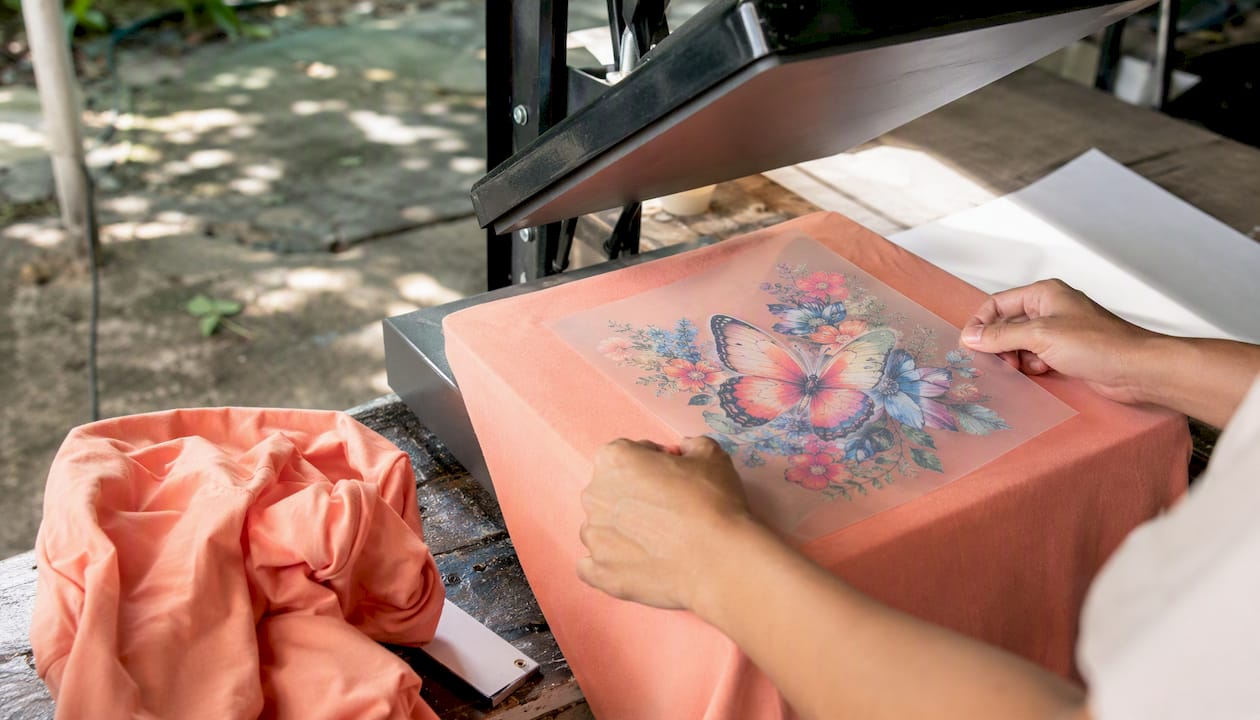
Dye-sublimation bonds ink directly into polyester fibers using heat, producing vivid, durable prints, but it’s restricted almost entirely to polyester and poly-coated substrates.
Screen printing, even with water-based inks, still requires screen setup and reclaiming, which generates wash-off waste and consumes water during screen cleaning, unless a shop invests in a closed-loop reclaiming system.
| Method | Environmental impact | Cost | Best for | Compatibility | Implementation difficulty |
|---|---|---|---|---|---|
| DTF | Low waste, no minimums, film/liner disposal to manage | Low upfront, per-unit cost stable | Small runs, full-color designs | Cotton, polyester, blends | Low |
| DTG | Low waste on cotton, pretreatment chemicals for blends | Moderate upfront | Cotton-heavy small runs | Best on cotton | Moderate |
| Dye-sublimation | Low waste, limited to polyester | Moderate upfront | All-over prints, polyester goods | Polyester only | Moderate |
| Screen printing | Screen reclaiming water/chemical use, efficient at scale | High upfront, low per-unit at volume | Large single-design runs | Broad, with pretreatment | High |
For a small business testing a new design line, DTF avoids the minimum-order waste that screen printing forces on low-volume runs. For a shop running thousands of identical units, screen printing’s per-unit cost and efficiency at scale still make sense despite the higher water and chemical use per screen cycle. A broader comparison of textile printing methods walks through where each option fits a growing apparel business.
What Actually Counts as Eco-Friendly Printing?
Eco-friendly printing means reducing the environmental footprint of a print job across its full lifecycle: the fiber in the paper, the chemicals in the ink, the energy that ran the press, and what happens to the material after its useful life ends. It’s not one action. It’s a stack of decisions that compound.
The core benefits break down into three measurable categories. Reduced waste comes from matching production volume to actual demand (digital and on-demand methods) and from operational controls like duplex defaults. Reduced energy use comes from process technology like LED-UV curing and from sourcing renewable power at the production level. Reduced emissions comes primarily from ink choice, since water-based and vegetable-based formulations release far fewer volatile organic compounds than solvent-based alternatives.
None of these benefits require choosing between quality and sustainability. Modern digital presses and DTF transfer processes produce color-accurate, durable output that matches or beats older, higher-waste methods on final print quality.
How Should You Handle Paper and Cartridge Recycling?
End-of-life handling is the part of the sustainability story most guides skip, and it’s where a lot of “green” printing quietly fails. Recycled paper only stays recycled if it actually gets collected, sorted, and reprocessed, and ink type determines how easily that happens.
Water-based and vegetable-based inks de-ink cleanly during the pulping process, which means paper printed with them re-enters the recycling stream with fewer contaminants. Petroleum-solvent inks and plastisol resist de-inking, which can drag down the quality of an entire batch of recycled pulp.
For toner and ink cartridges, most major manufacturers, Konica Minolta included, run take-back programs where you ship spent cartridges back for recycling or refurbishment instead of landfilling them. Set up a standing pickup or mail-back arrangement with your supplier rather than treating it as a one-off task; recurring programs catch far more cartridges than ad hoc recycling drives.
For textile production specifically, film and liner waste from DTF transfers, and screen reclaiming wastewater from screen printing, need separate handling. Ask any transfer or apparel supplier what happens to their film backing and whether their reclaiming water gets treated before disposal. It’s a fair question, and a credible vendor will have a straight answer.
Where Should a Sustainability Program Actually Start?
Most sustainability plans fail for a boring reason: they try to fix everything at once instead of picking one lever that actually moves the needle. If you’re building a print sustainability program from nothing, three steps get you further than a twenty-item checklist.
Start with a pilot, not a mandate. Pick one product line, one department, or one print job type, and change exactly one variable, substrate, ink, or method. Measure it for thirty days before rolling it out further. Trying to overhaul paper, ink, and equipment simultaneously makes it impossible to know which change actually drove the result.
Measure before you scale. Print-management software isn’t optional if you’re serious about this. Without a baseline number for pages, color usage, and waste, you’re guessing at impact instead of proving it. The businesses that stick with sustainability programs are the ones that can point to a specific percentage reduction, not a vague sense of “we’ve gotten better.”
The operational habit that moves the needle most, in my read of how these programs actually play out, is secure release printing. It sounds like a minor IT setting, but it eliminates the pile of forgotten, duplicate, and abandoned print jobs that quietly account for a large share of office paper waste. Nobody notices it’s gone because nobody misses the mess it prevented.
A realistic rollout: by day 30, defaults are set and tracking is live. By day 90, you have a baseline waste number and one pilot substrate or method change underway. By day 180, you’re comparing pilot results against baseline and deciding whether to scale the change company-wide or try a different lever instead.
Where Do Sustainable DTF Transfers Fit Into This Checklist?
If you run through the vendor-selection checklist above (no minimums, on-demand production, verified materials, transparent processes), custom DTF transfers check most of those boxes by design. Transferkingz runs without minimum order requirements, so you’re never forced into a large print run just to hit a price break, which is exactly the kind of overproduction waste this guide has been steering you away from.
Orders run on-demand rather than from pre-printed inventory, using premium inks and films built for durability across cotton, polyester, glass, and acrylic. That flexibility matters if you’re testing a new design or running a small batch for a client instead of committing to a bulk print you might not sell through. Same-day local pickup and nationwide shipping options mean you’re not stockpiling transfers, either, another point off the waste column.
This is one supplier option among several discussed in this guide, and it’s worth applying the same certification and process questions here that you’d ask anyone else. If you want to see how the sheet builder and ordering process works for your next apparel run, check out Transferkingz’s Print Point hub or browse custom DTF transfer options in Texas for regional fulfillment.
Frequently Asked Questions
What is the single most eco-friendly printing method? There isn’t one universal answer. Digital printing is the greenest choice for short, variable runs because it generates no plate waste and no unsold inventory. For high-volume jobs, waterless offset or LED-UV systems typically outperform digital on a per-unit basis.
Is recycled paper actually better for the environment than virgin paper? Yes, generally. Recycled paper production uses less energy and fewer raw materials than virgin fiber production, though FSC-certified virgin fiber is still a responsible choice when recycled stock isn’t available in the weight or finish a project requires.
Do eco-friendly inks cost more than standard inks? Water-based and vegetable-based inks have largely closed the price gap with solvent-based options, though pricing still varies by supplier and formulation. The bigger cost driver tends to be equipment compatibility, not the ink itself.
How do I know if a printer’s sustainability claims are real? Ask for a specific certificate number (FSC, Blue Angel, or Cradle to Cradle) and verify it independently through the certifying body’s website. Vague language like “eco-conscious” with no documentation is a red flag.
Is DTF printing more sustainable than screen printing? For small to mid-size runs, DTF generally produces less waste because it requires no screens, no color separations, and no minimum order quantity. Screen printing can be more efficient per unit at very large volumes despite its higher water and chemical use during screen reclaiming.
Sources
- Sustainable printing — Konica Minolta Business Solutions U.S.
- A guide to eco-friendly printing — PaperCut
- Sustainable Printing Practices & Technologies | drupa blog
- What is eco-friendly printing? - MOO Blog
- Forest Stewardship Council (FSC)
When you’re evaluating any specific vendor claim, always ask for the underlying certificate or audit document rather than taking a website badge at face value.
0 comments