

TL;DR:
- Embroidery offers durability and texture ideal for large, repeat orders, while heat transfer provides speed and vibrant color options for short runs. Small business owners should choose method based on fabric type and order size, requesting detailed cost breakdowns before production. Transferkingz offers high-quality DTF transfers suitable for quick, full-color decoration without minimums.
Embroidery vs heat transfer benefits define the core choice every small business owner faces when decorating custom apparel. Embroidery uses stitched thread to create a raised, textured finish with lasting durability. Heat transfer uses heat-pressed vinyl or digital prints to deliver flat, detailed, and color-rich designs. The right method depends on your production volume, fabric type, and branding goals. Neither method wins outright. Each has a clear advantage in the right situation.
1. How does production volume influence embroidery and heat transfer benefits?
Production volume is the single biggest factor in your decoration cost. Embroidery carries a one-time digitizing fee per design, which spreads efficiently across large orders of 100 or more pieces. Heat transfer has lower upfront setup costs but higher per-unit material costs, making it better for short runs under 24–50 pieces.
The math matters here. If you order 200 polo shirts with an embroidered chest logo, the digitizing fee becomes a small fraction of each unit’s cost. Order 15 shirts with the same logo, and that fee makes embroidery expensive per piece. Heat transfer flips this equation by keeping setup costs low regardless of quantity.
Small business owners often miss the full picture when comparing quotes. Total decoration costs include digitizing fees, film costs, and labor, not just the headline unit price. A quote that looks cheaper may omit setup fees entirely.
Pro Tip: Always ask vendors to break out setup fees, digitizing costs, and per-unit material costs separately. A low unit price with a hidden $75 digitizing fee can flip the math on small orders.

2. What design and fabric considerations affect the choice?
Fabric type determines which method performs well and which one fails. Embroidery works best on heavier, structured materials like cotton twill, canvas, denim, and structured caps. On stretch or lightweight fabrics, embroidery causes puckering and distortion that ruins the garment’s appearance.
Heat transfer adapts well to moisture-wicking polyester, spandex blends, and lightweight performance fabrics. These materials respond poorly to the weight and tension of stitching. A heat-pressed transfer sits on top of the fabric without pulling or distorting the weave.
Design complexity also drives the decision. Heat transfer captures gradients, multi-color logos, and photo-realistic images that embroidery thread simply cannot replicate. Embroidery, by contrast, delivers a tactile, three-dimensional finish that reads as premium on corporate uniforms and structured outerwear.
- Embroidery suits: cotton polos, structured caps, denim jackets, canvas tote bags
- Heat transfer suits: performance tees, athletic jerseys, lightweight hoodies, stretch fabrics
- Embroidery excels with: simple logos, text, crests, and monograms
- Heat transfer excels with: full-color graphics, gradients, photographic prints, and detailed illustrations
Pro Tip: If your logo includes more than four colors or any gradient, skip embroidery entirely. Thread color matching is limited, and gradients are impossible to stitch cleanly.
3. What durability differences exist between embroidery and heat transfer?
Embroidery outlasts heat transfer in nearly every wear and wash scenario. Embroidery stitching resists fading, rubbing, and repeated washing far better than any heat-pressed application. The thread is physically woven into the fabric, so it does not sit on the surface where friction and heat can degrade it.
Heat transfer durability depends heavily on material quality and application technique. Low-quality transfers crack and peel after a dozen washes. High-quality Direct-to-Film (DTF) transfers from a reputable supplier hold up significantly longer, but they still require proper care. Washing inside out in cold water and avoiding high-heat dryers extends their life considerably.
Embroidery adds weight and stiffness to the decorated area. This matters for performance apparel where breathability and flexibility are priorities. A large embroidered back panel on a running shirt creates discomfort that a heat transfer would not.
| Factor | Embroidery | Heat Transfer |
|---|---|---|
| Wash resistance | Excellent, does not fade or peel | Good with quality materials, can crack with poor care |
| Fabric weight added | Noticeable, especially on large designs | Minimal, preserves fabric feel |
| Durability over time | Very high, thread is woven into fabric | Moderate, depends on transfer quality |
| Best for | Uniforms, caps, structured garments | Performance wear, short-run apparel |
4. How do production timelines and customization flexibility compare?
Heat transfer wins on speed. Heat transfer production requires less setup time and adapts quickly to design changes, making it the right choice for rush orders or last-minute branding needs. A DTF transfer can go from artwork file to finished garment in hours.
Embroidery requires digitizing, which converts your artwork into a stitch file. This process takes time and must be redone if the design changes significantly. Once digitized, embroidery machines run efficiently for repeat orders, but the initial setup adds days to your timeline.
Heat transfer also handles multi-color and complex artwork without additional cost per color. Embroidery charges increase with stitch count and color changes, which adds up fast on detailed logos.
- Heat transfer: fast setup, same-day production possible, easy design revisions
- Embroidery: slower initial setup, efficient for repeat large runs, limited design flexibility
- DTF transfers: no minimum order quantities, full-color printing, quick turnaround
- Embroidery: best when the same design repeats across hundreds of identical pieces
Physical sample approvals are non-negotiable before bulk production. Digital mockups hide issues like thread puckering, backing stiffness, and transfer peeling that only appear on an actual garment.
5. When should small businesses use embroidery, heat transfer, or both?
The choice between embroidery and heat transfer is a production decision, not just a design preference. Decoration method selection must align with brand image, fabric type, and the realities of your production budget.
Embroidery is the right call for corporate uniforms, structured caps, and any garment where a premium, heritage look matters. Law firms, financial services companies, and hospitality brands consistently choose embroidery because it signals professionalism and permanence. The tactile quality of stitched thread communicates quality in a way that flat printing cannot.
Heat transfer is the right call for bold graphic designs, sportswear, event merchandise, and any order under 50 pieces. It also wins when your design includes gradients, photography, or more than four colors. DTF heat transfers give small businesses access to full-color, photo-quality prints without minimum order requirements.
A third option exists: embroidered heat transfer patches combine the textured look of embroidery with the fast application of heat pressing. These patches are embroidered separately, then heat-sealed onto garments. They work well for brands that want the premium embroidery aesthetic without committing to machine time on every individual piece.
Pro Tip: Use embroidery for your core uniform program and heat transfer for seasonal or promotional items. This gives you durability where it counts and flexibility where you need it.
| Situation | Recommended Method |
|---|---|
| Corporate uniforms, 100+ pieces | Embroidery |
| Event tees, under 50 pieces | Heat transfer (DTF) |
| Performance or stretch fabrics | Heat transfer |
| Structured caps and heavy cotton | Embroidery |
| Full-color or gradient logos | Heat transfer |
| Premium heritage branding | Embroidery or embroidered patch |
Key Takeaways
Embroidery delivers unmatched durability and texture for large, repeat orders, while heat transfer offers speed, color range, and cost efficiency for short runs and complex designs.
| Point | Details |
|---|---|
| Volume drives cost | Embroidery saves money at 100+ pieces; heat transfer wins under 50 pieces. |
| Fabric type decides fit | Use embroidery on structured fabrics and heat transfer on stretch or performance materials. |
| Durability favors embroidery | Stitched thread resists washing and wear better than any heat-pressed application. |
| Speed favors heat transfer | DTF transfers allow same-day production and easy design changes. |
| Total cost includes setup fees | Always request itemized quotes that include digitizing, film, and labor costs. |
What I’ve learned from watching small businesses get this wrong
The most common mistake I see is choosing a decoration method based on what looks good in a digital mockup. A gradient logo looks sharp on screen. It looks equally sharp as a DTF transfer on a finished shirt. It looks like a blocky, color-limited approximation when stitched. That gap between expectation and reality costs money and time.
The second mistake is ignoring fabric. I’ve seen business owners order embroidered logos on moisture-wicking athletic shirts and wonder why the chest panel puckers and stiffens. The fabric was never designed to carry that kind of tension. Heat press application on performance fabrics is the correct call, every time.
The third mistake is trusting headline unit prices without asking for a full cost breakdown. A $3 per piece embroidery quote sounds great until you learn there’s a $90 digitizing fee attached. On a 20-piece order, that’s $4.50 per piece in hidden costs. Total decoration cost is the only number that matters.
My honest advice: treat this as a production decision from the start. Match the method to your fabric, your order size, and your brand’s visual identity. Then get a physical sample before you commit to bulk. No digital proof replaces holding the finished garment in your hands.
— Anthony
Transferkingz custom transfers for small business apparel
Small businesses that need full-color, short-run apparel decoration without minimum order requirements have a clear option in DTF printing. Transferkingz specializes in high-quality DTF transfers that deliver photo-realistic prints, sharp gradients, and vibrant color on virtually any fabric.
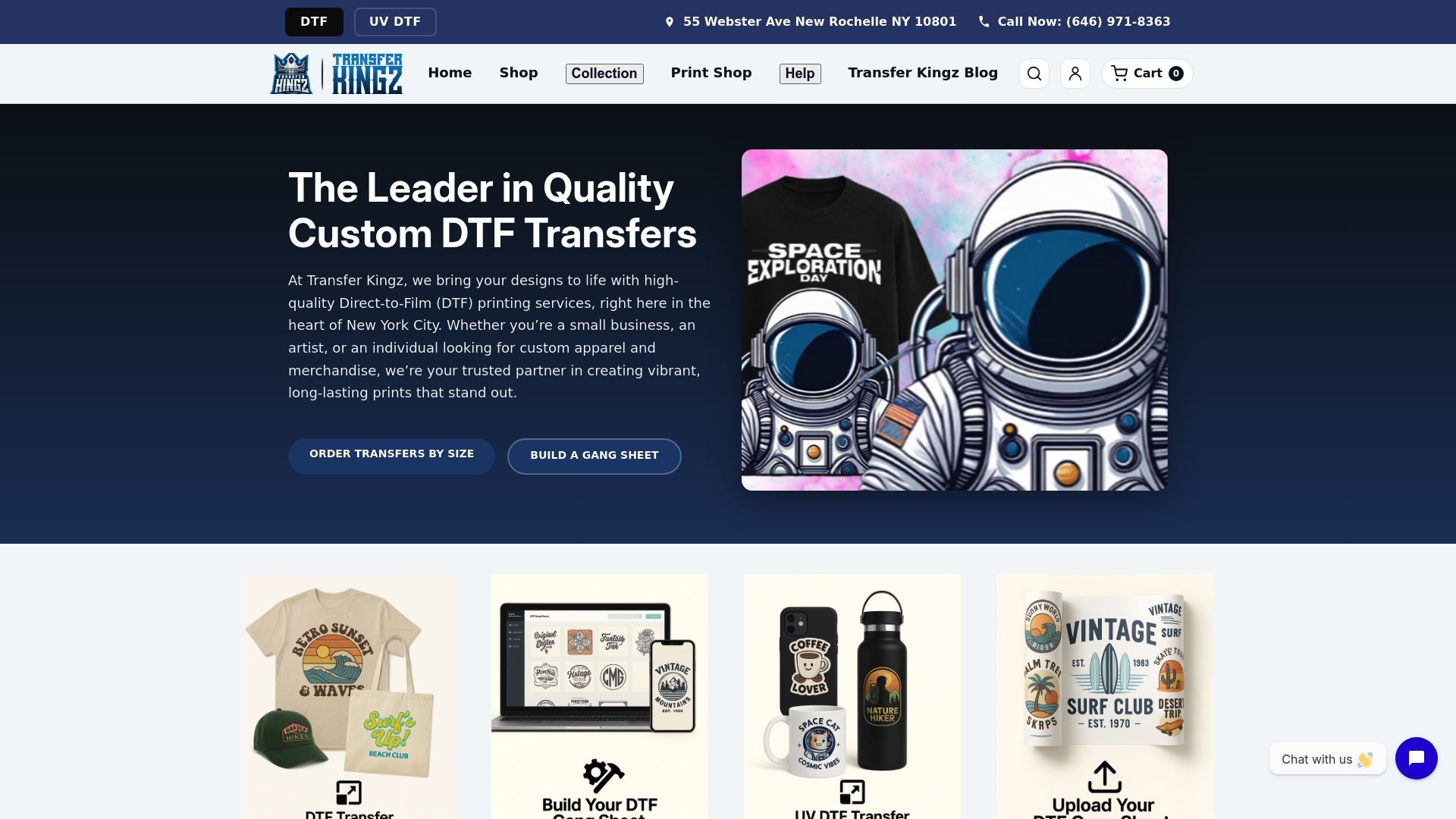
Whether you’re decorating 5 shirts or 500, Transferkingz offers fast turnaround, premium inks, and no minimums. Their custom DTF printing services are built for small business owners who need professional results without the setup costs of traditional embroidery. Upload your artwork, build a gang sheet, and get production-ready transfers shipped directly to you.
FAQ
Is embroidery or heat transfer better for logos?
Embroidery suits simple logos on structured garments, while heat transfer handles multi-color and gradient logos better. The best method depends on your fabric type and design complexity.
Which method lasts longer through washing?
Embroidery lasts longer because the thread is physically woven into the fabric. Heat transfer can crack or peel without proper care, though high-quality DTF transfers significantly extend wash life.
What is the cost breakpoint between embroidery and heat transfer?
Embroidery becomes cost-effective at roughly 100 or more pieces, where the digitizing fee spreads across enough units. Heat transfer is more economical for orders under 50 pieces.
Can I use heat transfer on performance fabrics?
Heat transfer works well on stretch, moisture-wicking, and lightweight performance fabrics. Embroidery distorts these materials due to thread tension and added weight.
What is an embroidered heat transfer patch?
An embroidered heat transfer patch is an embroidered design made separately and then heat-sealed onto a garment. It combines the premium look of embroidery with the fast, flexible application of heat pressing.
Recommended
- Why Choose Digital Transfers for Custom Apparel Success – Transfer Kingz
- Heat Press Application: Boosting Apparel Decoration Results – Transfer Kingz
- DTF Printing for Business Branding: How Custom DTF Transfers Boost Sma – Transfer Kingz
- Advantages of custom transfers for apparel businesses – Transfer Kingz
0 comments