

TL;DR:
- In 2026, DTF technology dominates garment printing due to its durability, fabric versatility, and cost-effectiveness. Bold minimalism and retro-futurism press for precise digital printing, while sustainability certifications have become essential procurement standards. Hybrid workflows and automation in print-on-demand models are crucial for scaling and remaining competitive.
The garment printing industry is defined in 2026 by three forces: the dominance of Direct-to-Film (DTF) technology, mandatory sustainability standards, and bold aesthetic shifts that demand higher print precision than ever before. The digital garment printing market is projected to grow from $43.8B in 2024 to $66.5B by 2029 at a 7.4% CAGR, confirming this is no longer a niche sector. Garment printing trends 2026 are shaped by professionals who need to make real decisions: which technology to invest in, which workflows to build, and which design directions to pursue before competitors do.
1. DTF is the dominant garment printing technology in 2026
Direct-to-Film printing has moved from promising alternative to industry standard for personalized apparel, and the reasons are technical, not just commercial. DTF transfers survive 50-plus wash cycles with color integrity intact, outperforming both DTG and plastisol screen printing in real-world wear conditions. That durability gap matters enormously when your customer is a brand protecting its logo on 500 staff uniforms.
DTF also prints on cotton, polyester, nylon, blended fabrics, and dark substrates without requiring pre-treatment. Screen printing demands flat, light-colored fabrics for best results. DTG struggles on anything below 60% cotton. DTF removes both constraints in a single workflow, which is why decorators handling mixed fabric orders have adopted it at scale.
Pro Tip: When printing on dark polyester blends, use a white underbase layer in your DTF film to maximize color pop without any additional pre-treatment step.
| Method | Durability | Fabric range | Setup cost | Best for |
|---|---|---|---|---|
| DTF | 50+ washes | All fabrics, dark and light | Low | Small runs, complex art, mixed fabrics |
| Screen printing | High (plastisol) | Light, flat fabrics | High (per color) | Large volume, simple designs |
| DTG | Moderate | 60%+ cotton preferred | Medium | Photo-quality, short runs on cotton |
For a deeper look at how DTF printing works compared to legacy methods, the technical breakdown is worth reviewing before committing to equipment.
2. Bold minimalism and retro-futurism define 2026 print design concepts
The two dominant visual directions in 2026 print design concepts pull in opposite directions aesthetically, yet both demand the same thing from your printing setup: precise color reproduction and sharp edge definition. Bold minimalism and retro-futurism with 80s and 90s distressed textures, neon palettes, and chrome graphics are the aesthetics driving consumer purchasing decisions right now.

Bold minimalism uses high-contrast typography, single-color blocks, and geometric shapes that look simple but expose every flaw in a print. A slightly off-white on a black tee reads immediately as a quality failure. Retro-futurism, by contrast, layers distressed textures, gradient neons, and metallic effects that only resolve cleanly at high DPI output. Both styles reward digital printing’s color range and detail capabilities over screen printing’s limitations.
Three additional design directions gaining traction this year:
- Earth-tone palettes with terracotta, sage, and warm neutrals printed as textural monochrome patterns on heavyweight fleece and structured tees
- Y2K chrome and holographic effects requiring metallic-finish DTF films for accurate reproduction
- Oversized typographic statements using condensed sans-serif fonts at 200-plus point sizes that demand precise ink layering to avoid bleed
The connection between design trend and technology choice is direct. If your clients are requesting chrome gradients or distressed neon overlays, screen printing cannot reproduce them accurately. Digital methods, specifically DTF and high-resolution DTG, are the only viable production paths.
3. Sustainable garment printing trends are now operational requirements
Sustainability in textile printing innovations 2026 is not a marketing position. It is a procurement requirement, a regulatory condition, and increasingly a customer expectation that affects repeat business. Dry-to-dry workflows and pigment ink innovations are growing at a 27.9% CAGR, which signals where supply chain investment is flowing.
Dry-to-dry digital printing eliminates the water-intensive pre-treatment and washing stages that traditional reactive dye printing requires. A single production run can reduce water consumption by thousands of liters compared to conventional wet processing. For decorators operating under municipal wastewater regulations, this is not optional.
Certifications are becoming gatekeepers to major contracts:
- OEKO-TEX Eco Passport certifies individual chemical inputs, not just finished products, making it the standard for brands with transparent supply chains
- bluesign® certification covers the entire production process, from fiber to finished fabric, and is required by outdoor and performance apparel brands including Patagonia and Arc’teryx
- GOTS (Global Organic Textile Standard) applies when organic fiber content is part of the product claim
Pro Tip: If you are sourcing DTF inks, request the Safety Data Sheet and ask suppliers directly whether their formulations are OEKO-TEX Eco Passport compliant. Non-compliant inks can disqualify your output from premium brand contracts.
Real-time environmental monitoring systems are now embedded in production-grade digital printers from Kornit Digital and similar manufacturers. These systems log ink consumption, energy draw, and waste output per job, giving decorators the traceability data that brand compliance teams require.
4. Hybrid screen and digital workflows for scalable production
The future of garment printing is not a single technology. Leading decorators use hybrid screen and digital setups that assign each method to the work it does best, and the production economics are compelling. Screen printing handles high-volume base-layer prints at a cost per unit that digital cannot match above roughly 72 pieces. DTF handles the custom, complex, or short-run elements that screen printing cannot execute cleanly.
The global apparel screen printing equipment market is growing at 5.4% CAGR to $344M by 2032, which confirms screen printing is not being replaced. It is being repositioned as the volume engine in a hybrid shop. Automatic presses from M&R and Anatol now integrate AI-driven registration technology unveiled at FESPA 2026, reducing misregistration errors on multi-color jobs and improving throughput on tight-tolerance work.
| Workflow | Best volume | Cost per unit | Color complexity | Setup time |
|---|---|---|---|---|
| Screen printing only | 72+ pieces | Low at scale | Limited (per screen) | High |
| DTF only | 1 to 71 pieces | Moderate | Unlimited | Low |
| Hybrid (screen base + DTF detail) | 50+ pieces | Lowest overall | High | Medium |
The hybrid model also reduces inventory risk. Screen a standard base design in bulk, then apply DTF transfers for individual customization at fulfillment. This is how large promotional merchandise operations are handling personalized orders without sacrificing margin.
5. Print-on-demand has become the standard operating model
Print-on-demand is no longer a trend in 2026. It is the default operating model for apparel brands that want to eliminate dead inventory and respond to demand signals in real time. Automation is the critical enabler, handling order intake, file processing, print queuing, and shipping without manual intervention at each stage.
The business case is straightforward. A brand carrying 500 SKUs in pre-printed inventory absorbs warehousing costs, markdown risk, and obsolescence losses. The same brand running POD through an automated DTF workflow carries zero inventory and prints only what is sold. Labor supply constraints in the decorated apparel sector make automation even more attractive, since a single operator can manage output that previously required a full shift team.
“Convergence is the word I keep coming back to. The decorators growing fastest right now are not just printing shirts. They are printing shirts, hats, bags, and banners from the same digital workflow.” — Dave Connor, STAHLS’ Fulfill Engine
Convergence into promotional products and wide-format textile printing is the growth lever that single-method shops are missing. A decorator already running DTF transfers on apparel can add tote bags, patches, and soft signage with minimal additional investment. The substrate range of DTF makes this expansion practical rather than aspirational. Businesses exploring product creation and diversification into promo items are finding that the margin profile on accessories often exceeds apparel.
6. How to choose garment printing methods for your 2026 operation
Choosing the right printing method is a production decision, not a preference. The variables that matter are order volume, fabric type, design complexity, and turnaround requirement. Getting this wrong means either overpaying on short runs or under-delivering on quality at scale.
For runs under 50 pieces with complex artwork or mixed fabric types, DTF is the correct choice on every metric. For runs above 72 pieces with simple, flat designs on consistent fabric, screen printing delivers the lowest cost per unit. For photo-realistic prints on 100% cotton at medium volumes, DTG remains competitive. The hybrid model applies when you need volume economics on the base design and customization flexibility on the finish.
DTF printing best practices cover the operational details that affect output quality: film storage conditions, cure temperature tolerances, and pressure settings for different fabric weights. These variables matter more than equipment brand when you are troubleshooting inconsistent adhesion or color shift after washing.
Pro Tip: Test every new fabric substrate with a sample transfer before committing to a production run. Fabric finish, thread count, and coating all affect adhesion and color vibrancy in ways that are not always predictable from spec sheets alone.
Key takeaways
DTF printing, hybrid workflows, and sustainability compliance are the three non-negotiable pillars of a competitive garment printing operation in 2026.
| Point | Details |
|---|---|
| DTF leads on versatility | DTF handles all fabric types and delivers 50-plus wash durability, making it the default for personalized apparel. |
| Design trends demand precision | Bold minimalism and retro-futurism require high-DPI digital output that screen printing cannot reliably reproduce. |
| Sustainability is a contract requirement | OEKO-TEX and bluesign certifications are procurement gatekeepers, not optional brand extras. |
| Hybrid workflows cut costs | Combining screen printing for volume with DTF for custom elements delivers the lowest cost per unit at scale. |
| POD and convergence drive growth | Print-on-demand automation and expansion into promo products are the primary revenue levers for 2026. |
What I’ve learned running DTF operations in a shifting market
The conversation I keep having with decorators in 2026 is about confidence. Specifically, the confidence to commit to DTF as a primary technology rather than treating it as a backup for jobs screen printing cannot handle. My experience is that shops still hedging on DTF are leaving margin on the table, not protecting it.
The sustainability piece is where I see the most underestimation. Decorators treat OEKO-TEX certification as something large brands worry about. Then they lose a contract to a competitor who can produce the compliance documentation and they never get that client back. Sustainable production is not a future requirement. It is a current one, and the shops that have built it into their workflow already are not scrambling when a new client asks for it.
The hybrid model is the most practical path for shops that are not starting from scratch. You do not need to abandon your screen printing infrastructure. You need to add DTF capability and assign work intelligently. The decorators I respect most in this industry are not the ones with the newest equipment. They are the ones who understand which tool belongs on which job and build workflows that reflect that clarity.
The design trend cycle will keep moving. Bold minimalism will give way to something else in 18 months. But the underlying requirement, which is printing technology precise enough to execute whatever aesthetic the market demands next, stays constant. Invest in capability, not in chasing trends.
— Anthony
Take your 2026 printing operation further with Transferkingz
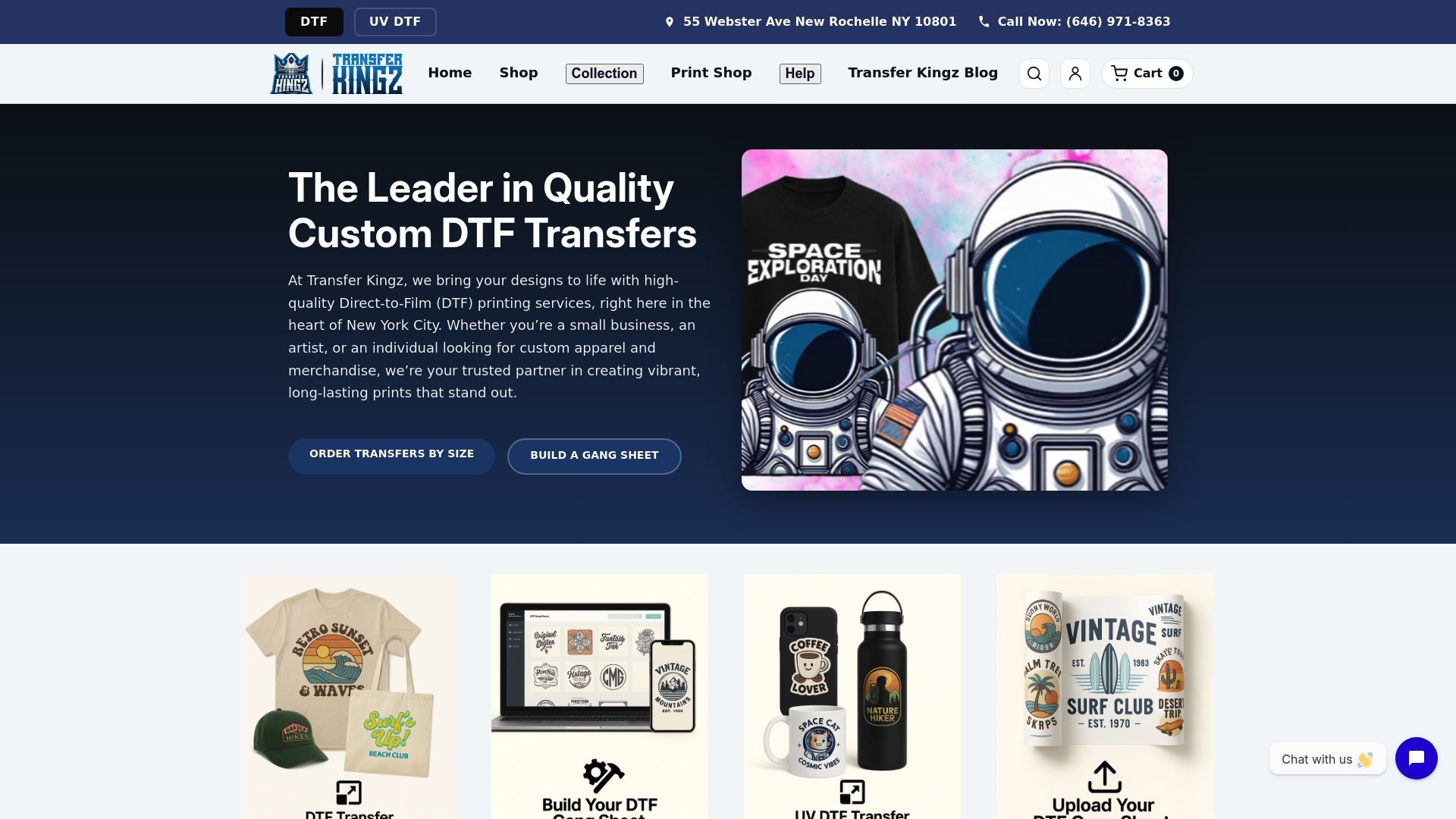
Transferkingz supplies high-quality DTF transfers built for the production demands that 2026 garment printing trends require. Whether you are running small-batch custom orders or scaling a POD operation, Transferkingz delivers vibrant, wash-durable transfers with fast turnaround and no minimum order requirements. The gang sheet builder lets you maximize film usage and reduce cost per transfer on complex artwork. Explore DTF transfers and printing solutions at Transferkingz to see how premium ink formulations and precision film technology translate directly into output your clients will reorder. For shops handling intricate designs, the detailed print capabilities page covers exactly what DTF film can reproduce at production scale.
FAQ
What is the best garment printing method in 2026?
DTF printing is the leading method for personalized and small-batch apparel in 2026, offering 50-plus wash durability and compatibility with all fabric types. Hybrid screen and DTF setups deliver the best economics for high-volume orders with custom elements.
How does DTF compare to screen printing for small runs?
DTF requires no screens or setup fees, making it significantly more cost-effective for runs under 50 pieces. Screen printing becomes more competitive above 72 pieces when the per-screen setup cost amortizes across the order volume.
Are sustainable printing certifications required in 2026?
OEKO-TEX Eco Passport and bluesign certification are now procurement requirements for contracts with major apparel brands. Decorators without certified ink and process documentation are being excluded from supplier lists at an increasing rate.
What design trends are driving garment printing demand in 2026?
Bold minimalism with high-contrast typography and retro-futurism with neon, chrome, and distressed textures are the two dominant aesthetics. Both require high-resolution digital printing to reproduce accurately, which is accelerating DTF adoption.
Is print-on-demand still growing in 2026?
Print-on-demand is now the standard operating model rather than a growth trend, with automation handling order processing and fulfillment at scale. Shops expanding POD into promotional products and wide-format textiles are seeing the strongest revenue growth.
0 comments