

Choosing the right method to apply designs can feel daunting when expanding your clothing line or launching custom merchandise. The heat press offers artists and small business owners a precise solution, blending controlled temperature and pressure for lasting results. With modern machines capable of temperatures up to 500°C and pressures reaching 120 Bar, creators from Canada to Africa can achieve detailed transfers on a range of materials. This guide highlights essential techniques, practical tips, and expert insights for mastering vibrant heat press applications.
Table of Contents
- Heat Press Application Defined and Debunked
- Types of Heat Press Transfers Explained
- Step-by-Step Heat Press Process Overview
- Compatible Materials and Best Use Cases
- Common Mistakes in Heat Press Application
Key Takeaways
| Point | Details |
|---|---|
| Heat Press Functionality | Heat presses transfer designs onto substrates using precise heat and pressure, ensuring professional-grade results in apparel decoration. |
| Types of Heat Transfers | Various transfer methods, such as DTF and sublimation, cater to different materials and project requirements for optimal design implementation. |
| Critical Process Steps | Successful heat press application involves a systematic approach, including preparation, calibration, and quality checks to minimize errors. |
| Common Mistakes | Avoiding key errors like inconsistent temperature and ignoring fabric compatibility is essential to maintain design quality and product durability. |
Heat Press Application Defined and Debunked
A heat press is a specialized machine engineered to transfer designs onto various substrates through precise heat and pressure application. Industrial heat press machines can generate temperatures up to 500°C and apply pressures reaching 120 Bar, enabling remarkable design transfers across multiple materials.
Traditionally used for apparel decoration, heat presses have evolved from simple manual tools to sophisticated digital machines with computerized controls. Modern heat press technologies offer unprecedented precision in design application, allowing independent artists and small business owners to create professional-grade merchandise with minimal equipment investment.
Key characteristics of professional heat press machines include:
- Precise temperature control
- Consistent pressure distribution
- Digital time and heat management
- Compatibility with multiple substrate types
- Rapid heating and cooling cycles
These machines operate through a systematic process that combines thermal energy and mechanical pressure to permanently bond transfer designs onto fabrics, ceramics, and other materials. Digital heat press technology enables users to program exact specifications, ensuring reproducible and high-quality design transfers every time.
Pro tip: Always conduct a test print on scrap material to validate your heat press settings before working on final products.
Types of Heat Press Transfers Explained
Apparel decoration professionals have multiple heat press transfer technologies available, each with unique characteristics and applications. Heat transfer techniques range from Direct-to-Film (DTF) to specialized methods like sublimation and vinyl transfers, offering diverse options for creative design implementation.
Each heat transfer type presents distinct advantages for different project requirements. Understanding these variations allows designers and small business owners to select the most appropriate technique for their specific apparel decoration needs.
Common heat press transfer types include:
- Direct-to-Film (DTF): Versatile method compatible with multiple fabric types
- Heat Transfer Vinyl (HTV): Ideal for single-color and multi-layer designs
- Sublimation Transfers: Best for polyester and polymer-coated surfaces
- Screen Printed Transfers: Excellent for high-volume production
- Rhinestone Transfers: Perfect for adding sparkle and texture
The selection process involves considering factors like fabric composition, design complexity, durability requirements, and budget constraints. Artists must evaluate each transfer type’s unique characteristics to achieve optimal results in their apparel decoration projects.
The table below compares common heat press transfer types by ideal material, design complexity, and durability:
| Transfer Type | Best Material | Design Complexity | Durability |
|---|---|---|---|
| Direct-to-Film (DTF) | Cotton, polyester | Detailed images | High |
| Heat Transfer Vinyl | Cotton, blends | Simple or layered | Medium to high |
| Sublimation | Polyester, ceramics | Photographic prints | Permanent |
| Screen Print | Cotton, blends | Bulk, simple logos | Very high |
| Rhinestone | Cotton, denim, blends | Decorative patterns | Medium |
Pro tip: Always test your chosen transfer method on a sample fabric to confirm color vibrancy and adhesion before full production.
Step-by-Step Heat Press Process Overview
Mastering the heat press process requires understanding a systematic approach to apparel decoration. Heat press machine operation involves precise technical steps that ensure consistent and professional design transfer results.
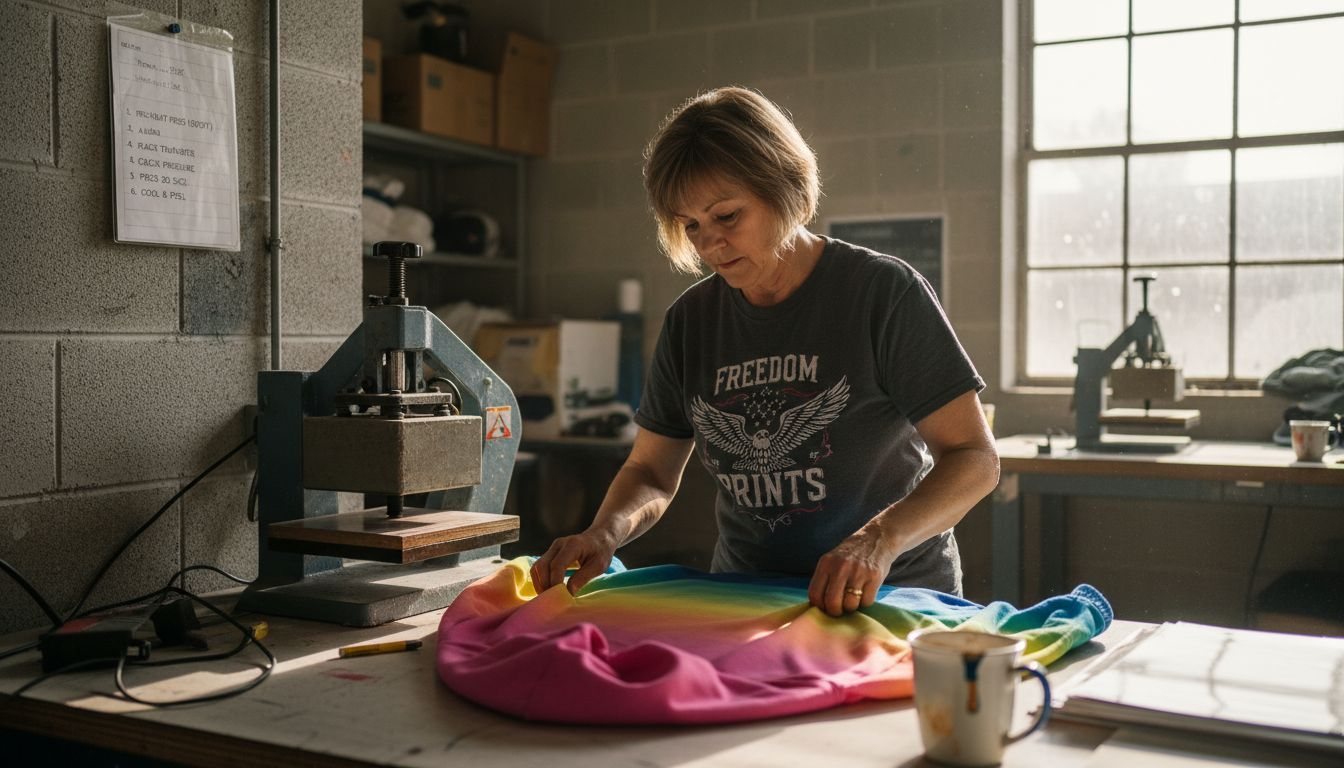
Successful heat press application demands careful preparation and meticulous execution. Independent artists and small business owners must develop a structured workflow that minimizes errors and maximizes design quality across various fabric types and transfer techniques.
The comprehensive heat press process includes seven critical stages:
- Workspace and Machine Preparation
- Material and Design Selection
- Temperature and Pressure Calibration
- Substrate Alignment
- Transfer Execution
- Peeling and Finishing
- Post-Press Quality Inspection
Each stage requires specific attention to detail, from selecting the appropriate heat transfer type to understanding the unique requirements of different fabrics and designs. Precision in temperature control, pressure application, and timing determines the ultimate success of the heat press transfer.
Pro tip: Create a standardized checklist for each heat press session to ensure consistent quality and minimize potential errors during the transfer process.
Compatible Materials and Best Use Cases
Heat press technology offers remarkable versatility across numerous fabric and substrate types, enabling creative professionals to expand their design capabilities. Small business owners and independent artists can leverage different transfer methods to achieve stunning results on a wide range of materials.
Understanding material compatibility is crucial for successful heat press applications. Different transfer techniques perform optimally with specific fabric compositions, requiring careful selection to ensure durability, color vibrancy, and design integrity.
Compatible materials for heat press transfers include:
- Cotton: Excellent for most transfer types
- Polyester: Best with sublimation and specialty transfers
- Blend Fabrics: Requires specific temperature and pressure settings
- Synthetic Materials: Demands specialized transfer techniques
- Ceramic: Suitable for specific heat transfer applications
- Leather: Requires careful temperature and pressure management
- Canvas: Supports various transfer methods
The selection of appropriate transfer method depends on several critical factors such as fabric composition, design complexity, intended use, and desired longevity of the decorated item. Artists must consider the unique characteristics of each material to achieve professional-grade results.
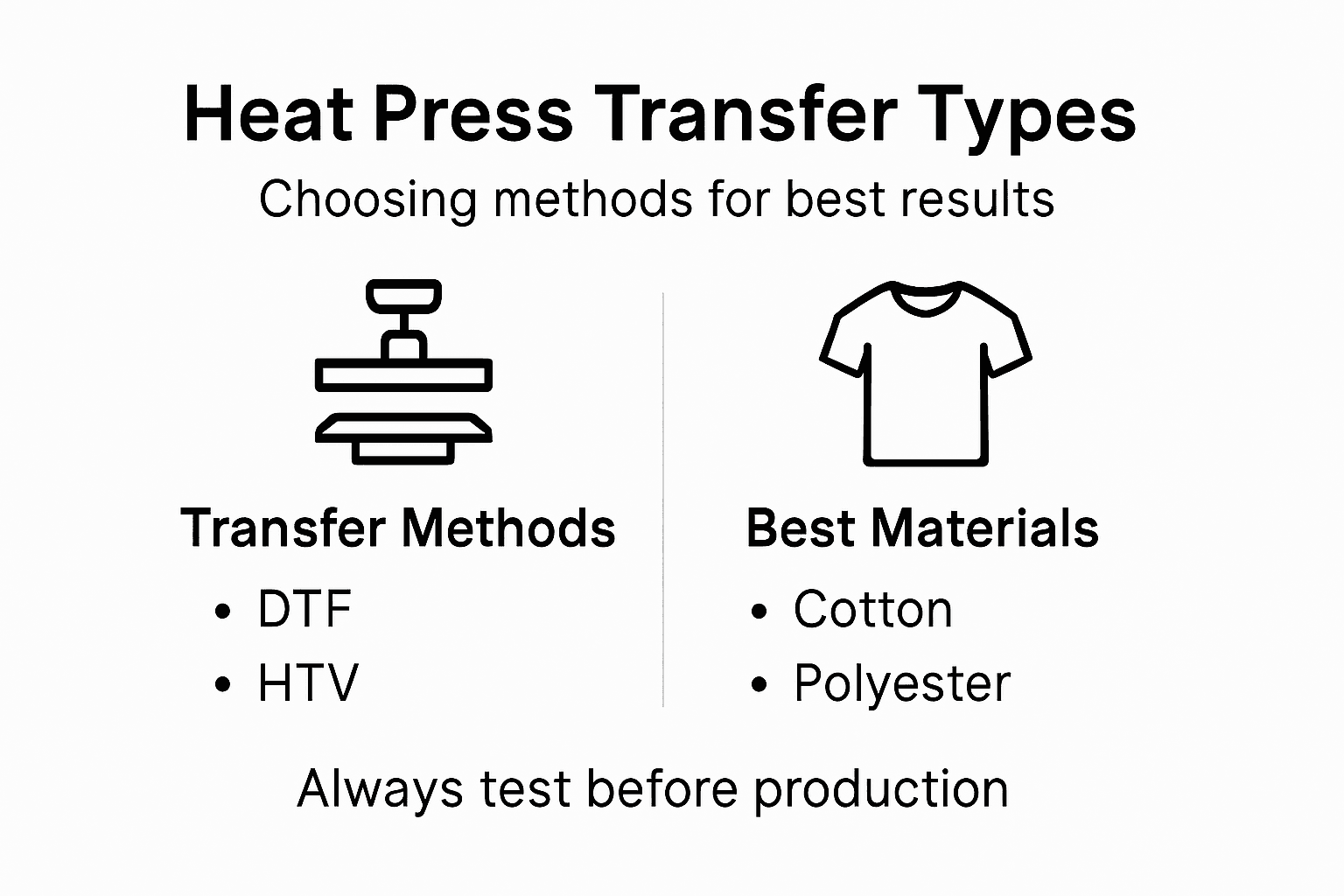
This table provides a quick reference for suitable heat press methods based on material type and primary use case:
| Material | Recommended Transfer Methods | Common Use Case |
|---|---|---|
| Cotton | DTF, HTV, screen print | T-shirts, hoodies |
| Polyester | Sublimation, DTF | Sportswear, jerseys |
| Leather | HTV (low temp), DTF | Custom patches, bags |
| Ceramic | Sublimation | Mugs, tiles |
| Canvas | HTV, DTF | Tote bags, art prints |
Pro tip: Always conduct a test transfer on a scrap piece of fabric to verify compatibility and optimize transfer settings before working on final products.
Common Mistakes in Heat Press Application
Independent artists and small business owners frequently encounter critical errors during heat press application that can compromise design quality and product durability. Common heat press troubleshooting techniques reveal specific challenges that can dramatically impact transfer results.
Mastering heat press techniques requires understanding and avoiding fundamental mistakes that can destroy expensive materials and ruin potential product lines. Precision in temperature, pressure, and timing separates professional-grade results from amateur attempts.
Key mistakes to avoid in heat press application include:
- Inconsistent Temperature Settings: Causes uneven transfers
- Improper Pressure Application: Creates design distortion
- Incorrect Pressing Duration: Leads to transfer failure
- Poor Quality Transfer Materials: Reduces design longevity
- Neglecting Machine Maintenance: Increases equipment malfunction risks
- Skipping Test Transfers: Prevents quality verification
- Ignoring Fabric Compatibility: Results in transfer rejection
Each mistake represents a potential point of failure that can compromise the entire design process. Successful heat press operators develop systematic approaches to minimize these common pitfalls, ensuring consistent and professional decoration results.
Pro tip: Maintain a detailed log documenting temperature, pressure, and time settings for each fabric type to create a personalized reference guide for future transfers.
Elevate Your Heat Press Applications with Premium DTF Transfers
Mastering heat press techniques involves precise control of temperature, pressure, and material compatibility—yet the challenge of achieving vibrant, durable designs remains for many independent artists and small business owners. You need reliable, high-quality transfers that hold strong through multiple washes and showcase intricate details without the hassle of inconsistent results or trial-and-error setups.
Discover how DTF transfers, UV DTF Permastickers, custom printing supplies, heat transfers, bulk printing. – Transfer Kingz can transform your apparel decoration outcomes.
Take the next step to boost your apparel decoration quality with industry-leading Direct-to-Film transfers from Transfer Kingz. Benefit from quick turnaround times, premium inks, and films designed for easy application and professional results every time. Whether you are a hobbyist or running a full-scale business, explore our full Collection – Transfer Kingz to find exactly what you need. Don’t let common heat press mistakes hold you back – visit https://www.transferkingz.com/ now and start creating vibrant, long-lasting custom apparel with confidence.
Frequently Asked Questions
What is a heat press machine used for?
A heat press machine is used to transfer designs onto various substrates, including fabrics, ceramics, and more, by applying heat and pressure for a specified duration.
What are the different types of heat press transfer methods?
Common heat press transfer types include Direct-to-Film (DTF), Heat Transfer Vinyl (HTV), sublimation transfers, screen printed transfers, and rhinestone transfers, each with unique applications and benefits.
How do I ensure my heat press settings are correct for different materials?
Always conduct a test print on scrap material before working on final products. Each fabric type may require specific temperature and pressure settings for optimal transfer results.
What are the most common mistakes to avoid when using a heat press?
Key mistakes include inconsistent temperature settings, improper pressure application, incorrect pressing duration, using poor quality transfer materials, neglecting machine maintenance, skipping test transfers, and ignoring fabric compatibility.
Recommended
- Role of Heat Presses in DTF: Achieving Vibrant Results – Transfer Kingz
- How to Apply DTF Transfers for Flawless Apparel Prints – Transfer Kingz
- DTF Printing Industry Trends: Boosting Apparel Brands – Transfer Kingz
- Why Choose DTF Transfers for Apparel Printing – Transfer Kingz
- How to Sublimate on Cotton T-Shirts – Smoked Times
0 comments