

Custom apparel is growing rapidly among American small business owners, with demand for unique designs reaching new heights. Having the right heat press for DTF transfers can make or break your ability to offer vibrant, long-lasting prints. This guide cuts through the technical jargon and highlights practical strategies so you can choose equipment, master application techniques, and prevent costly mistakes that impact your creative business.
Table of Contents
- Defining Heat Presses In Dtf Printing
- Types Of Heat Presses For Dtf Transfers
- Key Features For Quality Dtf Application
- Proper Heat Press Application Techniques
- Common Mistakes And How To Avoid Them
Key Takeaways
| Point | Details |
|---|---|
| Heat Press Functionality | Heat presses are essential in DTF printing, allowing for the effective bonding of graphic transfers to textiles through heat and pressure. |
| Types of Heat Presses | Choose between manual, semi-automatic, and automatic heat presses based on your production scale and business needs. |
| Key Features for Quality | Ensure precise temperature control, pressure consistency, and accurate transfer timing for high-quality custom apparel. |
| Common Mistakes and Prevention | Familiarize yourself with common DTF transfer errors to implement preventative strategies and maintain printing quality. |
Defining Heat Presses in DTF Printing
A heat press represents the critical transformation device in Direct-to-Film (DTF) printing, enabling the precise application of printed graphic transfers onto textiles through calculated heat and pressure. These specialized machines function as the pivotal equipment that transforms digital designs into permanent, vibrant apparel graphics.
In the DTF workflow, heat presses serve a fundamental purpose by melting adhesive powders onto fabric surfaces, creating durable and flexible garment decorations. The machine applies targeted thermal energy and consistent pressure, which activates the adhesive powder contained within the printed transfer film. This process ensures that graphic designs bond seamlessly with textile fibers, producing professional-grade custom apparel.
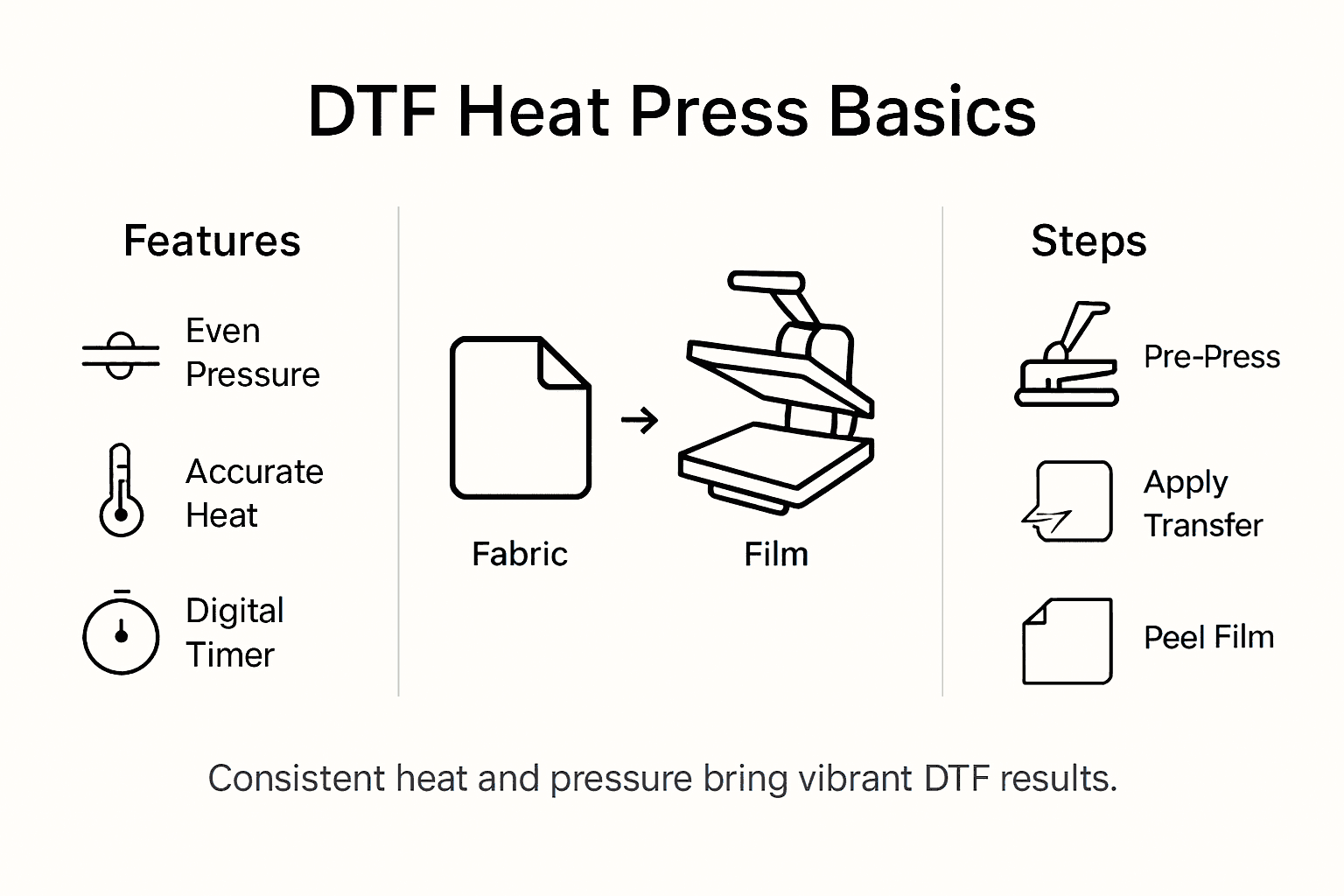
Heat presses come in various configurations, but most DTF-focused models share core characteristics. Typical features include:
- Adjustable temperature controls
- Precise pressure regulation
- Digital time and heat displays
- Flat pressing surfaces compatible with different fabric types
- Quick heat-up mechanisms
Pro tip: Invest in a heat press with digital temperature controls and consistent pressure distribution to ensure uniform transfer quality across multiple garment productions.
Types of Heat Presses for DTF Transfers
DTF printing requires specialized heat press machines designed to accommodate different production scales and design requirements. Small business owners and independent artists typically choose between manual, semi-automatic, and automatic heat press models, each offering unique advantages for custom textile printing.
Manual heat presses represent the entry-level option for DTF transfers. These machines require direct human operation and are ideal for small batch productions. Features typically include:
- Compact design
- Lower initial investment
- Straightforward temperature and pressure controls
- Suitable for home studios and small workshops
Semi-automatic heat presses provide a middle ground between manual and fully automatic models. These versatile machines offer increased production capabilities with some automated features like preset temperature settings and digital timers. They balance affordability with enhanced production efficiency, making them perfect for growing custom apparel businesses.
Automatic heat presses represent the pinnacle of DTF transfer technology. These advanced machines feature:
- Full computerized control systems
- Continuous transfer capabilities
- Precise temperature and pressure regulation
- High-volume production potential
- Minimal human intervention required
Pro tip: Consider your current production volume and future growth potential when selecting a heat press, as upgrading later can be more expensive than investing in a slightly more advanced model upfront.
Here’s a concise comparison of heat press types and their best use cases for DTF transfers:
| Heat Press Type | Ideal User | Production Scale | Automation Level |
|---|---|---|---|
| Manual | Hobbyist, small studio | Low-volume | None (fully manual) |
| Semi-automatic | Small business grower | Medium-volume | Partial automation |
| Automatic | Large-scale producer | High-volume | Full automation |
Key Features for Quality DTF Application
Achieving exceptional DTF transfer results requires understanding the critical features that influence print quality and durability. Temperature control, pressure consistency, and transfer timing emerge as the most fundamental elements in producing professional-grade custom apparel.
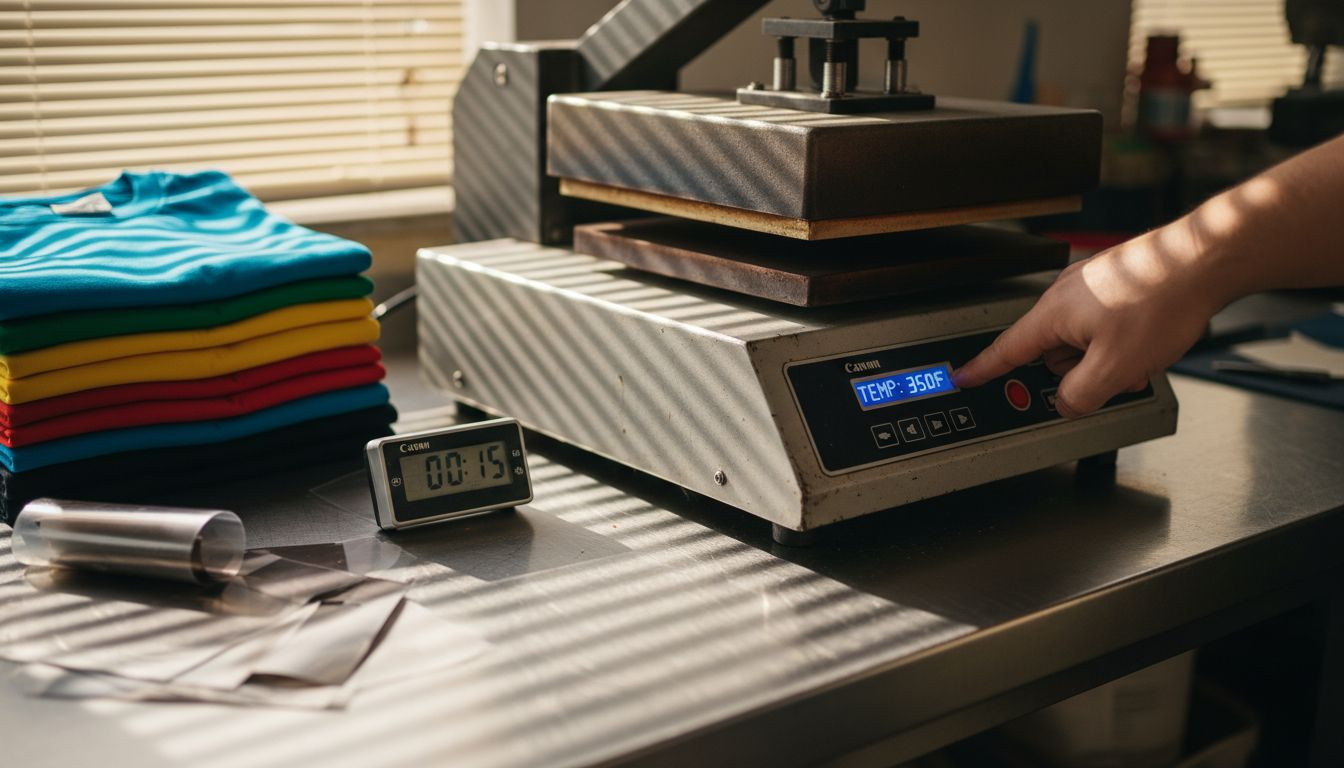
Temperature management stands as the cornerstone of successful DTF transfers. Different fabrics and transfer films demand precise thermal settings to activate adhesive powders effectively. High-quality DTF ink selection plays a crucial role in determining the optimal temperature range for your specific printing project. Most professional heat presses feature digital temperature controls with incremental adjustments, allowing for pinpoint accuracy.
Pressure distribution represents another critical factor in DTF transfer quality. Uneven pressure can result in incomplete transfers, leading to patchy or inconsistent designs. Modern heat presses incorporate advanced features to address this challenge:
- Silicone heating elements for uniform heat distribution
- Adjustable pressure settings
- Pressure gauge indicators
- Multilayer pressing capabilities
- Even weight distribution mechanisms
Transfer timing requires meticulous attention, as both under and over pressing can compromise design integrity. Different materials and transfer types demand specific pressing durations, typically ranging between 10 to 25 seconds. Experienced printers recommend creating a detailed reference chart that tracks optimal settings for various fabric types and transfer materials.
Pro tip: Maintain a detailed log of your heat press settings for different fabric types and transfer materials to consistently reproduce high-quality results.
Proper Heat Press Application Techniques
Successful DTF transfer application requires precision and understanding of the nuanced techniques that distinguish amateur from professional results. Heat press technique involves more than simply pressing a transfer onto fabric - it demands strategic approach and meticulous attention to multiple variables.
Controlling temperature, dwell time, and pressure precisely forms the foundation of effective pressing. Each fabric type demands unique parameters, making adaptability crucial. Cotton fabrics typically require different settings compared to synthetic materials, necessitating a flexible approach to heat transfer application.
Proper preparation significantly impacts transfer quality. Critical pre-pressing steps include:
- Cleaning the heat press platen thoroughly
- Pre-heating garments to remove moisture
- Checking fabric for wrinkles or surface irregularities
- Aligning transfer precisely
- Using Teflon sheets for protection
Peeling technique represents another critical aspect of heat press application. The transfer removal process can make or break your final product. Professionals recommend:
- Allowing transfers to cool slightly before peeling
- Peeling at a consistent 45-degree angle
- Supporting fabric during removal to prevent stretching
- Checking transfer adhesion immediately after pressing
- Performing small test runs before full production
Pro tip: Create a detailed reference chart documenting optimal pressing settings for different fabric types to streamline your DTF transfer process and minimize costly errors.
Use this quick reference to match heat press settings with different fabric types:
| Fabric Type | Typical Temperature Range | Suggested Pressure Level | Average Press Time |
|---|---|---|---|
| Cotton | 300–320°F | Medium to high | 15–20 seconds |
| Polyester | 275–295°F | Medium | 10–15 seconds |
| Blends | 285–315°F | Medium | 12–18 seconds |
Common Mistakes and How to Avoid Them
DTF transfer success depends on understanding and preventing common pitfalls that can compromise print quality and garment appearance. Transfer errors often stem from technical oversights that even experienced professionals can encounter.
Incorrect temperature, time settings, and uneven pressure represent the most prevalent challenges in DTF heat pressing. These technical missteps can result in multiple transfer defects, ranging from poor adhesion to complete transfer failure. Understanding these potential issues allows small business owners to proactively prevent costly mistakes.
Specific transfer mistakes to watch for include:
- Insufficient heat causing weak transfer bonding
- Excessive temperature leading to fabric scorching
- Uneven pressure creating patchy or incomplete transfers
- Improper cooling time before peeling
- Neglecting fabric pre-treatment
Mitigating these risks requires systematic approach and meticulous attention to detail. Preventative strategies include:
- Regularly calibrating heat press equipment
- Maintaining detailed transfer setting logs
- Performing consistent test prints
- Using high-quality transfer materials
- Investing in precision measurement tools
- Monitoring equipment performance consistently
Pro tip: Create a standardized equipment maintenance checklist and transfer settings reference guide to systematically reduce error rates and improve overall print consistency.
Unlock Vibrant DTF Prints with the Right Heat Press and Transfers
Achieving stunning and durable Direct-to-Film (DTF) prints demands mastering the delicate balance of temperature, pressure, and timing discussed in this article. If you face challenges like uneven transfers, inconsistent colors, or transfer peeling due to improper heat press application, it is time to enhance your workflow with high-quality resources. Optimizing your heat press settings is crucial, but pairing that with premium DTF transfer materials makes all the difference. Explore our extensive collection of DTF transfers, custom apparel printing, heat transfers, t-shirt printing, high-quality prints designed for superior adhesion and vibrant results.
Start producing professional-grade apparel with confidence by accessing premium transfers that complement your heat press capabilities. Take control over your custom printing with our user-friendly platform at Transfer Kingz. Whether you operate a small studio or a growing business, we provide quick turnaround, no minimum orders, and expert resources. Visit our shop today and bring your vibrant DTF designs to life with ease.
Frequently Asked Questions
What is the role of a heat press in DTF printing?
A heat press is essential in DTF printing as it applies heat and pressure to transfer printed graphic designs onto textiles, ensuring a strong bond between the graphic and the fabric.
How do I choose the right heat press for DTF projects?
Consider your production scale and future growth. Manual heat presses are suitable for hobbyists, while semi-automatic and automatic presses are better for small businesses and large-scale production, respectively. Focus on features like temperature control and pressure consistency.
What temperature and pressure settings should I use for different fabric types in DTF printing?
Typical settings include Cotton at 300–320°F with medium to high pressure for 15–20 seconds, Polyester at 275–295°F with medium pressure for 10–15 seconds, and Blends at 285–315°F with medium pressure for 12–18 seconds.
How can I avoid common mistakes when using a heat press for DTF transfers?
Ensure proper calibration of your equipment, maintain detailed logs of your transfer settings, conduct test prints, and use high-quality transfer materials to prevent issues like poor adhesion or scorching of the fabric.
Recommended
- Where to Buy Top-Quality DTF Supplies USA: Your Guide to the Best Dire – Transfer Kingz
- How dtf shirt transfers are Revolutionizing Custom Apparel – Transfer Kingz
- Where to Buy Top-Quality DTF Supplies USA: Your Guide to the Best Dire – Transfer Kingz
- Can Digital Transfer Film Handle Intricate and Detailed Prints? – Transfer Kingz
- Role of Digital Print Technology in Modern Branding
0 comments