

If you run a small clothing business or work as an apparel decorator, you’ve probably wondered what separates professional DTF printing from amateur results. The difference often comes down to understanding and applying industry standards. These standards aren’t arbitrary rules but proven practices that ensure your prints survive dozens of washes, maintain vibrant colors, and keep customers coming back. This guide breaks down the essential benchmarks, workflows, and quality controls that define professional DTF printing, giving you the knowledge to compete with established players and build a reputation for reliability.
Table of Contents
- Key takeaways
- Understanding industry standards in DTF printing
- Key processes and quality benchmarks in DTF printing
- Comparing DTF industry standards with other apparel printing methods
- Practical tips for small business success with DTF printing
- Discover quality DTF printing solutions at Transfer Kingz
- FAQ
Key Takeaways
| Point | Details |
|---|---|
| Durability benchmark 50 washes | Professional DTF transfers should withstand at least 50 washes without significant fading or cracking. |
| Premium materials and inks | Using premium films, high quality inks formulated for DTF, and compatible fabrics supports consistent color, adhesion, and wash resistance. |
| Standardized workflow steps | Follow a consistent workflow from design prep to final transfer to reduce defects and improve efficiency. |
| Controlled curing parameters | Curing should be done at about 300 to 320 degrees Fahrenheit for 10 to 15 seconds with medium to firm pressure. |
| Test every new design | Implement wash testing and color checks on sample pieces and validate each new design before full production. |
Understanding industry standards in DTF printing
Industry standards in Direct-to-Film printing represent the collective knowledge and best practices that successful businesses use to deliver consistent results. These aren’t official regulations but widely accepted guidelines that have proven effective across thousands of print jobs. When you follow these standards, you’re tapping into solutions that others have refined through trial and error.
The most fundamental standard involves print durability. Quality DTF transfers should withstand at least 50 washes without significant fading or cracking. This benchmark exists because customers expect their custom apparel to last, and meeting this expectation builds trust. Industry standards guide print quality, durability, and efficiency in DTF printing.
Material selection follows established patterns too. Professional operations typically use:
- Premium DTF films with consistent thickness and adhesive coating
- High-quality plastisol or water-based inks formulated specifically for DTF applications
- Compatible fabrics including cotton, polyester, and cotton-poly blends
- Properly maintained heat press equipment calibrated to manufacturer specifications
The workflow itself has standardized stages. You start with design preparation at proper resolution, usually 300 DPI minimum. Then comes printing with appropriate ink saturation, followed by powder application while the ink is still wet. Curing happens next, melting the adhesive powder to create a transferable film. Finally, you apply the transfer to fabric using controlled heat and pressure.
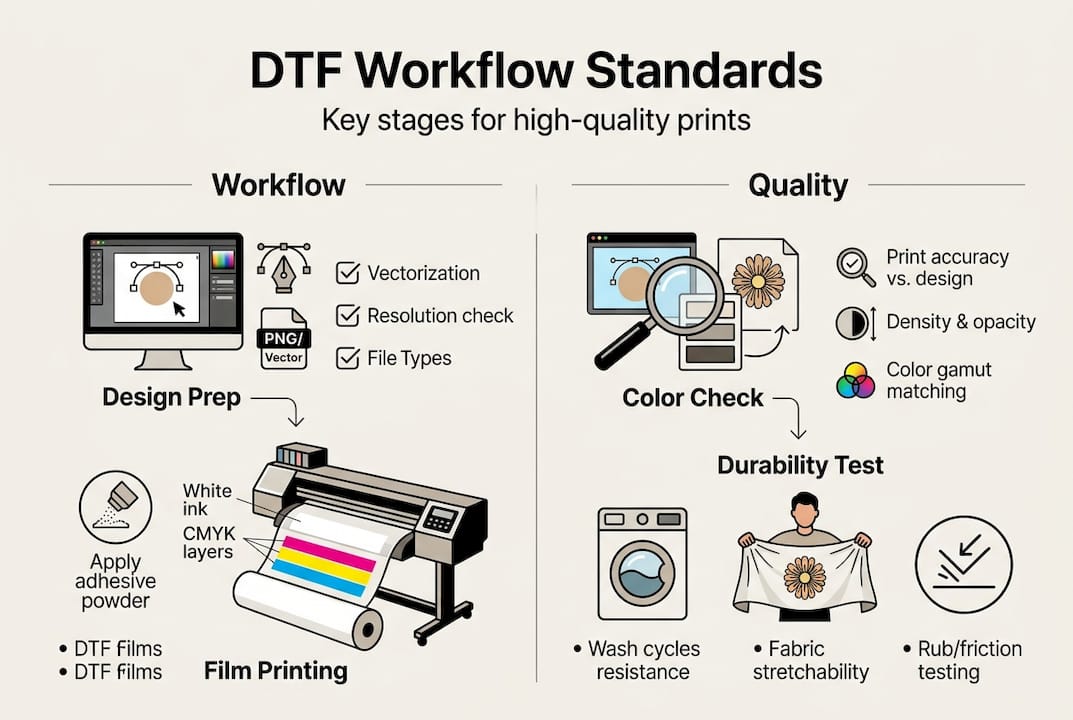
Adhering to these standards dramatically reduces defects like incomplete transfers, premature peeling, or color shifting. When you skip steps or use substandard materials, you’re gambling with customer satisfaction. The standards exist because they work, plain and simple.
Key processes and quality benchmarks in DTF printing
Successful DTF printing depends on mastering specific technical processes where precision matters more than speed. Each stage has optimal parameters that separate professional results from disappointing failures.
The curing process deserves special attention because it’s where many beginners struggle. Typical workflows include precise curing times and temperatures to ensure transfers adhere correctly and last through washes. Temperature too low means weak adhesion. Too high risks scorching the film or fabric. The sweet spot typically falls between 300-320°F, maintained for 10-15 seconds with medium to firm pressure.
Ink formulation affects both appearance and longevity. Quality DTF inks contain:
- Pigments with high color density for vibrant prints
- Binders that create flexible films resistant to cracking
- Additives that improve wash fastness and prevent fading
- Proper viscosity for consistent printer performance
Quality control methods separate professionals from hobbyists. Standard inspection includes visual checks for color accuracy, tactile examination for proper adhesive feel, and wash testing on sample pieces. You should test every new design before running production quantities. Catching problems early saves materials and prevents customer complaints.
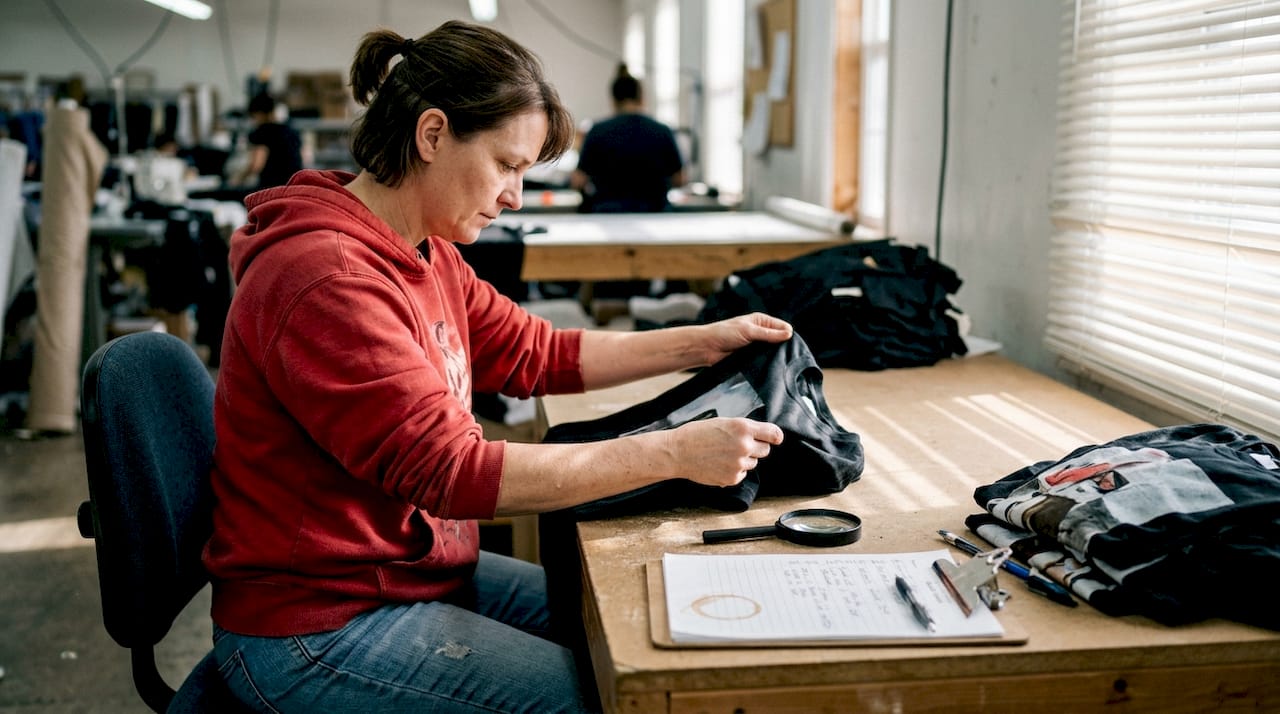
Common pitfalls include inadequate curing time, which causes transfers to peel after a few washes. Poor film adhesion often results from contaminated surfaces or incorrect pressure settings. Ink bleeding happens when resolution is too low or ink saturation exceeds optimal levels.
Pro Tip: Track your curing parameters for each fabric type in a simple spreadsheet. Cotton often needs slightly different settings than polyester blends, and documenting what works prevents guesswork on future jobs.
Another critical benchmark involves color consistency across batches. Professional operations calibrate their printers regularly and use color management systems to ensure that a design printed today matches one printed next month. This consistency builds customer confidence and enables reliable reorders.
Comparing DTF industry standards with other apparel printing methods
Understanding how DTF stacks up against screen printing and direct-to-garment (DTG) helps you choose the right method for each project and set realistic expectations with customers.
| Method | Setup Cost | Durability | Detail Level | Best For |
|---|---|---|---|---|
| DTF | Low | 50+ washes | High | Small to medium runs, complex designs |
| Screen Printing | High | 100+ washes | Medium | Large runs, simple designs |
| DTG | Medium | 30-40 washes | Very High | One-offs, photo-realistic prints |
DTF printing typically offers lower setup costs and better wash durability compared to other methods. Screen printing requires creating separate screens for each color, making it expensive for small batches but economical for hundreds of identical pieces. The prints last longer than DTF but lack the ability to reproduce fine details or gradients effectively.
DTG excels at photographic reproduction and requires no setup beyond loading the design. However, the prints often fade faster than DTF, especially on darker fabrics where pretreatment is necessary. DTG also works best on 100% cotton, limiting fabric choices.
DTF’s advantages include:
- No minimum order quantities, making custom one-offs profitable
- Excellent color vibrancy on both light and dark fabrics without pretreatment
- Faster turnaround than screen printing for small batches
- Better wash resistance than DTG at comparable costs
- Ability to print white ink effectively for dark garments
Limitations exist too. DTF transfers have a slightly thicker hand feel than DTG, though modern films have minimized this difference. Setup speed favors DTG for single pieces since DTF requires the printing, curing, and transfer steps. Screen printing wins for massive production runs where setup costs spread across thousands of units.
Choose DTF when you need:
- Runs of 10-500 pieces where screen printing setup isn’t justified
- Complex, multi-color designs with fine details
- Durability exceeding standard DTG capabilities
- Flexibility to work with various fabric types
This comparison shows DTF occupying a sweet spot for small to medium clothing businesses that need professional quality without massive capital investment.
Practical tips for small business success with DTF printing
Knowing the standards matters little if you can’t implement them consistently. These actionable practices help you maintain quality while building efficiency.
Start with design preparation. Always work at 300 DPI minimum resolution, and convert text to outlines to prevent font substitution issues. Size your designs slightly larger than the final desired dimensions to account for any minor shrinkage during transfer. Use CMYK color mode rather than RGB to ensure colors print as expected.
Ink selection impacts both cost and quality. Premium inks cost more upfront but reduce waste from failed prints and customer returns. Cheap inks often clog printer heads, fade quickly, or crack after minimal washing. The savings disappear when you factor in reprints and lost customers.
Curing consistency requires discipline:
- Preheat your heat press and allow it to stabilize at target temperature
- Use a timer rather than estimating seconds
- Apply consistent pressure by checking your press calibration monthly
- Keep a test garment handy to verify settings before production runs
Quality checks should happen at multiple stages. Inspect prints immediately after curing for proper powder adhesion. Before transferring, examine for any defects or incomplete coverage. After application, perform a stretch test on the transfer to ensure proper bonding. For new designs, wash a sample piece before delivering customer orders.
Following recommended workflows and quality checks significantly enhances the customer’s final product experience. Document your successful settings for each fabric type and design style. This knowledge base becomes invaluable as your business grows and you hire additional staff.
Pro Tip: Adjust your heat press pressure based on fabric thickness. Thin performance fabrics need lighter pressure than heavy hoodies, and finding the right setting prevents crushing fibers while ensuring good adhesion.
Inventory organization prevents costly mistakes. Store films in a cool, dry place away from direct sunlight. Label everything clearly with dates and specifications. Keep backup supplies of your most-used materials so equipment problems or supplier delays don’t halt production.
Customer communication sets expectations appropriately. Explain proper care instructions, including washing inside out in cold water and avoiding high heat drying. When customers understand how to maintain their prints, satisfaction increases and returns decrease.
Stay current with industry developments by joining online communities, following equipment manufacturers, and testing new materials periodically. Standards evolve as technology improves, and early adopters of better methods gain competitive advantages.
Discover quality DTF printing solutions at Transfer Kingz
Applying these industry standards becomes easier when you partner with suppliers who understand professional requirements. Transfer Kingz specializes in providing the high-quality materials and expertise that small clothing businesses need to compete effectively.
Their digital transfer films handle intricate and detailed prints with the durability standards covered in this guide. Whether you’re printing complex graphics or simple text, their products deliver the consistency that builds customer loyalty.
The company’s focus on DTF shirt transfers revolutionizing custom apparel means they understand the challenges small decorators face. From gang sheet builders that maximize material efficiency to educational resources that help you troubleshoot problems, Transfer Kingz provides more than just products.
Explore their full range of solutions at transferkingz.com to see how professional-grade materials and expert support can elevate your apparel printing operation.
FAQ
What are the typical curing temperatures and times for DTF transfers?
Optimal curing temperatures range generally between 300-320°F for 10-15 seconds. These parameters ensure the adhesive powder melts completely and bonds properly to create a durable transfer. Going below this range risks weak adhesion that fails during washing, while excessive heat can damage the film or scorch fabrics. Always preheat your equipment and use a timer for consistency.
How many washes can customers typically expect from high-standard DTF prints?
High-quality DTF prints last for 50 or more washes without significant degradation when proper standards are followed. This durability depends on correct curing parameters, quality inks and films, and appropriate application pressure. Customers should wash garments inside out in cold water and avoid high-heat drying to maximize longevity. This wash resistance makes DTF competitive with traditional screen printing for many applications.
What materials are best suited for DTF printing according to industry standards?
Cotton, polyester, and cotton-poly blends are widely accepted materials for DTF printing due to adhesion and durability standards. These fabrics provide the surface texture and heat tolerance needed for successful transfers. Pure polyester requires slightly lower temperatures to prevent scorching, while 100% cotton handles higher heat well. Avoid heavily textured or moisture-wicking fabrics treated with silicone coatings, as these interfere with adhesion.
How can small businesses maintain consistent quality in their DTF prints?
Consistent curing, regular equipment maintenance, and pre-transfer testing are key to maintaining high quality. Create standard operating procedures documenting your successful settings for different fabric types and design styles. Calibrate your heat press monthly, clean printer heads according to manufacturer schedules, and inspect films before use. Testing sample pieces before production runs catches problems early and prevents costly mistakes that damage your reputation.
0 comments