

TL;DR:
- Performance fabric printing involves applying specialized inks to synthetic, stretch, or moisture-wicking textiles used in athletic apparel. Different methods like dye sublimation, silicone inks, and DTF transfers are chosen based on fabric type and design needs to ensure durability and fabric protection.
Performance fabric printing is defined as the application of specialized inks and transfer methods to synthetic, stretch, or moisture-wicking textiles used in athletic and technical apparel. The best examples of performance fabric printing include screen printing with low-cure plastisol inks, dye sublimation on 100% polyester, silicone inks for Lycra and spandex, Direct-to-Film (DTF) transfers, heat transfer vinyl, and embroidery. Each method solves a different problem: some protect fabric fibers from heat damage, others embed color directly into the weave for lasting vibrancy. Over 60% of athletic apparel uses synthetic moisture-wicking materials, which means standard cotton printing rules simply do not apply here.
1. Examples of performance fabric printing: screen printing with low-cure plastisol inks
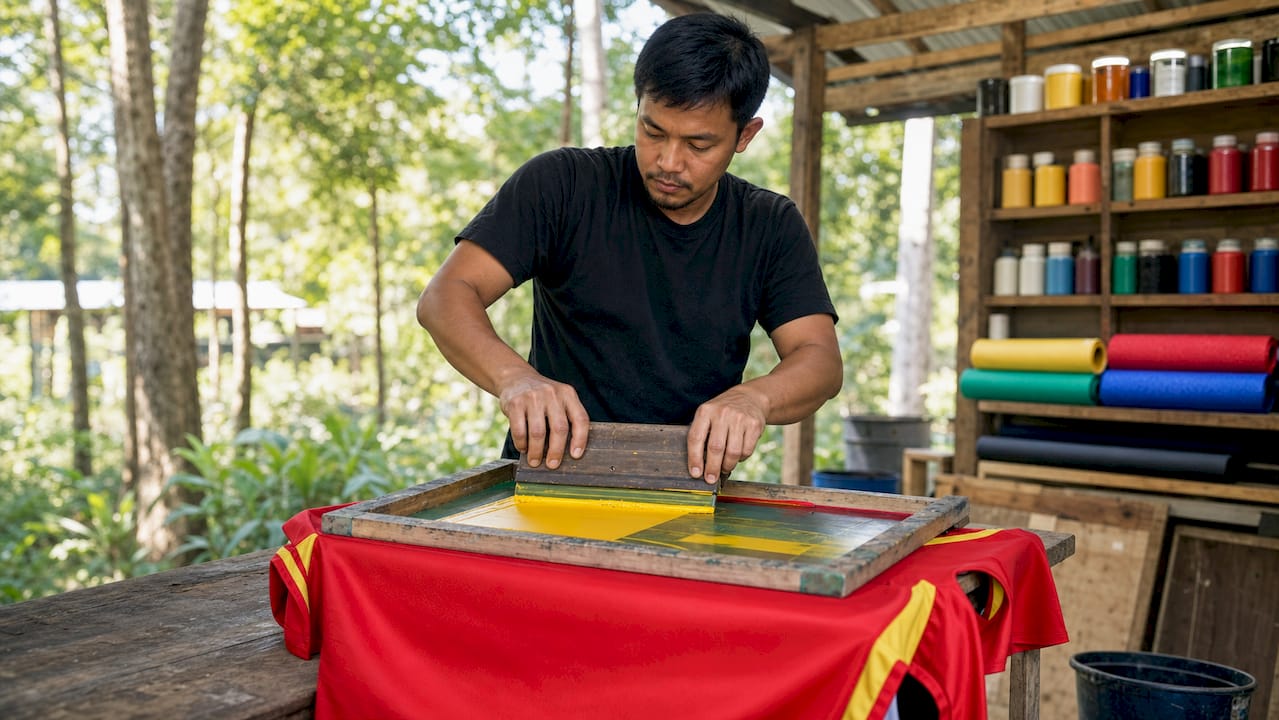
Screen printing on performance fabrics is not the same as screen printing on a cotton T-shirt. Synthetic fibers like polyester and nylon are heat-sensitive, so standard plastisol inks that cure above 320°F will damage them. Low-cure plastisol inks cure at 270–290°F, which is 30–50°F lower, protecting the fabric while still locking in color.
This method works best for team uniforms, branded activewear, and moisture-wicking polos where bold, opaque logos are the goal. The print sits on top of the fabric surface, giving you a thick, vivid result that holds up through repeated washing. The tradeoff is that heavy ink deposits can reduce breathability, so thinner ink films and higher mesh counts are the right call for lightweight performance gear.
Pro Tip: Use a 160–200 mesh count for performance fabrics to control ink deposit thickness and prevent cracking during wear.
2. Dye sublimation for 100% polyester apparel
Dye sublimation is the gold standard for full-coverage, photo-realistic designs on performance wear. The process converts solid dye into gas under heat and pressure, embedding it directly into polyester fibers rather than sitting on top. Sublimated graphics do not crack or peel, which makes them far more durable than surface prints under heavy athletic use.
The method supports unlimited color gradients at no extra cost per color, which is a real advantage over screen printing for complex artwork. Per-unit costs stay stable regardless of how many colors your design uses, making it cost-effective for small to medium runs. The hard limit: sublimation only works on white or very light fabrics that are at least 65% polyester. Dark or cotton-heavy blends will produce faded, washed-out results.
For a deeper look at how sublimation stacks up against DTF for activewear, Transferkingz covers the sublimation vs DTF tradeoffs in detail.
3. Silicone inks for stretch fabrics like Lycra and spandex
Silicone inks are the right choice when your fabric stretches. Standard plastisol or water-based inks crack under repeated extension, but silicone cross-links with the fabric at 248–266°F, creating a print that moves with the material. Silicone inks deliver elongation above 300% and elastic recovery above 95%, which means the print snaps back to its original shape every time.
This method is used on compression shorts, yoga pants, swimwear, and any garment where the fabric stretches significantly during use. The soft, matte finish also feels natural against skin, which matters for performance wear worn directly on the body. Silicone inks also resist dye migration from the fabric’s disperse dyes, so you get clean, sharp edges without a blocker layer.
4. Direct-to-Film (DTF) transfers on performance fabrics
DTF transfers print a design onto a special film, apply a hot-melt adhesive powder, and then heat-press the finished transfer onto the fabric. This method works on polyester, nylon, blends, and even stretch fabrics, making it one of the most flexible options for performance apparel decoration. Transferkingz specializes in DTF transfers for polyester that resist dye migration and hold color through heavy wash cycles.
DTF requires no screens, no minimum order quantities, and no setup fees per color. That makes it the practical choice for small runs, sample production, and custom one-off pieces. The adhesive layer does add a slight texture to the print, but modern hot-melt formulations have reduced this significantly compared to earlier versions of the technology.
Pro Tip: For stretch fabrics, use a low-temperature DTF adhesive powder and apply firm, even pressure during heat pressing to prevent edge lifting during wear.
5. Heat transfer vinyl (HTV) for simple, bold designs
Heat transfer vinyl cuts a design from colored vinyl sheets and heat-presses it onto the fabric. The method is fast, affordable, and works on most performance fabric types without special ink formulations. It suits simple logos, numbers, and text where a small color count is acceptable.
The limitation is design complexity. HTV does not handle gradients, fine details, or photographic images well. It also adds a noticeable layer on top of the fabric, which can feel stiff on lightweight athletic wear. For team names, jersey numbers, and single-color brand marks, HTV remains a practical and low-cost solution for small production runs.
6. Embroidery on performance fabrics
Embroidery delivers a premium, textured look that no ink-based method can replicate. It works on performance polo shirts, athletic jackets, and branded caps where a raised, three-dimensional logo signals quality. The thread is stitched directly into the fabric, so there is no risk of fading, cracking, or peeling over time.
The challenge with performance fabrics is that tight embroidery can pucker lightweight or stretch materials. A stabilizer backing placed behind the fabric during stitching prevents distortion. Embroidery is best reserved for structured garments with a stable weave rather than thin, highly elastic performance textiles.
7. How to choose the best printing method for your fabric
Choosing the right method starts with knowing your fabric. Here is a practical framework:
- 100% polyester, light color: Dye sublimation gives you the best color depth and durability.
- Polyester blends or dark fabrics: DTF transfers handle blends and dark backgrounds without the polyester-only restriction.
- High-stretch Lycra or spandex: Silicone inks or flexible DTF adhesives are the only options that survive repeated stretching.
- Moisture-wicking synthetics with bold logos: Screen printing with low-cure plastisol inks delivers opacity and wash resistance.
- Small custom runs or samples: DTF transfers eliminate setup costs and work without minimum quantities. Transferkingz covers small run transfer printing for exactly this use case.
- Premium branded outerwear: Embroidery adds a tactile quality that ink-based methods cannot match.
Dye sublimation’s dry process avoids water-intensive post-processing, which makes it the most sustainable choice for brands with environmental commitments. That matters more in 2026 as activewear buyers increasingly ask about production practices.
8. Common challenges when printing on performance fabrics
Dye migration is the most common defect in performance fabric printing. Polyester fabrics contain disperse dyes that can bleed into the ink layer during curing, turning white or light-colored prints pink or gray. Specialized low-bleed inks formulated for synthetics prevent this, and experienced printers treat dye migration as a non-negotiable technical requirement, not an optional upgrade.
Curing temperature is the second major variable. Too hot and you damage the fabric. Too cool and the ink does not fully cure, leading to poor wash resistance. Low-cure plastisol inks solve the temperature problem for screen printing, but every fabric and ink combination still needs a test run before full production.
Ink deposit thickness matters on stretch fabrics. Thin ink films below 200 micrometers and mesh counts above 155 prevent cohesion failure when the fabric extends. Printing too thick on stretch material is the fastest way to get cracking after the first wear.
Pro Tip: Always wash-test a sample garment before committing to a full production run. A single test cycle reveals dye migration, adhesion failure, and color shift before they become expensive problems.
- Use low-bleed or dye-blocking inks on all polyester and synthetic fabrics.
- Cure at the ink manufacturer’s specified temperature range, verified with a heat gun or conveyor thermometer.
- Apply a single flood stroke followed by one print stroke to control ink deposit on stretchy materials.
- Back lightweight or stretch fabrics with a stabilizer during embroidery to prevent puckering.
- Test wash at least once before approving a design for production.
9. Comparison of performance fabric printing methods
| Method | Best fabric | Color range | Durability | Cost per unit | Best use case |
|---|---|---|---|---|---|
| Screen printing (low-cure) | Polyester, moisture-wicking synthetics | Limited by screen count | High | Low at volume | Team uniforms, bold logos |
| Dye sublimation | 100% polyester, light colors | Unlimited gradients | Very high | Low to medium | All-over prints, sports kits |
| Silicone inks | Lycra, spandex, high-stretch | Moderate | Very high | Medium to high | Compression wear, swimwear |
| DTF transfers | Polyester, blends, dark fabrics | Full color | High | Low, no minimums | Small runs, custom pieces |
| Heat transfer vinyl | Most synthetics | Limited by cut | Medium | Very low | Numbers, simple logos |
| Embroidery | Structured performance fabrics | Thread palette | Very high | High | Premium branding, outerwear |
For a detailed side-by-side breakdown of DTF and sublimation for activewear, the Transferkingz guide on DTF vs sublimation covers cost, durability, and fabric compatibility in depth. You can also find a broader overview of fabric printing techniques covering innovative personalization methods across apparel categories.
Key takeaways
The most effective performance fabric printing method depends on fabric type, design complexity, and production volume. No single technique works for every situation.
| Point | Details |
|---|---|
| Match method to fabric | Dye sublimation suits 100% polyester; silicone inks suit high-stretch Lycra and spandex. |
| Control curing temperature | Low-cure plastisol inks cure at 270–290°F to protect synthetic fibers from heat damage. |
| Prevent dye migration | Use low-bleed inks on all polyester fabrics to stop disperse dyes from contaminating the print. |
| DTF works without minimums | DTF transfers handle small runs, dark fabrics, and blends with no screen setup costs. |
| Test before full production | A single wash test catches adhesion failure, color shift, and dye migration before they scale. |
What I’ve learned from watching performance fabric printing go wrong
The biggest mistake I see designers and business owners make is treating performance fabric like cotton. They pick a printing method based on price or familiarity, skip the wash test, and then wonder why their logos are pink after two cycles. Dye migration on polyester is not a rare edge case. It is the default outcome if you use the wrong ink.
The second thing I have noticed is that people underestimate silicone inks. They are more expensive than plastisol, and the curing process is less forgiving. But for anything that stretches, silicone is not a premium option. It is the only option that actually works long-term. I have seen compression wear printed with standard inks come back from the first wash looking like a cracked road map.
DTF has genuinely changed what is possible for small production runs. The ability to print a single piece with full color, no setup fee, and no minimum order has opened up custom performance apparel to designers and small brands that could not afford screen printing minimums. That shift is real, and it is accelerating in 2026.
My honest advice: build a test matrix before you commit to a production method. Print one sample of each candidate method, wash it five times, and stretch it if the fabric stretches. The results will tell you more than any spec sheet.
— Anthony
Custom performance fabric printing with Transferkingz
Transferkingz produces high-quality DTF transfers built for performance and synthetic fabrics, including polyester, blends, and stretch materials. Every transfer uses premium inks and hot-melt adhesives formulated to resist dye migration and hold color through repeated wash cycles.
There are no minimum order requirements, which means you can print a single sample or a full production run with the same quality and turnaround. The gang sheet builder lets you pack multiple designs onto one sheet, cutting cost per unit on small batches. If you are ready to print on performance fabrics without the guesswork of ink selection and curing temperatures, explore Transferkingz’s custom DTF printing services and see what your design looks like on a real garment.
FAQ
What is performance fabric printing?
Performance fabric printing is the application of specialized inks or transfer methods to synthetic, stretch, or moisture-wicking textiles. Standard cotton printing techniques do not work on these materials because of heat sensitivity and dye migration risks.
What is the best printing method for polyester performance wear?
Dye sublimation is the best method for 100% polyester in light colors, embedding dye directly into the fiber for permanent, crack-free results. DTF transfers are the better choice for dark polyester or blended fabrics.
How do you prevent dye migration on performance fabrics?
Use low-bleed inks specifically formulated for synthetic fabrics, and cure at the correct temperature range for your ink type. Dye migration is a predictable problem with a known technical solution, not a random defect.
Can you screen print on stretch fabrics like Lycra?
Screen printing on Lycra requires silicone inks, thin ink films below 200 micrometers, and mesh counts above 155 to prevent cracking during extension. Standard plastisol inks will crack on high-stretch materials after minimal wear.
Is DTF printing durable on performance fabrics?
DTF transfers on polyester and synthetic blends hold up well through repeated washing when applied with the correct temperature, pressure, and dwell time. Using a low-temperature adhesive powder on stretch fabrics prevents edge lifting during wear.
0 comments