

Choosing the right printing method can shape the success of any custom apparel venture, especially for creative entrepreneurs looking to impress clients without heavy investments. With Direct-to-Film (DTF) transfer technology, small business owners and independent designers across Canada and the United States are discovering a way to produce vivid, durable designs on a wide variety of fabrics using minimal resources. Explore the fundamentals of DTF transfer films and see how mastering this process can help your business create standout custom apparel while keeping costs in check.
Table of Contents
- What Are Dtf Transfer Films And How They Work
- Types Of Dtf Transfer Films And Key Differences
- Essential Features For Quality Transfers
- Cost Factors And Common Mistakes To Avoid
- Optimizing Film Application For Custom Apparel
Key Takeaways
| Point | Details |
|---|---|
| DTF Transfer Films | DTF Transfer Films are vital for creating high-quality custom apparel with precision and vibrant color. |
| Types of Films | Different DTF film types, such as Hot Peel and Cold Peel, serve specific applications and affect production workflows. |
| Essential Features | High-quality films should have superior ink absorption, adhesive consistency, and temperature resistance to ensure great results. |
| Cost Management | Understanding production costs and avoiding common mistakes can lead to better financial outcomes in DTF printing. |
What Are DTF Transfer Films and How They Work
Direct-to-Film (DTF) transfer films represent a cutting-edge printing technology enabling small business owners and independent designers to create vibrant, high-quality custom apparel with unprecedented precision. Transfer film fundamentals are essential for understanding this innovative printing method that revolutionizes textile decoration.
At its core, a DTF transfer film is a specialized polyester-based transparent sheet designed to receive and temporarily hold printed graphic designs before transferring them onto fabric surfaces. These films act as a critical intermediary medium, capturing intricate digital artwork with remarkable color clarity and detail reproduction.
Key characteristics of DTF transfer films include:
- Exceptional ink adhesion properties
- High-resolution image transfer capabilities
- Compatibility with various fabric types
- Durability and wash resistance
- Ability to print complex multicolor designs
The transfer film process involves several precise steps that transform digital artwork into wearable graphics. First, specialized DTF printers deposit pigment inks directly onto the transfer film, creating a mirror image of the intended design. A powdered adhesive is then strategically applied to the printed film, which will later help the graphic bond permanently with the fabric during heat application.
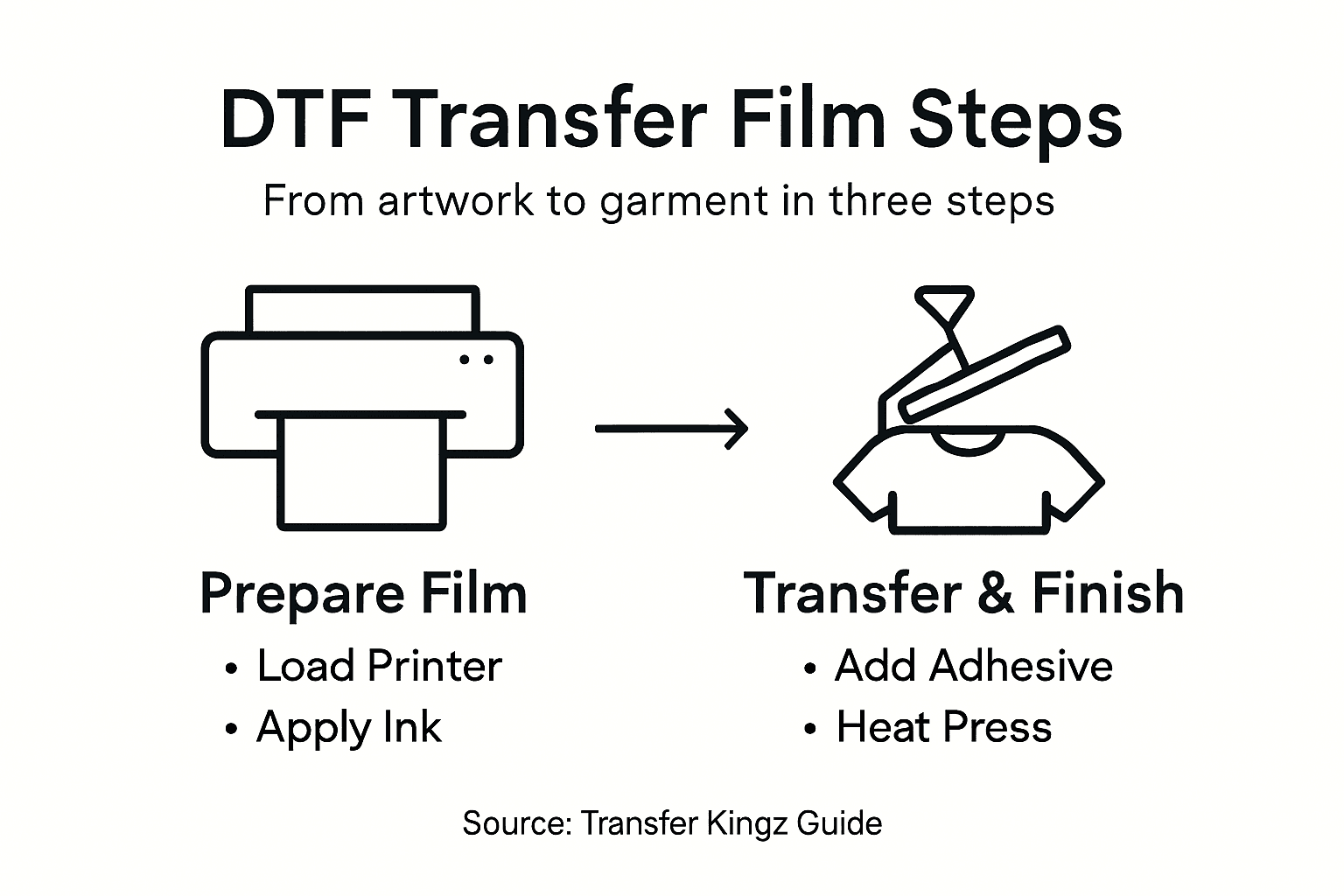
Film Composition Matters. These transfer films are engineered with specialized polymer coatings that enable superior ink reception and transfer performance. DTF film technology ensures that each graphic maintains crisp edges, vibrant colors, and exceptional durability through multiple wash cycles.
Pro tip: Always store your transfer films in a cool, dry environment and avoid direct sunlight to maintain their optimal printing performance and prevent premature degradation.
Types of DTF Transfer Films and Key Differences
DTF transfer films are not a one-size-fits-all solution, but rather a diverse range of specialized materials designed to meet varying printing requirements. DTF transfer sheets come in multiple variations, each engineered to deliver specific performance characteristics for different textile printing applications.
The primary categories of DTF transfer films include:
- Hot Peel Films: Designed for immediate transfer after printing
- Cold Peel Films: Require cooling before fabric application
- Specialty Coated Films: Optimized for specific fabric types
- Transparent Films: Allow for unique design techniques
- Matte Finish Films: Provide softer texture and reduced glare
Each film type presents unique advantages depending on the specific printing project. Hot peel films, for instance, enable rapid production workflows by allowing immediate transfer after printing, while cold peel films offer more intricate design possibilities by providing extended working time during the transfer process.
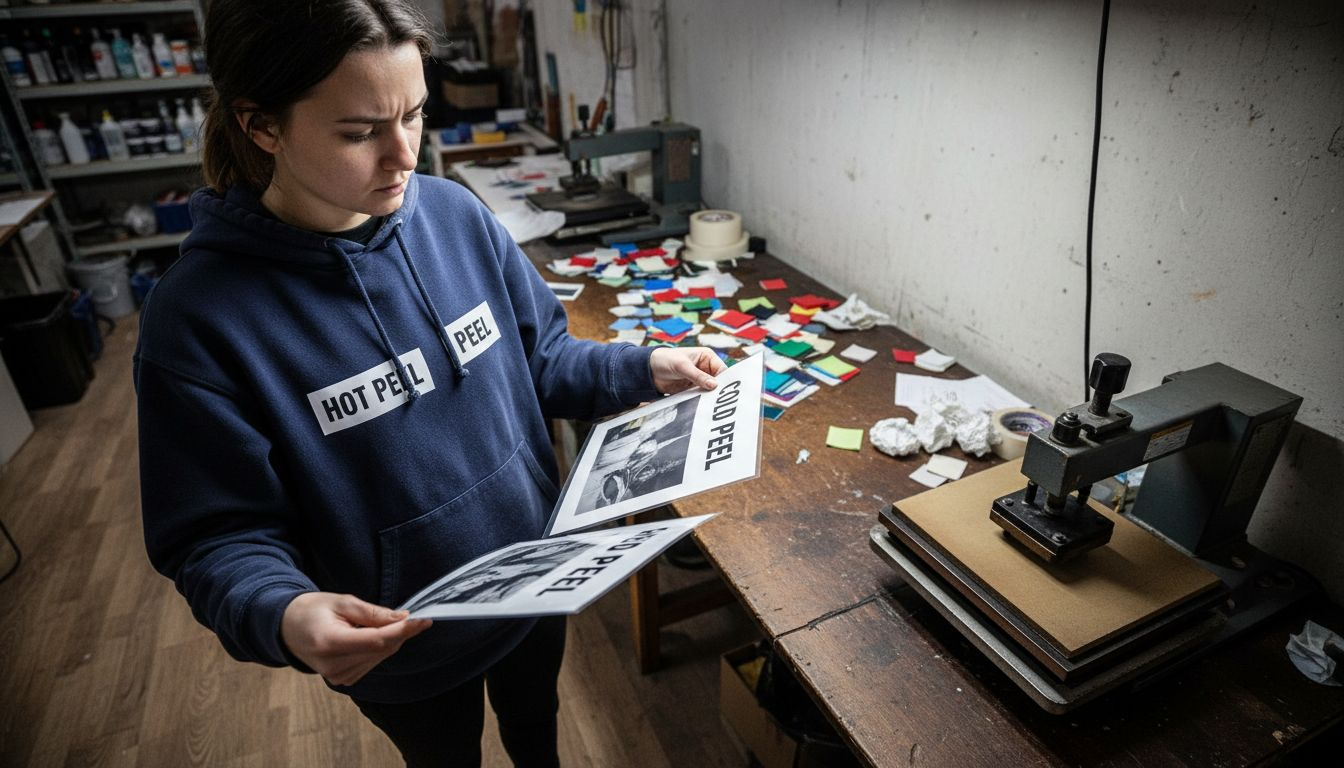
Here’s a comparison of DTF transfer film types and their practical business applications:
| Film Type | Ideal Use Case | Application Benefit |
|---|---|---|
| Hot Peel | Fast production runs | Minimizes processing time |
| Cold Peel | Detailed, complex art | Allows design adjustments |
| Matte Finish | Premium apparel lines | Reduces glare, soft touch |
| Transparent | Layered graphics | Enables placement accuracy |
| Specialty Coated | Unusual fabrics | Expands substrate options |
Substrate Compatibility plays a crucial role in film selection. Some transfer films are specifically formulated to work exceptionally well with cotton, while others excel on synthetic or blended fabrics. DTF transfer material suppliers recommend matching film characteristics precisely with intended fabric compositions to achieve optimal transfer results.
The quality of your transfer film directly impacts the vibrancy, durability, and overall appearance of your printed design.
Advanced DTF transfer films now incorporate sophisticated polymer technologies that enhance ink adhesion, color retention, and wash resistance. These innovations allow small business owners to produce professional-grade custom apparel with remarkable consistency and quality.
Pro tip: Always conduct a small test print and transfer to verify film compatibility with your specific fabric type and printing equipment before launching full production.
Essential Features for Quality Transfers
Achieving exceptional DTF transfer results requires understanding the critical features that distinguish superior printing materials. DTF transfer application tips highlight the importance of selecting transfer films with specific performance characteristics that ensure professional-grade outcomes.
Key essential features for high-quality DTF transfers include:
- Ink Absorption: Superior film capacity to receive and retain printer pigments
- Adhesive Consistency: Even powder coating for uniform fabric bonding
- Temperature Resistance: Ability to withstand high-heat transfer processes
- Dimensional Stability: Minimal stretching or warping during printing
- Color Vibrancy: Maintaining precise color reproduction and brightness
The polymer composition of transfer films significantly impacts overall print quality. Advanced films now incorporate sophisticated molecular technologies that enhance ink penetration, color retention, and durability through multiple wash cycles.
Performance Metrics are crucial in evaluating transfer film effectiveness. Small business owners should prioritize films that demonstrate consistent performance across various fabric types, including cotton, polyester, and blended materials. DTF transfer troubleshooting resources recommend examining film characteristics like stretch tolerance, ink adhesion, and heat transfer efficiency.
Selecting the right transfer film is as critical as choosing high-quality printing equipment for achieving professional results.
Advanced transfer films now integrate nanotechnology and specialized polymer coatings that dramatically improve print resolution, color accuracy, and overall design durability. These innovations enable small business owners to produce commercial-grade custom apparel with remarkable consistency and visual appeal.
Pro tip: Invest in sample packs from reputable manufacturers to test different transfer film characteristics before committing to bulk purchases.
Cost Factors and Common Mistakes to Avoid
Navigating the economic landscape of DTF printing requires strategic understanding of both direct and indirect expenses associated with transfer film production. DTF transfer application tips reveal critical insights into managing printing costs effectively for small business owners.
Key cost factors impacting DTF transfer film expenses include:
- Material Quality: Higher-grade films with advanced polymer technologies
- Printer Compatibility: Specific film requirements for different printer models
- Volume of Production: Economies of scale in film purchasing
- Ink Consumption: Per-transfer ink usage and efficiency
- Equipment Maintenance: Ongoing costs of print head and machine upkeep
Common mistakes that dramatically increase operational expenses involve overlooking subtle but significant details in the printing process. Inexperienced operators frequently waste resources through improper film selection, inconsistent temperature settings, and inadequate quality control measures.
Economic Optimization demands a comprehensive approach to transfer film management. DTF transfer troubleshooting resources emphasize the importance of understanding how minor technical variations can substantially impact overall production costs.
Reducing waste and improving efficiency are more critical to profitability than simply minimizing upfront material expenses.
Small business owners can mitigate financial risks by implementing systematic quality control processes, investing in employee training, and developing a nuanced understanding of transfer film performance characteristics. Strategic purchasing, combined with methodical production techniques, enables more predictable and controlled printing expenses.
Consider these common DTF transfer challenges and recommended solutions:
| Challenge | Impact on Prints | Solution Strategy |
|---|---|---|
| Inconsistent adhesion | Designs peel off | Adjust heat and pressure |
| Dull color appearance | Unattractive results | Optimize ink and film match |
| Excessive film waste | Higher production cost | Improve alignment accuracy |
| Warping/stretching | Distorted transfers | Use stable, quality films |
| Substrate mismatch | Poor durability | Select compatible film type |
Pro tip: Develop a comprehensive tracking system to monitor per-transfer costs, including material expenses, labor time, and potential waste to identify optimization opportunities.
Optimizing Film Application for Custom Apparel
Successful DTF transfer application demands precision, strategic planning, and a comprehensive understanding of material interactions. DTF printing best practices provide crucial insights into achieving consistent, high-quality custom apparel transfers.
Critical steps for optimizing film application include:
- Surface Preparation: Ensuring clean, smooth fabric surfaces
- Temperature Calibration: Precise heat press settings for each fabric type
- Pressure Management: Consistent and even application pressure
- Alignment Techniques: Precise transfer film positioning
- Cooling Protocol: Proper cooling and peeling procedures
The application process requires meticulous attention to detail. Different fabric compositions demand unique transfer approaches, with cotton, polyester, and blended materials each requiring specific temperature and pressure configurations.
Transfer Technique Mastery involves understanding the nuanced interactions between transfer film, ink, and fabric substrates. DTF transfer checklist resources emphasize the importance of systematic approach and controlled environmental conditions.
Consistent technique matters more than expensive equipment when achieving professional-grade custom apparel transfers.
Advanced practitioners develop muscle memory and intuitive understanding of how transfer films behave under different conditions. This expertise allows for rapid adjustments and troubleshooting, minimizing waste and maximizing production efficiency.
Pro tip: Create a detailed documentation system tracking transfer settings for different fabric types, enabling reproducible and consistent print quality across various materials.
Elevate Your DTF Printing Success with Premium Transfer Films
Struggling to achieve vibrant, durable, and precise prints in your custom apparel projects? The key lies in selecting the right transfer films designed to deliver exceptional ink adhesion, color vibrancy, and fabric compatibility. Understanding the role of transfer films, like hot peel or cold peel variations, can significantly improve your printing outcomes and reduce costly mistakes.
Discover how DTF transfers, custom apparel printing, heat transfers, t-shirt printing, high-quality prints. – Transfer Kingz offer the perfect balance of advanced polymer coatings and adhesive technology to bring your digital designs to life with unmatched quality and consistency.
Take control of your printing process now by choosing Transfer Kingz as your trusted partner for premium DTF transfer solutions. Benefit from fast turnaround times, no minimum order requirements, and expert support that helps you master every step from transfer film selection to flawless application. Visit Transfer Kingz and explore how our resources and products elevate your craft today. Start creating prints that impress and last with confidence.
Frequently Asked Questions
What is a DTF transfer film?
A DTF transfer film is a specialized polyester-based transparent sheet that temporarily holds printed graphic designs before transferring them onto fabric surfaces, enabling high-quality custom apparel creation.
How do I choose the right type of DTF transfer film for my project?
Selecting the right type of DTF transfer film depends on your project requirements; hot peel films are ideal for fast production, while cold peel films allow for more intricate designs. Specialty coated films are optimized for specific fabric types, and matte finish films reduce glare.
What features should I look for in a high-quality DTF transfer film?
Look for features such as superior ink absorption, even powder adhesive consistency, temperature resistance, minimal stretching, and vibrant color reproduction to achieve optimal transfer results.
How do I optimize the application process for DTF transfer films?
To optimize the application process, ensure proper surface preparation, calibrate temperature settings accurately, apply consistent pressure, align the film precisely, and follow appropriate cooling protocols after transfer.
Recommended
- What Is Transfer Film? Key Facts for Print Shops – Transfer Kingz
- What Is Film in DTF? The Key to Vibrant Custom Prints – Transfer Kingz
- What Is Direct to Film Printing and Its Impact – Transfer Kingz
- Can Digital Transfer Film Handle Intricate and Detailed Prints? – Transfer Kingz
0 comments