

TL;DR:
- Sublimation and DTF printing are the two main heat-transfer methods used in custom apparel production, each offering distinct benefits depending on fabric compatibility and product needs. DTF works on almost all fabrics, including dark and cotton materials, while sublimation is limited to polyester and coated surfaces, providing superior image quality on polyester garments. Many successful businesses leverage both techniques strategically to expand their product range and meet diverse customer demands.
Sublimation and DTF (Direct-to-Film) printing are the two dominant heat-transfer methods in custom apparel production, and each delivers a distinct set of advantages that directly affect your product line, profit margins, and customer satisfaction. Sublimation bonds ink into polyester fibers at the molecular level, while DTF prints designs onto film with a white underbase and transfers them with heat and adhesive onto nearly any fabric. Understanding the sublimation vs DTF benefits side by side is the fastest way to stop guessing and start building a printing setup that actually fits your business.
1. What are the sublimation vs DTF benefits at a glance?
The core distinction between these two methods is fabric compatibility. Sublimation requires polyester or polymer-coated hard goods like mugs and tumblers to work at all. DTF works on cotton, polyester blends, denim, spandex, and dark or light colors without restriction. That single difference shapes every other business decision you make downstream, from which blanks you stock to which customers you can serve.
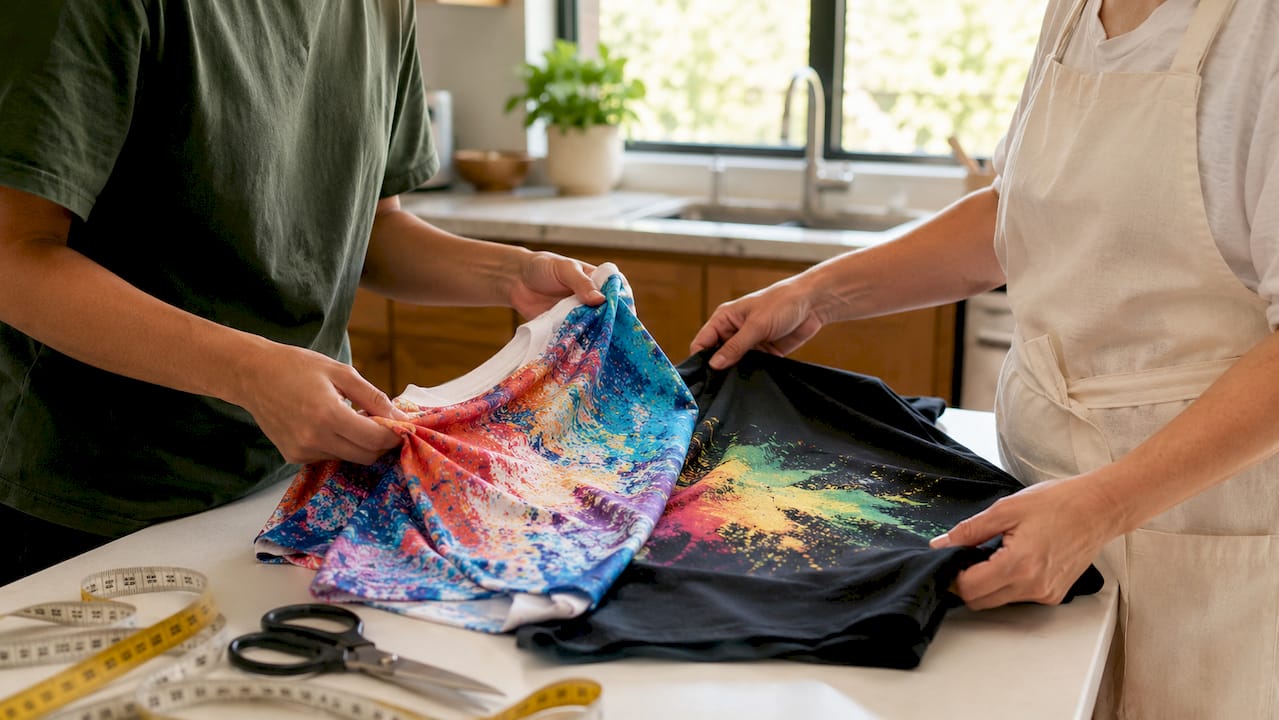
Sublimation printing advantages are real and significant on the right materials. The ink becomes part of the fiber itself, which means no cracking, no peeling, and no texture on the finished garment. DTF printing benefits include a broader material range and the ability to print on dark fabrics using an opaque white underbase layer. Neither method is universally superior. The right choice depends entirely on what you sell and who you sell it to.
2. Fabric compatibility: which method works on more materials?
DTF wins this category outright. DTF prints on almost all fabric types, including cotton, polyester blends, denim, and dark colors, because the white underbase creates a consistent printing surface regardless of the garment’s base color. That flexibility means you can offer a single design across a full range of blanks without reformatting or reprinting.
Sublimation printing is limited to light-colored polyester and polymer-coated surfaces. The ink is transparent, so it cannot produce vivid colors on dark fabrics or cotton. A white 100% polyester tee works perfectly. A gray cotton blend does not work at all.
Here is a quick breakdown of where each method applies:
- DTF: Cotton, polyester, blends, denim, nylon, dark garments, light garments, canvas, and most synthetic fabrics
- Sublimation: White or light polyester apparel, polyester-coated hard goods (mugs, tumblers, phone cases, metal prints)
Pro Tip: If you sell both soft goods and hard goods like drinkware or signage, sublimation covers the hard goods side while DTF handles your apparel. Running both methods gives you the widest product catalog without compromise.
3. Print quality and color vibrancy compared
Sublimation produces photo-realistic, all-over dye designs on polyester with finer detail than DTF. Because the ink integrates directly into the fiber, gradients and photographic images render with exceptional sharpness and no visible texture. This makes sublimation the preferred choice for athletic wear, swimwear, and all-over print designs where image fidelity matters most.
DTF delivers vibrant, opaque color on any fabric color. The white underbase ensures that even bright yellows and reds pop on black garments, which sublimation physically cannot achieve. For standard logos, text, and graphic designs, the quality difference between the two methods is minimal to the naked eye.
| Feature | Sublimation | DTF |
|---|---|---|
| Color vibrancy on light fabrics | Exceptional | Very good |
| Color vibrancy on dark fabrics | Not possible | Excellent |
| Photo-realistic gradients | Superior | Good |
| Print texture | None (zero hand feel) | Slight soft film layer |
| Fabric range | Polyester and coated only | Nearly all fabric types |
Pro Tip: For all-over print polyester jerseys or sublimated sportswear, sublimation is the clear winner on quality. For anything involving cotton or dark garments, DTF is the only viable option between the two.
4. Durability: how long do sublimation and DTF prints last?
Sublimation prints are permanent. The ink bonds chemically with polyester fibers, so the print cannot crack, peel, or fade under normal wash conditions. Sublimation prints become part of the fiber, which makes them the most durable option available for polyester garments. This is why sublimation dominates athletic uniforms and performance wear that gets washed frequently.
DTF prints resist 50 or more washes with proper application and quality films. The film layer adheres strongly to the fabric surface, but it sits on top of the fibers rather than inside them. Under heavy stress or repeated stretching, DTF prints may develop cracking at stress points over extended use. Using premium films and correct heat press settings significantly reduces this risk for typical commercial applications.
The hand feel difference also matters to customers. Sublimation has zero hand feel because the ink lives inside the fabric. DTF has a thin, soft film layer that is perceptible on close touch. Most customers do not notice it, but it is worth knowing if you sell premium or luxury apparel where tactile quality is part of the value proposition.
5. Cost considerations and startup investment
Sublimation has a lower barrier to entry for beginners. A basic sublimation printer, heat press, and transfer paper setup costs significantly less than a full DTF printing system. If you are starting with polyester products only, sublimation is the more affordable path to your first sale.
DTF equipment requires a higher upfront investment and consistent operator discipline, particularly around white ink maintenance. DTF equipment enables flexibility for short runs and mixed fabrics, which justifies the cost for businesses with diverse product catalogs. The real cost advantage of DTF shows up at scale, where the ability to print on any fabric without restocking specialized blanks reduces per-unit costs over time.
Here is how the cost factors break down for each method:
- Sublimation startup costs: Lower printer cost, lower ink cost, requires polyester-specific blanks
- DTF startup costs: Higher printer and film cost, white ink maintenance adds complexity
- Sublimation consumables: Transfer paper, sublimation ink, polyester blanks
- DTF consumables: PET film, DTF ink (including white), hot melt adhesive powder
- Outsourcing option: Outsourcing DTF transfers eliminates equipment costs entirely for small businesses
- Gang sheets: Purchasing pre-printed gang sheets from a DTF supplier lowers per-print cost and removes maintenance burden
DTF reduces setup costs versus screen printing, making it practical for small to medium batch production with diverse designs. Outsourcing to a DTF transfer provider like Transferkingz removes the equipment investment entirely, which is a strong option for businesses that want DTF quality without the capital outlay.
6. Which business scenarios favor sublimation over DTF?
The choice between sublimation and DTF is strategic based on your product line, not a verdict on which technology is better overall. Each method has a clear home.
Sublimation is the right choice when you:
- Sell all-over print polyester apparel like jerseys, leggings, or athletic shorts. Men’s performance polyester apparel is a natural fit for sublimation printing.
- Produce custom hard goods such as mugs, tumblers, phone cases, or metal prints
- Need photo-realistic, all-over designs with zero hand feel
- Work exclusively with white or light-colored polyester blanks
DTF is the right choice when you:
- Carry mixed fabric inventories including cotton, blends, and denim
- Print on dark garments where sublimation simply cannot produce color
- Fulfill small custom orders with varied designs across different garment types
- Want to avoid stocking polyester-only blanks
Many successful small apparel businesses use both methods. Sublimation handles the polyester and hard goods side of the catalog. DTF covers cotton basics, dark garments, and custom one-off orders. Complementary use of both methods delivers a broader product range than either method alone. You can explore the best fabrics for DTF printing to understand which materials give you the sharpest results before committing to a fabric lineup.
Key takeaways
DTF printing and sublimation each deliver distinct advantages, and the strongest apparel businesses use both methods strategically based on fabric type, design complexity, and order volume.
| Point | Details |
|---|---|
| Fabric compatibility | DTF works on nearly all fabrics; sublimation is limited to polyester and coated hard goods. |
| Print durability | Sublimation prints are permanent on polyester; DTF prints resist 50 or more washes with proper application. |
| Cost and startup | Sublimation has lower startup costs; DTF offers broader fabric flexibility that justifies higher investment at scale. |
| Business fit | Use sublimation for polyester apparel and hard goods; use DTF for cotton, blends, and dark garments. |
| Outsourcing DTF | Buying pre-printed DTF transfers removes equipment costs and simplifies operations for small businesses. |
What I’ve learned from watching businesses choose the wrong method first
Most apparel entrepreneurs I have seen struggle with printing technology made the same mistake: they chose a method based on price alone, not product fit. They bought a sublimation setup because it was cheaper, then discovered their customers wanted cotton tees and dark hoodies. Or they invested in a full DTF printer before understanding the white ink maintenance demands.
The honest truth is that neither method is a shortcut. Sublimation rewards you with permanent, beautiful prints on polyester, but it punishes you the moment a customer asks for a black cotton shirt. DTF gives you real flexibility across fabrics and colors, but the equipment demands discipline. White ink clogs if you do not run the printer regularly. That is not a flaw you can ignore.
My recommendation for newcomers is to test both methods on your actual product line before committing to equipment. Order sample DTF transfers from a supplier like Transferkingz and press them onto the garments you actually sell. Run a sublimation test on your polyester blanks. The results on your specific fabrics will tell you more than any comparison article can. You can also check the DTF printing industry trends to understand where the market is heading before you lock in your workflow.
The businesses I have seen grow fastest are the ones that treat sublimation and DTF as complementary tools, not competing options. They use sublimation for performance wear and drinkware, and they outsource DTF transfers for everything else. That combination keeps overhead low while keeping the product catalog wide.
— Anthony
How Transferkingz supports your apparel printing business
Transferkingz specializes in high-quality custom DTF transfers with vibrant colors, broad fabric compatibility, and fast turnaround times. If you want DTF quality without the equipment investment, Transferkingz lets you upload your artwork, build gang sheets, and order with no minimums.
Small businesses and production shops use Transferkingz to cut startup costs, skip white ink maintenance, and press professional transfers onto cotton, blends, denim, and dark garments the same day transfers arrive. Whether you need a single custom order or a high-volume run, Transferkingz offers DTF printing services across Texas with the speed and quality your customers expect.
FAQ
What is the main difference between sublimation and DTF printing?
Sublimation bonds ink directly into polyester fibers, producing a permanent print with zero hand feel. DTF applies a thin film layer with a white underbase onto the fabric surface, enabling printing on nearly all fabric types including cotton and dark garments.
Which printing method lasts longer, sublimation or DTF?
Sublimation prints are permanent on polyester and will not crack or peel under normal use. DTF prints resist 50 or more washes but may develop stress-point cracking over extended heavy use if lower-quality films are used.
Can DTF printing match sublimation quality on polyester?
DTF produces vibrant, high-quality prints on polyester, but sublimation delivers superior photo-realistic gradients and finer detail on polyester because the ink integrates directly into the fiber. For standard logos and text, the visual difference is minimal.
Is sublimation or DTF cheaper for a small business?
Sublimation has lower startup equipment costs, but it only works on polyester. DTF equipment costs more upfront, but outsourcing DTF transfers to a supplier eliminates equipment costs entirely and makes DTF accessible at any budget level.
Can I use both sublimation and DTF in the same business?
Yes. Many apparel businesses use sublimation for polyester garments and hard goods, and DTF for cotton, blends, and dark garments. Running both methods gives you the widest product catalog and the ability to serve more customer segments.
0 comments