

The 2026 apparel-decoration story comes down to one thing: shops that pair digital decoration methods with real workflow automation will outproduce and outprice everyone still running last decade’s setup. Design is getting louder and quieter at the same time, sustainability has stopped being optional, and the equipment on your floor now decides which trends you can actually sell.
Here’s what to prioritize right now:
- Lean on DTF and DTG for short-run and personalized orders instead of screen printing.
- Mix textures (chenille, flock, embroidery) into single garments rather than picking one finish.
- Buy softer, heavier blanks. Cheap fabric undercuts even great print work.
- Build a print-on-demand workflow before your competitors do.
Pantone’s Transparent Teal as its 2026 Color of the Year is already showing up in mockups from shops that showed at Impressions Expo this year, and it’s a useful signal for where palettes are heading.
Key Takeaways
Apparel decoration in 2026 rewards shops that combine digital decoration methods, mixed-media texture, and print-on-demand workflows over those still relying on single-method, high-minimum production.
| Point | Details |
|---|---|
| Design for both extremes | Stock oversized graphic templates and minimalist placement options since both are trending for different buyers. |
| Upgrade blanks first | Heavier, garment-dyed, or recycled-content fabrics matter as much as the print method itself. |
| Mix textures deliberately | Pair DTF or DTG with chenille, flock, or puff embroidery accents for a premium feel. |
| Fix throughput before buying new gear | Larger heat presses and gang-sheet templates solve more bottlenecks than software alone. |
| Test with Transferkingz before scaling | Order a no-minimum sample gang sheet to check hand-feel and wash-fastness before a full drop. |
Table of Contents
- Eight Trends Reshaping Apparel Decoration in 2026
- What Should You Design for Graphics, Placement, and Texture in 2026?
- Which Fabrics and Finishes Read as Premium This Year?
- Which Decoration Methods Actually Deliver 2026 Looks?
- How Are Production Workflows Changing to Support 2026 Trends?
- A Practical Checklist for Adopting 2026 Trends This Quarter
- What Tools and Innovations Should You Watch This Year?
- Sources
Eight Trends Reshaping Apparel Decoration in 2026
Scan this list against your current catalog. If you’re not touching at least three of these, you’re behind.
- Nostalgia and washed finishes. Vintage graphics with soft, broken-in texture are outselling crisp, high-contrast prints in casual apparel.
- Tonal neutrals meeting jewel and sorbet colors. Buyers want a calm base palette punched up with one saturated accent color.
- Personalization at scale. Print-on-demand orders of one to five pieces are now routine, not exceptional.
- Oversized graphics versus quiet placement branding. Both are trending, but for different customers and different garments.
- Mixed-media decoration. Combining embroidery, flock, and print on one shirt reads as premium.
- Premium blanks with real hand-feel. Heavier midweights and garment-dyed fabrics are becoming the default expectation.
- Sustainability as baseline, not upsell. Recycled content and lower-waste methods are now a buying criterion, not a bonus.
- AI-assisted design workflows. Mockup generation and rapid variant creation are cutting design turnaround time significantly.
Short-run feasibility matters most here. A trend only counts if you can produce it profitably at five or fifty units, not just five hundred.
What Should You Design for Graphics, Placement, and Texture in 2026?
Full-front and full-back graphics are winning with younger buyers and event merch because DTG and DTF printing remove the setup barriers that used to make oversized art expensive, letting shops run photorealistic, edge-to-edge designs without extra plates or screens. Minimalist placement branding, on the other hand, still dominates retail and corporate work, where a small chest logo or sleeve hit reads as more expensive than a loud graphic.
Nostalgia-driven art needs specific file prep. Distressed textures, retro typography, and washed color palettes only translate correctly if you build in opacity variation and avoid flat vector fills. A halftone or grain overlay applied at the file stage, not after printing, keeps that broken-in look consistent across a production run.
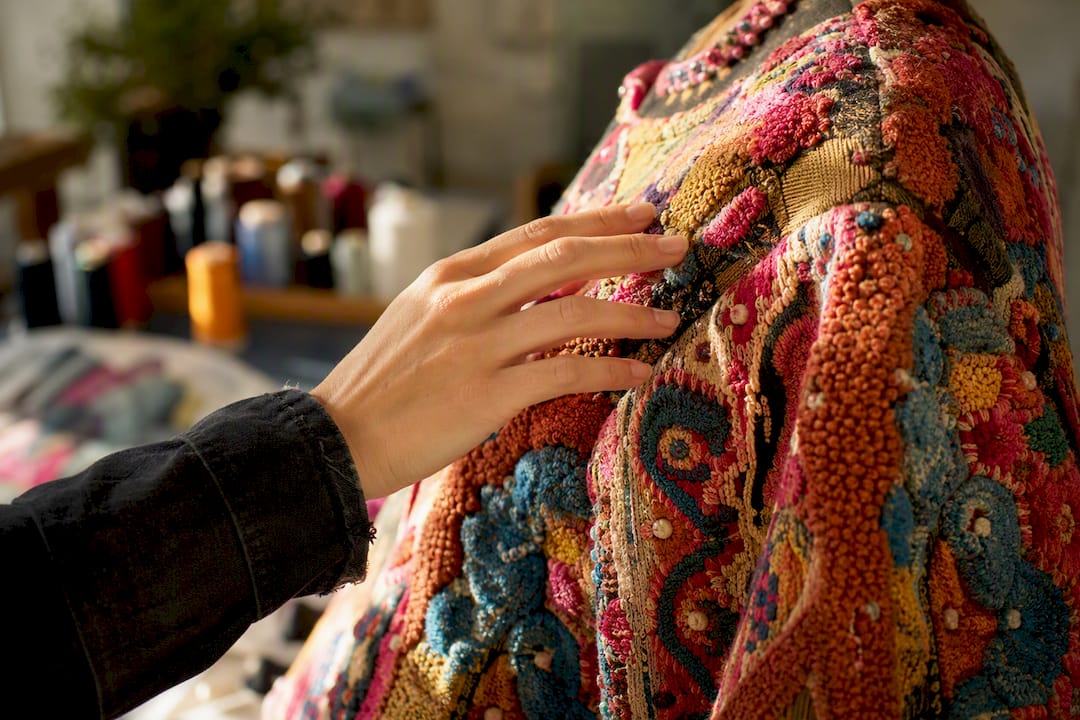
Texture is becoming part of the design brief itself, not an afterthought. Tone-on-tone prints, puff embroidery paired with flat stitching, and small chenille or flock accents on an otherwise simple design are showing up across retail-adjacent promo lines, according to reporting from ASI Orlando 2026.
Pro Tip: Build a simple artwork checklist before every job: confirm color separation, check your RIP resolution against garment texture, and test peel timing on a scrap swatch before running the full order. Skipping this step is the fastest way to lose the soft hand-feel that made the design worth doing.
Which Fabrics and Finishes Read as Premium This Year?
Garment choice now shapes decoration success as much as the print method does. Buyers are gravitating toward garment-dyed and washed tees, heavier midweight cotton, buffed fleece, recycled polyester blends, and Lenzing modal fabrics that hold a softer drape than standard ring-spun cotton.
- Garment-dyed and washed finishes for a lived-in look straight off the rack.
- Heavier midweight blanks (6+ oz) for structured, premium-feeling merch.
- Buffed fleece and brushed interiors for elevated hoodies and crewnecks.
- Recycled polyester and organic cotton blends for buyers asking about sustainability credentials.
Fabric choice directly affects which decoration method performs best. DTF handles blends and dark garments more reliably than DTG, which still shines on cotton but can struggle with color vibrancy on synthetic-heavy fabrics. If a customer specifically asks about certifications, organic cotton and recycled-content blends are the two callouts most worth stocking, according to current apparel trend coverage.
Which Decoration Methods Actually Deliver 2026 Looks?
Picking the right method matters more than picking the trendiest one. Here’s a practical rundown.
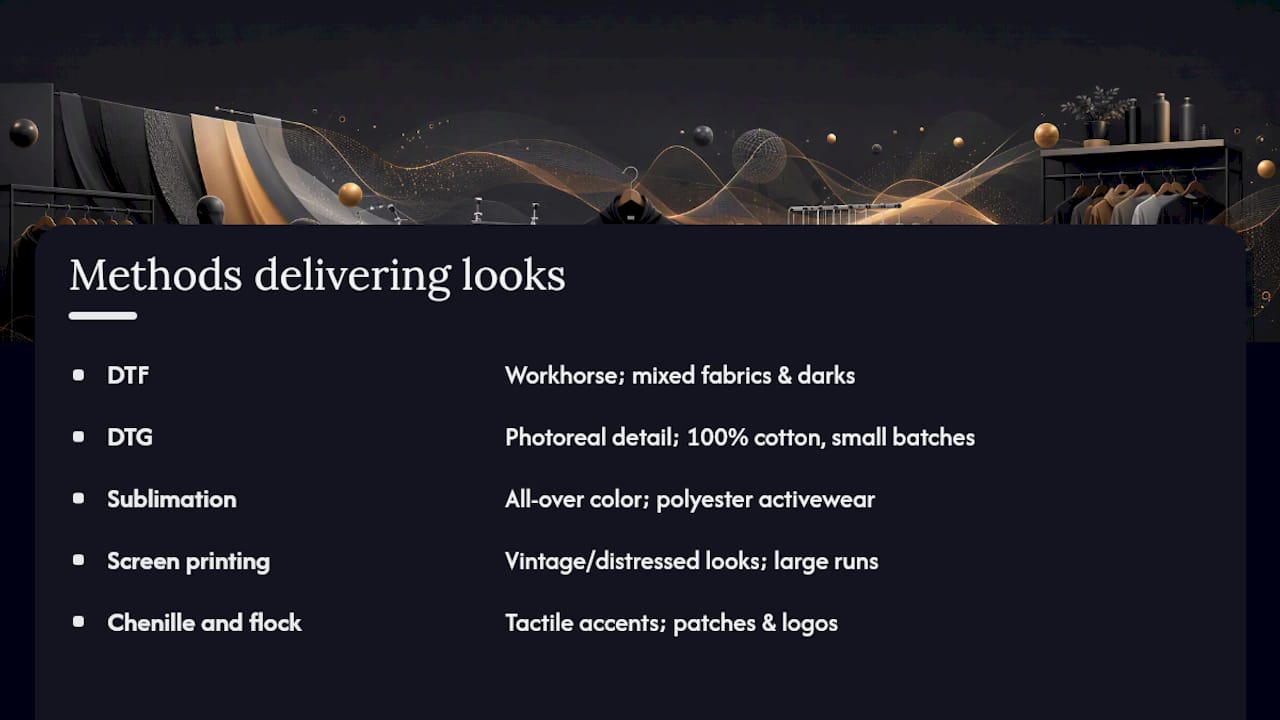
DTF (Direct-to-Film) remains the workhorse for 2026, and vendors keep improving it. New ink chemistry produces a noticeably softer hand-feel, and powderless DTF options are gaining traction for high-volume automated lines. Best for: mixed fabrics, dark garments, short runs. Limitation: still needs correct cure timing to avoid a plasticky feel. Shop tip: test peel temperature on every new film batch, since chemistry shifts between vendor releases.
DTG (Direct-to-Garment) wins on photorealistic detail and smooth gradients, especially on 100% cotton. Best for: full-color art, small batches, one-off personalization. Limitation: slower on large runs and less reliable on poly blends.
Sublimation delivers all-over color with zero hand-feel change, since the ink becomes part of the fabric. Best for: polyester activewear and all-over print apparel. Limitation: doesn’t work on cotton or dark garments.
Screen printing still owns vintage, distressed looks at volume, particularly with discharge or water-based inks that mimic a washed finish. Best for: large single-color or spot-color runs.
Chenille and flock add tactile dimension that flat printing can’t touch, and they’re showing up as accent pieces rather than full designs. Puff embroidery combined with flat stitching creates depth on logos and lettering.
3D printing is still early for mainstream apparel, but Jean Paul Gaultier’s runway pieces used 3D-printed TPU lattices and thousands of individually printed scales, proving the technology can create structural and textural effects standard printing simply can’t.
Pro Tip: A strong mixed-media combo for 2026: DTF full-back graphic paired with a small chenille patch on the chest. The contrast in texture reads as premium without doubling your production time.
How Are Production Workflows Changing to Support 2026 Trends?
Print-on-demand has flipped the priority list. Speed, adaptability, and gang-sheet management now matter as much as raw print quality, because customers expect one-off orders turned around in days, not weeks.
Trade shows this year made the automation shift obvious. Impressions coverage highlighted hybrid presses, automated DTF lines, and new workflow software as the structural upgrades separating shops that scale from shops that stall.
New high-speed embroidery heads and hybrid screen/digital presses debuted on 2026 show floors specifically to cut labor time per print, a change that determines which trend-driven orders a shop can actually take on without adding staff.
- Fix heat-application throughput first. A larger-format press or pallet stacking solves more bottlenecks than any single software purchase.
- Standardize your gang-sheet templates so artwork checks don’t slow down every order.
- Build a repeatable variant workflow before promising unlimited personalization to customers.
A Practical Checklist for Adopting 2026 Trends This Quarter
You don’t need to overhaul your entire shop at once. Work through this in order.
- Audit your current blanks. If your fabric doesn’t feel premium, no decoration method will fix that.
- Pick one or two trend directions, not five. Nostalgia graphics plus mixed-media texture is a realistic combo to start with.
- Run small test prints before committing to a full drop. Ten units, not a hundred.
- Measure hand-feel and wash-fastness against your current standard. A design that cracks after three washes isn’t ready.
- Set pricing for limited drops that reflects the setup time, not just material cost.
- Iterate based on what actually sold, not what you personally liked best.
Run a quick quality-assurance pass on every new method: check color accuracy against a Pantone swatch, feel the print by hand after full cure, and wash-test a sample before it goes live to customers.
Pro Tip: The smallest investments unlock the most scale: a slightly larger heat press, printed gang-sheet templates, and a barcode system for tracking POD orders. None of these require a six-figure equipment purchase.
What Tools and Innovations Should You Watch This Year?
A short list of what’s actually debuting on show floors and worth evaluating for your shop:
- Powderless DTF lines that cut cleanup time and reduce material waste per sheet.
- Hybrid screen/digital presses that let you combine spot-color screen work with digital detail on one machine.
- Large-format heat presses for full-front and full-back graphic runs.
- 3D mockup platforms for showing customers a realistic preview before printing a single sheet.
- High-speed multi-needle embroidery heads for faster chenille and puff embroidery turnaround.
When evaluating a new machine or service, run the math on two things only: how much floor space it actually needs and how many orders per week it needs to process before it pays for itself. Named entities worth researching directly: DTF, DTG, sublimation, chenille, flock, 3D printing, and Pantone’s 2026 Color of the Year.
Pro Tip: Before buying anything new, calculate cost per unit at your actual current order volume, not the volume you hope to hit. Equipment that only pencils out at scale is a liability until you’re actually at that scale.
A Publisher’s Note on Priorities
If you run a small shop, prioritize DTF and mixed-media texture over chasing every trend on this list. The gap between what’s technically possible and what’s profitable at low volume is wide. Run one test batch, track your actual cost per wear against what customers will pay, and only then commit to a full drop.
How Transferkingz Fits Into Your 2026 Production Plan
Transferkingz builds DTF and UV DTF transfers specifically for the shop realities described above: no minimum order requirements, a gang-sheet builder for combining multiple designs into one efficient print run, and softer ink chemistry that holds up on the premium blanks buyers now expect. Whether you’re testing a mixed-media graphic on ten units or running a full print-on-demand catalog, the gang sheet builder lets you combine short-run orders without paying screen-printing setup costs on every design.
If you’re evaluating whether DTF can handle the detailed, photorealistic graphics this year’s trends demand, the answer is worth confirming before you commit to a full drop. Test a sample gang sheet through Print Point and measure the hand-feel and wash-fastness yourself before scaling up your next collection.
Sources
- ASI Orlando 2026: 4 Promo Apparel & Headwear Trends From the Show Floor
0 comments