

TL;DR:
- Transfer application methods are specialized techniques that transfer images using heat, water, pressure, or polymers. Selecting the correct method based on substrate, design, and volume is vital for durability and cost efficiency.
Transfer application methods are specialized printing techniques that move images or graphics onto substrates using heat, water, pressure, or polymer adhesion. The right method determines whether a finished product lasts one wash or one hundred. For custom printing projects, the choice between heat and water transfer techniques, sublimation, hydrographic printing, and advanced micro-transfer systems defines both quality and cost. Transferkingz operates squarely in this space, specializing in Direct-to-Film (DTF) transfers that apply to a wide range of textiles and materials. Understanding the types of transfer application methods before you place an order saves time, money, and frustration.
1. What are the main types of transfer application methods?
Transfer application methods fall into four broad categories: heat-based, water-based, pressure-based, and advanced polymer or laser-assisted techniques. Each category suits different substrates, production volumes, and design complexities. Heat transfer and water transfer are the two most widely used methods in 2026, chosen for their durability and broad substrate compatibility. Sublimation, screen transfer, digital transfer, and micro-transfer printing round out the full spectrum. Knowing which category fits your project is the first decision you need to make.
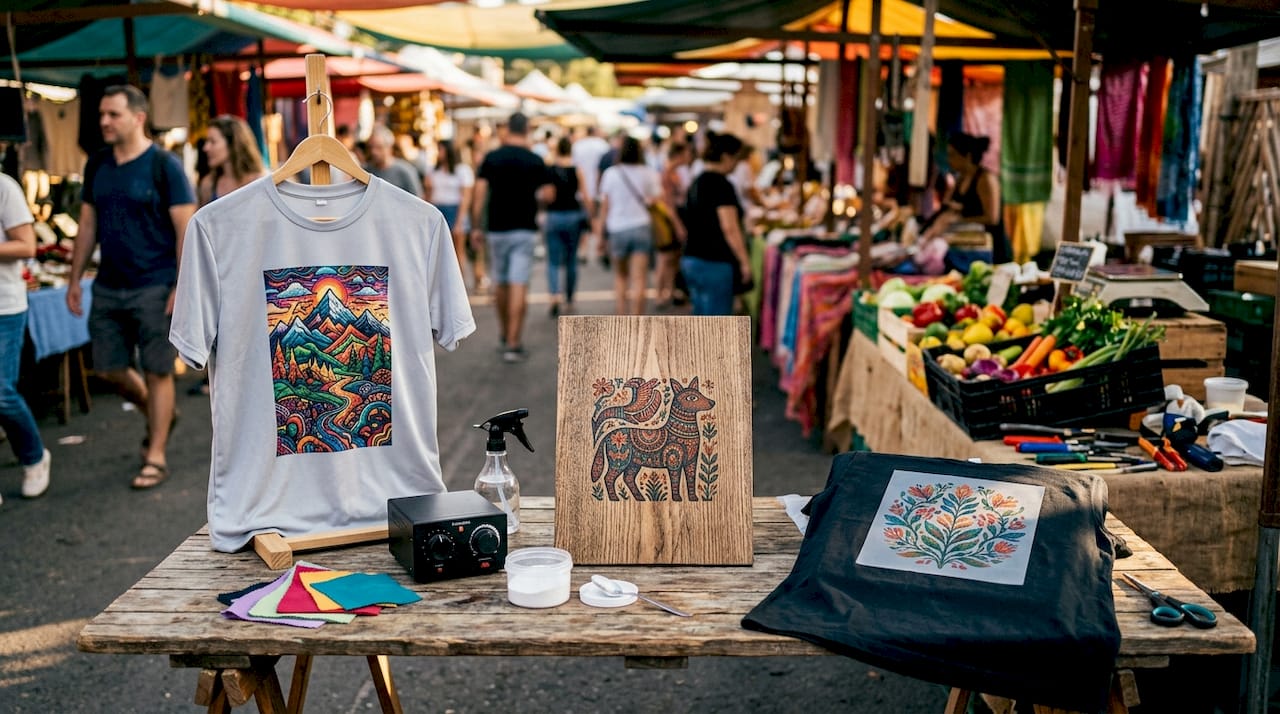
2. Heat transfer printing for flat substrates
Heat transfer printing applies a graphic to a substrate by combining heat and pressure through a heat press machine. The process bonds a pre-printed film or vinyl layer directly to the material’s surface. It is the standard method for flat substrates like cotton T-shirts, polyester jerseys, and canvas bags.
Pros and cons of heat transfer:
- Pros: Fast turnaround, no minimum order, works on most flat fabrics, vibrant color output
- Cons: Less effective on highly textured or curved surfaces, can crack over time without proper curing
Substrate preparation is the single most important factor in heat transfer success. Pre-pressing the fabric for 3–5 seconds removes moisture and flattens fibers, which directly improves adhesion. Skipping this step causes early peeling regardless of how much heat or pressure you apply afterward.
Pro Tip: Always pre-press your garment before applying any heat transfer. A flat, dry surface bonds faster and holds longer than a wrinkled or damp one.
For a deeper look at heat press mechanics, the heat press application basics guide from Transferkingz covers temperature, pressure, and dwell time in practical detail.
3. Sublimation transfer printing
Sublimation transfer converts ink directly from a solid to a gas under heat, embedding the dye into the substrate rather than sitting on top of it. The result is a print that cannot peel, crack, or fade the way surface-level transfers can. Sublimation excels on aluminum panels, polyester fabrics, and photo panels.
The critical limitation is substrate compatibility. Sublimation only bonds with polyester fibers or polymer-coated hard surfaces. Cotton garments and uncoated wood will not accept sublimation ink. This makes sublimation the best choice for photo merchandise and sportswear but a poor fit for standard cotton apparel.
Color accuracy in sublimation is exceptional because the dye becomes part of the material itself. Photographers and product designers who need true-to-life color reproduction consistently choose sublimation over other methods for photo panels and aluminum prints.
4. What transfer methods work best for curved or heat-sensitive surfaces?
Water transfer printing is the correct method for curved, irregular, or heat-sensitive items. Also called hydrographic printing or water decal transfer, this process floats a printed film on water and dips the object through it. The film wraps uniformly around the object’s geometry, covering every contour without distortion.
Best use cases for water transfer:
- Automotive parts and helmets
- Firearms and sporting equipment
- Plastic housings and electronics casings
- Decorative items with complex 3D shapes
Water transfer works on almost any solid material, including plastic, metal, wood, and glass. Heat-sensitive items that would warp or discolor under a heat press are ideal candidates. The trade-off is that water transfer requires more setup, including an activator chemical that dissolves the film and bonds the ink to the surface.
Pro Tip: Clean and prime the substrate surface before water transfer. Any oil, dust, or oxidation creates gaps in coverage that show up as bare spots after the film dissolves.
Surface geometry is the deciding factor between heat and water methods. Flat surfaces favor heat transfers, while complex shapes require water-based hydrographics. Choosing the wrong method for the geometry produces uneven coverage and wasted materials.
5. Direct-to-Film (DTF) transfer printing
DTF transfer printing prints a design directly onto a special film, applies a hot-melt adhesive powder, and then cures it. The finished transfer is pressed onto the garment using a heat press. DTF works on cotton, polyester, nylon, leather, and blended fabrics without requiring a coating or pre-treatment.
DTF is the most versatile heat-based method available for apparel decoration today. Unlike sublimation, it bonds to cotton. Unlike heat transfer vinyl (HTV), it handles photographic detail and gradients without cutting or weeding. Transferkingz built its entire service model around DTF because of this flexibility.
The DTF vs. heat transfer vinyl comparison shows that DTF consistently outperforms HTV on multi-color designs and fine detail. For small businesses and hobbyists who need professional results without large minimum orders, DTF is the most practical entry point.
6. Screen transfer printing for mass production
Screen transfer printing uses a mesh stencil to push ink through onto a substrate in layers. Each color requires a separate screen, making setup time and cost higher than digital methods. The payoff is volume. Screen transfer is the standard for mass production runs where per-unit cost must stay low.
Screen printing produces thick, opaque ink layers that hold up through repeated washing. This durability makes it the preferred method for branded merchandise, uniforms, and promotional products in high quantities. The method is less practical for short runs or designs with more than six colors.
Digital heat transfer has largely replaced screen printing for short-run custom work. Screen printing remains dominant for orders in the hundreds or thousands of identical units where setup costs are spread across volume.
7. How advanced micro-transfer printing works
Micro-transfer printing uses thermally activated polymer stamps to pick up and place micro-scale components with programmable precision. The system controls adhesion dynamically, allowing selective transfer of chiplets, thin films, and nanometer-scale structures. This method is not used in apparel. It belongs to semiconductor manufacturing and advanced electronics assembly.
The technology matters to custom printing professionals because it represents the direction the broader transfer field is heading: automated, programmable, and scalable. Frame-assisted and stamp-based methods are moving away from manual processes toward reliable, repeatable systems for fragile materials.
For anyone working with precision electronics or photonic devices, micro-transfer printing offers capabilities no other method can match. The learning curve and equipment cost are significant, but the yield improvements justify both for high-value components.
8. Laser-assisted mass transfer
Laser-assisted transfer uses focused laser energy to propel material from a donor film onto a receiving substrate without physical contact. The method is effective for micro-LED arrays and other components that cannot tolerate mechanical pressure. However, direct laser ablation can damage surfaces and create thermal instability.
Photothermal infrared laser methods with soft polymer stamps provide greater stability than UV lasers. This approach reduces mechanical stress and improves yield in micro-LED transfer applications. Polymer-based stamps and heat-release tapes minimize the explosive thermal effects that make direct laser ablation unreliable at scale.
Process windows in laser-assisted transfer are narrow. Non-optimal parameters produce failure rates that make the method cost-prohibitive without careful calibration. This is a high-precision tool for specialized manufacturing, not a general-purpose printing technique.
9. Solvent-free dry lift-off transfer
Dry lift-off transfer uses thermally shrinkable polymers like PVDF to achieve 100% yield in pattern transfers without solvents. The polymer shrinks under heat, releasing the pattern cleanly onto the receiving substrate. The method is compatible with photolithography and electron-beam lithography, making it suitable for large-area structural color patterns.
The environmental advantage is significant. Solvent-based transfer processes generate chemical waste and require ventilation and disposal infrastructure. Dry lift-off eliminates those requirements entirely. For labs and manufacturers looking to reduce chemical exposure and waste, this method offers a practical path forward.
Dry lift-off is currently a research-stage technique for most commercial applications. Its compatibility with existing lithography workflows positions it well for adoption in precision manufacturing as the process matures.
10. Key factors in choosing the right transfer method
Surface geometry is the first filter. Flat substrates accept heat, sublimation, DTF, and screen transfers. Curved or irregular surfaces need water-based hydrographic methods. Heat-sensitive materials eliminate all heat-based options immediately.
Adhesive layer management is the second critical factor. Excessive adhesive creates a heavy, stiff feel on fabric. Insufficient adhesive causes poor bonding and early failure. Testing adhesion strength on scrap material before a production run prevents both problems.
Durability requirements and production volume complete the decision. Screen printing wins on volume and wash durability for simple designs. DTF wins on design complexity and substrate range for short to medium runs. Water transfer wins on geometry. Sublimation wins on color permanence for polymer-coated surfaces.
For a broader look at how these decisions play out across apparel specifically, the textile printing methods guide from Transferkingz covers fabric-specific considerations in detail.
Key Takeaways
The most effective transfer application method is always determined by substrate geometry, material compatibility, and production volume before any other factor.
| Point | Details |
|---|---|
| Substrate geometry decides first | Flat surfaces use heat or DTF; curved surfaces require water-based hydrographic transfer. |
| Preparation drives adhesion | Pre-pressing fabric and cleaning surfaces prevents peeling, cracking, and coverage gaps. |
| DTF is the most versatile apparel method | DTF bonds to cotton, polyester, and blends without pre-treatment or minimum order requirements. |
| Advanced methods serve precision manufacturing | Micro-transfer and laser-assisted techniques apply to electronics, not general custom printing. |
| Test adhesive on scrap before production | Adhesive quantity directly affects both feel and bonding strength across all transfer types. |
What I’ve learned from watching people pick the wrong method
The most common mistake I see is choosing a transfer method based on price before checking substrate compatibility. A customer saves money on screen printing, then discovers their product has a curved surface that a flat stencil cannot cover evenly. The reprint costs more than the original savings.
Substrate preparation is where most failures actually happen. People focus on the transfer itself and skip the pre-press step. No amount of correct temperature or dwell time fixes a damp, wrinkled garment. The prep work is not optional. It is the job.
I am genuinely interested in where dry lift-off and micro-transfer methods are heading. The move toward solvent-free, automated transfer processes is not just an environmental preference. It is a quality improvement. Cleaner interfaces and more consistent adhesion produce better results at scale. The field is moving from craft to engineering, and that is a good thing for everyone who depends on transfer printing for their livelihood.
My practical advice for anyone starting out: test every variable on scrap material first. Temperature, pressure, dwell time, adhesive weight. Change one thing at a time. The DTF printing process guide from Transferkingz is a solid starting point for understanding how those variables interact in a real production context.
— Anthony
Transferkingz custom DTF transfers for your next project
Transferkingz specializes in high-quality DTF transfers that work across cotton, polyester, nylon, and blended fabrics without minimum order requirements.
Whether you are a small business decorating a dozen shirts or a production shop running hundreds of units, Transferkingz delivers vibrant, durable transfers with fast turnaround times. The gang sheet builder lets you maximize film usage and reduce cost per print. For customers in the Dallas area, custom DTF printing in Dallas is available with the same quality and speed that Texas-wide customers access through DTF transfers across Texas. Upload your artwork, choose your substrate, and get professional-grade results without the overhead of in-house printing equipment.
FAQ
What is the most common transfer application method for apparel?
Heat transfer and DTF printing are the most widely used methods for apparel in 2026. DTF is preferred for its compatibility with cotton, polyester, and blended fabrics without pre-treatment.
When should I use water transfer instead of heat transfer?
Water transfer is the correct choice for curved, irregular, or heat-sensitive surfaces. Heat transfer works best on flat substrates like T-shirts and canvas bags.
Does sublimation work on cotton?
Sublimation does not bond to cotton. It requires polyester fibers or polymer-coated hard surfaces to embed the dye permanently into the material.
How does adhesive quantity affect transfer quality?
Too much adhesive creates a stiff, heavy feel on fabric. Too little causes poor bonding and early peeling. Testing on scrap material before a production run sets the correct balance.
What is micro-transfer printing used for?
Micro-transfer printing is used in semiconductor manufacturing and advanced electronics assembly. It places micro-scale chiplets and thin films with programmable precision, not for apparel or general custom printing.
0 comments