

Water-based inks use water as the primary carrier for pigments or dyes, forming a soft, low-VOC film that either penetrates garment fibers or bonds at the surface as a thin flexible layer. If you want breathable, soft-hand prints with minimal chemical exposure in your shop, they belong in your rotation. The trade-offs are real though: dark garments demand discharge chemistry or an underbase, and screens need active management to prevent drying mid-run.
- Types covered: traditional water-based, discharge, and acrylic-modified formulations
- Shop essentials: mesh selection, curing temperatures, and wet-trap strategies
- Decision guide: when water-based screen printing beats plastisol, and when DTF transfers are the smarter call
Key Takeaways
Water-based inks use water as the carrier, cure into a soft low-VOC film, and require active screen management, proper curing above 300°F, and discharge chemistry for dark garments to perform reliably in production.
| Point | Details |
|---|---|
| Composition basics | Typically 50–70% water plus binder, pigment, and additives; binder type drives hand feel and washfastness. |
| Screen management | Water-based inks dry in-screen; use retarders, humidity above 45%, and wet-trap setups to prevent downtime. |
| Curing target | Cure at 300–320°F for varies depending on conveyor speed; always verify with a wash test and crock test before full production. |
| Dark garments | Standard water-based inks lack opacity on dark fabric; use discharge inks on cotton or build an acrylic-modified underbase. |
| When to use DTF instead | Short runs, complex artwork, or dark garments without discharge capability are better served by DTF transfers. |
Table of Contents
- What are water-based inks and how do they work?
- How water-based inks differ from plastisol and solvent-based inks
- The main types of water-based inks you’ll encounter
- What’s actually inside a water-based ink
- Practical shop setup for printing with water-based inks
- Curing water-based inks correctly
- Additives and modifiers: what they do and how to use them safely
- Troubleshooting common water-based printing problems
- How to tell if an ink or printed sample is water-based
- Water-based screen printing vs. DTF transfers vs. plastisol: which fits your job?
- An honest take on water-based adoption from someone in the transfer business
- Sources
What are water-based inks and how do they work?
The mechanism is straightforward. You push wet ink through a mesh onto fabric. Water, which makes up a significant portion of a typical textile formulation, begins evaporating the moment it hits the substrate. What stays behind is a binder, usually an acrylic or polyurethane emulsion, that coalesces around the pigment particles and locks them in place as the film dries.
Two distinct outcomes are possible depending on the formula:
- Fiber-penetrating inks (traditional water-based and discharge): the ink soaks into the yarn structure, becoming part of the fabric rather than sitting on top. The result is a print with almost no hand feel.
- Surface-film inks (acrylic-modified and pigment-based): the binder forms a thin flexible layer at the fabric surface, similar in concept to plastisol but far softer and more breathable.
The process in shorthand: water in → screen deposit → water evaporates or activator reacts → binder fixes pigment to fiber or surface.
From a workplace standpoint, water-based inks deliver very low VOC emissions(https://arrow-digital.com/ink-composition-sustainability-benefits-of-our-water-based-inks/), which means no solvent-extraction ventilation equipment, lower regulatory burden, and a noticeably cleaner shop environment. That alone drives many decorators toward them.
How water-based inks differ from plastisol and solvent-based inks
The feel difference is the first thing customers notice. Plastisol sits on top of the fabric as a thick PVC layer; water-based inks, especially fiber-penetrating formulas, become part of the garment and produce a soft, flexible print with no plastic film sensation. On a white or light shirt, that difference is dramatic.
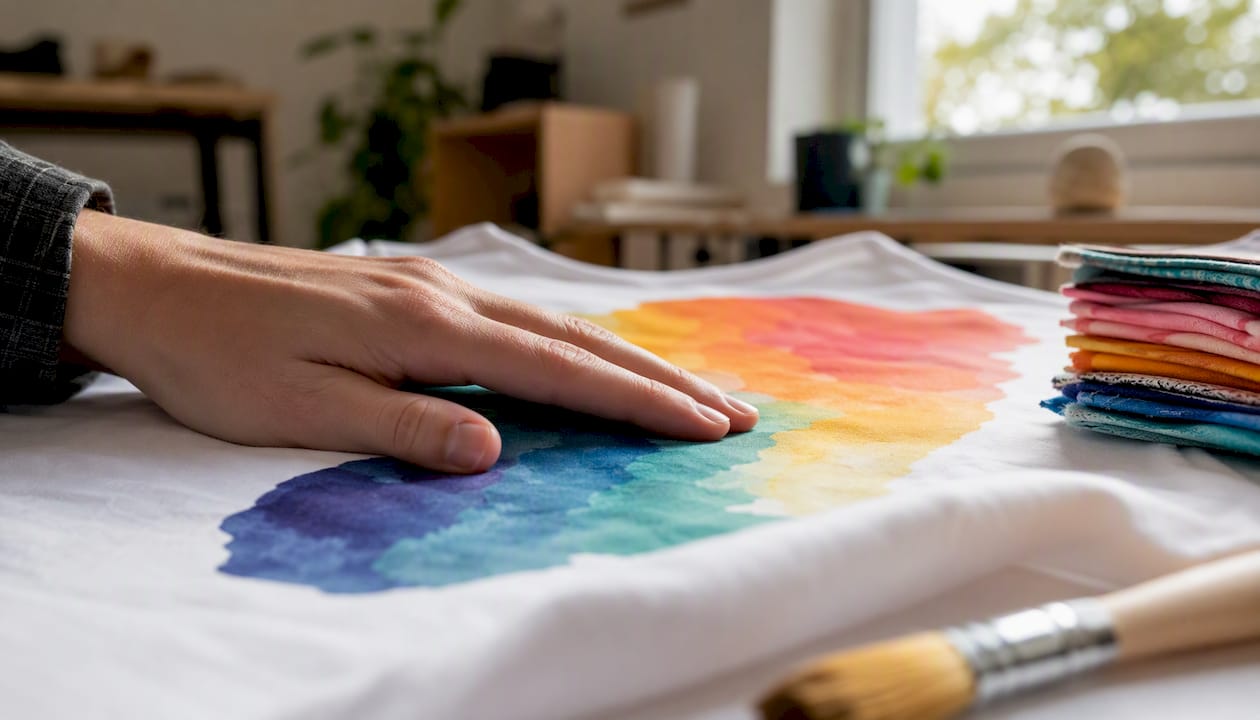
Opacity is where plastisol still has an edge. Lay down a white plastisol underbase on a black shirt and you get full, bright coverage. Water-based inks on dark garments need either a discharge process or a carefully built underbase, and neither is as forgiving as plastisol for a beginner.
Shop workflow diverges sharply:
- Plastisol does not dry on the screen, so you can pause a run, walk away, and come back. Water-based inks start drying the moment air hits them.
- Water-based screens need humidity control, wet-trap setups, or retarder additives to stay open during production.
- Reclaiming screens after water-based runs requires different chemistry than plastisol reclaim.
On the regulatory and health side, BASF’s eco-efficiency analyses following ISO 14040/44 and ISO 14045 standards document significantly lower VOC emissions and related costs for water-based systems compared with solvent-based inks. Shops in states with strict VOC regulations, or those pursuing sustainable brand certifications, often find water-based inks reduce permit complexity and insurance exposure.
Pro Tip: Run a mixed shop. Use water-based inks for light-garment soft-hand jobs and premium fashion prints where the hand feel justifies the extra screen management. Keep plastisol for high-opacity dark-garment runs and jobs where production speed is the priority. The two systems complement each other rather than compete.
The main types of water-based inks you’ll encounter
Understanding which formula to reach for is half the battle. The families behave differently on press and suit different jobs.
Traditional water-based inks are the most fiber-penetrating. They produce the softest possible hand, almost invisible on the garment. The trade-off is that they offer limited opacity and require careful screen management. Best for light-colored garments where softness is the selling point.
Discharge inks use a chemical activator, typically zinc formaldehyde sulfoxylate (ZFS) or a sodium-based alternative, to bleach the garment’s dye and replace it with pigment. The result is a vibrant, soft print on dark cotton that no standard water-based formula can match. Discharge inks require compatible fabric (100% cotton or high-cotton blends) and controlled process steps, and the activator has a limited pot life once mixed.
Acrylic-modified water-based inks are thicker and handle more like plastisol on press. They form a surface film rather than penetrating fibers, so they’re easier to manage for printers transitioning from plastisol. Hand feel is softer than plastisol but not as soft as traditional water-based.
Pigment vs. dye in aqueous systems: pigment particles sit at or near the fiber surface and tend to offer better washfastness and UV stability. Dye-based aqueous inks soak deeper into fibers for a more integrated look but can fade faster under repeated washing or UV exposure.
Specialty functional inks represent a growing category beyond apparel. Research published in MDPI Polymers describes how miniemulsion, flash, and dialysis nanoprecipitation techniques produce polymer nanoparticle dispersions, typically 50–500 nm, used in electronics, conductive coatings, and high-performance adhesives. For most screen printers, these are background knowledge, but they explain why water-based chemistry is expanding across industries.
Quick selection guide:
- Light garments, premium soft hand → traditional water-based
- Vibrant prints on dark cotton → discharge
- Easier press handling, moderate softness → acrylic-modified
- Durability and washfastness priority → pigment-based
- Advanced functional applications → specialty nanoparticle formulations
What’s actually inside a water-based ink
Textile water-based ink formulations typically run around 50–70% water, with binder, pigment, and additives making up the balance.
| Component | Function | Practical sign |
|---|---|---|
| Water (carrier) | Transports pigment through mesh; evaporates during cure | Higher water content = lower viscosity, longer dry time |
| Binder (acrylic, urethane-modified acrylic, PU dispersion) | Coalesces around pigment; bonds film to fiber | Higher binder = better washfastness, slightly stiffer hand |
| Pigment or dye | Provides color | Pigment = surface durability; dye = deeper fiber integration |
| Rheology modifiers | Controls flow and thixotropy on press | Too little = flooding; too much = screen clogging |
| Defoamers | Prevents air bubbles in the ink film | Absence shows as pinholes in the print |
| Humectants / retarders | Slows surface drying to keep screens open | Critical for long runs and low-humidity shops |
| Co-solvents | Improves wetting and film formation | Affects VOC profile; choose low-VOC options where possible |
Binder selection has the biggest downstream effect on print quality. Acrylic binders are cost-effective and widely used. Urethane-modified acrylics and polyurethane dispersions add flexibility and adhesion, which matters on stretch fabrics like polyester blends. The softer the hand you want, the lower the binder-to-water ratio you’ll typically run, but that comes at some cost to washfastness.
Practical shop setup for printing with water-based inks
Getting reliable results from water-based inks means adjusting several variables that plastisol printers rarely think about.
Mesh selection: use higher mesh counts (160–230 threads per inch) for thin, detail-heavy water-based formulations. Heavier acrylic-modified inks can run on 110–160 mesh. A finer mesh deposits less ink per pass, which speeds drying and reduces puddling on the substrate.
Squeegee: a durometer of 70–75 Shore A works well for most water-based applications. Use a sharp, clean blade and a single firm stroke rather than multiple passes, which can flood the screen and cause drying issues at the edges.
Screen preparation: degrease screens thoroughly before coating. Water-based inks need emulsions specifically formulated to resist water, typically dual-cure or SBQ-based photopolymer emulsions. Standard plastisol emulsions break down quickly under water-based inks. For reclaim, use a dedicated water-based ink remover before applying emulsion remover.
Managing drying in-screen: this is the biggest operational shift. Keep a spray bottle of water nearby and mist the screen surface during pauses. Run a wet-trap setup (a damp cloth or foam pad under the screen) for longer runs.
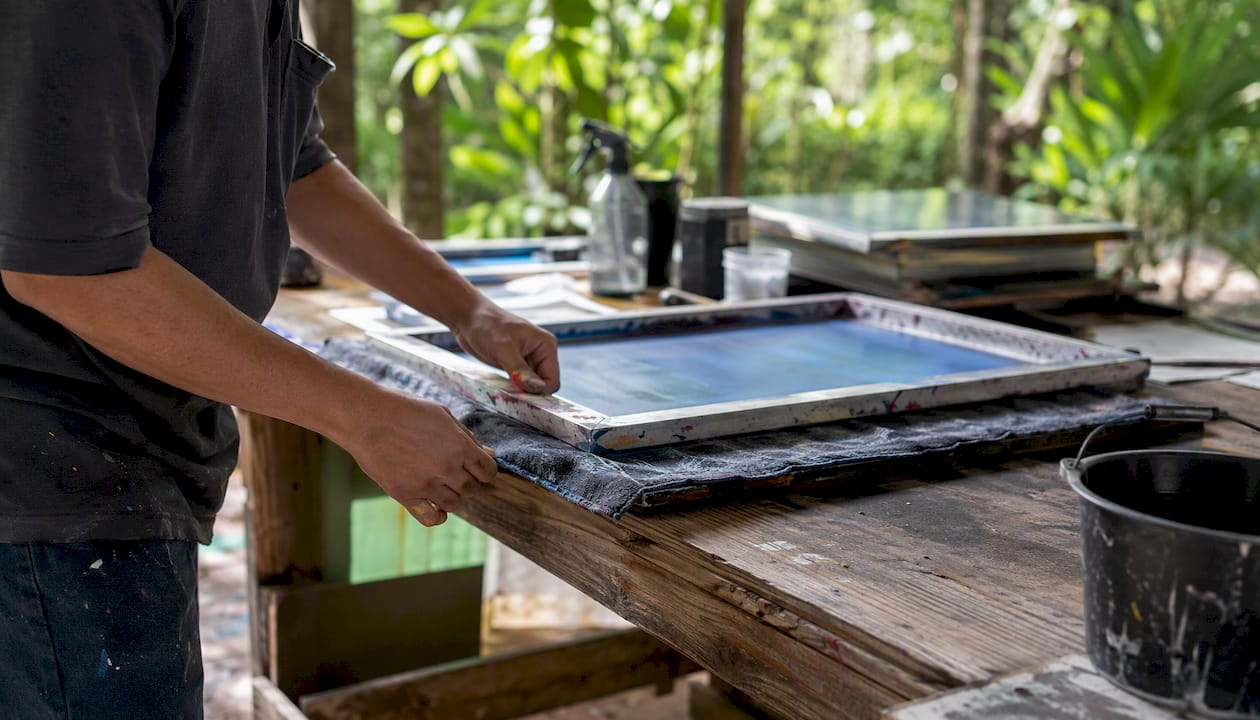
Flash drying between colors: flash at lower temperatures than plastisol (around 200–250°F surface temperature) and for shorter dwell times. You want the surface dry enough to accept the next color without smearing, not fully cured.
Pro Tip: Batch your water-based runs together. Switching between water-based and plastisol mid-day creates screen management headaches that batch scheduling eliminates.
Common troubleshooting quick-hits:
- Puddling at screen edges: reduce ink deposit, increase mesh count, or add a thickener
- Pinholes: check for defoamer depletion or contamination; clean screen thoroughly
- Uneven coverage: verify squeegee pressure is consistent; check for worn blade edges
- Ink drying in screen mid-run: add retarder, increase shop humidity, or shorten run intervals
For a broader look at how equipment choices affect water-based and other printing methods, the types of industrial printing equipment guide covers dryer configurations and press setups worth reviewing before you invest.
Curing water-based inks correctly
Under-curing is the most common reason water-based prints fail in the wash. The binder needs to fully coalesce, and that requires both heat and time.
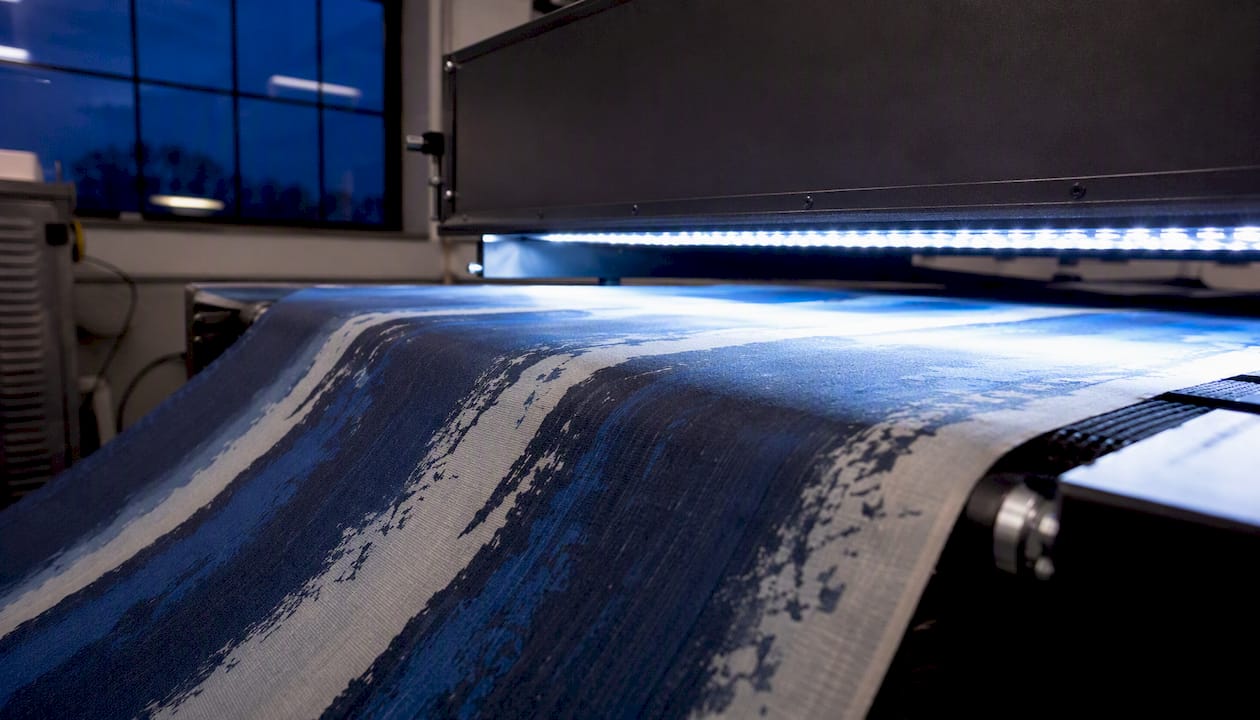
Wash test: cure a sample print, wash it three times on a normal cycle with detergent, and inspect for cracking, fading, or peeling. A properly cured water-based print survives this without visible degradation.
Crock test: rub a damp white cloth firmly across the cured print 10 times. Minimal color transfer indicates good cure and washfastness.
Tape test: press a strip of tape firmly onto the cured print and pull it off sharply. If ink lifts with the tape, the cure is incomplete.
Common curing problems:
- Chalky or dull surface: over-curing or excessive flash before the conveyor; reduce temperature or dwell
- Print sticks to itself when folded: under-cured binder; increase conveyor temperature or slow belt speed
- Poor washfastness despite adequate temperature: moisture trapped in the ink film; check that the garment is fully dry before it enters the conveyor
Water-based inks need time for moisture to escape the film, not just surface heat. Running at plastisol belt speeds is the single most common cause of under-cure complaints from printers making the switch.*
Additives and modifiers: what they do and how to use them safely
Additives let you tune water-based inks to your shop conditions without reformulating from scratch.
- Retarders / anti-skinning agents: slow surface evaporation to keep screens open longer. Add at 2–5% by weight. Overuse softens the dried film and can hurt washfastness.
- Thickeners: increase viscosity for finer mesh counts or to reduce bleed on loose-weave fabrics. Add in small increments (1–2%) and test print after each addition.
- Defoamers: eliminate air entrapment that causes pinholes. A few drops per liter is usually sufficient; excess defoamer causes fisheye defects.
- Wetting agents: improve ink spread and adhesion on difficult substrates like polyester. Use sparingly; too much reduces surface tension to the point where ink bleeds.
- Adhesion promoters: used for non-textile substrates or challenging synthetic fabrics; check compatibility with your binder system before adding.
- Discharge activators (ZFS or sodium-based): mixed into discharge base at the manufacturer’s recommended ratio, typically 3–8% by weight. Critical safety note: activators release formaldehyde vapor during printing and curing. Always work with adequate ventilation, wear nitrile gloves and eye protection, and mix activators in a well-ventilated area away from open flames. Activated discharge ink has a pot life of 4–8 hours; discard unused portions rather than storing.
Store all water-based inks and additives at 50–77°F (10–25°C), away from freezing temperatures. Freezing permanently damages the emulsion. Keep lids sealed to prevent skinning and check for separation, off-odors, or viscosity changes before use. Shelf life for most water-based textile inks runs 12–24 months unopened when stored correctly.
Industry trends show growing adoption of water-based systems across apparel and packaging, driven partly by tightening VOC regulations and brand sustainability commitments. A broader look at printing industry trends covers how these market forces are reshaping decorator workflows.
Troubleshooting common water-based printing problems
-
Ink drying in screen mid-run. Cause: low humidity, long pauses, or no retarder. Fix: mist the screen with water, add 3–5% retarder to the ink, and raise shop humidity above 45%.
-
Poor opacity on dark garments. Cause: standard water-based inks lack the pigment load to cover dark fabric. Fix: switch to discharge ink on cotton, or build a white underbase using an acrylic-modified formula before printing colors.
-
Color shift after curing discharge prints. Cause: activator reaction continues during cure and can shift hue. Fix: run a calibration print on the exact garment dye lot before production; discharge results vary by fabric brand and dye chemistry.
-
Print sticking or blocking when garments are stacked. Cause: under-cured binder. Fix: increase conveyor dwell time or reduce belt speed; confirm internal garment temperature reaches 300°F+.
-
Washfastness failure after three washes. Cause: under-cure, wrong binder for the substrate, or insufficient pigment-to-binder ratio. Fix: run a full cure verification (wash test + crock test) and consult your ink supplier about binder upgrades for stretch fabrics.
-
Staining on light garments from discharge activator. Cause: residual activator migrating into adjacent fabric areas. Fix: reduce activator percentage, confirm fabric compatibility, and test on a scrap garment before production.
-
Separation or lumps in stored ink. Cause: freezing, age, or contamination. Fix: if gentle stirring restores smooth consistency, the ink is likely still usable; if lumps remain or odor is off, discard. Never add water to restore viscosity without checking with your supplier first.
-
Viscosity too thin on press. Cause: high ambient temperature or dilution from previous water additions. Fix: add a thickener in 1% increments; avoid printing in direct sunlight or near heat sources.
When a problem persists after two or three adjustments, call your ink supplier’s technical line. Most major suppliers offer free technical support and can diagnose issues from a photo of the print defect and your shop conditions.
How to tell if an ink or printed sample is water-based
Sensory checks:
- Smell: water-based inks have minimal odor. A strong solvent smell points to solvent-based ink; a plasticky or slightly sweet smell suggests plastisol.
- Hand feel: run a finger across a cured print. A soft, fabric-integrated feel with no raised film is a strong indicator of water-based or discharge ink. A thick, rubbery layer that sits clearly above the fabric surface is plastisol.
- Flexibility: water-based prints flex with the fabric and rarely crack on stretch. Plastisol can crack on heavy stretch if under-cured or old.
Simple shop tests:
- Isopropyl alcohol (IPA) wipe: dampen a white cloth with IPA and rub the uncured ink. Water-based ink wipes off easily; plastisol resists IPA. On a cured print, neither will wipe off cleanly, but water-based ink may show slight color transfer while plastisol shows almost none.
- Water wipe: on uncured ink, water dissolves water-based ink immediately. Plastisol is unaffected.
Always wear nitrile gloves when performing solvent wipe tests, work in a ventilated area, and test on a small, inconspicuous area first.
Label and SDS checks: look for “aqueous,” “water-borne,” or “water-based” on the product label or Safety Data Sheet. The SDS Section 9 (Physical and Chemical Properties) will list VOC content; water-based inks typically show VOC values well below 50 g/L, while solvent inks run far higher. When lab confirmation is needed, FTIR spectroscopy can identify the binder polymer type definitively.
Water-based pigment inks are also gaining ground in packaging and labels because they reduce hazardous residues and improve recyclability compatibility, which means you’ll increasingly encounter them on substrates beyond apparel.
Water-based screen printing vs. DTF transfers vs. plastisol: which fits your job?
No single method wins every job. The right call depends on run length, garment color, detail complexity, and how much shop infrastructure you want to maintain.
Water-based screen printing:
- Best for: soft-hand premium prints on light to medium garments, eco-certified brands, and shops with humidity-controlled environments
- Limitations: dark garments need discharge chemistry; screens require active management; not cost-effective for very short runs
Plastisol screen printing:
- Best for: high-opacity dark-garment work, high-volume runs where production speed matters, and shops without humidity control
- Limitations: thicker hand feel, higher VOC profile, PVC content
DTF transfers:
- Best for: short runs, complex multi-color artwork, dark garments without discharge chemistry, and jobs where screen setup time kills the margin
- Limitations: slightly different hand feel than fiber-penetrating water-based inks; per-unit cost can be higher on very large runs
For jobs where the shop setup changes required by water-based inks are impractical, or where you need vibrant full-color prints on dark garments without discharge chemistry, DTF transfers from Transferkingz deliver soft, durable prints with no screen management overhead. Understanding how ink quality affects DTF printing helps you evaluate whether outsourcing transfers makes sense for your production mix.
Quick decision rule: if you’re printing 50+ pieces of the same design on light garments and hand feel is the priority, water-based screen printing earns its setup cost. Under 24 pieces, complex artwork, or dark garments without discharge capability, DTF transfers are usually the faster and more economical path.
An honest take on water-based adoption from someone in the transfer business
The screen printing industry has been talking about switching to water-based inks for at least two decades. The conversation has gotten more serious recently, and for good reason: VOC regulations are tightening, brands are asking for sustainability documentation, and customers can feel the difference between a soft water-based print and a thick plastisol one.
But the adoption gap is real. Most shops that try water-based inks and abandon them do so because they treated it as a drop-in replacement for plastisol. It isn’t. It’s a different system that rewards shops with humidity control, disciplined batching, and a willingness to run cure verification tests. The printers who make it work aren’t necessarily bigger or better-equipped; they’re just more methodical.
My honest recommendation: start with a single press dedicated to water-based runs on light garments. Run a 12-piece test job, cure it properly, wash it three times, and crock-test it before you commit to a client order. That 30-minute test saves you from a reprint conversation.
For jobs where the shop infrastructure isn’t there yet, or where you need full-color dark-garment prints without discharge chemistry, Transferkingz DTF transfers in Dallas give you soft, durable prints with no press setup required. It’s not a permanent substitute for building water-based capability, but it’s a practical bridge while you get there. You can also explore the DTF printing sustainability angle if you’re weighing the environmental trade-offs between in-shop water-based printing and outsourced digital transfers.
Sources
- Water based inks are the more sustainable alternative: benefits — BASF
- Preparation of Water-Based Polymer Inks and Their Applications — MDPI Polymers
- Screenprinting
- What is Water Based Printing Ink? - Alite Inks
0 comments