

TL;DR:
- Apparel customization involves applying designs, logos, or artwork to garments using various decoration techniques rather than tailoring from scratch. It enhances brand loyalty and customer engagement through co-creation, making products more personal and meaningful. Modern technology enables scalable, cost-effective customization options suitable for small orders and diverse fabric types.
Most people assume apparel customization means ordering a tailored suit from a skilled craftsman. That’s one narrow corner of a much bigger space. What is apparel customization, really? It’s the process of applying your chosen designs, logos, text, or artwork to garments using decoration techniques that range from embroidery and screen printing to cutting-edge Direct-to-Film (DTF) transfers. For individuals building a personal brand and businesses expanding their product lines, understanding this space opens up serious opportunity.
Table of Contents
- Key takeaways
- What apparel customization actually means
- The real value: why customization creates deeper connection
- Modern approaches: technology, scale, and purpose
- Apparel personalization options and how to choose
- Benefits of custom apparel for brand and business growth
- My take on where apparel customization is headed
- Ready to put your brand on fabric?
- FAQ
Key takeaways
| Point | Details |
|---|---|
| Customization goes beyond tailoring | Modern apparel customization covers print decoration, branding, and design, not just garment construction. |
| Co-creation drives loyalty | Customers who actively participate in design decisions show stronger brand loyalty and repeat purchase rates. |
| Method choice determines cost and quality | Each decoration method, from DTF to screen printing, suits different budgets, order sizes, and design types. |
| Personalization commands premium pricing | 68% of consumers will pay 10-20% more for apparel that feels genuinely personal. |
| Technology makes customization accessible | Digital tools and print-on-demand platforms let small businesses and individuals order single units without sacrificing quality. |
What apparel customization actually means
The cleanest working definition: apparel customization applies customer-selected designs, logos, or artwork to blank garments, primarily through printing and embroidery techniques rather than full bespoke tailoring. The garment itself is often a standard blank. What makes it custom is the decoration layered on top.
This distinction matters because it changes your entire cost and production model. You’re not commissioning a seamstress to cut and sew from scratch. You’re selecting a quality blank and choosing a decoration method that fits your vision.
Here are the most common decoration methods in use today:
- Direct-to-Garment (DTG): Inkjet printing directly onto fabric. Best for complex, multicolor artwork with no minimums.
- Direct-to-Film (DTF): A printed film transfer applied with heat. Works on virtually any fabric type and produces vibrant, durable results.
- Screen printing: Ink forced through a mesh screen onto fabric. Cost-effective at scale, but setup costs make it less practical for small runs.
- Embroidery: Thread stitched directly into the garment. Adds texture and perceived quality, popular for corporate logos and uniforms.
- Sublimation: Dye infused directly into polyester fabric. Produces all-over prints with no feel on the fabric, ideal for athletic wear.
Common garments that get customized include t-shirts, hoodies, polo shirts, hats, uniforms, and tote bags. The term “custom apparel decoration” specifically refers to this category where an existing garment receives applied artwork, which is different from made-to-measure clothing where the garment itself is constructed to individual specifications.
The real value: why customization creates deeper connection
Here’s something most articles skip over. The value of apparel customization isn’t just the physical product you receive. Active customer participation in the design process creates utilitarian, uniqueness, and self-expressiveness value components that directly boost satisfaction and repurchase intention.
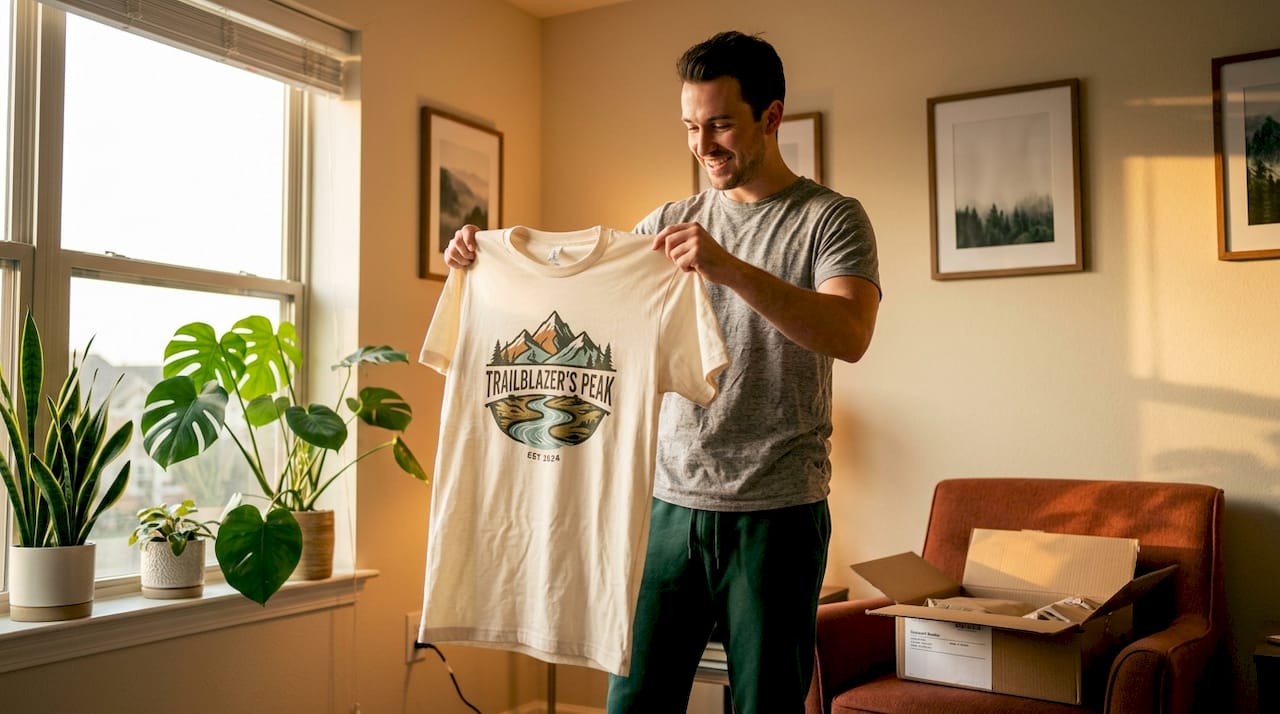
What does that mean practically? When you pick the colors, upload your logo, and watch a mockup come to life, you’re not just buying a shirt. You’re co-authoring something. That emotional investment changes how you feel about the product, and it changes how your customers feel about your brand.
Researchers studying this describe it as co-creation. Co-creation in fashion involves customers and companies collaboratively generating designs that predict stronger engagement and repeat participation. For businesses, this is a strategy, not a feature. Give your customers design input, and they become advocates.
“The symbolic value of a customized product goes beyond utility. It signals who you are, what you stand for, and who you belong to.” This is why sports teams, university organizations, and tight-knit communities invest so heavily in custom apparel.
Trust also plays a measurable role. Research shows that trust in e-vendors increases how much customers participate in the customization process, which in turn amplifies perceived product value across all dimensions. If you’re building a brand around custom apparel, your reputation for reliability is as important as your design quality.
Pro Tip: When offering apparel personalization options to your customers, make the design tool intuitive and the mockup realistic. The more confidence someone has in what they’re ordering, the more they’ll invest in personalizing it.
Modern approaches: technology, scale, and purpose
The old model of customization required a specialist for every step. Today, the tools have changed everything. Digital mockups, automated embroidery, and print-on-demand platforms reduce waste and errors, making high-quality decoration more accessible than at any point in history.
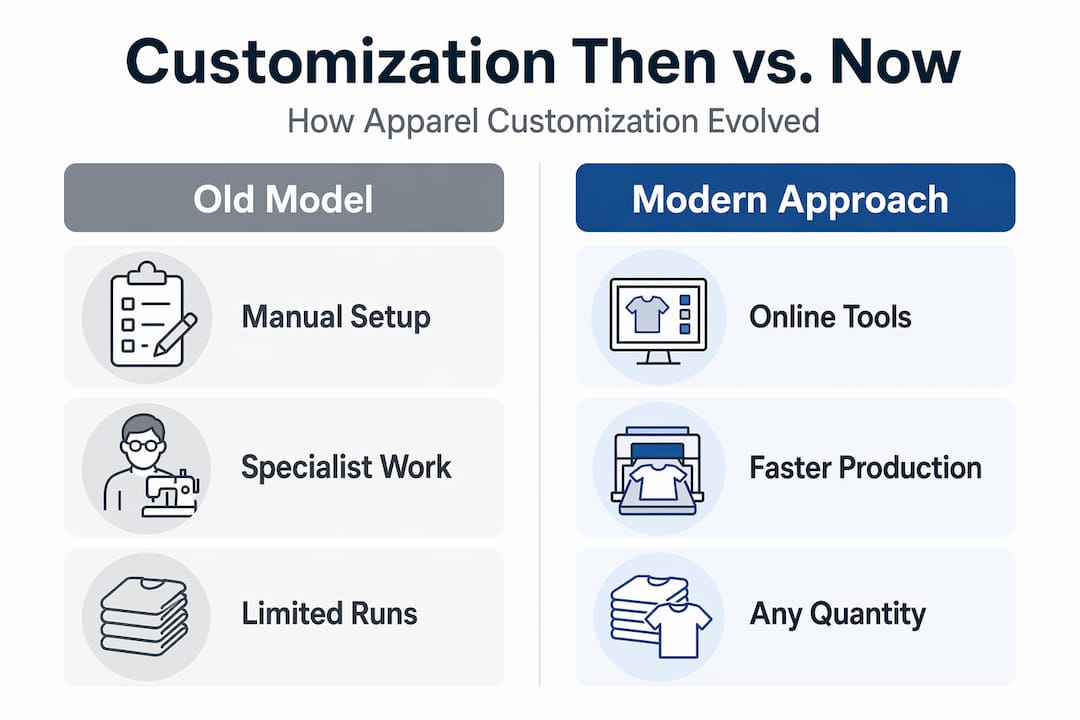
Modern customization is also less about one-of-a-kind pieces and more about exclusive designs for specific groups. A company ordering 300 polo shirts with their logo placed exactly where their brand guidelines require, in their specific pantone colors, is doing something custom. It’s not bespoke. It’s purposeful and scalable.
The table below captures how customization goals shape the approach:
| Use Case | Priority | Best Method | Scale |
|---|---|---|---|
| Personal expression | Uniqueness, color accuracy | DTF or DTG | Single units |
| Team uniforms | Consistency, durability | Screen printing or embroidery | 12-300+ units |
| Corporate branding | Logo precision, professionalism | Embroidery or DTF | 50-500+ units |
| Event merchandise | Speed, cost efficiency | DTG or DTF | 1-100 units |
| Athletic wear | All-over print, performance fabric | Sublimation | 24+ units |
Control over what researchers call identity signals, specifically logo placement and colorways, is fundamental to large-scale customization. It enables consistent yet exclusive branding without the cost of bespoke production.
Web-to-print platforms also incorporate complex mockup rendering and SKU management systems that reduce production errors dramatically. For businesses managing apparel as part of a product catalog, this kind of infrastructure makes scaling feasible.
Apparel personalization options and how to choose
Knowing your decoration options is one thing. Choosing the right one for your situation is where most people get stuck. Here’s a structured way to think through it.
- Define your order size first. Single units or small batches suit DTF and DTG. Bulk orders above 50 units may favor screen printing for cost efficiency at higher volumes.
- Assess your design complexity. Photorealistic artwork or gradients perform best with DTF or DTG. Simple one or two-color logos are cost-effective with embroidery or screen printing.
- Consider your fabric. DTF works on cotton, polyester, blends, and even leather. Sublimation requires polyester. Embroidery works on most wovens and knits.
- Set a budget per unit. Screen printing has high setup costs but low per-unit costs at scale. Print-on-demand methods like DTF carry no setup fees, making them economical for small runs.
- Think about longevity. Embroidery outlasts most print methods with proper care. DTF produces prints that are wash-resistant and flexible when applied correctly.
When comparing print-on-demand methods, DTG and DTF printing enable economical single-unit orders, while screen printing suits bulk runs requiring consistent, flat-color designs.
Pro Tip: For businesses just getting started with custom apparel printing, DTF transfers are often the smartest entry point. No minimums, fast turnaround, and compatibility with nearly every fabric type means you can test product ideas without committing to large inventory runs.
For a practical comparison of how different textile printing methods stack up for specific goals, Transferkingz has put together a solid breakdown worth bookmarking.
Benefits of custom apparel for brand and business growth
The strategic case for custom apparel is strong, and the data backs it up. 68% of consumers will pay 10-20% more for apparel that feels personal, particularly when features like name embroidery or custom sizing are involved. That’s a significant margin opportunity for any brand selling physical products.
The benefits extend well beyond direct revenue:
- Brand visibility: Custom uniforms and branded merchandise put your identity in front of new audiences every time they’re worn.
- Team cohesion: Sports teams, corporate groups, and event staff wearing coordinated custom apparel report stronger group identity and morale.
- Customer loyalty: When clients or fans receive personalized apparel, the emotional resonance of that item exceeds its monetary value.
- Sustainability advantages: Made-to-order production through print-on-demand significantly reduces unsold inventory and fabric waste compared to traditional manufacturing.
- Market differentiation: Generic wholesale apparel blends in. Custom pieces communicate that your brand pays attention to detail and invests in quality presentation.
Millennial and Gen Z buyers increasingly expect sustainable production, good fit, and real-time order updates when purchasing customized apparel. For brands targeting these demographics, a custom apparel strategy that incorporates these values is no longer optional. It’s a baseline expectation.
Small brands in particular stand to gain significantly. The ability to build brand identity through custom printed apparel was once reserved for companies with large print runs and deep pockets. Print-on-demand has rewritten that equation entirely.
My take on where apparel customization is headed
I’ve watched this space shift dramatically over the past several years, and one thing stands out: most brands underestimate what customization actually requires. Everyone wants a custom look, but few are intentional about it.
The technology is accessible now. DTF transfers, automated embroidery machines, and mockup tools have removed nearly every barrier to entry. What separates memorable custom apparel from forgettable merchandise isn’t the method. It’s the intentionality behind the design.
What I’ve noticed is that businesses treating customization as an afterthought, slapping a logo on a shirt because it’s cheap marketing, produce apparel that communicates exactly that. The customers who get the most value from customization are the ones who think about where the logo sits, why the color matters, and what the garment says about them before they ever place an order.
Here’s the contrarian view I’ll stand behind: more options don’t make customization better. The explosion of personalization options can actually paralyze decision-making and produce overcrowded designs. The best custom apparel I’ve seen is restrained and purposeful. One strong design element placed with intention beats five competing graphics every time.
If you’re exploring apparel design services for the first time, resist the urge to customize everything at once. Start with one garment type, one decoration method, and one clear message. Master that combination before expanding. The brands that do this consistently build something recognizable over time.
— Anthony
Ready to put your brand on fabric?
Transferkingz specializes in high-quality DTF transfers that make custom apparel accessible for everyone from solo hobbyists to high-volume production shops. Whether you’re decorating a single piece or running a full product line, the platform supports orders with no minimums, fast turnaround, and premium film and ink combinations that hold up wash after wash.
If your designs require fine detail, gradients, or intricate line work, Transferkingz has published a clear explanation of what digital transfer film can handle at the production level. For businesses in Texas or surrounding areas looking for dedicated custom DTF printing services, the Texas location page covers regional fulfillment options. And if you want ongoing guidance on getting the most from print-on-demand setups, the print-on-demand tips blog from Transferkingz is a practical resource worth checking out regularly.
FAQ
What is apparel customization in simple terms?
Apparel customization is the process of adding custom designs, logos, or text to existing garments using decoration methods like DTF printing, embroidery, DTG, screen printing, or sublimation. It differs from bespoke tailoring because the garment itself is typically a standard blank.
Which customization method works best for small orders?
DTF and DTG printing are the best options for small or single-unit orders since they require no setup fees and handle complex artwork well. Screen printing becomes cost-effective only when order quantities are higher, generally above 50 units.
How does custom apparel benefit a business?
Custom apparel builds brand visibility, increases customer loyalty, and commands premium pricing. Consumers are willing to pay 10-20% more for apparel that feels personalized, making it a strong margin opportunity for brands of all sizes.
What is the difference between DTG and DTF printing?
DTG prints ink directly into the fabric fibers and works best on cotton. DTF printing creates a film transfer that adheres to almost any fabric type, making it more versatile for blends, synthetics, and non-standard materials.
Can I order custom apparel without a large minimum quantity?
Yes. Print-on-demand platforms using DTF or DTG technology allow single-unit orders with no minimum purchase requirement. This makes custom apparel accessible for individuals, small businesses, and anyone testing new product designs before committing to bulk production.
0 comments