

TL;DR:
- Not all custom apparel transfers are equally durable, with DTF transfers setting a new standard for longevity and vibrant color retention.
- A well-executed DTF process involves precise printing, adhesive application, curing, and pressing to ensure designs withstand over 50 washes without cracking or fading.
Not all custom apparel transfers are created equal, and if you’ve ever had a customer come back with a cracked, faded print after just a handful of washes, you already know how much that hurts your brand. The idea that any heat-applied transfer will hold up to real-world use is one of the most costly assumptions small clothing businesses make. Direct-to-Film (DTF) transfers have changed what durability actually looks like in custom apparel, setting a new performance standard that older methods simply can’t match. This guide breaks down what durable transfer means, why DTF leads the field, and exactly how to get consistent, long-lasting results every time.
Table of Contents
- Understanding durable transfer: Key principles and definitions
- How DTF transfers compare to other methods
- The process: What gives DTF transfers their durability?
- Best practices for achieving consistent, durable results
- Why durability isn’t just technical—it’s business-critical
- Next steps: Get durable DTF transfers for your apparel brand
- Frequently asked questions
Key Takeaways
| Point | Details |
|---|---|
| True durability matters | DTF transfers set the standard for apparel prints that look new after repeated washes. |
| Comparison reveals the edge | DTF lasts longer and keeps colors brighter than traditional transfer techniques. |
| Process drives results | Quality inks, precise heat, and good post-care deliver maximum transfer life. |
| Business benefits add up | Durable prints mean satisfied customers, fewer returns, and steady profit growth. |
Understanding durable transfer: Key principles and definitions
The term “durable transfer” gets used loosely in the apparel decoration world, but it has a precise meaning when it counts. A durable transfer is one that maintains its color vibrancy, flexibility, and bond strength across repeated washes, friction, and regular wear without cracking, peeling, or fading. For a small clothing brand or independent designer, durability isn’t just a technical checkbox. It’s the difference between a customer who becomes a repeat buyer and one who asks for a refund.
DTF, which stands for Direct-to-Film, is a printing process where designs are printed onto a special PET film, coated with a hot-melt adhesive powder, cured, and then heat-pressed onto fabric. The result is a print that bonds deeply with the textile fibers rather than sitting on top of them. As the DTF durability guide explains, the core elements of print durability include ink quality and film composition, making DTF transfers more resilient than many other methods.
Several factors determine how well a transfer holds up over time:
- Ink quality: Pigment-based inks with strong color-lock chemistry resist UV degradation and washing agitation far better than dye-based alternatives.
- Film type: High-clarity PET film with the right release coating ensures even ink distribution and consistent adhesion.
- Adhesive powder: The hot-melt powder acts as the bonding agent. Coarse or uneven powder application is one of the most common reasons prints fail early.
- Heat press settings: Correct temperature, pressure, and dwell time are non-negotiable. Even a 10-degree variance can weaken adhesion.
- Wash count resistance: A genuinely durable DTF transfer should hold its design integrity through 50 or more wash cycles.
“Durability in custom apparel transfers isn’t just about surviving the first wash. It’s about your design still looking sharp on the 50th.”
Understanding how DTF printing works at a process level helps you make smarter sourcing decisions and catch quality issues before they reach your customers.
How DTF transfers compare to other methods
Once you understand what makes a transfer truly durable, it’s worth seeing how DTF holds up against the alternatives you’re probably already familiar with. The four main methods used in small to mid-size apparel production are DTF, Direct-to-Garment (DTG), screen printing, and heat transfer vinyl (HTV).
| Method | Wash durability | Color vibrancy | Setup cost | Fabric compatibility | Best for |
|---|---|---|---|---|---|
| DTF | 50+ washes | Excellent | Low | Most fabrics | Small runs, complex designs |
| DTG | 30-40 washes | Good | Medium | Cotton-heavy only | On-demand single items |
| Screen printing | 50+ washes | Excellent | High | Most fabrics | Large volume, simple designs |
| Heat transfer vinyl | 20-30 washes | Good | Low | Most fabrics | Simple graphics, names |
DTF can withstand over 50 washes, outperforming older transfer types in both vibrancy and longevity. That’s a critical advantage when your customers are buying team uniforms, branded merchandise, or everyday staples they’ll wear repeatedly. Screen printing matches DTF on durability but requires expensive screens, minimum order quantities, and lengthy setup times that price small brands out entirely.
DTG printing works well for on-demand single items but is limited to cotton-rich fabrics and tends to fade faster, especially on lighter ink layers applied to dark garments. HTV is popular for simple text and bold shapes, but its durability cap around 20 to 30 washes makes it risky for items meant to last a season or more.
The DTF vs DTG guide goes deeper on the tradeoffs for different business scenarios, but the bottom line is this: if your priority is a vibrant, detailed design that lasts, DTF consistently wins on value per print.
Pro Tip: Before committing to a transfer method for a new product line, do a wash test. Heat press three samples, wash them 10 times each using normal household settings, and compare the results. Most small brands skip this step and don’t find out there’s a durability problem until their customers do.
The process: What gives DTF transfers their durability?
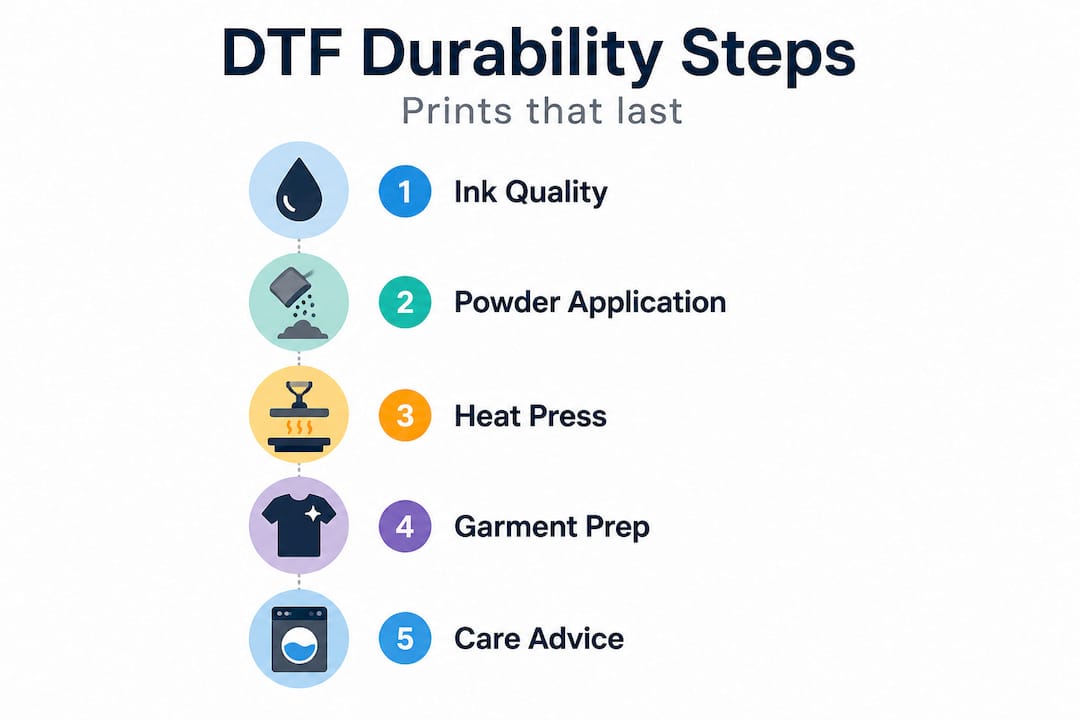
The durability of a DTF transfer isn’t magic. It comes directly from a well-executed, four-stage process. Each step builds on the last, and skipping or rushing any stage is where quality problems originate.
- Printing onto PET film. A specialized inkjet printer deposits pigment-based CMYK inks plus a white ink base layer onto a clear PET film. The white base is what allows DTF to print vibrantly onto dark and colored fabrics without the color washing out.
- Hot-melt adhesive powder application. Immediately after printing, while the ink is still wet, the film is coated with a polyurethane hot-melt powder. This powder is the actual adhesive that will bond the design to your fabric. Even, consistent coverage at this stage is critical.
- Curing in a heat tunnel or oven. The powdered film passes through a curing station at approximately 250 to 300 degrees Fahrenheit. This melts and bonds the powder uniformly to the ink layer. Under-curing at this stage is the single most common cause of early print failure.
- Heat pressing onto the garment. The cured transfer is placed design-side down on the fabric and pressed at the correct temperature and pressure (typically 300 to 320°F for 10 to 15 seconds). After a brief cooling period, the film peels away, leaving the design bonded to the fabric.
As the research on high-quality DTF ink details confirms, high-quality inks and proper powder application are the foundation of a DTF transfer that stands up to frequent wear and washing. Cutting corners on either one is a false economy that will cost you far more in returns and lost customers.
Here’s a quick reference for production quality benchmarks:
| Process stage | Optimal parameter | Common mistake | Effect of error |
|---|---|---|---|
| Printing | Correct ICC color profile | Wrong profile loaded | Color shift, dull output |
| Powder coating | Even, full coverage | Patchy application | Peeling edges, weak bond |
| Curing | 265°F for 2-3 minutes | Under-curing | Powder not bonded, crumbling |
| Heat pressing | 310°F, 15 sec, medium pressure | Too low temp or pressure | Poor adhesion, early peeling |
Consistency is the word that separates professional output from amateur results. Your business reputation depends on every garment coming out looking as good as the first. A well-calibrated, repeatable process is how you protect that.
Best practices for achieving consistent, durable results
Understanding the process gets you halfway there. The other half is applying smart workflow habits that protect print quality from start to finish. These are the practices that separate brands with glowing customer reviews from those dealing with constant complaints.
Pre-press preparation is where most durability gains are made or lost before the transfer even touches fabric. Always pre-press your garment for 3 to 5 seconds to remove moisture and wrinkles. Moisture is the enemy of adhesion. A garment that feels dry to the touch can still hold enough humidity to weaken your bond, especially in humid climates or high-volume production runs.
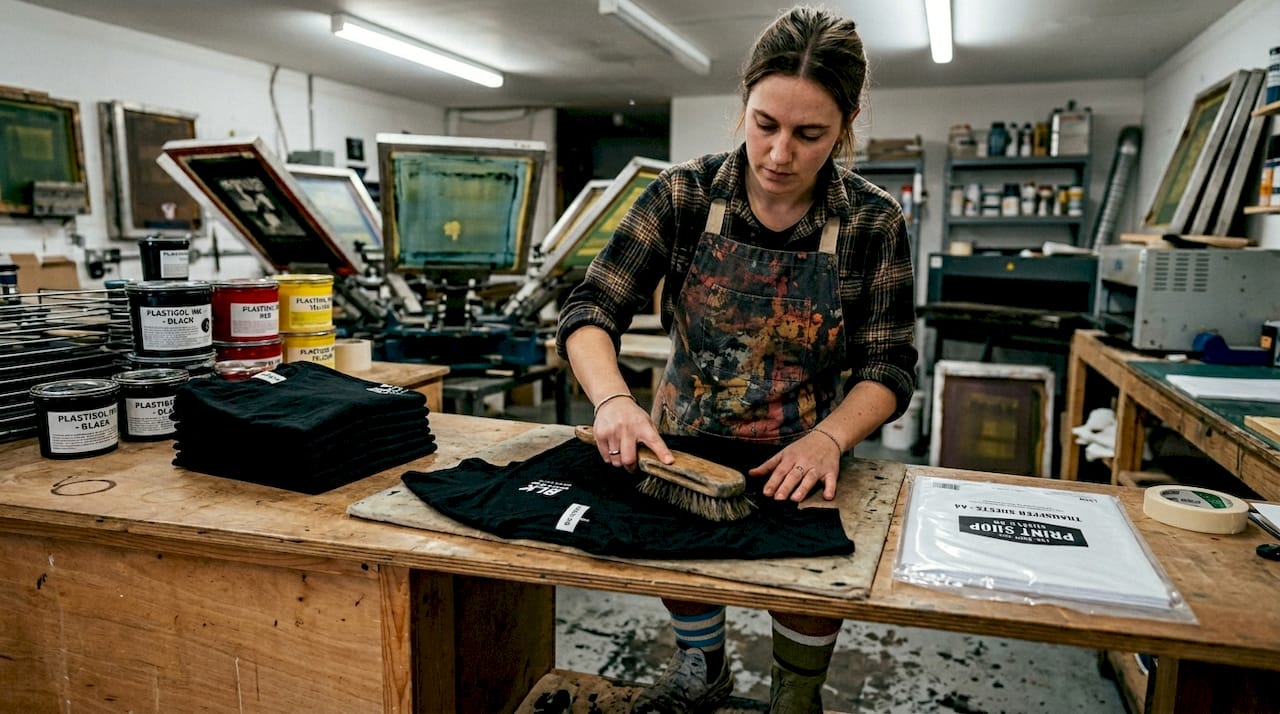
Temperature control during pressing needs to be precise, not approximate. Use a non-contact infrared thermometer to verify your heat press surface temperature regularly. Platens drift, and a press that reads 310°F on its digital display might actually be running at 290°F after two hours of heavy use. That 20-degree gap matters enormously.
Here are the key do’s and don’ts for consistently durable DTF output:
- Do pre-press every garment before applying the transfer
- Do use consistent, even pressure across the entire design
- Do allow the transfer to cool for 10 to 15 seconds before peeling
- Do store unused transfers flat, away from direct sunlight and humidity
- Don’t reuse transfers or attempt to re-press a failed application
- Don’t rush the peel step while the transfer is still warm
- Don’t stack freshly pressed garments before they’ve cooled completely
- Don’t ignore the peeling method specified (hot peel vs. cold peel varies by film type)
Post-press garment care is equally important and something most shops completely overlook when briefing customers. As the print durability best practices resource notes, simple adjustments to your workflow and care routine can add months to the life of a print. Including a simple care card with every order showing customers how to wash their garment correctly is one of the highest-return, lowest-cost things a small brand can do.
Pro Tip: Print care instructions on the inside of your packaging or on a hangtag. Customers who follow proper care instructions (cold wash, inside out, low-heat dry) will see their prints last significantly longer, which directly reduces the chance they’ll blame your brand when a print fades prematurely from aggressive machine washing.
Why durability isn’t just technical—it’s business-critical
Here’s the uncomfortable truth that most conversations about transfer durability miss entirely. Durability isn’t really about the transfer. It’s about your business model.
When a print fails at wash 15 instead of wash 50, the technical failure is the least of your problems. What actually happens is a customer posts a photo of their cracked design online, tags your brand, and suddenly your reputation takes a hit that costs far more than the refund you issued. Small clothing brands operate on tight margins and even tighter word-of-mouth cycles. One bad batch of prints can undo months of marketing.
We’ve watched this pattern repeat itself too many times. A brand launches strong, uses a cheaper transfer method to save a few cents per unit, and then spends three times that on dealing with complaints in the back half of their first year. The math never works out in favor of cutting quality corners.
Investing in quality DTF transfers isn’t a premium choice. It’s the economically rational one. When you factor in the cost of returns, customer service time, replacement inventory, and brand damage, reliable DTF transfers support small brand longevity and reduce customer complaints, giving you a real competitive advantage. The DTF branding benefits extend well beyond the print itself and into how your customers perceive your entire operation.
Durable prints build trust. Trust builds repeat customers. Repeat customers are the lifeblood of a sustainable small apparel brand. It’s that simple, and yet it’s the first thing that gets compromised when brands start chasing the lowest possible cost per unit. Don’t let that be your story.
Next steps: Get durable DTF transfers for your apparel brand
If this guide has you rethinking your current transfer setup, you’re not alone. Thousands of small brands and independent designers have made the switch to premium DTF after realizing that the long-term math simply favors quality. Transfer Kingz offers high-quality, vibrant DTF transfers with no minimum order requirements, fast turnaround times, and the kind of print consistency your brand depends on.
Whether you’re decorating a small run of custom tees or scaling up a full product line, Transfer Kingz has the tools and inventory to support your growth. If you’re based in the Dallas area, explore our Dallas DTF transfer services for local support and quick delivery. Businesses across the state can also find exactly what they need through our Texas DTF transfer solutions. Browse the full product catalog, upload your artwork, and see the difference that genuine durability makes on your next order.
Frequently asked questions
How many washes can a DTF transfer withstand?
A quality DTF transfer can endure over 50 washes without significant fading or cracking, far outlasting most heat transfer vinyl and DTG alternatives.
What makes DTF transfers more durable than other methods?
DTF uses high-quality inks and film combined with a hot-melt adhesive layer, creating a flexible, crack-resistant bond that holds up to repeated washing and wear.
Can I use DTF transfers on any fabric type?
DTF transfers work well on most fabrics, including cotton, polyester, nylon, and blended materials, making them one of the most versatile decoration methods available to apparel brands.
What care instructions help DTF transfers last longer?
Wash garments inside out in cold water and avoid high-heat drying. Following proper garment care extends print life significantly and keeps colors looking sharp for far longer.
Recommended
- What Makes DTF Transfers Durable? Guide for Lasting Prints – Transfer Kingz
- Professional DTF Printing Services | Fast, High-Quality Direct-to-Film Transfers – Transfer Kingz
- DTF Transfer Troubleshooting Guide for Flawless Prints – Transfer Kingz
- High-Quality DTF Ink for Stunning Transfers: Achieve Vibrant, Durable – Transfer Kingz
0 comments