

TL;DR:
- Heat transfer vinyl bonds permanently to fabric through heat and pressure, making it ideal for custom apparel. It has a three-layer structure with a carrier sheet, colored vinyl face film, and heat-activated adhesive backing. Proper application involves cutting, weeding, pre-pressing, and using a heat press for durability and consistency.
Heat transfer vinyl (HTV) is a thermoplastic polymer-based material that bonds permanently to fabric when heat and pressure are applied. Composed primarily of polyurethane (PU) or polyvinyl chloride (PVC), HTV activates between 300–320°F to create crisp, durable designs on custom apparel and textiles. Crafters, small business owners, and production shops all rely on it because it works on cotton, polyester, and blended fabrics without specialized industrial equipment. If you want to put a logo on a T-shirt or a name on a tote bag, HTV is the most direct path from design file to finished product.
What is heat transfer vinyl (HTV) and how is it structured?
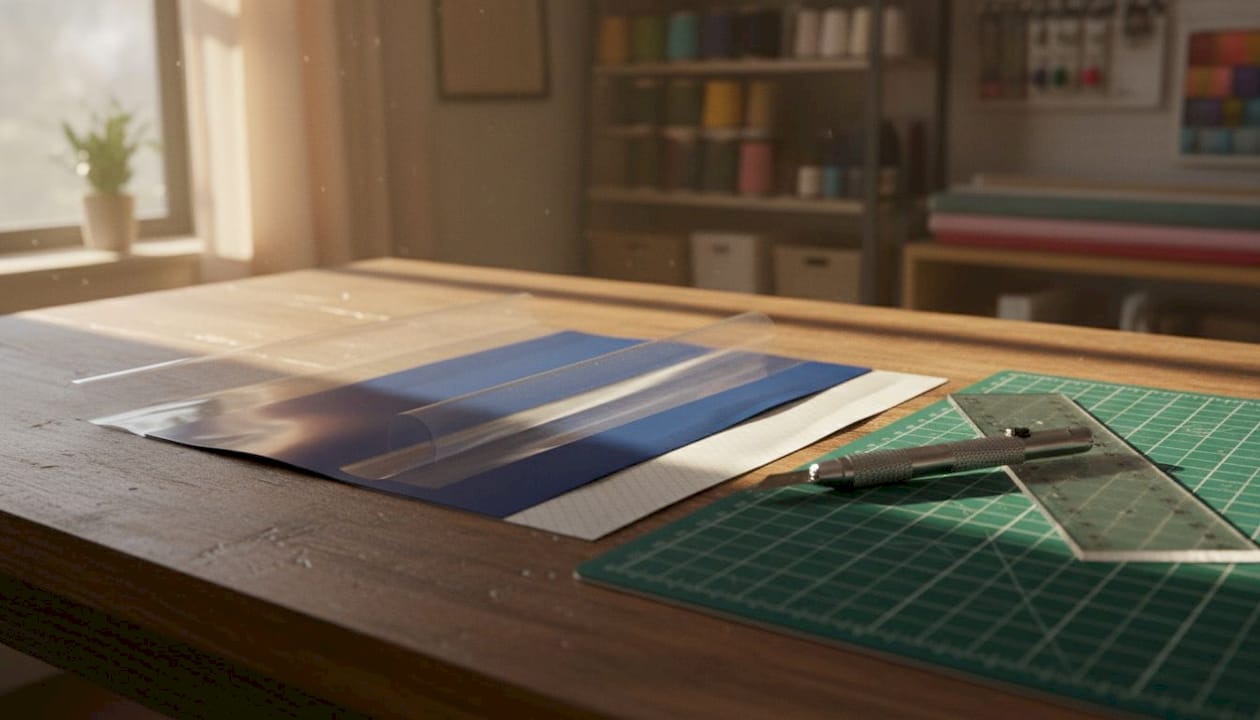
HTV is a three-layer material, and understanding each layer tells you exactly why it works. The three-layer structure consists of a carrier sheet on top, a colored vinyl face film in the middle, and a heat-activated adhesive backing on the bottom. Each layer has a specific job, and skipping any step in the process breaks the chain.
| Layer | Material | Function |
|---|---|---|
| Carrier sheet | Polyester film | Holds vinyl in place during cutting and pressing |
| Face film | PU or PVC vinyl | Provides color, texture, and the visible design |
| Adhesive backing | Heat-activated adhesive | Melts into fabric fibers to create a permanent bond |
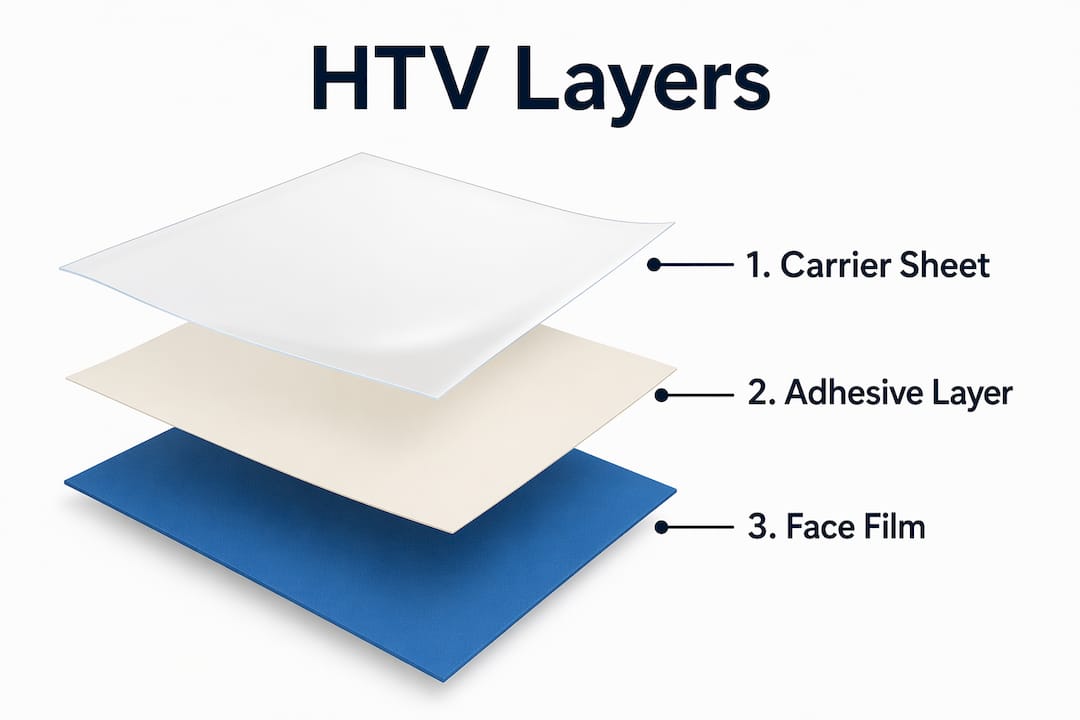
The carrier sheet is clear and slightly stiff. It keeps your design aligned while you cut it with a vinyl cutter and then transfer it to fabric. The face film is what you actually see on the finished garment. It carries the color, finish, and texture of the design. The adhesive backing is invisible once applied, but it does the real work.
PU-based face films are the standard choice for apparel. PU outperforms PVC in softness, stretch, and washability, making it far better suited to clothing that gets worn and laundered repeatedly. PVC is cheaper and stiffer, which makes it acceptable for rigid surfaces or low-wash applications, but it can crack over time on fabric.
How does the HTV application process work?
Applying HTV follows a clear sequence: cut, weed, press, and peel. Getting each step right determines whether your design lasts through one wash or a hundred.
- Mirror your design. Before cutting, flip your artwork horizontally in your design software. The vinyl cuts face-down on the mat, so the design must be reversed before cutting.
- Load the vinyl correctly. Place the vinyl shiny-side down on your cutting mat. The dull adhesive side faces up toward the blade. Beginners frequently load it backward, which ruins the cut.
- Cut and weed. Run the vinyl through your cutter at the correct blade depth. After cutting, remove all the excess vinyl around your design using a weeding hook. Only the design itself should remain on the carrier sheet.
- Pre-press the fabric. Place your garment on the heat press and press it for 3–5 seconds before applying the HTV. Pre-pressing removes moisture and smooths wrinkles, both of which cause adhesion failure after washing.
- Press the design. Position the HTV design-side down on the fabric, with the carrier sheet facing up. Apply heat and pressure at the recommended settings, typically 305–330°F for 10–20 seconds.
- Peel the carrier sheet. Some HTV types are cold peel, meaning you wait until the vinyl cools before removing the carrier. Others are hot peel, meaning you pull the carrier immediately after pressing. Check the manufacturer’s instructions before pressing.
Pro Tip: Always test your heat, time, and pressure settings on a scrap piece of the same fabric before pressing your final garment. Fabric thickness and fiber content both affect how the adhesive bonds.
Heat presses outperform home irons for HTV application because they deliver consistent temperature, even pressure, and precise timing across the entire design. A household iron creates hot spots and uneven pressure, which leads to partial bonding and early peeling. For occasional hobby projects, an iron works in a pinch. For anything you plan to sell or wear regularly, a heat press is the right tool.
What types of HTV finishes are available and how do you choose?
HTV comes in a wide range of finishes, and the right choice depends on your fabric, your design, and the final look you want. Specialty finishes include glitter, metallic, holographic, puff, reflective, and flocked, each requiring slightly different application settings.
| HTV Type | Best For | Key Consideration |
|---|---|---|
| Matte PU | Everyday apparel, cotton tees | Soft hand feel, high washability |
| Glitter | Cheer uniforms, festive items | Requires firm pressure; avoid over-pressing |
| Metallic | Logos, lettering, accent details | Hot peel recommended; test on stretch fabrics |
| Holographic | Fashion pieces, statement designs | Sensitive to high heat; reduce temp slightly |
| Puff | Raised 3D designs, streetwear | Requires higher heat to activate foam layer |
| Flocked | Velvet-texture designs, sports apparel | Longer press time; cold peel only |
| Reflective | Safety gear, athletic wear | Specialized adhesive; follow exact settings |
Fabric compatibility matters as much as finish selection. Standard PU HTV works on cotton, polyester, and cotton-poly blends. Stretch fabrics like spandex and lycra need a stretch-specific HTV formulated to flex without cracking. Nylon and waterproof fabrics often require low-temperature HTV because their coatings cannot withstand standard pressing temperatures.
A few common pitfalls to avoid:
- Choosing glitter HTV for fine detail work. Glitter particles make intricate cuts difficult. Use standard matte or metallic HTV for small text or complex shapes.
- Using standard HTV on athletic stretch fabric. It will crack at the seams after a few wears. Always match the HTV’s stretch rating to the fabric’s stretch percentage.
- Ignoring peel type. Pulling a cold-peel vinyl while it is still hot lifts the adhesive off the fabric and ruins the transfer.
For a deeper look at how HTV compares to other decoration methods, the DTF vs HTV comparison from Transferkingz breaks down the cost, durability, and production differences clearly.
What are the practical uses of heat transfer vinyl?
HTV applications cover a wide range of products, from single hobby pieces to small-batch production runs. HTV bonds durably to apparel, accessories, and home textiles that can tolerate the heat and pressure required during transfer. That durability makes it a practical choice for items that get regular use and washing.
Common crafting and personal projects include:
- Custom T-shirts with names, quotes, or graphics
- Personalized tote bags, backpacks, and pouches
- Decorated hats, visors, and beanies
- Monogrammed kitchen towels, aprons, and pillowcases
- Baby onesies and children’s clothing with names or characters
For small businesses, HTV opens up a low-overhead production model. A vinyl cutter, a heat press, and a roll of quality HTV are enough to produce branded merchandise, promotional apparel, and team uniforms without a minimum order requirement. That setup suits boutique shops, event planners, and sports teams that need short runs of custom pieces.
HTV does have real limits. It is not suitable for heat-sensitive fabrics like nylon outerwear with waterproof coatings, or for textured surfaces like canvas shoes where the adhesive cannot make full contact. Designs with very fine detail, such as thin script fonts below half an inch, are also difficult to weed cleanly. For those projects, custom apparel transfers using DTF printing often produce cleaner results with less manual effort.
HTV’s advantage over screen printing is its low setup cost for small quantities. Screen printing becomes cost-effective only at higher volumes because each color requires a separate screen. HTV requires no screens, no minimum order, and no color separation fees. For one-off pieces or runs under 24 units, HTV is typically the more economical choice. If you want to understand how different textile printing methods stack up, that context helps you pick the right process for each job.
If you are planning a custom print project beyond standard apparel, resources on commissioning custom prints can help you think through design requirements before you cut your first piece of vinyl.
Key Takeaways
Heat transfer vinyl is a three-layer thermoplastic material that bonds to fabric through heat and pressure, making it the most accessible method for custom apparel decoration at low quantities.
| Point | Details |
|---|---|
| Material composition | HTV is made from PU or PVC vinyl with a heat-activated adhesive backing. |
| Application temperature | Press at 305–330°F for 10–20 seconds for a lasting bond. |
| Pre-press fabric first | A 3–5 second pre-press removes moisture and prevents adhesion failure after washing. |
| Match HTV type to fabric | Use stretch HTV on spandex and low-temp HTV on coated or synthetic fabrics. |
| Mirror designs before cutting | Failing to flip artwork horizontally before cutting is the most common beginner error. |
Why I think most beginners overcomplicate HTV
After working with heat transfer vinyl across dozens of custom apparel projects, the pattern I see most often is this: beginners spend too much time choosing the “best” HTV brand and not enough time dialing in their heat press settings. The vinyl type matters far less than consistent temperature and pressure.
The single most damaging mistake I see is skipping the pre-press step. Skipping pre-press is the leading cause of adhesion failure after washing, and it takes only five seconds to do correctly. That five-second step separates a design that lasts two years from one that peels after the third wash.
One thing worth flagging for anyone new to the space: HTV silicone is a completely different material used in industrial molding at temperatures around 200°C. It has nothing to do with textile printing. If you search “HTV” and land on industrial silicone content, you are in the wrong category entirely. Stick to PU-based heat transfer vinyl for fabric work.
My honest advice is to buy a small sampler of different finishes, press each one on a scrap of your target fabric, wash it five times, and see what holds. That test costs less than $20 and tells you more than any spec sheet. The best HTV for your project is the one that survives your specific fabric, your specific wash routine, and your specific press settings.
— Anthony
Ready to print beyond HTV?
HTV is a great starting point for custom apparel, but it has real limits when designs get complex or production volumes grow. Transferkingz offers professional DTF printing in Dallas that handles full-color artwork, fine detail, and gradient designs that HTV simply cannot reproduce cleanly. There are no minimums, turnaround is fast, and the transfers apply with the same heat press you already own.
Whether you are a hobbyist outgrowing your vinyl cutter or a small business ready to scale, Transferkingz makes it straightforward to get professional-grade transfers without a large upfront investment. Upload your artwork, choose your quantity, and receive ready-to-press transfers that perform across cotton, polyester, and blended fabrics.
FAQ
What is HTV vinyl used for?
HTV vinyl is used to apply custom designs, logos, names, and graphics to fabric items including T-shirts, bags, hats, and home textiles. It bonds permanently to fabric through heat and pressure, making it suitable for both personal crafting and small-batch apparel production.
What temperature does heat transfer vinyl require?
HTV typically requires a pressing temperature of 300–320°F (150–160°C) for proper bonding. Press time is generally 10–20 seconds, with firm, even pressure applied throughout.
What is the difference between PU and PVC heat transfer vinyl?
PU-based HTV is softer, more flexible, and more durable through repeated washing, making it the standard choice for apparel. PVC is stiffer and less expensive but can crack or stiffen over time on fabric.
Do you need a heat press to apply HTV?
A heat press is strongly recommended because it delivers consistent temperature, pressure, and timing across the full design. A household iron can work for small hobby projects but produces less reliable adhesion due to uneven heat distribution.
What is the difference between HTV and DTF transfers?
HTV requires cutting and weeding before application and works best for simple, bold designs. DTF transfers are pre-printed full-color films that press directly onto fabric, making them better suited for complex artwork, gradients, and high-volume production runs.
0 comments