

TL;DR:
- Intricate design printing encompasses multiple specialized techniques that reproduce highly detailed, complex patterns.
- Understanding the specific methods, like intaglio or guilloché, helps ensure proper application and quality results.
Intricate design printing is one of those terms that gets thrown around a lot, but rarely explained well. Most people assume it refers to a single printing method. It doesn’t. Intricate design describes any print that reproduces complex, highly detailed motifs with many small parts arranged in a precise, deliberate way. The printing category covers several distinct techniques, each suited to different materials, budgets, and levels of detail. Whether you’re a small business owner trying to upgrade your packaging or a designer exploring custom apparel options, understanding what these techniques actually are will save you time, money, and frustration.
Table of Contents
- Key Takeaways
- What is intricate design printing and how it works
- How intricate printing differs from standard print methods
- Applications and benefits of intricate design printing
- Choosing the right approach for your project
- My honest take on what intricate printing gets wrong
- Bring your intricate designs to life with Transferkingz
- FAQ
Key Takeaways
| Point | Details |
|---|---|
| Not a single process | Intricate design printing is a category covering multiple specialized techniques, not one method. |
| Artwork preparation matters | The quality of your source file and plate or die precision determines final detail fidelity more than the printer itself. |
| Technique selection is critical | Matching the right method (intaglio, foil embossing, laser cutting) to your substrate and goal prevents costly rework. |
| Prototyping saves money | Testing a first-article sample before full production catches parameter errors before they scale. |
| DTF handles fine detail well | Direct-to-Film transfers can reproduce intricate design patterns with sharp color and edge accuracy on textiles. |
What is intricate design printing and how it works
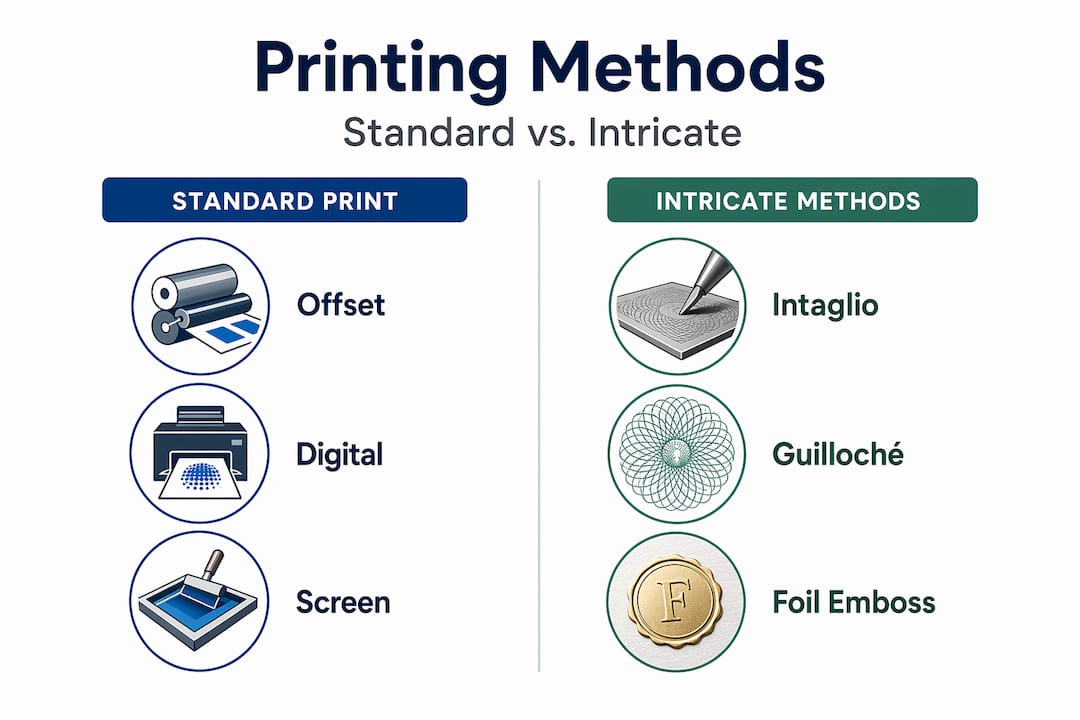
At its core, intricate design printing is about reproducing complex detail at a level that standard printing simply cannot achieve. Where a basic print might put a logo on a shirt with a few flat colors, intricate printing reproduces fine lines, interlocking patterns, gradients, and layered elements with precision that reads as craftsmanship rather than production.
The confusion starts because “intricate design printing” is a descriptive outcome, not a process name. You won’t find it listed as a machine setting or a product category from a paper supplier. What you will find are the specific techniques that produce intricate results, and those techniques are genuinely different from one another in how they work, what they cost, and what substrates they work on.
Intaglio printing
Intaglio printing involves engraving designs into a plate, typically metal, where the recessed grooves hold ink. When paper or material is pressed against the plate under high pressure, ink transfers from those grooves to the surface. The result is a print with a subtle raised texture that you can actually feel with your fingers. No other common printing method replicates that tactile quality.
Line depth controls how dark or light each element appears, and how the ink fills those recesses determines both visual and textural character. Novices tend to focus on the complexity of their digital drawing while underestimating how much plate engraving and inking technique dictate the final output.
Guilloché engraving
Guilloché uses a specialized rose engine lathe fitted with cams and rosettes to mechanically engrave repeating, symmetrical geometric patterns. The results range from simple wave patterns to intricate lace-like interlocking designs. You’ve seen this on currency, passports, high-end watch dials, and luxury certificate paper. The patterns exist specifically because they are nearly impossible to reproduce with standard digital printing, which makes them ideal for anti-counterfeiting applications.
One important distinction: the pattern complexity comes from the mechanics of the machine, not from a digital file. Clients frequently overestimate how closely a digital mock-up will match the finished machine-produced pattern. Clear communication between client and operator about what the machine can actually produce is not optional. It’s the only way to avoid expensive surprises.
Foil embossing
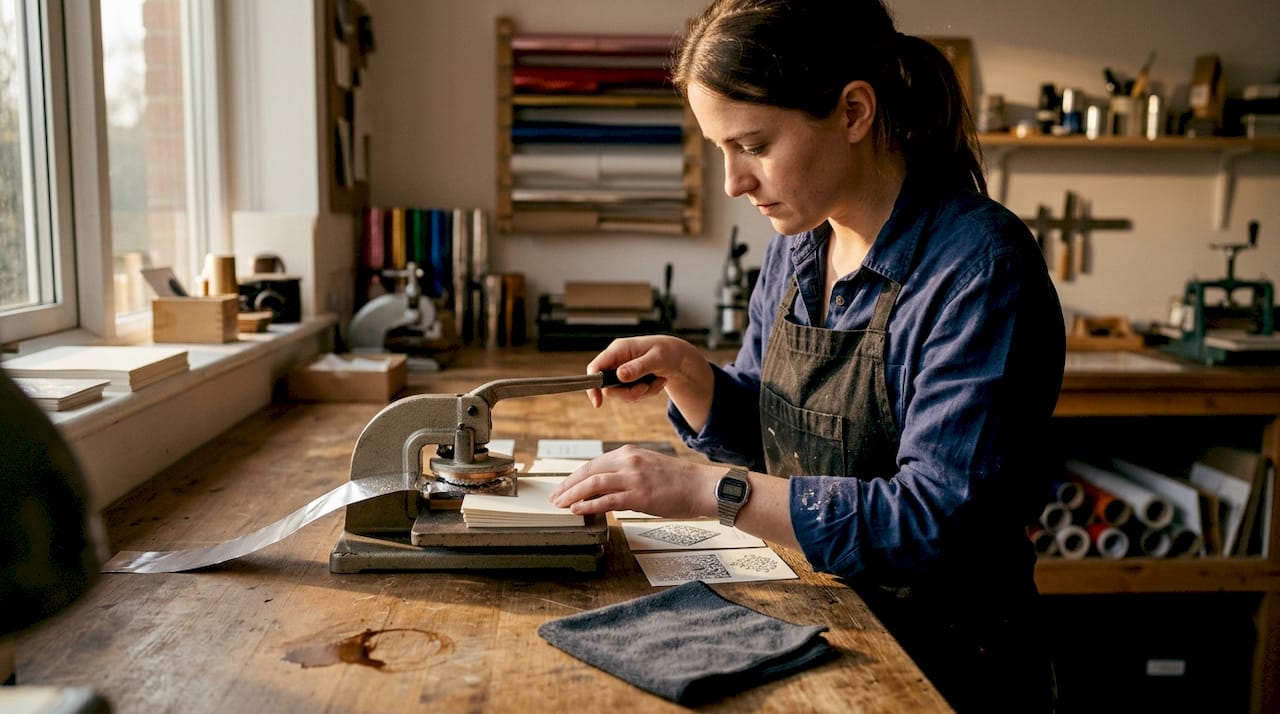
Foil embossing is the technique most commonly associated with luxury print finishes. It combines metallic foil transfer with raised relief in a single die impression, requiring precise calibration of temperature, pressure, and dwell time to avoid defects like foil bleed or incomplete emboss. The die stamps both effects simultaneously, which is more efficient than running foil and embossing as separate passes and delivers registration accuracy of plus or minus 0.1mm.
Laser cutting
Laser cutting uses computer-controlled laser beams to cut precise, complex shapes from paper, cardboard, fabric, and other substrates. It doesn’t apply ink. Instead, it removes material with exact edges, adding visual complexity through shape and negative space. The limitation is kerf, which is the width of material the laser removes during the cut. Thicker substrates and tighter curves require testing to confirm the cut edges meet the design’s expectations.
Pro Tip: When specifying intricate laser-cut shapes, always request a test cut on your actual material before approving final production. Edge quality varies significantly between paper weights, coatings, and fabric types.
How intricate printing differs from standard print methods
Standard printing is about coverage and color accuracy. You lay down ink, you get a reproduction of your artwork. That works fine for most commercial purposes. Intricate design printing operates on a different set of priorities entirely.
The defining challenges fall into four distinct areas:
- Fine line reproduction. Lines below a certain thickness will either disappear or bleed together depending on the printing method. Intaglio handles extremely fine lines well because the plate itself holds the ink geometry. Standard offset or digital printing struggles below roughly 0.25pt for fine detail work.
- Multi-layer registration. Intricate patterns often combine several elements that must align perfectly. A misregistered layer on a complex design is far more visible than on a simple two-color print. Each additional pass or element compounds the registration risk.
- Artwork preparation. Vector files with clean paths and properly separated layers are non-negotiable. Rasterized artwork at insufficient resolution will produce soft edges. Artwork that survives production without losing clarity requires deliberate preparation at the design stage, not cleanup after the fact.
- Substrate behavior. How the material absorbs or reflects ink directly affects detail fidelity. A coated paper stock will hold finer detail than an uncoated one. A stretch fabric behaves completely differently from a rigid cardstock. The printing process and the substrate must be chosen together.
Pro Tip: Always prepare intricate artwork as vector files. If your design includes photographic elements, embed them at 300 DPI minimum and keep all fine lines and outlines as vector paths. Trying to rescue a low-resolution file at the production stage costs time and money.
Common beginner mistakes include submitting rasterized files with complex patterns, designing fine details below the minimum reproducible line weight for the chosen method, and ignoring substrate testing entirely until the first full production run comes back unusable.
Applications and benefits of intricate design printing
Understanding the why behind intricate printing is as useful as understanding the how. The techniques covered above are not just technically impressive. They serve real business and creative purposes across several industries.
- Luxury packaging. Foil embossing on premium product boxes communicates quality before the customer even opens the package. Foil embossing remains the benchmark for luxury finishing because it delivers both visual and tactile impact in one efficient production step.
- Security printing. Guilloché patterns on certificates, identity documents, and financial instruments exist specifically to deter counterfeiting. The mechanical precision required to reproduce them makes unauthorized copying prohibitively difficult.
- Fashion and custom apparel. Detailed print patterns on garments, from intricate paisley to photorealistic graphics, benefit from printing methods that preserve fine color transitions and sharp edges across fabric. Learning about textile printing methods makes it easier to match technique to fabric and end use.
- High-end promotional materials. Business cards, event invitations, and brand packaging with laser-cut windows or embossed logos create a tangible impression that flat digital prints cannot match.
- Custom merchandise. For individual creators and small businesses, detailed DTF transfers make it practical to produce short runs of complex designs on apparel without the setup costs associated with traditional screen printing.
The underlying benefit across all of these applications is the same. Complexity signals care. When a print has fine detail that is executed well, it communicates that someone put real thought and resources into the result. That perception of quality transfers directly to the product or brand it represents. You can read more about how DTF handles detailed prints specifically on fabric for a practical comparison.
Choosing the right approach for your project
Selecting the right intricate printing technique requires honest answers to a few straightforward questions about your project before you spend anything.
| Technique | Best substrate | Detail level | Cost tier | Lead time |
|---|---|---|---|---|
| Intaglio | Paper, card | Very high | High | Long |
| Guilloché | Paper, metal | High (pattern-dependent) | Very high | Long |
| Foil embossing | Paper, card, leather | High | Medium to high | Medium |
| Laser cutting | Paper, card, fabric, wood | Very high | Medium | Short to medium |
| DTF transfer | Fabric, textiles | High | Low to medium | Short |
Material and substrate compatibility should be the first filter. Foil embossing requires a substrate with enough rigidity to hold the raised impression. Laser cutting works across many materials but demands testing for edge quality. DTF transfers are designed specifically for fabric and flex materials, making them the practical choice for apparel applications.
Prototype before you commit. First-article samples are critical in intricate printing because subtle changes in temperature, pressure, or material thickness produce dramatically different results. Running a full production order without testing a sample is one of the most reliably expensive mistakes in custom printing.
Pro Tip: When budgeting for intricate printing, build in at least one round of sampling. The cost of a prototype is almost always less than the cost of reprinting a production run with a correctable flaw.
Working with specialists who understand the physical limits of their equipment matters more in intricate printing than in standard print work. A printer who knows that their DTF process terminology and physical constraints well will catch problems at the quoting stage rather than after production. Cost and timeline expectations also shift significantly by method. Laser cutting has shorter setup times than guilloché or intaglio, which require significant tooling preparation.
My honest take on what intricate printing gets wrong
I’ve seen a lot of projects go sideways, and the pattern is almost always the same. Someone arrives with a beautiful, complex digital file and assumes the printing process will simply reproduce it. It won’t, not automatically, and not without preparation.
In my experience, the biggest gap isn’t in the printing technology. It’s in the conversation between designer and printer before the job starts. The collaboration between design and production is where intricate print quality is either built or lost. When those two sides work from the same understanding of what the process can and cannot do, the results are genuinely impressive. When they don’t, even technically excellent printing equipment produces mediocre results.
What I’ve found actually works is this: treat artwork preparation as at least fifty percent of the project. Clean vectors, correct layer structure, realistic line weights for the chosen method, and an honest conversation about what the substrate will do. The printing technology has caught up remarkably in recent years, and DTF in particular has made high-fidelity intricate design printing accessible at short run quantities that were impossible a decade ago. What hasn’t changed is that physical manufacturing has hard limits, and no software can design around them.
The future is genuinely interesting. Higher resolution DTF printers, improved film adhesives, and smarter gang sheet tools mean intricate designs are moving from specialty print houses to small shops and individual operators. But the fundamentals of artwork quality and process understanding will always matter more than the equipment itself.
— Anthony
Bring your intricate designs to life with Transferkingz
If you’ve been exploring what is intricate design printing and want to put that knowledge to work on actual apparel or merchandise, Transferkingz makes the production side straightforward. Their DTF transfer process handles fine lines, complex patterns, and multi-color gradients with the kind of sharpness that makes intricate artwork actually look the way you designed it.
Transferkingz uses premium inks and films that hold crisp detail through washing and wear, with no minimum order requirements so you can test your design before committing to volume. Whether you’re based in Dallas or need custom DTF services across Texas, the platform supports everything from single transfers to full production runs. Their Print Point service also covers advanced finishing options for projects that need more than a standard transfer.
FAQ
What is intricate design printing, exactly?
Intricate design printing is a descriptive term for any printing process that reproduces complex, fine-detail patterns rather than a specific single method. Techniques such as intaglio, guilloché, foil embossing, laser cutting, and DTF transfers all fall under this category depending on the application.
Which printing method is best for intricate designs on fabric?
Direct-to-Film (DTF) transfers are the most accessible and practical option for intricate designs on fabric. They reproduce fine lines, gradients, and complex color patterns with high accuracy at short run quantities.
Why does artwork preparation matter so much for intricate printing?
The physical printing process can only reproduce what the artwork file clearly defines. Low-resolution files, rasterized fine lines, or improperly layered artwork lose detail before the printing even begins. Vector files with clean paths are the standard for intricate work.
How does foil embossing achieve its luxury finish?
Foil embossing combines metallic foil and raised relief in a single die impression. The die applies precise heat and pressure simultaneously to transfer the foil and create the embossed texture, delivering both visual and tactile complexity in one production pass.
What is guilloché and where is it used?
Guilloché is a mechanical engraving technique that uses a rose engine lathe to produce repeating symmetrical geometric patterns. It is most commonly used in security printing on currency and identity documents, as well as in luxury product design contexts.
0 comments