

A no minimum order policy means you can buy as few as one unit from a supplier, with no required quantity threshold to place an order. For small businesses and independent creators, that single fact changes everything about how you test designs, manage inventory, and launch products without tying up capital.
The standard industry term for a required purchase floor is minimum order quantity, or MOQ. No-minimum ordering is the direct opposite: the MOQ is effectively set to one. Digital printing platforms and print-on-demand services made this model mainstream, but you’ll find it in specialty food wholesale, promotional products, and custom label printing too.
Key Takeaways
No-minimum ordering means buying as few as one unit, and digital printing technology is what makes that economically viable for suppliers and affordable for buyers.
| Point | Details |
|---|---|
| Definition | No minimum order means no required quantity floor; you can order a single unit. |
| MOQ contrast | Traditional MOQs cover fixed setup and logistics costs that digital printing largely eliminates. |
| Main benefit | Test designs and manage inventory risk without committing upfront capital to bulk stock. |
| Key trade-off | Per-unit price is higher on small runs; always calculate total landed cost before choosing. |
| Transferkingz | Offers no-minimum DTF transfers with gang sheet options and nationwide shipping. |
Table of Contents
- What does “no minimum order” actually mean?
- How no-minimum ordering works in digital printing and POD
- Where you’ll see no-minimum policies across industries
- Why no-minimum policies matter for your business
- Costs and trade-offs you should plan for
- When to use no-minimum vs. when to order bulk
- Why digital printing makes no-minimum economically viable
- The part most buyers overlook
- Transferkingz offers no-minimum DTF transfers with fast turnaround
- Sources
What does “no minimum order” actually mean?
The phrase gets used loosely, so the details matter. Legally, a “no minimum purchase requirement” clause means the buyer has no contractual obligation to purchase a set quantity. In practice, suppliers interpret this in three distinct ways:
- True zero-minimum: You can order a single unit at any time, no strings attached. Per-unit price is higher to offset the supplier’s fixed costs.
- Low-minimum with a floor: The supplier advertises “no minimum” but actually requires 6, 12, or 24 units. Read the fine print.
- Aggregated zero-minimum: The platform pools multiple small buyers into one bulk order, so you get wholesale pricing without meeting the MOQ alone.
MOQs exist because fixed costs like setup, plate creation, and warehousing make small runs uneconomical on traditional offset equipment. A supplier printing 500 shirts spreads those setup costs across every unit. At 1 shirt, those same costs sit entirely on you. That’s why no-minimum suppliers either charge a per-unit premium or use aggregation to absorb the overhead.
Watch for these clauses when evaluating a supplier’s no-minimum claim:
- Per-unit price differences between single orders and bulk tiers
- Annual spend commitments buried in the terms
- Sample order policies that differ from standard order policies
- Platform or fulfillment fees that effectively create a cost floor
- Shipping minimums that make single-unit orders impractical
How no-minimum ordering works in digital printing and POD
Traditional offset printing requires physical plates, makeready time, and a minimum run to justify setup. Digital presses eliminate those fixed costs entirely, which is why no-minimum ordering is standard in web-to-print and print-on-demand platforms. A digital file goes straight to the press queue with no plate, no setup fee, and no minimum run requirement.
The typical workflow for a single-unit digital print order looks like this:
- Upload: Customer submits artwork file (PDF, PNG, or vector format)
- Proof: Automated or manual color check against the press profile
- Queue: Job enters the press schedule, often batched with similar jobs to reduce paper waste
- Print: Digital press runs the job, sometimes alongside other small orders on the same sheet
- Finish and ship: Cut, packaged, and dispatched, often within 24–72 hours
The batching step is where per-unit economics get interesting. A supplier running a gang sheet fills one large press sheet with multiple customers’ small orders. Each customer pays for their portion of the sheet, which keeps costs lower than a dedicated single-unit run would be.
Pro Tip: When ordering a single design, ask your supplier about gang sheet options. Fitting multiple designs onto one sheet, even at low quantities per design, can cut your per-unit cost significantly without requiring a large order of any one design.
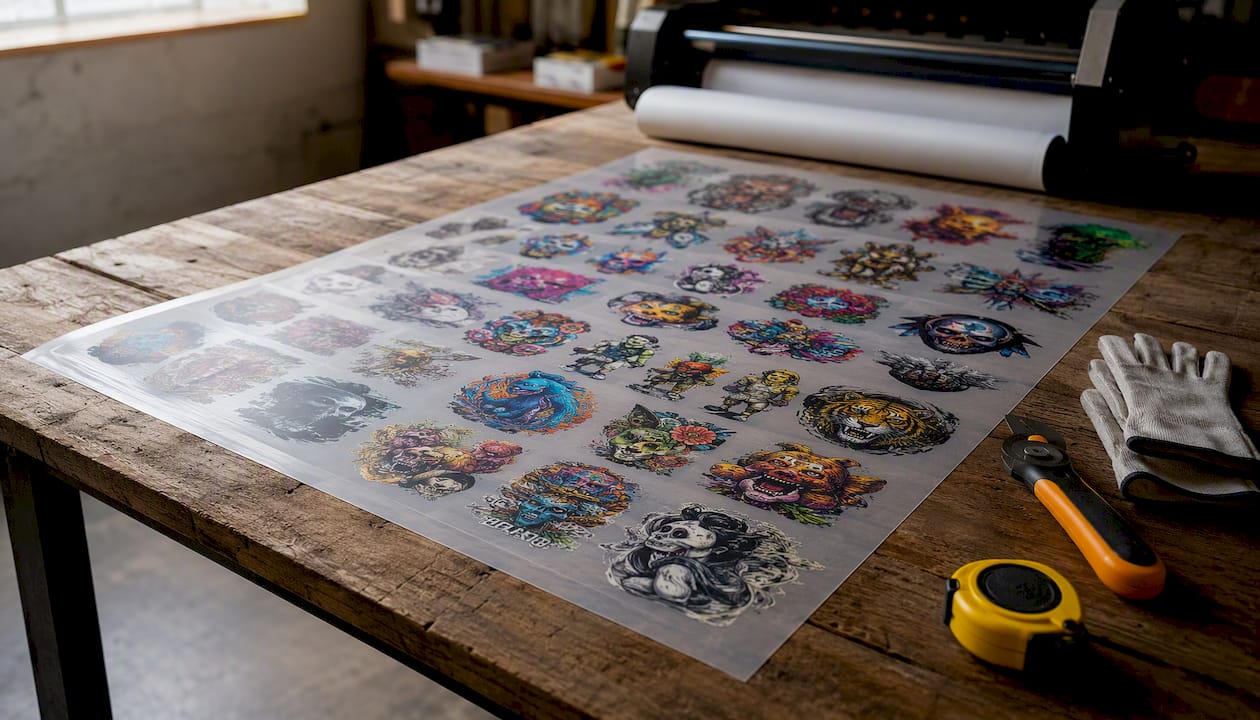
Turnaround time for small runs is generally fast, but smaller jobs can sometimes face longer processing times when shops schedule them between larger production runs. If your deadline is tight, ask the supplier directly whether small orders are batched or run on demand.
Where you’ll see no-minimum policies across industries
No-minimum ordering shows up in more places than most buyers realize. Here are the most common contexts:
- Custom apparel and DTF transfers: A creator launching one shirt design can order a single transfer, apply it, photograph it, and validate demand before committing to inventory. Small businesses use DTF printing precisely because the no-minimum model fits their testing cycles.
- Sticker and label runs: A cafe ordering 12 custom stickers for a pop-up event doesn’t need to buy 500. Digital label printing handles runs this small without a price penalty that makes the order impractical.
- Promotional products: Event organizers ordering branded items for a 30-person team meeting don’t need to hit a 144-unit MOQ. Many promo suppliers now offer no-minimum tiers for smaller events.
- Specialty food wholesale: No-minimum policies in specialty food distribution let independent retailers stock boutique brands without committing to a full case. A small grocery can carry three jars of an artisan hot sauce instead of buying a case of 24.
- Sample orders from manufacturers: A brand sourcing a new product can order one sample unit to evaluate quality before placing a production run. This is technically no-minimum ordering even when the supplier has a standard MOQ for production.
The key distinction between consumer-facing POD platforms and business-facing wholesale marketplaces is pricing transparency. POD platforms build the per-unit premium into the listed price. Wholesale marketplaces often show the bulk price and add a small-order surcharge, which can surprise buyers who don’t read the pricing tiers carefully.
Why no-minimum policies matter for your business
The practical benefits go beyond just “order less.” Here’s what actually changes when a supplier drops the MOQ:
- Lower inventory risk: You don’t hold stock that doesn’t sell. One unit ordered, one unit sold, zero leftover inventory.
- Faster design iteration: Test a new colorway or graphic on a single unit, get customer feedback, and update the design before printing 200 shirts.
- Lower upfront capital: A creator launching a merch line can start with $30 instead of $300. That difference matters when you’re self-funded.
- Personalization at scale: Custom gifts, one-off event pieces, and personalized merchandise become economically viable when you’re not forced into bulk.
- Seasonal flexibility: Order exactly what you need for a holiday drop without carrying leftover inventory into the next quarter.
Who benefits most: microbrands testing new product lines, event organizers with specific headcounts, seasonal sellers who can’t predict demand, and any creator who wants proof of concept before scaling. The benefits depend on the supplier’s per-unit pricing and fulfillment model, so always compare the total landed cost (unit price plus shipping) against what a small bulk run would cost you.
Costs and trade-offs you should plan for
No-minimum ordering isn’t free of friction. The trade-offs are real and worth calculating before you commit to a supplier.
Higher per-unit cost is the most obvious one. A single DTF transfer costs more per unit than the same transfer ordered in a run of 50. MOQ calculations from fulfillment experts show that smaller orders increase per-order paperwork, handling touchpoints, and processing overhead, all of which get passed to the buyer.
Shipping overhead compounds this. A $4 transfer with $8 shipping is a $12 unit cost. Order 10 of them and that shipping cost spreads across the run, dropping the effective per-unit cost considerably.
Platform or fulfillment fees can also create a hidden cost floor. Some no-minimum platforms charge a per-order processing fee regardless of quantity, which makes very small orders more expensive than the unit price suggests.
On the operational side, some shops consolidate small jobs between larger runs, which can add latency you didn’t budget for. Return handling on single-unit orders is also more complex, since a defective single unit often costs more to return and replace than the unit itself is worth.
Pro Tip: Batch your product launches. Instead of ordering one design at a time as ideas come to you, collect 3–5 designs and order them together. You get the flexibility of no-minimum ordering while spreading shipping costs across multiple SKUs.
When to use no-minimum vs. when to order bulk
Run through this checklist before placing an order:
- Define the purpose. Is this a test, a proof of concept, or a confirmed sale? Tests and proofs belong in no-minimum orders. Confirmed demand belongs in bulk.
- Calculate total landed cost. Multiply per-unit price by quantity, then add shipping and any platform fees. Do this for both the no-minimum option and the smallest available bulk tier.
- Estimate sell-through risk. If you’re confident you’ll sell 50 units, bulk pricing almost always wins on margin. If you’re uncertain, the inventory risk of unsold stock often outweighs the per-unit savings.
- Check lead time. No-minimum orders are often faster, but not always. Confirm turnaround before assuming.
- Read the supplier’s aggregation terms. Some platforms use order aggregation to deliver wholesale pricing at low quantities. Verify whether the platform actually pools orders to meet a brand’s MOQ or simply lowers the list price per unit.
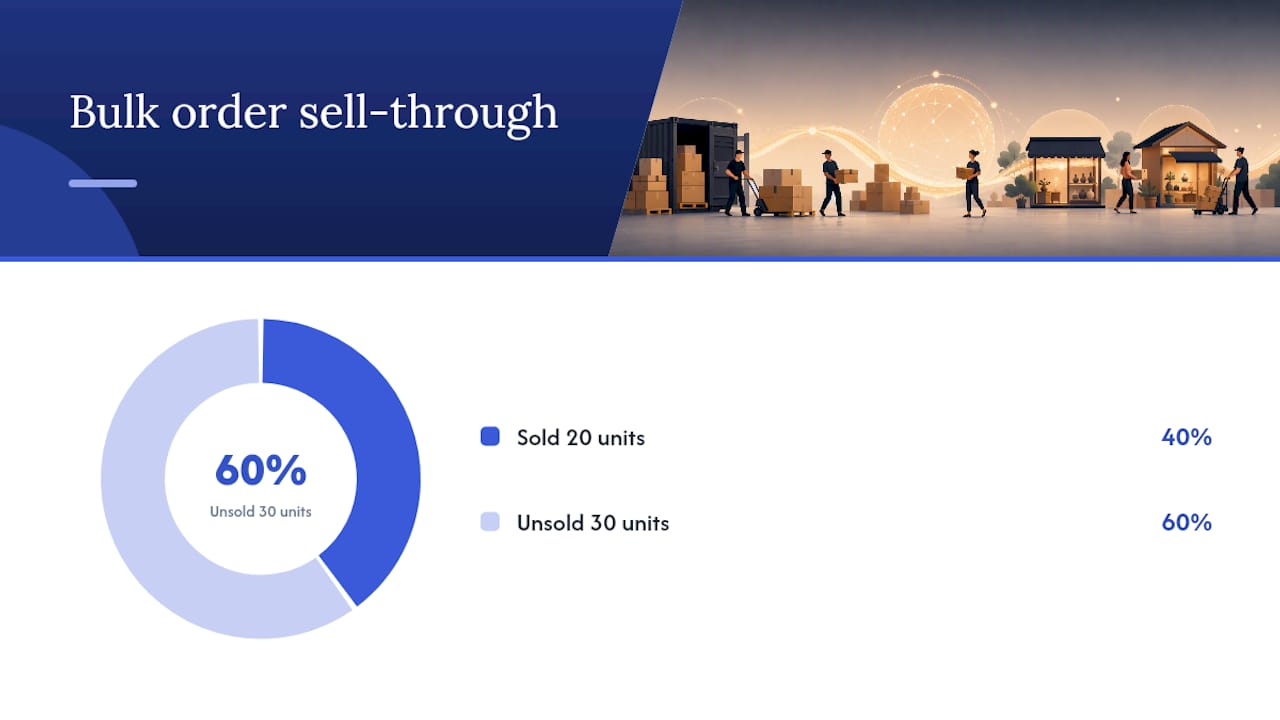
Quick example: A design costs $3 per unit at no-minimum and $1.50 per unit at a 50-unit MOQ. If you expect to sell 20 units, the no-minimum total is $60. The bulk run is $75 for 50 units, with 30 units of inventory risk. At 20 expected sales, no-minimum wins on total cash exposure even though the per-unit cost is higher.
| Decision factor | No-minimum ordering | Bulk ordering |
|---|---|---|
| Upfront cost | Low | Higher |
| Per-unit price | Higher | Lower |
| Inventory risk | None | Moderate to high |
| Best for | Testing, proofs, personalization | Confirmed demand, repeat SKUs |
| Lead time | Often fast | Varies by supplier |
Why digital printing makes no-minimum economically viable
The economics of no-minimum ordering rest on one technical shift: digital presses require no plates and no makeready, so the fixed cost that justified traditional MOQs simply doesn’t exist. A digital file is the setup. The press runs it once or a thousand times at the same per-unit cost structure.
Batching software compounds this advantage. When a supplier’s system fills a press sheet with multiple customers’ jobs, each buyer pays only for their portion of the sheet. This is how order aggregation makes genuine zero-minimum wholesale possible without requiring each buyer to meet the supplier’s full MOQ individually. The distinction matters: some platforms advertise no-minimum but simply accept small orders at a higher list price. Others actually pool orders to preserve wholesale economics. The second model delivers meaningfully lower costs to the buyer.
Direct-to-Film (DTF) printing is a strong example of this model in action. A DTF press prints designs onto film, which are then heat-transferred to fabric. Because the process is fully digital, a single transfer costs the same to set up as a run of 500. Transferkingz operates on exactly this model, offering no-minimum DTF transfers with gang sheet options that let buyers maximize sheet coverage across multiple designs. The advantages of digital printing for small runs come directly from this plate-free, file-driven production model.
The part most buyers overlook
Most articles about no-minimum ordering focus on the obvious benefit: order less, risk less. That’s true, but the more useful insight is about when no-minimum ordering is the wrong choice.
Buyers who default to no-minimum for every order because it feels safer are often leaving real margin on the table. If you’ve validated a design and you know it sells, the per-unit premium on no-minimum orders is a cost you’re paying for flexibility you no longer need. The smart move is to use no-minimum ordering as a testing tool, not a permanent operating model.
The other thing buyers miss: not all no-minimum claims are equal. Some platforms use aggregation to preserve wholesale pricing; others just accept small orders and charge you more for the privilege. Asking a supplier directly whether they aggregate orders or simply accept small runs at a premium will tell you more about your actual cost than any marketing copy will.
Transferkingz offers no-minimum DTF transfers with fast turnaround
Custom DTF transfers without a quantity floor, a gang sheet builder that lets you mix designs on one sheet, and support for cotton, polyester, glass, and acrylic. That’s the practical answer to every checklist item above: test a single design, order exactly what a client needs, or run a small seasonal drop without committing to inventory.
Transferkingz ships nationwide and offers same-day local pickup. Per-unit costs stay manageable because the gang sheet model spreads press costs across your designs rather than charging a single-unit premium on each. If you’re ready to test a design or configure a sheet, the Print Point tool lets you build and price your order online in minutes.
Sources
- Placing orders without MOQ
- No minimum orders (Web-to-Print glossary)
- What do ‘no minimums’ mean? (Makers Row blog)
- Why “No Minimum Order” is Critical in Specialty Food Wholesale
- No Minimum Purchase Requirement Sample Clauses - Law Insider
- Why order aggregation makes real zero-minimum wholesale possible (Catalist analysis)
0 comments