

TL;DR:
- Transfer durability is about how well a design remains adhered, vibrant, and intact after multiple washes and wear. It involves more than initial appearance, requiring proper materials, application, and fabric choice to ensure long-term performance. Consistent testing and following best practices extend the lifespan of DTF transfers, building customer trust and brand reputation.
Most apparel creators assume that if a transfer looks great right out of the heat press, it’s built to last. That assumption costs businesses customers, returns, and reputation. Transfer durability is not about first impressions—it’s about how your design performs after the tenth wash, the twentieth tumble dry, and a full season of regular wear. For small businesses and independent creators building a brand around custom apparel, understanding what durability actually means in a DTF context is the difference between customers who reorder and customers who move on.
Table of Contents
- Defining transfer durability: What it really means
- What affects DTF transfer durability?
- How to test and measure transfer durability
- Best practices for maximizing DTF transfer life
- A deeper look: Why “transfer durability” often gets misunderstood
- Ready to get long-lasting results with DTF transfers?
- Frequently asked questions
Key Takeaways
| Point | Details |
|---|---|
| Understand true durability | Transfer durability is about how well your prints survive washing, wearing, and time—not just initial appearance. |
| Quality impacts results | Choosing the right films, inks, and application methods is critical for long-lasting custom apparel transfers. |
| Test and educate | Regular testing and proper customer education on aftercare will maximize the lifespan and reputation of your creations. |
| Practical improvements matter | Small tweaks to application and care can prevent most common transfer failures. |
Defining transfer durability: What it really means
Transfer durability is not the same as a sharp-looking print fresh off the press. Many creators confuse those two things, and that confusion causes real problems down the line. A transfer can look flawless on day one and still crack, peel, or fade within five washes if the underlying application or materials were off.
According to Transfer Kingz, “transfer durability refers to how well a design remains adhered, vibrant, and intact after repeated washing, drying, and regular use.” That definition covers three distinct qualities: adhesion (staying on the fabric), vibrancy (color staying true), and structural integrity (not cracking or peeling). A truly durable transfer has to check all three boxes, not just one.
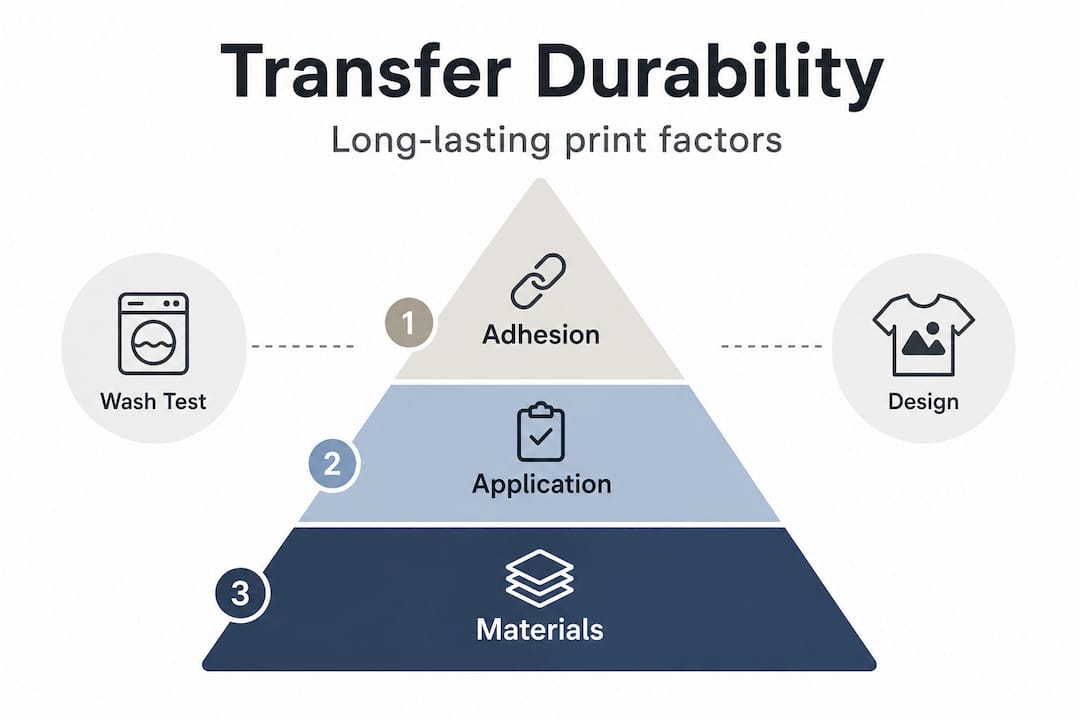
For a small business, durability is directly tied to brand trust. Your customers judge your products over time. A shirt that looks great in the first photo but degrades by wash number eight will hurt your reviews and your reorder rate. Most buyers will not reach out to explain why they stopped purchasing—they simply stop. That silent churn is what makes durability one of the most business-critical factors in custom apparel.
Here are the most common misconceptions about DTF transfer durability:
- “It looks good, so it must be durable.” Appearance right after pressing says nothing about long-term performance.
- “All DTF transfers are created equal.” Film quality, ink formulation, and adhesive powder vary significantly by supplier.
- “If it passed one wash test, it’s fine.” A single cycle tells you almost nothing. Real durability testing requires many cycles under varied conditions.
- “The garment doesn’t matter.” Fabric type dramatically affects how well a transfer adheres and how long it stays intact.
The key insight for apparel business owners: durability is a system, not a single variable. Materials, process, and garment choice all work together to determine how long your print will actually last.
Use our durable transfer guide to dig deeper into how each element contributes to long-term print performance.
What affects DTF transfer durability?
Now that we have a firm definition in place, it’s time to explore what actually influences whether your DTF transfers stand the test of time—or fade fast. The answer is not one variable. It’s a combination of several factors that interact with each other, and weaknesses in any one area can undermine the others.
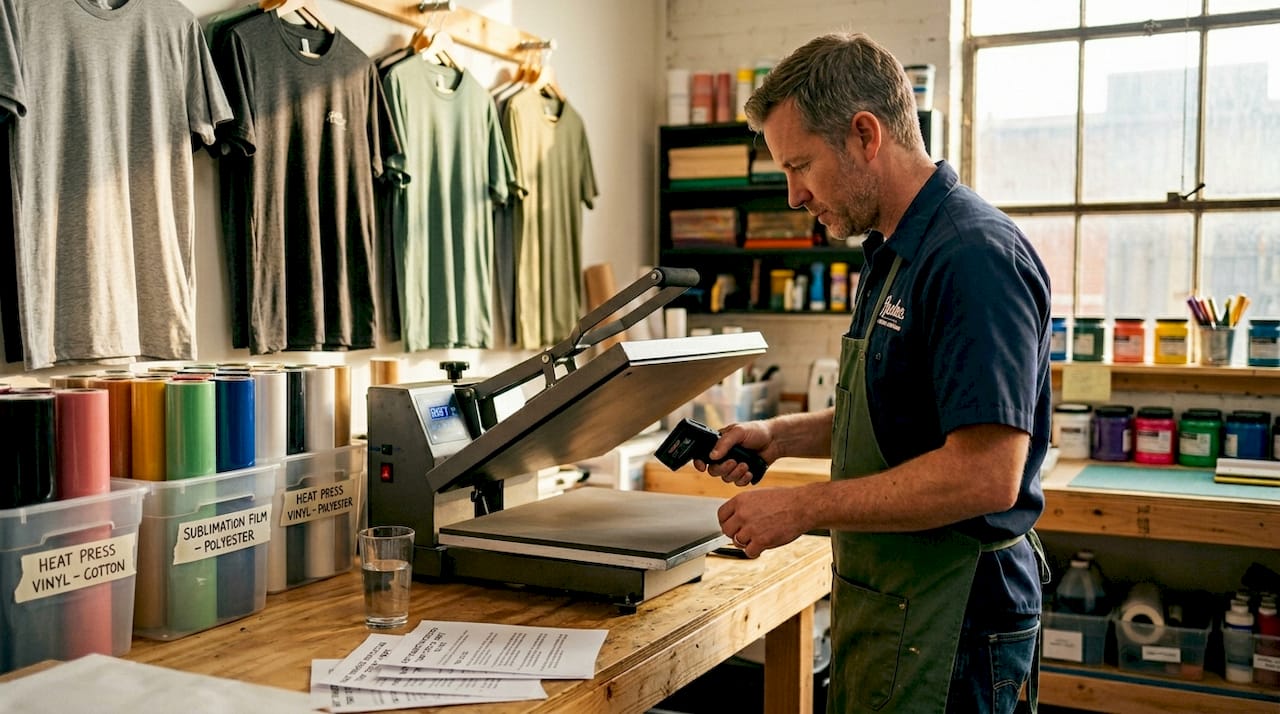
As noted in Transfer Kingz’s technical resources, “factors such as transfer film quality, ink type, application temperature, and garment material all impact how long a custom print lasts.” Each of those factors is within your control. That’s actually good news—it means durability is something you can optimize, not just hope for.
Here is how different fabric types respond to DTF transfers:
| Fabric type | Adhesion quality | Color vibrancy | Wash durability |
|---|---|---|---|
| 100% cotton | Excellent | High | Very good with proper cure |
| 100% polyester | Good | High | Good, risk of dye migration |
| Cotton/poly blend | Very good | High | Excellent overall |
| Nylon | Moderate | Moderate | Varies by application temp |
| Athletic knit | Moderate | Good | Lower without stretch allowance |
The fabric table above makes one thing clear: blended fabrics tend to perform best overall for DTF applications. They balance adhesion strength with color retention and hold up well through repeated washing. Pure polyester requires extra attention to prevent dye migration, where the fabric’s dye bleeds into the transfer layer and muddies the design.
Beyond fabric, the following factors are the most critical durability influencers for your process:
- Film quality: Thinner or lower-grade films degrade faster and can separate from the fabric after repeated washing.
- Ink saturation and formulation: Using high-quality DTF ink preserves color vibrancy and prevents cracking.
- Hot melt adhesive powder: Powder quality and curing temperature affect how strongly the transfer bonds to the garment fibers.
- Heat press calibration: An uncalibrated press leads to cold spots or overheated zones, creating inconsistent adhesion across the design.
- Application time: Too short and the bond is weak; too long and you risk damaging the transfer or the garment.
- Environmental factors: High humidity during application can interfere with adhesion; pre-pressing the garment removes moisture and improves results.
If you want to understand exactly what makes DTF transfers durable at every stage of production, reviewing each factor before scaling your operation is essential.
Pro Tip: Consistent temperature and time are your two most powerful levers. Invest in a quality heat press with accurate platens, and test every new garment batch before running a full production order.
How to test and measure transfer durability
Knowing what impacts durability is only half the battle. Testing your transfers the right way ensures you are delivering reliability to your customers, not just hoping things hold together. Transfer Kingz confirms that “testing includes repeated wash cycles, stretch tests, and colorfastness checks to ensure prints stay vibrant and hold up over time.”
Here is a straightforward testing process you can run in your own shop or studio:
- Press a test sample. Apply a representative transfer to the exact garment type you plan to sell, following your standard process settings.
- Pre-test inspection. Document color, adhesion, and surface finish before any washing. Take photos for reference.
- Initial wash and dry cycle. Run the garment through a standard machine wash on warm and a medium heat dry cycle.
- Post-cycle inspection. Check for any peeling, cracking, color change, or edge lifting. Note any issues.
- Repeat 10 times. Run at least 10 wash/dry cycles on the same sample to surface problems that won’t appear in one or two washes.
- Stretch test. Gently stretch the printed area and check for cracking or delamination. This matters especially for athletic wear.
- Sunlight exposure test. Place the garment in direct sunlight for several hours. UV exposure can fade inferior inks faster than washing does.
- Final documentation. Record results across all criteria in a log so you can compare performance across different garment types, ink batches, or press settings.
Use this simple pass/fail data table to track each test run objectively:
| Criteria | Pass standard | Common fail signs |
|---|---|---|
| Wash cycle count | 50+ cycles with no peeling | Edges lifting before cycle 20 |
| Color retention | Less than 10% visible fade | Noticeable dullness after 10 cycles |
| Adhesion integrity | No separation from fabric | Bubbling or peeling after stretch |
| Crack resistance | No visible cracking after stretch | Fine cracks along design edges |
| Edge definition | Crisp edges maintained | Blurring or fraying of print border |
This approach turns a subjective “it looks fine” into actual, repeatable data. Over time, your logs become a quality control system, not just a testing exercise. Use our print durability guide to develop a more structured testing program.
Pro Tip: Keep a dedicated test log spreadsheet for every garment type you use. When something fails, you have a paper trail that helps you pinpoint whether the issue is the garment, the ink batch, or the press calibration.
Best practices for maximizing DTF transfer life
Applying expert methods every time and informing your buyers about care can add months or even years to the life of your transfers. The difference between a transfer that lasts 20 washes and one that lasts 70 often comes down to a handful of process choices you make before you ever pull the shirt out of the press.
Transfer Kingz highlights that “proper application method and aftercare steps, such as correct pressure, temperature, and post-press cooling, maximize DTF durability.” Follow the DTF transfer application checklist as a framework, and build on it with the best practices below.
Key process steps to protect every transfer:
- Pre-press the garment for 3 to 5 seconds to remove moisture and wrinkles, which create uneven adhesion points.
- Apply firm, even pressure across the full design area. Uneven platens are one of the most common hidden causes of edge peeling.
- Hold correct temperature for your specific transfer type. Most DTF transfers press at 300 to 320 degrees Fahrenheit for 10 to 15 seconds.
- Peel at the right temperature. Cold peel transfers need to cool completely before you pull the film. Hot peel films are removed immediately. Mixing those up damages adhesion.
- Allow a full cool-down before folding or packaging garments. Heat trapped inside a folded shirt immediately after pressing can distort the transfer surface.
Aftercare instructions to share with your customers:
- Wash inside out in cold water on a gentle cycle.
- Avoid bleach or fabric softener, which break down the adhesive layer over time.
- Tumble dry on low heat or air dry whenever possible.
- Do not iron directly on the printed design. If ironing is needed, use a pressing cloth over the design.
- Skip dry cleaning. The solvents used can dissolve the transfer’s adhesive.
Pro Tip: Print a small care card to include with every order. Customers who follow proper care instructions report better results, which directly reduces returns, complaints, and negative reviews. Check our print durability guide for custom apparel for language you can adapt for your cards.
Common mistakes that shorten transfer life:
- Using worn or uncalibrated heat press platens.
- Pressing at a single temperature for all fabric types.
- Skipping the pre-press step.
- Not storing unused transfers properly (humidity and heat degrade them before application).
- Ignoring garment preparation, like pressing over seams or uneven surfaces.
A deeper look: Why “transfer durability” often gets misunderstood
After reviewing best practices, it’s worth exploring why some transfers still fail even when creators believe they’ve done everything right. This is where the industry conversation often falls short.
Most educational content about DTF durability focuses on materials and process settings. That’s necessary but not complete. What rarely gets discussed is how design complexity and real-world wear conditions interact with durability outcomes in ways that no spec sheet will warn you about. As Transfer Kingz notes, “even with high-quality materials and application, durability can suffer if design complexity or finishing is not considered.” That’s a subtle but critical point.
Think about a design with extremely fine lines or tiny text. Those areas contain less ink mass and less adhesive surface area than bold, solid fills. In a lab setting pressed onto a perfectly flat garment, they may test fine. But in real-world conditions—washed with other garments, twisted, stretched, or worn in areas that flex constantly—those thin areas experience far more stress per square inch. They fail first, and they fail faster.
The fix is not always “press harder” or “buy better ink.” Sometimes it’s rethinking the design itself to improve how it translates to a durable print. Working with your design files to avoid ultra-thin strokes or isolated detail clusters in high-flex zones is a practical durability strategy that most guides completely ignore. For more on handling intricate DTF prints, it’s worth reviewing how film technology handles detail before you commit to a large print run.
Real-world testing also tells a different story than a controlled bench test. A garment worn by someone who works outdoors, sweats heavily, and washes daily faces conditions no standard 50-cycle test replicates. If your customers are in specific use-case categories, test for those conditions specifically. A gym apparel brand and a souvenir shop have completely different durability demands, and treating them the same creates problems. Use our DTF troubleshooting guide when you hit unexpected failures—those moments are where the most valuable production insights come from.
The mindset shift that actually improves quality over time is treating every failed transfer as diagnostic data, not a production loss. Each failure tells you something specific about your process, materials, or design standards. The businesses that build genuinely durable products are the ones that document failures, investigate them honestly, and adjust systematically.
Ready to get long-lasting results with DTF transfers?
If you’ve made it through this guide and you’re ready to put durability knowledge into practice, the next step is choosing materials and a production partner that match the quality standards you now understand. Cutting corners on film or ink quality will undo every process improvement you make.
Transfer Kingz specializes in premium DTF transfers built for exactly the durability standards described throughout this guide. Whether you’re producing in small batches or scaling to larger runs, our transfers are made with high-grade inks and films designed to perform through repeated washing and regular wear. Creators in Dallas can explore DTF transfers in Dallas, and businesses across the state can find full-service options through DTF printing services in Texas. If you’re new to the process or evaluating your current workflow, learn more about how DTF transfers revolutionize apparel production for small businesses and independent creators.
Frequently asked questions
How many washes can a high-quality DTF transfer withstand?
A well-applied DTF transfer can typically withstand 50 or more wash cycles without significant fading or peeling, especially when care instructions are followed. Quality transfers last through multiple wash cycles when application settings are dialed in correctly.
Are DTF transfers more durable than traditional screen prints?
DTF transfers can match or exceed screen print durability, particularly for full-color or highly detailed designs where screen printing requires multiple layers and additional cost. DTF transfers are highly durable and handle complex artwork without sacrificing long-term performance.
What is the single biggest reason DTF transfers fail?
Most failures come from improper application—incorrect pressure, temperature, or press timing—rather than a defect in the transfer itself. Application errors are among the leading causes of premature transfer failure in small production environments.
How should my customers care for decorated apparel to maximize durability?
Advise customers to wash inside out in cold water on a gentle cycle, avoid bleach and fabric softener, and dry on low heat or air dry. Proper washing and care routines significantly extend the functional life of DTF prints through regular use.
Recommended
- What Makes DTF Transfers Durable? Guide for Lasting Prints – Transfer Kingz
- What Is Durable Transfer? Guide to Lasting DTF Prints – Transfer Kingz
- Print Durability Guide: Maximize Custom Apparel Longevity – Transfer Kingz
- High-Quality DTF Ink for Stunning Transfers: Achieve Vibrant, Durable – Transfer Kingz
0 comments