

Finding reliable, vibrant custom prints for your clothing business can feel overwhelming, especially when traditional methods limit fabric options or require large orders. Small brands and independent artists from the United States to Canada need versatile solutions that turn digital ideas into high-quality products quickly and affordably. With DTF transfers, you gain remarkable color vibrancy and compatibility with cotton, polyester, and blends, allowing you to experiment on any garment style without sacrificing quality or your budget.
Table of Contents
- What Sets Custom DTF Transfers Apart
- Different DTF Transfer Types And Applications
- How The DTF Transfer Process Works
- Comparing DTF With Other Print Methods
- Cost Factors, Common Mistakes, And Risk Management
Key Takeaways
| Point | Details |
|---|---|
| Exceptional Design Flexibility | Custom DTF transfers allow vibrant, intricate designs on various fabric types, catering to diverse creative needs. |
| Cost Efficiency for Small Runs | DTF printing supports small batch production with minimal upfront investment, appealing to independent artists and small businesses. |
| Durability and Quality | DTF prints resist cracking and fading, ensuring longevity through multiple wash cycles and maintaining vibrancy. |
| Versatility Across Applications | DTF transfers are suitable for a wide range of markets, from boutique clothing lines to personalized corporate apparel. |
What Sets Custom DTF Transfers Apart
Custom Direct-to-Film (DTF) transfers represent a revolutionary approach to apparel printing, offering unprecedented design flexibility and production capabilities. By enabling vibrant full-color designs with fine details, these transfers provide small businesses and independent artists with professional-grade printing options.
The key differentiators of custom DTF transfers include:
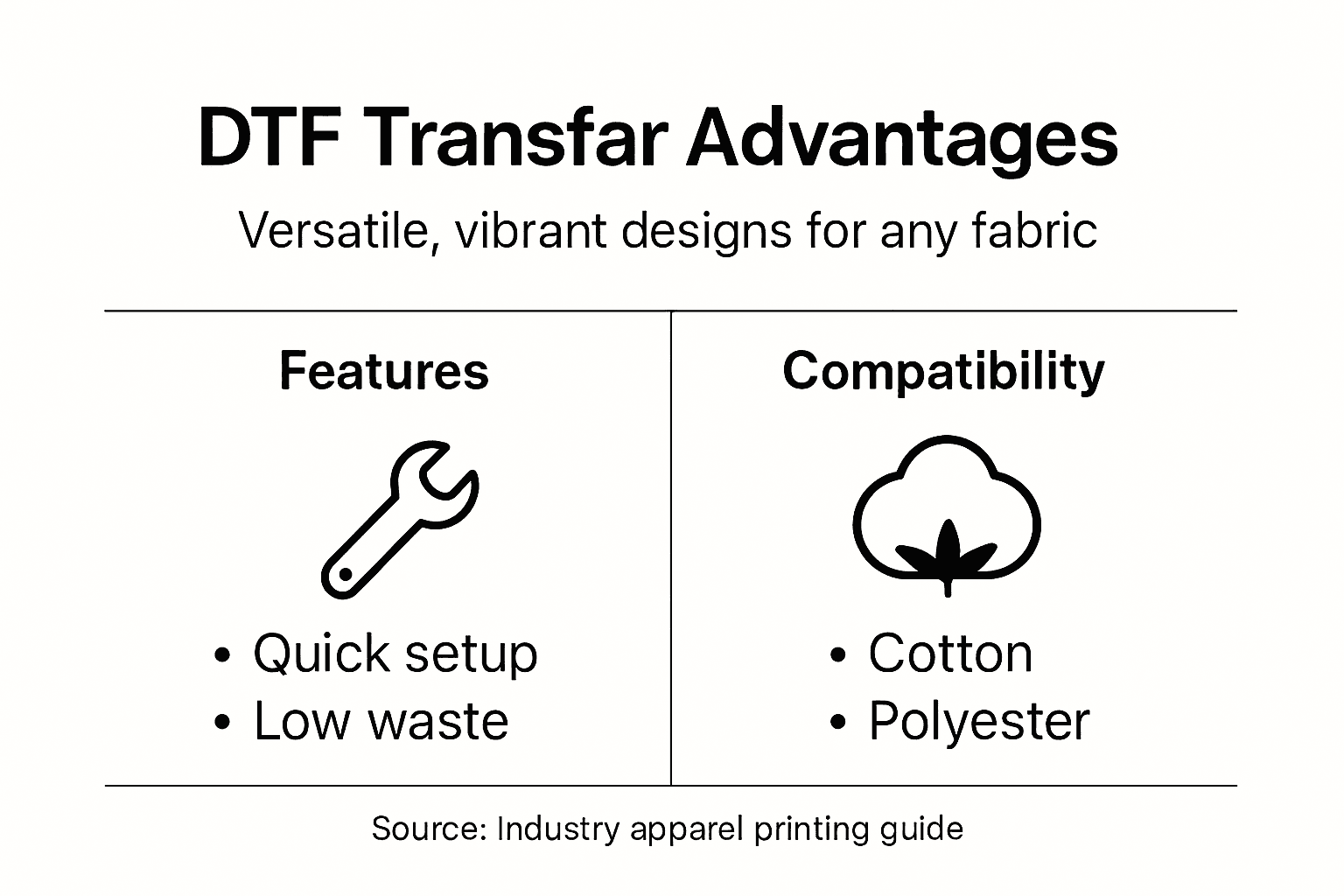
- Exceptional Color Reproduction: Capable of producing intricate designs with smooth gradients and rich color palettes
- Fabric Versatility: Applicable across multiple fabric types including cotton, polyester, and blended materials
- Cost-Effective Production: Supports small runs and on-demand printing without significant upfront investments
- Durability: Prints resist cracking and fading, maintaining design integrity over multiple wash cycles
Unlike traditional printing methods, DTF transfers eliminate complex setup requirements, enabling rapid concept-to-product transitions. This efficiency makes them particularly attractive for emerging brands and creative entrepreneurs seeking streamlined production processes.
Material Compatibility is another significant advantage. Whereas screen printing or traditional heat transfer methods often limit fabric choices, DTF transfers work seamlessly across diverse textile compositions. This flexibility allows designers to experiment with different garment types without compromising print quality.
Production Scalability represents another crucial benefit. Whether you’re creating a small batch of custom t-shirts or preparing for a larger merchandise run, DTF transfers accommodate varying production volumes with consistent quality.
Pro tip: Experiment with different fabric types and design complexities to fully leverage the versatility of custom DTF transfers.
Different DTF Transfer Types and Applications
Direct-to-Film (DTF) transfers offer a diverse range of applications that cater to various apparel printing needs. Understanding the different types of DTF transfers can help designers and small business owners optimize their custom merchandise production.
Key DTF transfer types include:
- Standard Full-Color Transfers: Ideal for complex, multi-colored designs with photographic quality
- Spot Color Transfers: Perfect for bold, graphic designs with limited color palettes
- Metallic Finish Transfers: Adds shimmer and special effects to apparel designs
- Neon and Specialty Transfers: Creates vibrant, eye-catching prints for unique merchandise
Each transfer type offers unique advantages for different creative and commercial applications. Standard full-color transfers excel in reproducing intricate artwork with stunning detail, making them perfect for photographers, artists, and graphic designers looking to translate their visual concepts onto fabric.
Specialty Transfer Techniques provide additional creative possibilities. Metallic and neon transfers, for instance, can transform ordinary garments into standout pieces. These specialized options allow designers to experiment with texture, sheen, and visual impact beyond traditional printing methods.
Commercial applications span multiple industries, from small boutique clothing lines to promotional merchandise, sports team gear, and personalized corporate apparel. The versatility of DTF transfers enables businesses to produce small batches or large runs with consistent quality and minimal setup complexity.
Pro tip: Experiment with different transfer types to discover unique design possibilities that can set your merchandise apart from competitors.
How the DTF Transfer Process Works
Direct-to-Film (DTF) printing represents a sophisticated yet streamlined approach to custom apparel decoration. DTF printing involves a precise multi-step workflow that transforms digital designs into vibrant, durable fabric transfers.
The DTF transfer process consists of several key stages:
- Digital Design Preparation: Creating or selecting high-resolution artwork
- Printing on PET Film: Using specialized DTF printers to reproduce designs
- Adhesive Powder Application: Coating the printed film with specialized adhesive
- Heat Curing: Melting and setting the adhesive powder
- Transfer and Press: Applying the design onto fabric using heat and pressure
In the initial stage, designers prepare digital artwork, ensuring high-quality resolution and color accuracy. Professional DTF printers then precisely print these designs onto special PET (polyethylene terephthalate) films, which act as a temporary carrier for the transfer.
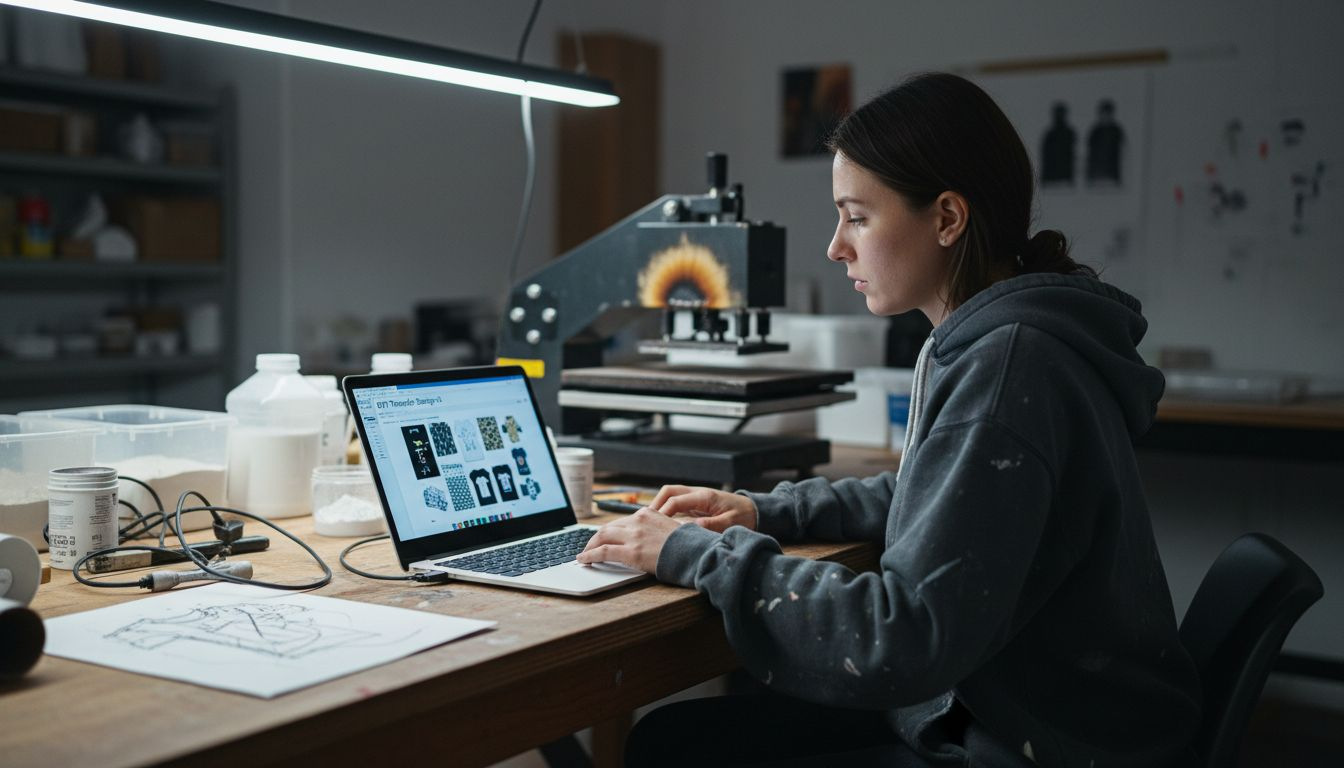
Adhesive Powder Dynamics play a crucial role in the DTF process. After printing, a fine layer of adhesive powder is evenly distributed across the film. This powder melts and bonds during the heat curing process, creating a strong connection between the design and the fabric substrate.
The final transfer stage involves using a heat press to apply the design onto the desired textile. Precise temperature, pressure, and timing are critical for achieving a seamless, long-lasting print that maintains its vibrancy and flexibility through multiple wash cycles.
Pro tip: Invest in high-quality PET films and calibrate your heat press settings to ensure consistent, professional-grade DTF transfers.
Comparing DTF with Other Print Methods
Custom apparel printing offers multiple techniques, but Direct-to-Film (DTF) transfers have rapidly emerged as a game-changing method. DTF printing outperforms traditional methods by addressing many limitations found in screen printing, heat transfer vinyl (HTV), and Direct-to-Garment (DTG) technologies.
Key comparative advantages of DTF include:
- Fabric Versatility: Works across cotton, polyester, and blended materials
- Color Vibrancy: Produces more detailed, full-color designs
- Production Flexibility: Supports small and medium production runs
- Cost Efficiency: Reduces setup complexity and material waste
- Durability: Creates prints resistant to cracking and fading
Screen printing remains superior for massive bulk orders, but DTF excels in smaller, more customized production environments. While DTG printing works best on 100% cotton fabrics, DTF transfers offer remarkable adaptability across different textile compositions.
Print Quality Considerations reveal significant differences between methods. Heat transfer vinyl often produces stiffer, less flexible designs, whereas DTF transfers maintain fabric softness and stretch. The ability to reproduce intricate, photographic-quality images sets DTF apart from traditional screen printing techniques.
Commercial applications demonstrate DTF’s versatility across industries. Small businesses, independent designers, and custom merchandise creators can now produce professional-grade apparel with minimal upfront investment and maximum creative freedom.
Here’s a comparative overview of apparel print methods and their ideal use cases:
| Printing Method | Best Use Case | Fabric Compatibility | Design Complexity Support |
|---|---|---|---|
| Direct-to-Film (DTF) | Custom short runs, flexible jobs | Cotton, polyester, blends | High, full-color & detail |
| Screen Printing | Large volume production | Mostly cotton, some blends | Moderate, limited colors |
| Direct-to-Garment | Photographic prints, cotton tees | Primarily 100% cotton | High, photo quality |
| Heat Transfer Vinyl | Names, numbers, simple graphics | Cotton, polyester | Low, simple cut shapes |
Pro tip: Experiment with sample transfers on different fabric types to understand DTF’s unique print characteristics and versatility.
Cost Factors, Common Mistakes, and Risk Management
Custom DTF transfers represent a strategic investment for small businesses and independent designers, requiring careful financial and operational planning. While the technology offers remarkable flexibility, understanding the nuanced cost structure and potential pitfalls is crucial for sustainable success.
Key cost considerations include:
- Equipment Investment: Initial printer and heat press costs
- Consumable Expenses: DTF films, inks, adhesive powders
- Maintenance Requirements: Regular printer servicing and calibration
- Material Waste Management: Minimizing unused transfer materials
- Quality Control Overhead: Testing and rejected print expenses
Potential Operational Risks emerge from several common mistakes. Improper temperature calibration can lead to transfer failures, while inconsistent powder application compromises print durability. Small businesses often underestimate the importance of precise equipment maintenance and technique refinement.
Financial risk management in DTF printing involves strategic approaches to minimize unexpected expenses. Developing a comprehensive understanding of material costs, production efficiency, and market pricing helps entrepreneurs create sustainable pricing models. Calculating per-transfer expenses, including consumables and labor, enables more accurate profit margin projections.
Technical proficiency directly impacts economic outcomes. Entrepreneurs should invest time in understanding equipment nuances, practicing consistent application techniques, and developing a systematic approach to quality control. Continuous learning and incremental skill improvement can significantly reduce waste and enhance overall production efficiency.
Quick reference to common DTF process mistakes and how to avoid them:
| Mistake | Business Impact | Preventative Action |
|---|---|---|
| Overheating during press | Print damage, wasted materials | Calibrate press temperature |
| Uneven powder application | Reduced durability, poor washability | Use consistent coating techniques |
| Neglecting equipment care | Frequent breakdowns, costly repairs | Schedule regular maintenance |
| Inadequate artwork quality | Blurry or inaccurate prints | Prep high-resolution designs |
Pro tip: Create a detailed spreadsheet tracking per-transfer costs, including material expenses, equipment depreciation, and labor time to maintain precise financial oversight.
Unlock Your Apparel Printing Potential with Custom DTF Transfers
Are you ready to overcome the challenges of producing vibrant, durable, and detailed designs on various fabrics? Custom Direct-to-Film (DTF) transfers offer you the flexibility to print on cotton, polyester, and blends without the complexity and high costs of traditional methods. Whether you are a small business, an independent artist, or expanding your production capabilities, our high-quality DTF transfers, custom apparel printing, heat transfers, t-shirt printing, high-quality prints. – Transfer Kingz empower you to bring your unique designs to life with outstanding color reproduction and lasting durability.
Experience fast turnaround times, premium inks, and easy application techniques tailored to your needs. Don’t let production hurdles slow you down. Visit Transfer Kingz today to explore our full DTF transfers, UV DTF Permastickers, custom printing supplies, heat transfers, bulk printing. – Transfer Kingz and Collection – Transfer Kingz so you can start creating standout apparel that impresses customers and builds your brand. Take the next step now and turn your creative vision into reality.
Frequently Asked Questions
What are the benefits of using custom DTF transfers for apparel printing?
Custom DTF transfers offer exceptional color reproduction, fabric versatility, cost-effective production, and durability, making them ideal for small businesses and independent artists.
How does the DTF transfer process work?
The DTF transfer process involves preparing digital designs, printing on PET film, applying adhesive powder, heat curing, and finally transferring the design onto fabric using heat and pressure.
What types of fabric can be used with DTF transfers?
DTF transfers are compatible with a variety of fabrics, including cotton, polyester, and blended materials, allowing for greater design flexibility.
How does DTF printing compare to other printing methods like screen printing and DTG?
DTF printing excels in versatility and detail compared to screen printing and DTG. It supports smaller production runs, produces vibrant full-color designs, and works across different fabric types, unlike DTG, which is best for cotton only.
Recommended
- How DTF Printing Works: Boost Custom Apparel Quality – Transfer Kingz
- Benefits of DTF Transfers for Custom Apparel – Transfer Kingz
- DTF Transfer Industry Trends: Shaping Apparel 2026 – Transfer Kingz
- Why Choose DTF Transfers for Apparel Printing – Transfer Kingz
- Role of Prints in Apparel—Boosting Style and Sales - fabric fabric
- Custom T-Shirt Design Guide: Create Unique Local Apparel | JuustAShirt Blog
0 comments