

Finding ways to deliver professional-quality apparel without high setup costs can feel challenging for small clothing brands and independent designers. The search for flexibility often leads to juggling different printing methods that limit your creativity or margins. With Direct-to-Film printing, you gain the freedom to print vibrant, durable designs on cotton, polyester, or blends—no garment pretreatment or minimum orders required, making every project more profitable and efficient.
Table of Contents
- Direct-to-Film Explained for Apparel Printing
- How DTF Transfers Work Step-by-Step
- Comparing DTF to Screen and DTG Printing
- Key Benefits for Small Apparel Businesses
- Common Misconceptions and Mistakes to Avoid
Key Takeaways
| Point | Details |
|---|---|
| DTF Offers Versatility | Direct-to-Film printing works on a variety of fabrics without pre-treatment, making it ideal for diverse apparel needs. |
| No Minimum Orders Required | You can print as few as one item, allowing for custom orders and flexibility in sales. |
| Simplified Process | DTF combines steps to reduce setup time and costs, benefiting small businesses in terms of efficiency and profitability. |
| Durability and Quality | Transfers maintain their quality through regular wear and washing, ensuring customer satisfaction. |
Direct-to-Film Explained for Apparel Printing
Direct-to-Film (DTF) is a digital printing method that transfers vibrant designs directly onto garments using film, heat, and adhesive powder. Unlike older printing techniques, DTF works on virtually any fabric without requiring pre-treatment of the garment first.
Here’s how the process works:
- Design your artwork digitally or upload existing designs
- Print the design onto a special DTF film using specialized inks
- Apply adhesive powder to the wet ink while still on the film
- Heat cure the powder to set it permanently
- Transfer the design to your garment using heat and pressure
- Cure the final transfer with additional heat
The result? Sharp, vibrant graphics with excellent color coverage that stay durable through countless washes.
What Makes DTF Different
Direct-to-Film printing eliminates pre-treatment requirements, which saves you time and cuts production steps. You can print on cotton, polyester, nylon, and blends—major flexibility compared to screen printing or other direct-to-garment methods.
Key advantages include:
- No garment pretreatment needed before printing
- Works on multiple fabric types (cotton, polyester, nylon, blends)
- Sharper prints with fine detail capability
- Better color coverage across darker and lighter fabrics
- No minimum order requirements for custom designs
- Faster turnaround times compared to traditional methods
DTF transfers deliver professional-quality results at a fraction of the cost and complexity of screen printing, making it perfect for small businesses and independent designers.
As a small clothing business owner, you benefit from the flexibility DTF offers. Want to print a single custom hoodie? You can. Need 50 matching t-shirts with different names? No problem. The technology doesn’t penalize small orders.
The durability is another major plus. These transfers handle regular washing, stretching, and everyday wear without cracking, fading, or peeling. Your customers will actually get the quality they’re paying for.
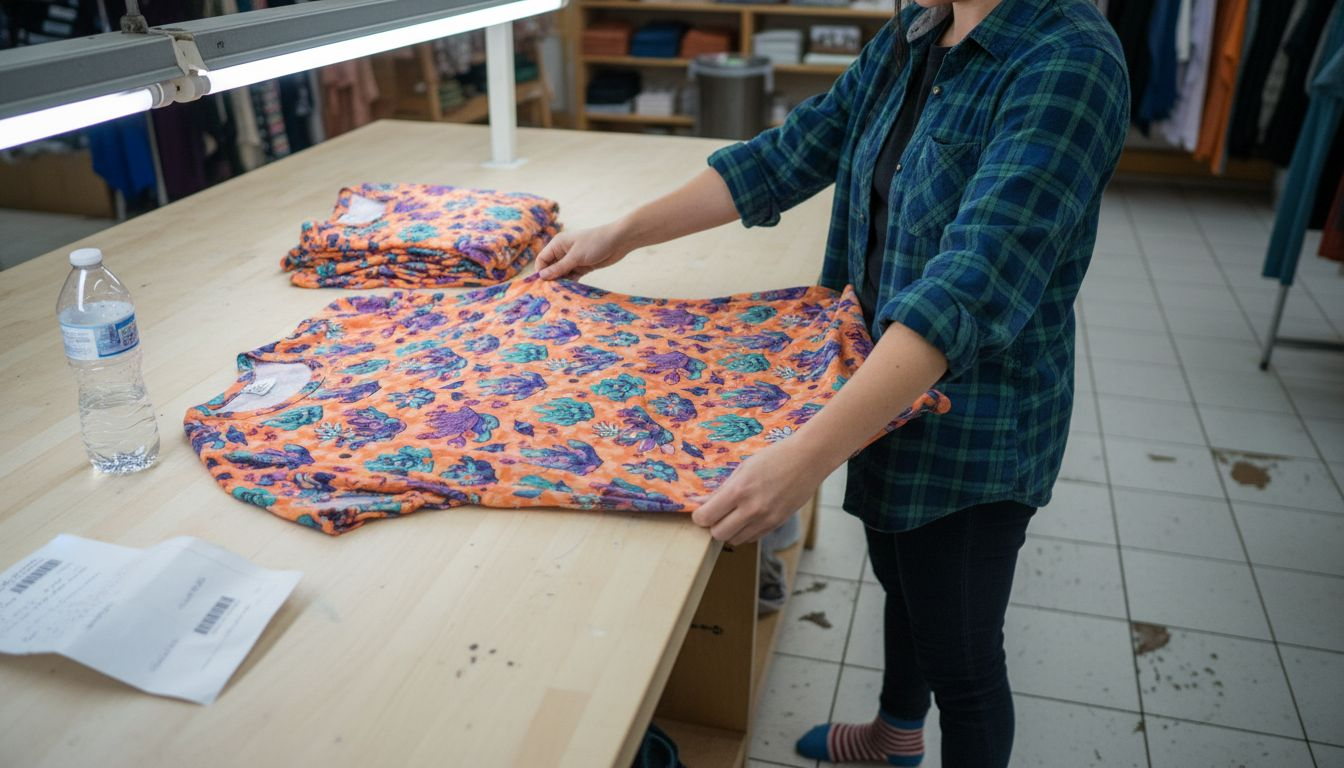
Pro tip: Start with a test order on your most common fabric type to dial in your heat press temperature and pressure settings—this takes roughly 10-15 minutes but prevents costly mistakes on larger batches.
How DTF Transfers Work Step-by-Step
The DTF process transforms your digital designs into wearable art through a series of precise steps. Understanding each stage helps you troubleshoot issues and achieve consistent, professional results every time you print.
The Complete DTF Process
Here’s what happens from design file to finished transfer:
- Prepare your artwork - Create or upload your design in a compatible file format (PNG, PDF, or TIFF work best for transparency)
- Send to printer - Load your design into DTF printer software and adjust settings like ink density and color profiles
- Print onto film - The DTF printer applies specialized inks directly onto the polyester film in one continuous pass
- Apply adhesive powder - While the ink is still wet, adhesive powder is automatically sprinkled across the entire design
- Cure the powder - Heat from the printer cures the powder, locking it to the inked film surface
- Cool and peel - The film cools completely before you peel away excess powder for a clean transfer
- Heat press application - Place the film design-side down on your garment and apply heat and pressure (typically 320-350°F for 10-15 seconds)
- Final cure - Allow the garment to cool, then peel away the film to reveal your finished design
The complete DTF transfer workflow requires attention to temperature, timing, and pressure at every stage.
Here’s a quick reference of how each DTF process step contributes to final print quality:
| Stage of DTF Process | Key Variable to Monitor | Impact on Final Quality |
|---|---|---|
| Artwork Preparation | File type & resolution | Determines graphic sharpness |
| Printing on Film | Ink density & color | Affects vibrancy and detail |
| Powder Application | Coverage consistency | Ensures strong, even adhesion |
| Powder Curing | Temperature control | Prevents ink bleeding or powder loss |
| Heat Pressing | Time and pressure | Influences softness and wash durability |
| Final Curing | Cooldown and peel time | Reduces risk of cracks or peeling |
Why Each Step Matters
Skipping or rushing any step creates visible problems. Insufficient powder application causes fading. Too much heat scorches fabric or causes ink bleeding. Pressure that’s too light leaves gaps in coverage.
Key things to monitor:
- Film quality - Use high-grade polyester film designed specifically for DTF
- Ink consistency - Keep tanks filled to proper levels; low ink produces weak colors
- Powder coverage - Uneven powder application shows as patchy transfers
- Heat press accuracy - Temperature fluctuations ruin entire batches
- Pressure settings - Varies by garment type and fabric weight
Success with DTF depends on mastering the details—one overlooked step cascades into quality issues your customers will notice immediately.
Most issues stem from inconsistent heat press settings. A digital thermometer separate from your machine’s built-in display often reveals temperature drift that causes problems.
The beauty of DTF is repeatability. Once you dial in your settings for a specific fabric, you can reproduce identical results across dozens of garments.
Pro tip: Create a settings chart for each fabric type you regularly use—note the exact temperature, pressure, and time for your specific heat press, then laminate it and keep it next to your equipment for quick reference.
Comparing DTF to Screen and DTG Printing
Three main printing technologies dominate custom apparel production, each with distinct strengths and limitations. Understanding how DTF stacks against screen printing and Direct-to-Garment (DTG) helps you choose the best fit for your business model.
The Key Differences
DTF printing combines digital precision with transfer versatility. It works on cotton, polyester, blends, and synthetics without pre-treating garments. DTF offers fabric versatility and durability across diverse material types while maintaining soft hand feel and vibrant colors.
DTG printing excels at photographic detail on cotton fabrics but requires garment pre-treatment before printing. Setup is faster for small batches, but prints lack durability on synthetic materials and blends.
Screen printing remains the cost champion at high volumes, producing thick, vibrant ink layers that last through countless washes. However, setup is labor-intensive, color separations are complex, and small runs become economically impractical.
Quick Comparison
| Factor | DTF | DTG | Screen |
|---|---|---|---|
| Fabric Types | All fabrics, no pre-treat | Cotton primarily | All fabrics |
| Detail & Colors | Excellent | Photographic | Good, 1-4 colors typical |
| Setup Time | Moderate | Fast | Slow, labor-heavy |
| Cost Per Unit (small) | Low | Moderate | High |
| Cost Per Unit (100+) | Moderate | Moderate | Low |
| Durability | Excellent | Good (cotton) | Superior |
| Minimum Order | None | None | 12-24 pieces |
Best Use Cases
Choose DTF when you need:
- No minimum order requirements
- Multiple fabric types in one order
- Intricate, multicolor designs
- Fast turnaround on custom orders
- Synthetic or blend fabrics
Choose DTG when you need:
- Photorealistic detail on cotton t-shirts
- Quick setup for one-off orders
- Maximum softness on lightweight cotton
Choose screen printing when you need:
- 100+ identical pieces
- Maximum durability and wash-fastness
- Cost efficiency at volume
- Thick, opaque ink coverage
DTF strikes the optimal balance for small business owners—you avoid long setup times, eliminate minimum orders, and maintain quality across any fabric type your customers request.
The reality for independent designers? DTF removes the gatekeeping that screen printing enforces. You’re no longer forced into choosing between profitability and customer satisfaction on small orders.
DTG sounds appealing but falls short on synthetics, which represents a huge market segment—activewear, performance wear, and fashion blends that cotton simply cannot address.
Pro tip: Test a sample order using DTF on your three most common garment types to establish baseline costs and turnaround times, then use those numbers to confidently quote custom orders without waiting for quotes from vendors.
Key Benefits for Small Apparel Businesses
DTF printing was designed with small business owners in mind. It removes the traditional barriers that forced you to choose between profitability and customer satisfaction, enabling you to compete with larger operations.
No Minimum Order Requirements
You can print a single custom t-shirt or 500 matching hoodies without penalty. Screen printing demands 12-24 piece minimums just to break even on setup costs. DTF eliminates that constraint entirely, opening doors to one-off orders, special requests, and niche markets.
This flexibility attracts customers who feel excluded by traditional printers. College students ordering unique graduation gifts. Small nonprofits printing branded merchandise. Corporate teams wanting custom team apparel. These profitable orders were simply unavailable to you before.
Fabric Versatility Without Equipment Changes
Direct-to-Film printing works on cotton, polyester, and blends without changing equipment. You print the same design onto any fabric type using the same DTF transfer process.
This matters because your customers demand options:
- Cotton t-shirts for casual wear
- Polyester athletic wear for performance
- Cotton-poly blends for durability
- Nylon jackets for outerwear
- Specialty fabrics for fashion applications
Screen printing requires separate screens for each color on each fabric type. DTG struggles on synthetics. DTF handles everything with one transfer.
Lower Setup Costs for Small Batches
You avoid the expensive screen prep, color separation fees, and manual labor that screen printing demands. Setup is essentially zero—load your design, print, transfer, done.
This cost advantage compounds across multiple orders. A customer ordering 10 custom hoodies pays similar per-unit costs regardless of order size, making your pricing competitive without sacrificing margins.
Scalability That Matches Your Growth
Start with one heat press and basic equipment. Add capacity gradually as demand increases. You’re not locked into expensive upfront investments or minimum production runs.
Key business benefits include:
- Custom orders boost profit margins
- On-demand production eliminates inventory risk
- Varied product lines attract diverse customers
- Responsive to market trends and seasonal demand
- Test new designs with zero financial risk
Small businesses using DTF respond to customer requests within hours instead of weeks, creating loyalty and word-of-mouth marketing that larger operations can’t match.
Your competitors using traditional methods spend weeks quoting jobs and managing setup. You quote instantly and deliver faster.
Pro tip: Create a simple pricing calculator that includes transfer cost, garment cost, and a fixed profit margin per unit, then share it transparently with customers—transparency builds trust and eliminates quote delays that lose sales.
Common Misconceptions and Mistakes to Avoid
DTF printing sounds simple, but several misconceptions trip up new users. Knowing what to expect prevents costly mistakes and ensures consistent quality from your first order forward.
Misconception 1: DTF Works Identically on All Fabrics
Not quite. While DTF works on cotton, polyester, blends, and synthetics, results vary slightly by fabric type. Dark polyester requires different heat press settings than light cotton. Heavily textured fabrics absorb transfers differently than smooth surfaces.
You’ll get great results on all fabrics, but you need to test and document settings for each one. What works perfectly on a 100% cotton t-shirt might undercure on nylon or overcure on lightweight poly.
Misconception 2: You Can Skip the Curing Step
Many beginners think peeling the film immediately after heat pressing is fine. Actually, that’s where failures happen. The transfer needs time to set completely—typically 24 hours before the first wash.
Skip the cure period and your transfers crack, peel, or fade prematurely. Your customer washes the shirt once and it looks damaged. That’s a refund or replacement you didn’t budget for.
Misconception 3: More Powder Always Equals Better Results
Excess adhesive powder causes stiff, uncomfortable transfers with a plastic-like feel. Too little powder creates weak adhesion and premature peeling. The sweet spot is moderate, even coverage.
You want your customers saying “I forgot I was wearing a transfer,” not “This feels thick and stiff.”
Common Mistakes to Avoid
These errors waste transfers and damage your reputation:
- Inconsistent heat press temperature - Calibrate with a separate thermometer; built-in gauges drift
- Skipping test transfers - Always test new designs on scrap fabric first
- Using low-quality film or ink - Cheap materials fail faster and look worse
- Rushing the application - Heat press too fast causes uneven transfer
- Overloading orders before mastering basics - Scale gradually, not suddenly
- Ignoring fabric pre-treatment - Some delicate fabrics need moisture management
The difference between success and failure often comes down to patience during the curing phase and consistency in your heat press settings.
Understanding the complete DTF transfer workflow helps you avoid these pitfalls before they become expensive problems.
Most issues stem from rushing the process or trying to cut corners on materials. DTF is forgiving if you follow proper procedures but unforgiving if you skip steps.
Below is a summary of common DTF troubleshooting issues and their practical solutions:
| Problem Observed | Probable Cause | Recommended Solution |
|---|---|---|
| Patchy transfers | Inconsistent powder | Use leveled, even powder application |
| Faded colors | Low ink levels | Refill ink tanks and recalibrate printer |
| Scorched fabric | Overheating | Reduce pressing temperature/time |
| Cracks after wash | Skipped curing step | Allow full cure time before use |
Pro tip: Create a laminated troubleshooting checklist covering temperature, pressure, cure time, and powder application, then reference it before every large batch—this single document prevents 90% of quality issues.
Unlock the Power of Direct-to-Film Printing for Your Apparel Business
The article highlights how Direct-to-Film printing solves crucial challenges for small apparel businesses such as high setup costs, fabric limitations, and minimum order quantities. If you are looking to scale your custom designs with vibrant, durable prints on any fabric without the hassle of pre-treatment or bulk orders, DTF is the perfect solution. It gives you freedom to create multiple designs on cotton, polyester, blends, and more with professional results and fast turnaround.
Experience the convenience and quality described in the article yourself with Transfer Kingz. Transfer Kingz offers premium DTF transfers crafted using top-grade inks and films. Their platform lets you upload your artwork or build gang sheets with no minimum orders, making it ideal for hobbyists, small businesses, or large shops aiming to boost efficiency and customer satisfaction.
[Image:cta_image]
Ready to elevate your apparel printing with reliable, flexible DTF transfers that save time and cut costs? Visit Transfer Kingz today and seamlessly bring your designs to life with industry-leading quality and speed. Don’t let printing limitations hold you back. Start your journey toward apparel success now.
Frequently Asked Questions
What is Direct-to-Film (DTF) printing, and how does it work?
Direct-to-Film (DTF) printing is a digital printing method that transfers designs onto fabrics using film, specialized inks, adhesive powder, and heat. The process involves printing your artwork onto a DTF film, applying adhesive powder, curing the powder, and then transferring the design to the garment with heat and pressure.
What are the main advantages of using DTF over other printing methods?
DTF offers several advantages, including no pre-treatment of garments, compatibility with various fabrics (cotton, polyester, blends), sharper prints with better color coverage, no minimum order requirements, and faster turnaround times compared to screen printing and Direct-to-Garment (DTG) methods.
How do I ensure the quality of my DTF prints?
To ensure high-quality DTF prints, monitor key variables during each step of the process, such as using the right file formats for artwork, maintaining proper ink levels, ensuring even adhesive powder application, controlling heat press temperature and pressure, and allowing adequate curing time before use.
What fabrics can I use for DTF printing?
DTF printing is versatile and can be used on a wide variety of fabric types, including cotton, polyester, nylon, and blends. This makes it a great option for different apparel applications, from t-shirts to activewear.
Recommended
- What Is Direct to Film Printing and Its Impact – Transfer Kingz
- What Is Film in DTF? The Key to Vibrant Custom Prints – Transfer Kingz
- DTF vs Screen Printing Explained: Making the Right Choice – Transfer Kingz
- Why Choose DTF Transfers for Apparel Printing – Transfer Kingz
- KAPSTOK FAIRFASHION - M-four
- Why Invest in Custom Banners for Retail Success -
0 comments