

TL;DR:
- Digital printing has revolutionized custom apparel by offering lower costs, faster turnaround times, and unlimited design flexibility for small orders. It requires no setup fees and produces high-quality, detailed, full-color prints suitable for complex images and gradients. As technology advances, digital printing continues to improve, empowering small businesses and creators with more versatile and cost-effective production options.
Most people assume that traditional screen printing is the gold standard for custom apparel, and that going digital means sacrificing quality or paying more for small runs. That assumption is outdated. The custom printing landscape has shifted dramatically, and digital printing now gives small business owners, independent designers, and hobbyists a genuine edge, with lower costs, faster turnarounds, and design freedom that traditional methods simply can’t match at small scale. This guide breaks down exactly what digital printing is, who it’s built for, and why it keeps getting better.
Table of Contents
- What is digital printing? Breaking down the basics
- Top reasons to choose digital printing for your business or hobby
- Digital printing vs. traditional methods: A side-by-side comparison
- Who benefits most? Matching digital printing to your needs
- Why digital printing is only getting better: A forward-looking perspective
- Ready to unlock your creativity with digital printing?
- Frequently asked questions
Key Takeaways
| Point | Details |
|---|---|
| No setup cost advantage | Digital printing eliminates screen fees and minimum orders, making it affordable for small runs. |
| Unmatched design flexibility | You can print any image, color, or detail with digital methods, which is perfect for creative or branded apparel. |
| Fast turnaround times | Digital printing allows you to receive custom merchandise in days, not weeks. |
| Ideal for testing and trends | Easily try out new designs or respond to market trends without big financial risks. |
What is digital printing? Breaking down the basics
Digital printing is a process where artwork created on a computer is transferred directly onto fabric or other materials using specialized printers and inks. There’s no need to create physical screens, plates, or stencils before a single item gets printed. That distinction matters more than most people realize.
Traditional screen printing requires a separate screen for every color in your design. Setup can take hours and cost anywhere from $25 to $100 per color, before a single shirt is printed. Vinyl cutting, another popular method, requires weeding out excess material and works best with simple, block designs. Digital printing skips all of that. As we’ve covered in our guide on how digital printing works, digital printing requires no screens or plates and allows for short runs and on-demand production.
Here’s what makes digital printing stand apart from traditional methods:
- No setup fees. Your design goes straight from the computer to the printer. What you spend is just the cost of the print itself.
- Full color range. You’re not limited to a set palette. Gradients, photographic images, and subtle color blends all print cleanly.
- On-demand production. Print one piece or one hundred. The cost per unit stays consistent regardless of quantity.
- Quick file changes. Swap out a name, tweak a color, or adjust a logo between orders without starting from scratch.
- Detailed design accuracy. Fine lines, tiny text, and complex artwork reproduce faithfully without simplification.
For a deeper look at techniques and substrate options, the digital textile printing guide covers how different digital methods apply to different fabric types and project goals.
Pro Tip: If your design has more than four colors or features any kind of gradient or photo element, digital printing will almost always give you a better result than screen printing at a lower total cost for small quantities.
Top reasons to choose digital printing for your business or hobby
With the basics covered, let’s look at exactly why small business owners, designers, and hobbyists benefit so much from digital printing. The advantages aren’t just theoretical. They directly impact your bottom line, your creative freedom, and your ability to move fast in a competitive market.
Here are the top reasons creators and entrepreneurs are switching to digital:
- No minimums, no wasted inventory. You can order exactly what you need. Whether that’s one custom shirt for a birthday gift or 30 pieces for a pop-up event, digital printing handles both without penalizing you for the small quantity.
- Faster turnaround times. Because there’s no setup phase, digital orders move from file to finished product significantly faster. This is critical when you’re responding to a trending moment or filling a last-minute order.
- Unlimited design flexibility. Every color, detail, and artistic style is fair game. Want a photorealistic portrait on a hoodie? Or a full-bleed pattern across a tote bag? Digital handles it all without compromise.
- Low-risk product testing. Before you invest in a large production run, you can print a small test batch to gauge customer response. This alone can save small businesses thousands of dollars in bad inventory.
- Consistent quality regardless of order size. The first piece off a digital printer looks identical to the fiftieth. Screen printing can drift in quality between runs, especially when re-setup is involved.
“Digital printing enables affordable customization for small orders and individual pieces.” This is exactly why independent brands with tight margins are making the switch and staying profitable while doing it.
The flexibility factor is especially important for creators who work across multiple niches or product categories. A hobbyist might print custom fan art on a Friday and switch to family reunion shirts on Monday. A small brand owner might run five different collections simultaneously, each with unique designs. Digital printing supports that kind of variety without forcing you into rigid minimum quantities or long lead times.
We’ve covered why digital printing excels for fast-moving, design-forward businesses in detail, and the pattern is consistent: the more variety you need, the more digital printing works in your favor.
The quality conversation has also evolved. Early digital printing had reputation issues with fading and cracking. Modern DTF (Direct-to-Film) transfers and advanced ink formulations have resolved most of those concerns. Today’s digital prints are soft to the touch, flexible on fabric, and resistant to repeated washing when applied correctly. For business branding with DTF, this durability matters because branded merchandise needs to look great long after the sale.
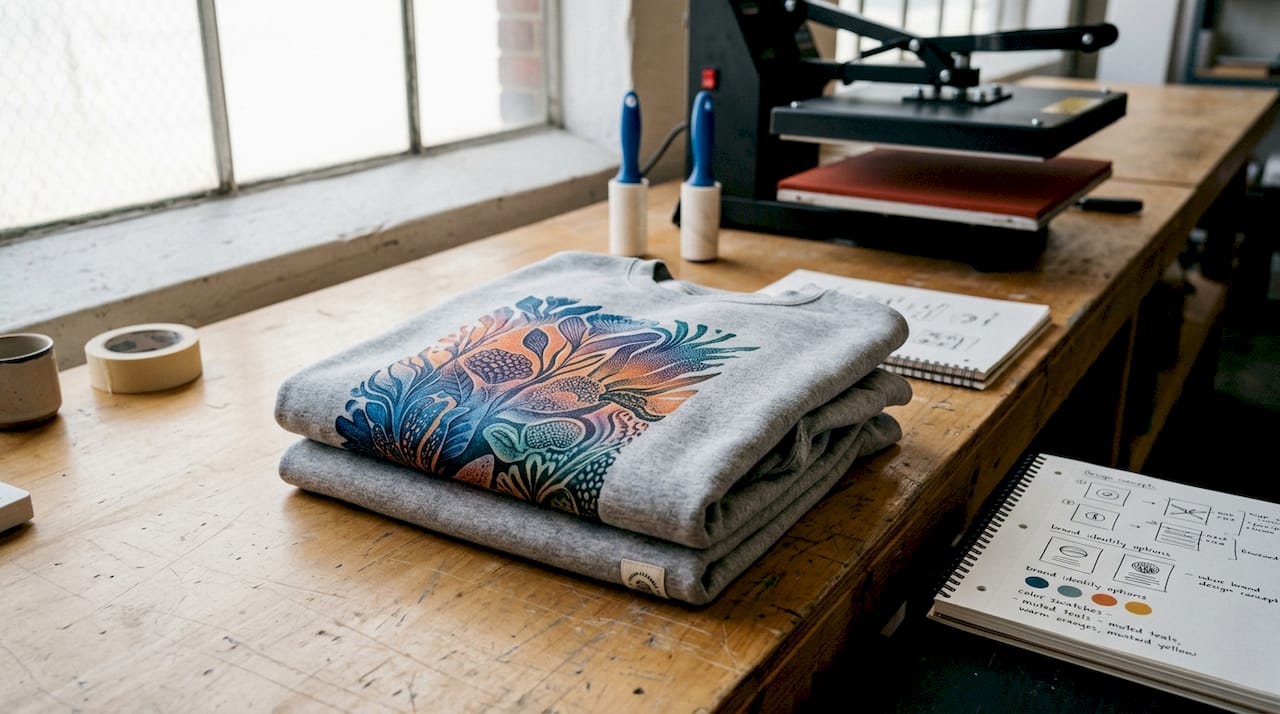
Pro Tip: Use digital printing to test a new design with a run of 10 to 20 pieces before committing to a larger production order. Customer feedback on a small batch is far cheaper than sitting on 200 units of a design that doesn’t sell.
Digital printing vs. traditional methods: A side-by-side comparison
Understanding the advantages is great, but how does digital printing truly measure up against screen printing and other established methods? Numbers help make this concrete.
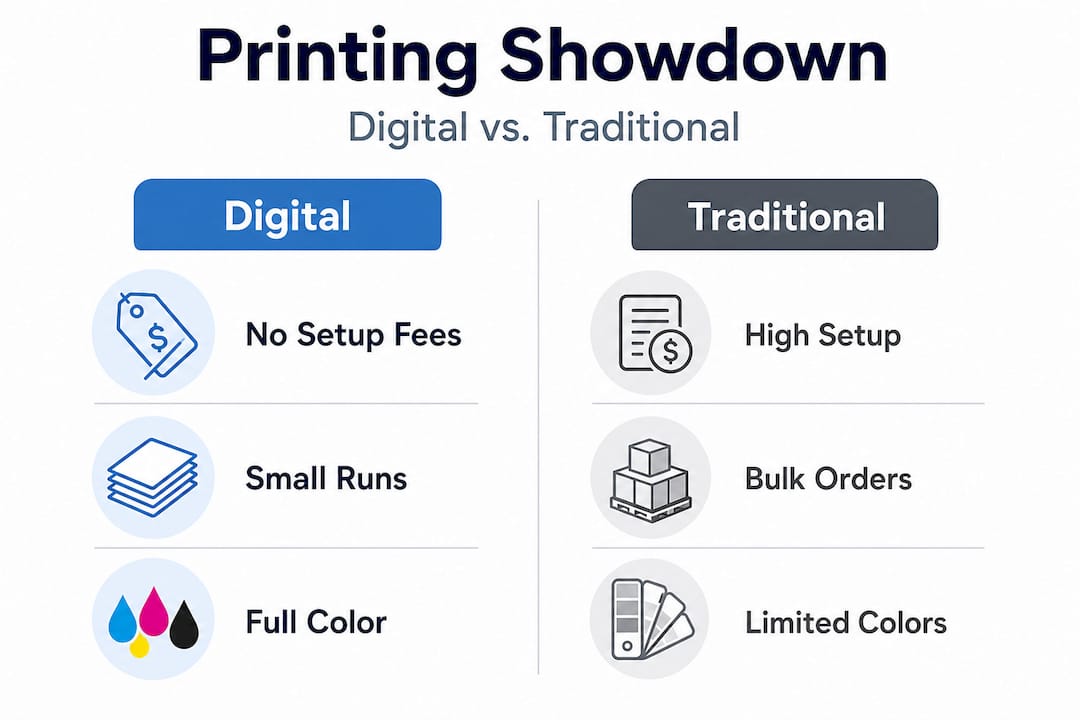
| Feature | Digital printing | Screen printing | Vinyl cutting |
|---|---|---|---|
| Setup cost | $0 | $25 to $100 per color | Moderate |
| Minimum order | 1 piece | Usually 12 to 24 pieces | 1 piece |
| Color range | Unlimited | Limited by screen count | Limited to solids |
| Design complexity | High (photos, gradients) | Medium | Low |
| Turnaround time | Same day to 2 days | 5 to 10 days | 1 to 3 days |
| Cost for small runs | Low | High | Medium |
| Best for | Custom, varied designs | Large uniform runs | Simple graphics |
Many small businesses choose digital printing over screen printing due to lower upfront costs and flexibility. This trend is especially visible among brands that sell through online stores where demand is unpredictable and variety is a selling point.
A detailed screen printed vs digital comparison shows where each method wins and loses across real use cases.
That said, traditional printing methods still have a place. Here are situations where screen printing or other methods may still be the right call:
- Massive uniform runs. If you’re printing 500 or more identical shirts with a two-color logo, screen printing’s cost per unit drops significantly and may beat digital.
- Specialty finishes. Puff ink, metallic effects, or certain discharge prints are still easier to achieve with traditional screen setups.
- Very thick or highly textured garments. Some heavyweight fleece or textured materials apply better with methods built specifically for them.
- Highly saturated single-color designs. For a bold, one-color print in a large run, screen printing delivers exceptional opacity and consistency.
The key takeaway: digital printing isn’t trying to replace every situation. It wins decisively in flexibility, small runs, and complex designs. For everything else, the decision depends on your specific project parameters.
Who benefits most? Matching digital printing to your needs
Now, let’s help you decide if digital printing is the best match for your next project, or if another method might work better for your specific goals.
| Project type | Best printing method | Key reason |
|---|---|---|
| Brand launch with small inventory | Digital | No minimums, low financial risk |
| Event merchandise (one-off) | Digital | Speed and single-piece capability |
| Frequent design changes | Digital | No re-setup costs between designs |
| Personalized gifts | Digital | Handles unique, one-of-a-kind pieces |
| Large uniform staff uniforms | Screen printing | Cost advantage at volume |
| Simple logo tees at scale | Screen printing | Consistent, low per-unit cost |
| Mixed product catalog | Digital | Supports variety without inventory burden |
As we note in our breakdown of custom transfers advantages, custom transfers and digital methods are especially valuable for independent brands, events, and frequent design changes. That’s not a niche use case. That describes the majority of small businesses and creators entering the custom apparel space right now.
When you’re evaluating which printing method fits your next project, ask yourself these questions:
- How many pieces do I actually need, not how many I hope to sell eventually?
- Does my design include more than four colors, gradients, or photographic detail?
- How quickly do I need finished products in hand?
- Am I testing a new design or fulfilling a proven best-seller?
- Is this a one-time project or part of an ongoing product line?
- What’s my budget for setup versus per-unit cost?
- Do I need flexibility to change names, numbers, or art between pieces?
If most of your answers point toward small quantities, complex designs, fast timelines, or frequent changes, digital printing is almost certainly your best tool. We’ve detailed the printing benefits for small brands specifically, because the economics and workflow advantages are significant enough to change how small businesses structure their entire product strategy.
Why digital printing is only getting better: A forward-looking perspective
Here’s something the broader printing industry doesn’t always say loudly enough: digital printing technology is still accelerating. The gap between what digital printing could do five years ago and what it does today is significant, and that trajectory isn’t slowing down.
Conventional wisdom used to hold that small runs would always cost more per unit than bulk production. That rule applied for decades because every analog printing method had a fixed setup cost that had to be spread across units. Digital printing broke that rule structurally. There’s no setup cost to spread, so the math changes completely. And as ink quality improves and film technology advances, the finished product keeps getting better without the price going up.
We’ve seen this play out directly. Brands that started with digital printing to test ideas have stayed with it permanently, not because they’re still small, but because the flexibility has become central to how they operate. Seasonal drops, limited editions, personalized runs. These aren’t possible at a reasonable cost without digital. The digital printing empowerment story isn’t just about access. It’s about building business models that would have been impossible a decade ago.
New substrates are expanding what digital printing can decorate. Beyond cotton and polyester blends, digital methods now work reliably on nylon, canvas, leather, and mixed-material goods. That opens product categories that weren’t viable before.
The brands winning in custom apparel right now are the ones staying current with what digital printing can do and working with providers who invest in the newest equipment and materials. Staying informed isn’t optional anymore. It’s a competitive advantage.
Pro Tip: Follow printing technology news and check in with your transfer provider regularly. Improvements in ink chemistry and film coatings are introduced frequently, and those updates often mean better results or lower costs for you.
Ready to unlock your creativity with digital printing?
You now have a solid picture of what digital printing offers and why it consistently outperforms traditional methods for the kinds of projects small brands and creators actually run. Putting that knowledge to work is the next step.
Transfer Kingz makes it straightforward to move from idea to finished product. Our Print Point digital transfers service gives you access to high-quality custom transfer solutions built for small businesses and independent designers. If you’re based in Texas, our DTF transfers in Dallas option means fast local service without sacrificing quality. And if you want to understand exactly what separates premium from standard, our breakdown of high-quality transfer options shows you what to look for in every order. No minimums, fast turnaround, and prints built to last.
Frequently asked questions
Is digital printing good for dark garments?
Yes, modern digital printing technologies can produce vibrant, long-lasting colors even on dark fabrics. DTF printing and digital transfers are suitable for both light and dark garments, with no loss of color vibrancy on darker backgrounds.
How durable is digital printing for frequent washing?
Digital prints are highly durable, especially when using quality transfers and proper laundering techniques. Advances in ink and transfer technology make digital prints robust for repeated wash cycles without cracking or fading.
What kind of designs work best with digital printing?
Digital printing excels with detailed, colorful, and complex designs, including gradients, photography, and fine linework. Digital methods allow reproduction of fine details and vibrant colors not possible with most traditional processes.
Is digital printing cost-effective for small orders?
Absolutely. Digital printing eliminates setup fees, making it the most affordable choice for low quantities and one-off designs. Digital printing enables affordable customization for small orders and individual pieces, with no penalty for ordering exactly what you need.
Recommended
- How digital printing empowers custom apparel brands – Transfer Kingz
- Why Choose Digital Transfers for Custom Apparel Success – Transfer Kingz
- Digital Textile Printing: A Practical Guide for Custom Apparel – Transfer Kingz
- DTF Printing for Business Branding: How Custom DTF Transfers Boost Sma – Transfer Kingz
0 comments