

TL;DR:
- DTF printing enables hobbyists to produce vibrant, durable apparel without expensive equipment or bulk orders.
- It offers broad fabric compatibility and cost-effective options, making custom small-batch creations accessible.
- DTF technology fosters experimentation and small business growth by simplifying design, printing, and iteration.
Most people assume professional-quality custom apparel is reserved for big brands with expensive equipment and bulk orders. That assumption is outdated. Direct-to-Film (DTF) transfers have quietly changed the game for hobbyists and independent creators who want vibrant, durable prints without a massive upfront investment. Whether you’re making a one-off gift, outfitting a friend group, or testing designs for a small online shop, DTF puts real creative power in your hands. This guide breaks down how DTF works, what it actually costs, how it compares to other methods, and what you can realistically create with it.
Table of Contents
- What is DTF and how does it work?
- Cost breakdown: Is DTF really affordable for hobbyists?
- Comparing DTF with other hobbyist printing methods
- Creative possibilities: What can hobbyists really do with DTF?
- A hobbyist’s leap: Why DTF is more than just ‘easier printing’
- Ready to try DTF? Get started with trusted supplies
- Frequently asked questions
Key Takeaways
| Point | Details |
|---|---|
| Beginner-friendly tech | DTF printing is accessible and easy for hobbyists to learn and use. |
| Affordable setup | You can start DTF printing without a huge upfront investment in equipment and materials. |
| Superior versatility | DTF transfers work on a wide variety of textiles and support intricate, vivid designs. |
| Perfect for small runs | DTF makes it easy to produce one-off or limited edition projects cost-effectively. |
| Creative empowerment | Hobbyists can experiment and achieve pro-level results with DTF in personal and micro-business projects. |
What is DTF and how does it work?
DTF stands for Direct-to-Film printing. At its core, DTF printing involves applying a water-based pigment to a film that is then transferred to fabric using heat. Think of it like a very advanced iron-on, except the results look nothing like the crinkly, faded patches you might remember from childhood craft projects.
Here’s what the process actually looks like step by step:
- A design is printed onto a special PET film using DTF-specific inks
- A hot-melt adhesive powder is applied to the wet ink on the film
- The film is cured in an oven or with a heat source to bond the powder
- The finished transfer is pressed onto fabric using a heat press
- The film is peeled away, leaving a clean, full-color print behind
This is fundamentally different from screen printing, which requires a separate screen for each color and works best at high volumes. It’s also different from heat transfer vinyl (HTV), which involves cutting shapes from colored sheets and layering them. Sublimation, another popular option, only works on polyester and light-colored fabrics. DTF sidesteps all those limitations.
For hobbyists, the big win is that how DTF technology works means you don’t need to own a printer to get started. You can order pre-made transfers from a supplier, apply them with a basic heat press, and get professional results on your first try.
“DTF has removed the technical gatekeeping that used to keep hobbyists from making truly professional-looking apparel.”
Pro Tip: If you’re just starting out, skip buying a printer entirely. Order ready-to-press DTF transfers, practice your heat press technique, and only invest in equipment once you know you love the process.
DTF works on cotton, polyester, blends, canvas, nylon, and even some leather surfaces. The color range is essentially unlimited since designs are printed digitally. Gradients, photo-realistic images, and fine text all reproduce cleanly without extra cost or complexity.
Cost breakdown: Is DTF really affordable for hobbyists?
Understanding what DTF is, it’s vital to see if it’s actually budget-friendly. The short answer is yes, especially compared to traditional methods. But the details matter.
DTF print durability and costs show that DTF printing yields durable results at roughly 40% lower setup costs than screen printing. That gap is even more significant for small runs where screen printing setup fees make every shirt disproportionately expensive.
Here’s a realistic cost comparison for hobbyists:
| Method | Setup cost | Cost per item (small run) | Minimum order |
|---|---|---|---|
| Screen printing | $150-$400+ | $15-$30 | Usually 12-24 units |
| HTV (DIY) | $200-$500 (cutter + press) | $3-$8 | 1 unit |
| Sublimation | $300-$600 (printer + press) | $4-$10 | 1 unit (polyester only) |
| DTF (order transfers) | $0 setup | $2-$6 per transfer | 1 unit |
| DTF (own printer) | $400-$1,200 | $1-$3 | 1 unit |
For most hobbyists, ordering transfers from a supplier is the smartest entry point. You pay only for what you need, there’s no minimum, and you skip equipment costs entirely. If you eventually want to print in-house, a hobby-friendly DTF printer can bring your per-unit cost down significantly once volume justifies it.
Recurring expenses to keep in mind include:
- Transfer film and ink (if printing yourself)
- Heat press maintenance and replacement pads
- Blank apparel costs
- Design software subscriptions (optional, many free tools exist)
Pro Tip: Use a gang sheet to pack multiple designs onto one large transfer film. This dramatically reduces your cost per design and is perfect for testing several ideas at once without paying for each individually.
The math is genuinely favorable for hobbyists. A single custom shirt through DTF can cost you $5 to $10 all-in, including the blank garment, with no compromise on print quality.
Comparing DTF with other hobbyist printing methods
After weighing the financial side, let’s look at how DTF stacks up against other ways to create custom gear. Each method has a genuine use case, but the differences matter depending on your project type.
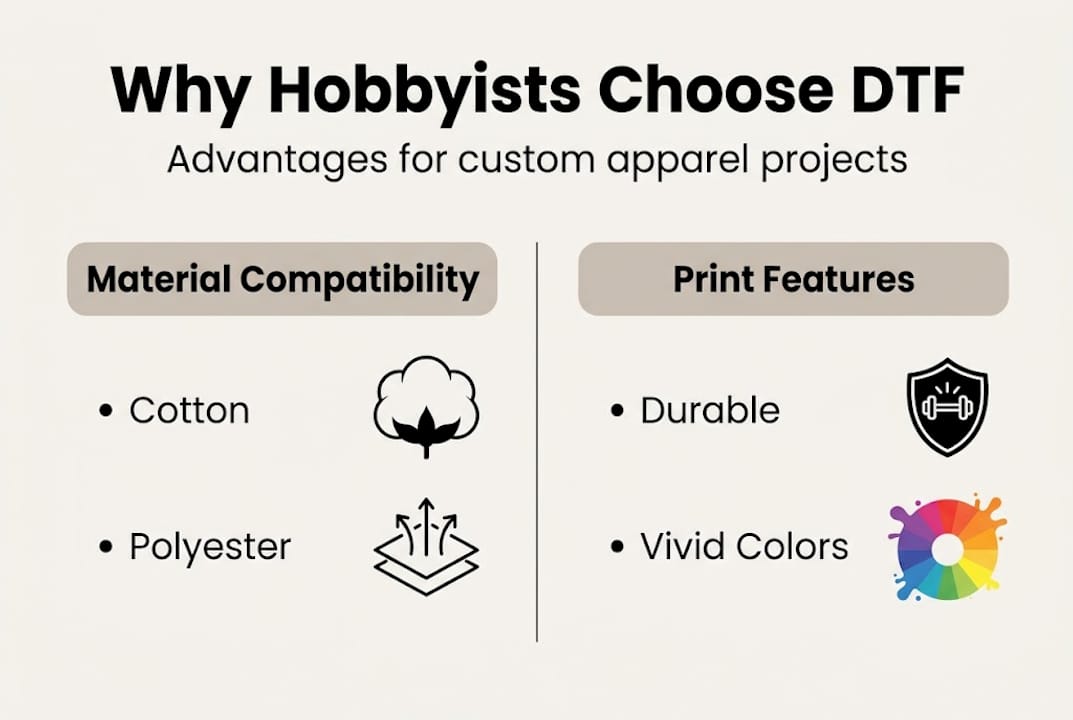
DTF offers broader material compatibility than sublimation and easier color accuracy than HTV. That’s not a small distinction. If you want to print a photo-realistic design on a dark cotton hoodie, DTF is your best option. Sublimation can’t handle dark fabrics, and HTV would require layering multiple colors manually.
Here’s a side-by-side comparison of what matters most to hobbyists:
| Feature | DTF | HTV | Sublimation | Screen printing |
|---|---|---|---|---|
| Works on dark fabrics | Yes | Yes | No | Yes |
| Photo-quality prints | Yes | Limited | Yes | Limited |
| No minimum order | Yes | Yes | Yes | No |
| Works on cotton | Yes | Yes | No | Yes |
| Beginner-friendly | Yes | Moderate | Moderate | No |
| Cost for 1-5 items | Low | Low | Low | High |
For a deeper look at specific matchups, check out DTF vs screen printing, DTF vs HTV, DTF vs DTG, and DTF vs sublimation to see detailed breakdowns.
Here are the top reasons hobbyists consistently prefer DTF:
- No weeding required unlike HTV, which demands precise cutting and removal of excess material
- Full-color in one step without color separation or layering
- Works on virtually any fabric including blended and synthetic materials
- Scales up easily from one shirt to fifty without changing your workflow
- Fast turnaround especially when ordering pre-made transfers
That said, DTF isn’t perfect for everything. If you’re printing on mugs or hard surfaces, sublimation wins. If your project is purely white-on-black text with no color, HTV might be simpler. But for most hobbyist apparel work, DTF covers more ground than any single alternative. You can also explore iron-on alternatives for specific niche projects where simplicity beats versatility.
Pro Tip: Test your design on a scrap piece of the same fabric before pressing your final garment. Different fabric weights and blends can affect how the transfer adheres and how the colors appear.
Creative possibilities: What can hobbyists really do with DTF?
Now that we’ve compared methods, imagine the range of projects DTF enables. The creative scope is genuinely wider than most beginners expect.
DTF works on a wide range of textile materials from cotton to blends and synthetics. That means your project list isn’t limited to T-shirts. Here’s what hobbyists are actually making with DTF transfers:
- Custom T-shirts and hoodies with photo-quality artwork, gradients, or personal photos
- Tote bags and canvas accessories for markets, gifts, or personal use
- Hats and caps with front or side panel designs
- Patches and iron-on appliques for jackets, bags, and denim
- Baby onesies and kids’ clothing where soft, durable prints matter
- Event merchandise for birthdays, reunions, sports teams, or local clubs
- Niche online shop stock testing small batches before committing to larger inventory
DTF also makes it easy to print designs that other methods struggle with. Photo-realistic portraits, gradient backgrounds, and fine-line illustrations all come out crisp. You’re not limited to bold, simple shapes the way you might be with vinyl cutters.
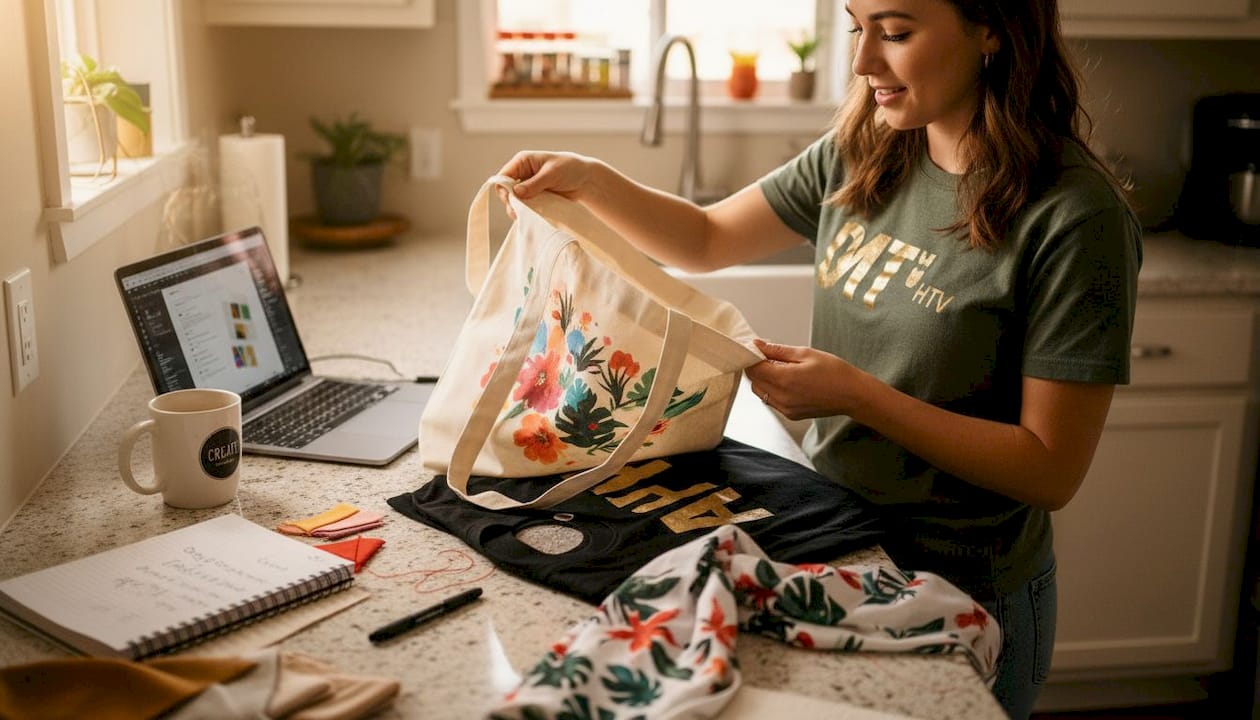
Personal gifts are one of the most popular use cases. A custom shirt with an inside joke, a tote bag featuring a friend’s dog, or a hoodie with a niche fandom design—these are things people genuinely love to receive. DTF makes them fast and affordable to produce.
For those thinking bigger, cost-effective merch production with DTF is a realistic path to a small side income. You don’t need a storefront or bulk inventory. Print on demand, ship direct, and keep your overhead near zero.
Pro Tip: Start with a simple project like a tote bag or flat T-shirt before moving to structured items like hats. Flat surfaces are more forgiving for beginners learning heat press pressure and timing.
Explore DTF-ready textile examples to see which fabrics respond best and what finishes you can expect across different materials.
A hobbyist’s leap: Why DTF is more than just ‘easier printing’
Here’s what most beginner guides miss: DTF isn’t just a more accessible printing method. It’s a mindset shift.
When the barrier to entry drops this low, you stop overthinking and start making. You try a weird design idea. You print three versions of the same concept to see which one looks best. You give away samples to friends and get real feedback without losing $200 on a screen printing run. That freedom to experiment is where creativity actually grows.
Small-scale hobbyists can create merch that rivals professional brands, thanks to DTF. That’s not marketing language. It reflects a real shift in what’s possible when quality printing is no longer gated by volume or equipment costs.
The unexpected benefit is iteration speed. You can go from a design idea to a finished shirt in a single afternoon. That fast feedback loop builds skill faster than any course or tutorial. And when you share your work, whether with friends or a small online audience, the response you get shapes your next project.
DTF and small business success are increasingly linked because the technology removes the gap between hobbyist and professional. The real leap isn’t technical. It’s deciding to start.
Ready to try DTF? Get started with trusted supplies
If this guide has sparked ideas for your next project, the best move is to start simple and start soon. Order a few transfers, press them onto a blank shirt, and see the results for yourself.
Transfer Kingz offers ready-to-press DTF transfers Dallas hobbyists and creators across the country rely on, with no minimum order requirements and fast turnaround. Whether you need detailed DTF transfers for intricate artwork or bold simple designs, the quality holds up wash after wash. Visit the Transfer Kingz store to upload your artwork, use the gang sheet builder, and get your first order moving. Your next custom apparel project is closer than you think.
Frequently asked questions
What equipment do I need to start DTF printing for hobby projects?
You’ll need a DTF printer, PET films, DTF-specific inks, hot-melt adhesive powder, and a heat press. If you’d rather skip the printer, DTF printing at home is just as achievable by ordering pre-made transfers and applying them with a heat press alone.
Is DTF printing safe and suitable for all fabric types?
DTF is compatible with most textiles including cotton, polyester, and blended fabrics. DTF works on cotton and synthetic materials alike, making it one of the most versatile options for hobby projects across different garment types.
How durable are DTF prints on apparel?
With proper care, DTF prints hold up through 50 or more wash cycles without cracking or fading, which makes them a reliable choice for items you’ll actually wear and use regularly.
Can I create one-off or small batch items using DTF?
Absolutely. DTF is cost-effective for short runs and single items with no setup penalties, which is exactly why it’s become the go-to method for hobbyists who want flexibility without financial risk.
Recommended
- Creative DTF design ideas to elevate custom apparel – Transfer Kingz
- DTF Design Process: Elevating Custom Apparel Printing – Transfer Kingz
- Why Choose Custom DTF for Apparel Printing Success – Transfer Kingz
- DTF vs HTV | Pros, Cons, Cost & Durability Comparison – Transfer Kingz
- Τι είναι custom made fashion και πώς ξεχωρίζει
0 comments