

TL;DR:
- Direct-to-Film printing is transforming hobbyist merchandise creation by offering vibrant, durable designs on diverse fabrics, including dark and stretchy materials. Although setup requires calibration and practice, it enables small-batch production with professional results, surpassing sublimation and HTV in flexibility and longevity. Transfer Kingz simplifies access to high-quality DTF transfers, supporting independent creators in producing long-lasting, sellable custom items.
Hobbyist printing has a reputation problem. Many people assume that creating custom merchandise at home means settling for faded prints, fabric limitations, or equipment that costs more than it’s worth. Direct-to-Film (DTF) printing is quietly dismantling every one of those assumptions. It’s not just a professional shop tool anymore. Independent creators are picking it up, learning the workflow, and producing sellable, vibrant, durable custom pieces that hold up wash after wash. If you’ve been on the fence about which printing method actually fits your creative goals, this is the breakdown you need.
Table of Contents
- Understanding DTF printing: What makes it unique?
- Comparing DTF to other hobbyist printing techniques
- Practical benefits of DTF for hobbyists and creators
- Common challenges and solutions for first-time DTF users
- What most hobbyist guides miss about DTF printing
- Explore custom DTF solutions for hobbyists
- Frequently asked questions
Key Takeaways
| Point | Details |
|---|---|
| Exceptional durability | DTF prints easily withstand repeated washes without losing quality. |
| Beginner accessibility | Most hobbyists can learn DTF setup with a manageable learning curve and basic calibration. |
| Wide creative flexibility | DTF works on various materials and produces vibrant, detailed designs. |
| Cost and time benefits | After initial setup, DTF is time-efficient and ideal for small projects. |
| Ready for resale | Sellable quality and professional results make DTF perfect for independent creators. |
Understanding DTF printing: What makes it unique?
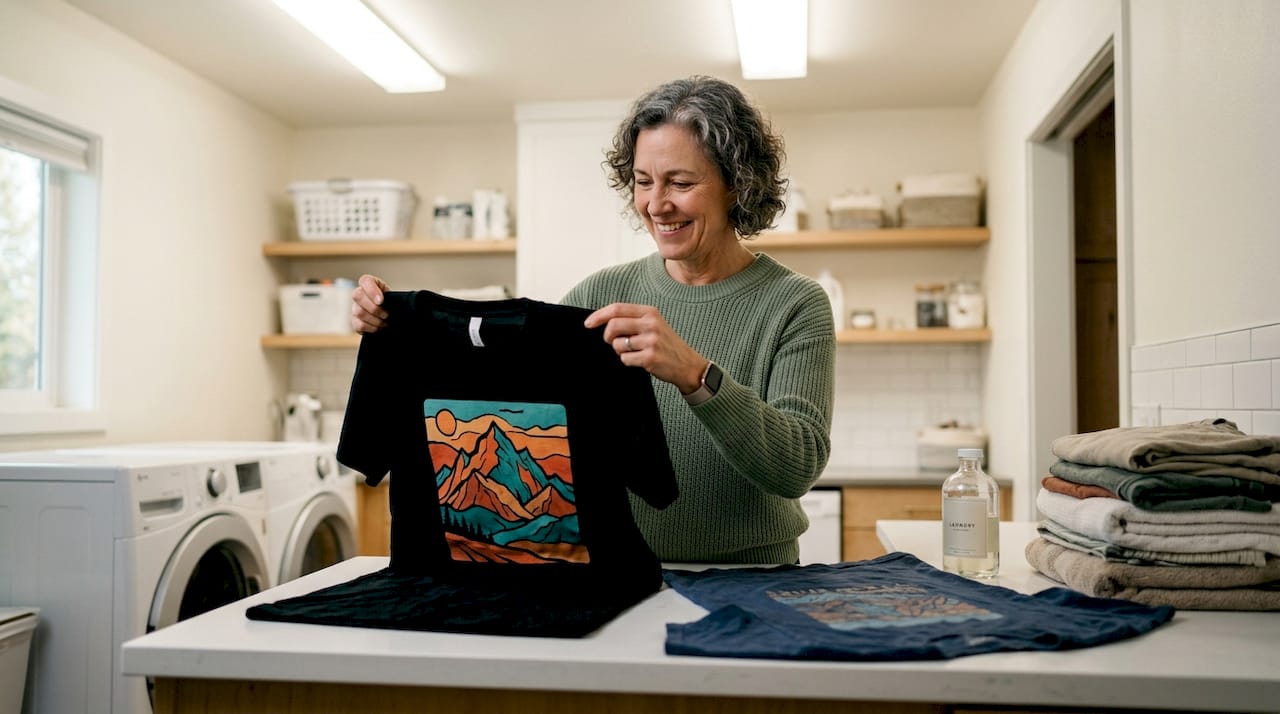
What is DTF printing, exactly? DTF stands for Direct-to-Film. The process involves printing a design onto a special film using specialized inks, applying a hot-melt adhesive powder to the wet ink, curing the powder with heat, and then pressing the finished transfer onto your chosen material using a heat press. The result is a vibrant, detailed print that bonds directly to the fabric fibers.
What makes this process stand out is the range of materials it works on. Unlike sublimation printing, which is limited to polyester fabrics and light-colored items, DTF transfers stick to cotton, polyester, blends, denim, nylon, and even leather. That flexibility is a serious advantage when you’re working on diverse projects like custom hoodies, tote bags, and hats all in the same session.
Here’s what DTF can handle that most other methods struggle with:
- Complex, full-color designs with gradients and fine detail
- Dark and light fabrics without color limitations
- Mixed-material garments that sublimation can’t touch
- Small-batch runs without waste or minimum order requirements
- Stretchy fabrics because the film is flexible after pressing
Understanding how DTF printing works helps you appreciate why calibration matters so much. The nozzles in a DTF printer need to lay down ink precisely. If alignment is off, you get unwanted white borders or color inconsistencies that ruin an otherwise perfect design.
“DTF A3 system bundles produce transfers that survive multiple wash cycles, with a learning curve related to calibration.”
Pro Tip: Before your first real print run, run a nozzle check and alignment test on plain film. Calibrating nozzle alignment at the start eliminates the white border problem that frustrates most first-time DTF users.
The learning curve is real, but it’s not steep. Most hobbyists who approach DTF with patience and a willingness to run test prints find that the system becomes reliable and intuitive within a few sessions.
Comparing DTF to other hobbyist printing techniques
Once you understand what DTF does, it helps to see how it stacks up against the methods you might already know. The three most common techniques hobbyists use are DTF, sublimation, and heat transfer vinyl (HTV). Each has strengths, but the comparison reveals why so many creators are making the switch.
| Feature | DTF | Sublimation | HTV |
|---|---|---|---|
| Fabric compatibility | Cotton, poly, blends, more | Polyester and light colors only | Most fabrics |
| Design complexity | Full color, fine detail | Full color | Limited to cut shapes |
| Setup cost | Moderate | Moderate to high | Low |
| Wash durability | Excellent | Excellent on polyester | Good to moderate |
| Learning curve | Moderate | Low to moderate | Low |
| Small-batch suitability | Excellent | Good | Excellent |
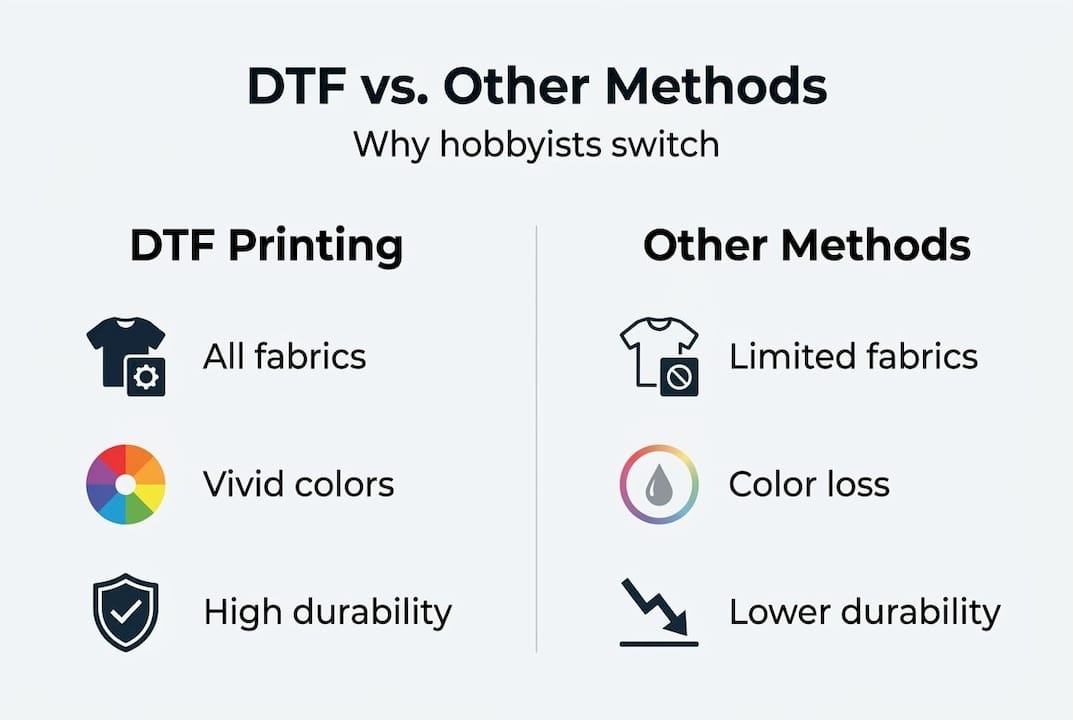
The durability factor is where DTF really proves itself. DTF prints can withstand multiple wash and dry cycles without degradation, while sublimation and other methods may not offer the same resilience across all fabric types.
You can explore a deeper DTF vs other hobbyist methods comparison to see how these choices affect real project outcomes. For hobbyists who want to understand the financial side, DTF wash durability and costs break down why long-lasting prints save money over time.
DTF clearly outperforms in specific scenarios every hobbyist will eventually face:
- Printing on a dark cotton shirt where sublimation simply doesn’t work
- Creating a complex logo with gradients that HTV can’t reproduce
- Producing merchandise for a small event where you need ten pieces, not fifty
- Working with blended fabrics that don’t respond to sublimation inks
- Selling on platforms like Etsy where quality and durability directly affect reviews
HTV has its place for simple shapes and solid colors, and sublimation excels on polyester drinkware. But when a hobbyist needs versatility across garments and design styles, DTF is the more practical everyday choice.
Practical benefits of DTF for hobbyists and creators
The workflow is where DTF earns its reputation among independent creators. It’s straightforward enough that you don’t need a production background, but capable enough to produce results that look and feel professional.
Here’s a typical DTF workflow for hobbyists working from home or a small studio:
- Create or prepare your design in software like Adobe Illustrator, Photoshop, or free tools like Canva
- Export the file in PNG format with a transparent background for clean transfer edges
- Load DTF film into your printer and run a nozzle check before printing
- Print the design onto the film using DTF-specific inks
- Apply adhesive powder to the wet ink while the film is still warm
- Cure the powder using a curing oven or heat press at the correct temperature
- Press the transfer onto your garment using a heat press for 10 to 15 seconds
- Peel the film while warm or cold depending on your transfer type
- Inspect the result and press again briefly if needed for full adhesion
This process becomes second nature quickly. The DTF design process has more detail on preparing files for best results, which matters a lot when you’re working with fine text or detailed artwork.
Let’s look at how the time and effort break down compared to other methods:
| Method | Initial setup time | Time per item (after practice) | Fabric prep needed |
|---|---|---|---|
| DTF | 60 to 90 minutes | About 15 minutes | Minimal |
| Sublimation | 30 to 45 minutes | 10 to 12 minutes | Fabric must be polyester |
| HTV | 15 to 20 minutes | 10 to 20 minutes (cutting time varies) | Minimal |
Initial setup takes 60 to 90 minutes for first-time users, then about 15 minutes per T-shirt after practice, with strong results. That’s a meaningful investment of time on day one, but it pays off fast. By the third or fourth session, most hobbyists report that the process feels routine.
The ability to produce sellable merchandise is a major draw. If you run a small Etsy store, sell at craft fairs, or want to create branded gear for a community or sports team, DTF gives you the quality to price competitively and the durability to earn repeat customers.
Pro Tip: When you’re doing your first real print run, spend extra time on the initial calibration test rather than jumping straight into printing on garments. Running three or four test transfers on scrap fabric before touching your final pieces will save you time and materials in the long run.
Common challenges and solutions for first-time DTF users
No printing method is entirely without friction. DTF has a few predictable sticking points that trip up new users, but every one of them has a clear solution once you know what to look for.
Common mistakes hobbyists make when starting with DTF:
- Skipping calibration: The single most common issue. Jumping straight to printing without checking nozzle alignment leads to white borders and color shifts.
- Incorrect positioning: Placing the transfer slightly off-center on the garment, especially on stretchy fabrics that shift under the heat press.
- Undercuring the powder: Not giving the adhesive powder enough heat leads to poor adhesion and prints that peel after one wash.
- Wrong pressing temperature or time: Different garment materials need different heat press settings. Cotton and blends behave differently from synthetic materials.
- Using too much or too little powder: Uneven powder application creates patchy adhesion and dull spots in the finished print.
Beginners reported a learning curve and the need for calibration and tuning, but found machines beginner-friendly overall. That balance is encouraging. The challenges are real, but they’re not roadblocks.
Solutions and strategies that actually work:
The most effective approach is to treat your first few sessions as learning sessions rather than production runs. Don’t set yourself up to fulfill an order on the very first day. Use inexpensive blank garments for test prints and give yourself permission to get it wrong once or twice.
Find calibration guides specific to your printer model. DTF printing setup tips give you a solid starting framework, and user community forums and video tutorials can fill in model-specific gaps. User reviews on hobbyist forums are particularly valuable because they reflect real-world conditions, not manufacturer best-case scenarios.
Pro Tip: Keep a simple log of your settings for each print run. Write down press temperature, press time, and curing time alongside the fabric type. After ten or fifteen prints, you’ll have a personal reference that makes setup faster and results more consistent every session.
Temperature consistency matters more than most people expect. A heat press that runs hotter in the center than the edges will give you uneven results. Test your press with temperature-sensitive paper before committing to a full run.
What most hobbyist guides miss about DTF printing
Most online guides treat DTF as a straightforward technical process. They walk you through the steps, mention the learning curve in passing, and move on. What they consistently understate is how much calibration shapes your entire experience. It’s not a checkbox to tick before printing. It’s the foundation that determines both quality and long-term durability.
We’ve seen this pattern repeatedly: hobbyists who invest thirty minutes in proper calibration from the start produce results that rival professional shops. Those who skip it spend weeks troubleshooting issues that were entirely preventable. The machine matters less than the setup.
There’s a deeper point here about independence. DTF lets you experiment without asking permission. You want to try printing on a thrifted denim jacket? You can test it this weekend. You want to create a one-of-one design for a friend’s birthday? No minimum orders, no waiting on a third-party shop, no compromising on quality. That creative freedom is genuinely rare in the merchandise world, and it’s something understanding DTF for custom apparel only deepens over time.
The longevity of DTF prints also changes how you think about your work. When you know a print will hold up for fifty washes, you start designing with more ambition. You invest more time in the artwork. You price your merchandise with confidence. Fewer reprints and replacements mean your creative energy goes into making new things instead of fixing old problems.
Home DTF systems are not plug-and-play devices. That’s the honest truth. But the commitment to learning is relatively short. A few focused sessions and you’re producing work that you’re proud to sell or give as a gift. That’s a reward that compounds over time.
Explore custom DTF solutions for hobbyists
Ready to put all of this into practice without investing in your own setup right away? Transfer Kingz makes it easy to access high-quality DTF transfers with no minimum order requirements, fast turnaround, and results that match professional standards.
Whether you’re in the Dallas area looking for DTF transfers Dallas or anywhere across the state looking for DTF transfers Texas, Transfer Kingz has you covered with premium films, vibrant inks, and a straightforward ordering process built for creators like you. Upload your artwork, choose your specs, and get professional transfers shipped directly to you. It’s the fastest way to start producing custom merchandise with the quality and durability your projects deserve, whether you’re just starting out or scaling up your creative operation.
Frequently asked questions
How durable are DTF-printed items after multiple washes?
DTF prints made with purpose-built systems can survive multiple wash cycles with no visible degradation, making them reliable for everyday wear and washed merchandise.
How long does setup take for hobbyists using DTF?
A typical initial DTF setup takes 60 to 90 minutes, and each item can be completed in about 15 minutes once you’re familiar with the process.
What materials can DTF printing be used on?
DTF printing works on a wide range of fabrics and materials including cotton, polyester, blends, denim, and nylon, making it one of the most versatile options for custom merchandise projects.
What are the common issues beginners face with DTF?
Beginners most often need to address calibration and positioning to eliminate white borders and uneven adhesion, but both issues are manageable with a few focused practice sessions.
Can DTF printing be used for small-batch custom merchandise?
Yes, DTF is highly efficient for small-batch projects with no minimum order requirements, making it an ideal choice for hobbyists, Etsy sellers, and independent creators working on personalized merchandise.
Recommended
- Why hobbyists choose DTF for custom apparel projects – Transfer Kingz
- Discover the Benefits of DTF Printing for Artists – Transfer Kingz
- DTF Printing: 50+ Washes & 40% Lower Setup Costs – Transfer Kingz
- Professional DTF Printing Services | Fast, High-Quality Direct-to-Film Transfers – Transfer Kingz
0 comments