

Skipping sample transfers is one of the most expensive mistakes small business owners and independent artists make in custom apparel production. Without testing print quality, color accuracy, and fabric compatibility first, you risk wasting hundreds or thousands of dollars on bulk orders that fail to meet expectations. Sample transfers help verify quality and compatibility before bulk orders, preventing costly production failures and material waste. This guide explains why ordering samples saves money, preserves your reputation, and enables better custom apparel production for creators at every scale.
Table of Contents
- Key takeaways
- Understanding the importance of sample transfers
- How sample transfers prevent costly production issues
- Sample transfers versus bulk orders: cost and risk comparisons
- Expert insights and best practices for using sample transfers
- Explore Transfer Kingz DTF transfer solutions
- Frequently asked questions about ordering sample transfers
Key Takeaways
| Point | Details |
|---|---|
| Protect investment with samples | Ordering sample transfers before bulk production helps catch quality and compatibility issues at low cost, preventing expensive waste. |
| Test print quality early | Testing print quality color accuracy and fabric compatibility before bulk orders reduces the risk of large scale failures. |
| Reduce waste and returns | Samples verify color vibrancy, adhesion, and durability to ensure finished garments meet expectations and minimize returns. |
| Compare suppliers in parallel | Ordering samples from multiple suppliers simultaneously reveals which vendor delivers on promises and supports production continuity with backups. |
Understanding the importance of sample transfers
Ordering sample transfers transforms guesswork into certainty for small businesses, artists, and hobbyists entering custom apparel production. Small business owners, artists, and hobbyists order DTF sample transfers to test print quality, color vibrancy, adhesion, and durability before committing to bulk orders, minimizing financial risk. This testing phase reveals whether your chosen supplier delivers vibrant colors that pop on fabric, strong adhesion that survives repeated washing, and print durability that maintains professional appearance over time.
Samples help confirm softness and hand feel compared to other printing methods like screen printing or vinyl. DTF transfers should feel smooth and flexible, not stiff or plasticky. Testing this tactile quality prevents customer complaints about uncomfortable garments. You’ll discover how the transfer integrates with different fabric weights and textures, from lightweight cotton tees to heavy fleece hoodies.
Ordering samples minimizes costly mistakes and wasted materials by catching calibration issues, color mismatches, and adhesion failures before you invest in hundreds of transfers. Samples usually cost little beyond shipping, making them accessible even to hobbyists working with tight budgets. A $20 sample pack investment protects you from a $500 bulk order disaster.
Testing preserves your reputation by preventing subpar bulk production from reaching customers. One batch of peeling, faded, or cracked transfers can generate negative reviews that damage your brand for months. Samples let you verify that DTF transfer quality meets your standards before your reputation is on the line.
Pro Tip: Order samples from multiple suppliers simultaneously to compare quality, turnaround time, and customer service. This parallel testing reveals which vendor truly delivers on their promises and helps you build relationships with backup suppliers for production continuity.
Key benefits of sample transfer testing include:
- Verification of color accuracy across different fabric colors and types
- Assessment of fine detail reproduction and gradient smoothness
- Evaluation of transfer edge quality and potential white halos
- Testing adhesive strength under real world application conditions
- Confirmation that curing time and temperature recommendations work with your equipment
How sample transfers prevent costly production issues
Samples allow verification of technical compatibility with printers, inks, heat presses, and fabrics, preventing production failures that waste materials and time. Stretch testing reveals whether transfers crack when applied to performance fabrics or garments that need flexibility. Peel testing shows adhesion strength after washing, identifying weak bonds before they become customer complaints. Wash durability testing simulates months of wear in days, exposing fading, cracking, or peeling that would surface after sale.
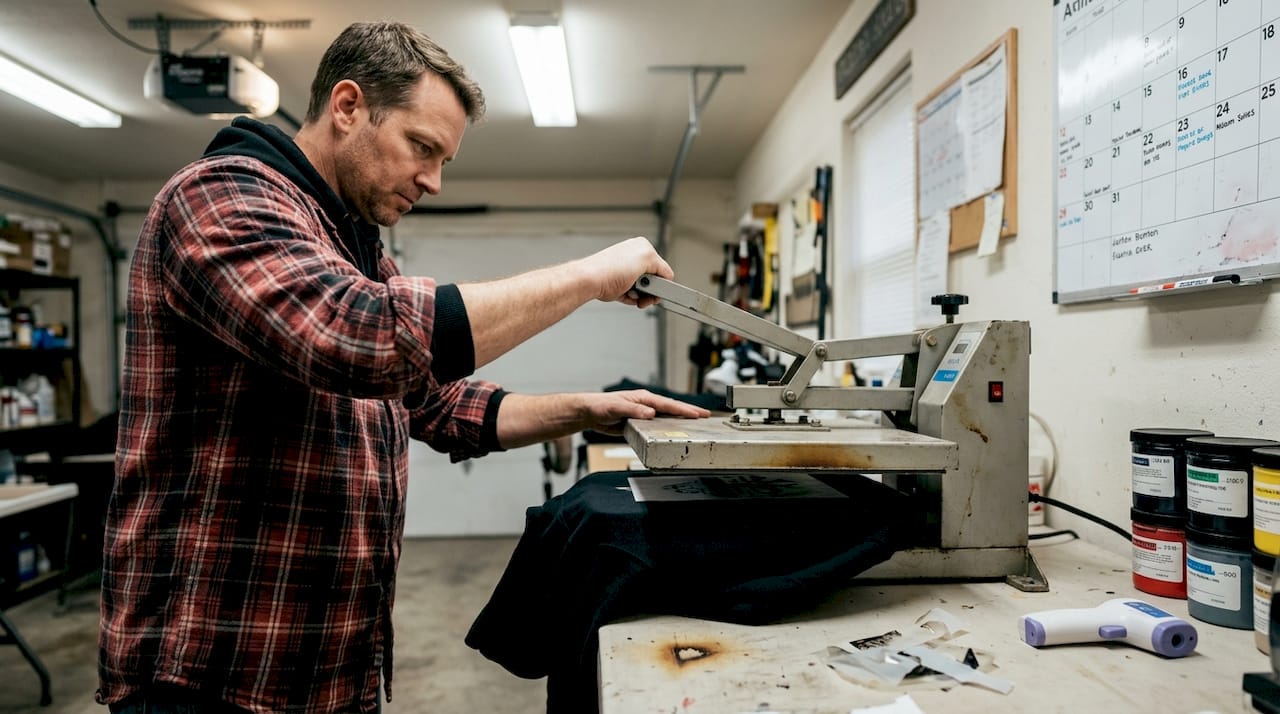
Verification on varied fabric types prevents flaws on dark garments, fabric blends, or coarse weaves that behave differently than standard cotton. Black shirts reveal white ink opacity issues. Polyester blends show dye migration problems. Textured fabrics expose adhesion weaknesses. Testing across your actual product line catches these variables before bulk production.
Proper curing verified on samples reduces cracking in production by confirming optimal temperature, pressure, and time settings for your specific equipment. Heat press calibration varies between models and degrades over time. What worked last month might not work today. Samples provide ongoing quality checkpoints.
| Test Type | Method | Benchmark |
|---|---|---|
| Stretch test | Extend fabric 25% in all directions | No cracking or delamination |
| Peel test | Apply tape firmly and remove quickly | Transfer remains fully bonded |
| Wash durability | 10 cycles hot water, tumble dry high | Minimal fading, no peeling edges |
| Adhesion test | Scratch surface with fingernail | No ink removal or flaking |
Expert tip: Apply standardized lighting conditions during color inspection to avoid metamerism, where colors appear different under various light sources. View samples under daylight, warm LED, and fluorescent lighting to ensure consistency. This prevents the nightmare scenario where transfers look perfect in your studio but wrong in customer photos.
Pro Tip: Create a sample archive organized by supplier, date, and fabric type. This reference library helps you quickly identify quality changes, compare new suppliers against proven benchmarks, and troubleshoot production issues by reviewing what worked previously.
Critical technical validations samples provide:
- Heat press temperature verification using actual equipment, not generic guidelines
- Pressure calibration confirmation across different garment thicknesses
- Peel timing optimization for hot, warm, or cold peel transfers
- Fabric pretreatment necessity testing for specific materials
- Color profile accuracy for your specific printer and ink combination
Understanding what makes quality DTF transfers requires hands on testing that reveals performance under real production conditions. Following a comprehensive DTF transfer quality checklist during sample evaluation ensures you catch issues before they become expensive problems.
Sample transfers versus bulk orders: cost and risk comparisons
Direct bulk ordering risks high losses from poor calibration or incompatibility that samples would have revealed for minimal investment. A $500 bulk order of defective transfers represents total loss, while a $20 sample pack catches the same problems for 4% of the cost. The math is simple: testing costs pennies per lesson learned, while bulk failures cost dollars per item wasted.
Sample order cost is low and often underpriced compared to bulk mistakes because suppliers use samples as marketing tools to demonstrate quality. Samples prevent material waste from calibration and expensive mistakes, ideal for low volume runs where DTF excels over screen printing. You’re essentially getting professional quality control consulting for the price of shipping.
DTF printing is suitable for small runs, making it ideal for artists and hobbyists who can’t justify screen printing setup costs or minimum order quantities. DTF setup costs $3,000 to $10,000 avoided by outsourcing samples, with per transfer costs around $3.50 on gang sheets. This accessibility democratizes custom apparel production for creators without significant capital.
| Approach | Upfront Cost | Risk Level | Time to Identify Issues | Total Potential Loss |
|---|---|---|---|---|
| Sample order first | $15 to $40 | Very low | 3 to 5 days | Maximum $40 |
| Direct bulk order | $300 to $1,000+ | High | After production complete | Entire order value |
| No testing | $0 initially | Extreme | After customer complaints | Order cost plus reputation damage |
Step by step process for evaluating cost benefit of samples before bulk production:
- Calculate your planned bulk order total cost including transfers, shipping, and application labor
- Determine sample cost from the same supplier, typically 5% to 10% of bulk pricing
- Estimate potential loss if bulk order fails quality standards or compatibility requirements
- Compare sample investment against potential bulk failure cost to quantify risk reduction value
- Factor in reputation damage cost from shipping defective products to customers
- Account for time savings from avoiding rework, returns, and customer service issues
Understanding the differences between DTF versus screen printing helps you recognize why DTF sampling is so cost effective for small creators. Screen printing requires expensive setup for each design, making samples prohibitively expensive. DTF produces individual transfers economically, making sampling practical and affordable.
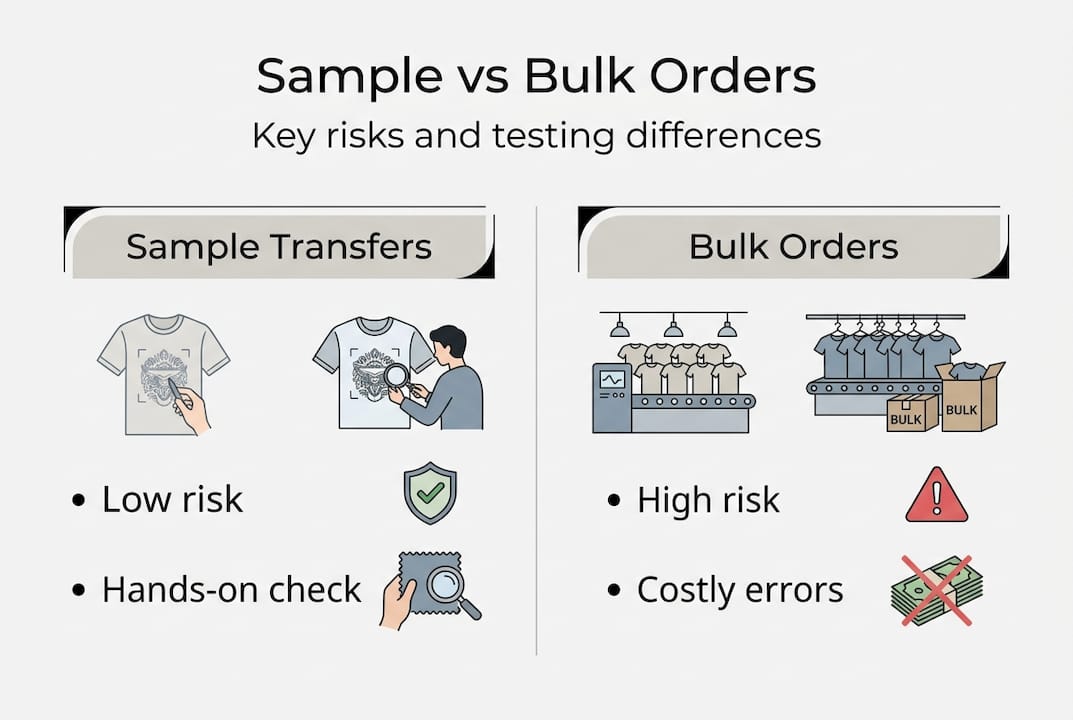
Following a thorough DTF transfer checklist during sample evaluation ensures you test all critical quality factors before scaling to bulk production. This systematic approach catches issues that casual inspection might miss.
Pro Tip: Request samples printed on the exact same equipment and materials your bulk order will use. Some suppliers use premium equipment for samples but cheaper production methods for bulk orders, creating a quality gap that defeats the purpose of testing.
Expert insights and best practices for using sample transfers
Implement batch sampling and standardized lighting conditions for color accuracy to ensure consistency across production runs. Professional quality control requires controlled environments where variables like lighting, temperature, and humidity remain constant. Use samples for quality control standard operating procedures, including batch sampling and standardized lighting for color checking, which reduces returns by 40% through metamerism avoidance.
Beware of common pitfalls like skipping metamerism checks, which cause color mismatches between your studio evaluation and customer environments. Colors that look perfect under warm LED workshop lighting might appear completely different under cool fluorescent retail lighting or natural daylight. Testing under multiple light sources catches these discrepancies before they become complaints.
Establish a formal quality control process using samples to reduce customer returns and build systematic quality into your workflow. Document your testing procedures, create pass/fail criteria for each quality metric, and maintain records that help you identify trends over time. This professional approach separates successful businesses from hobbyists who hope for the best.
“Sample testing is the single most important quality control step in custom apparel production. Businesses that implement systematic sample evaluation before bulk orders reduce returns by 40% and build reputations for consistent quality that drives repeat customers and referrals.”
Use sample results to calibrate equipment and refine production workflows by treating each sample as a learning opportunity. When a sample reveals an issue, document the problem, implement a solution, and test again. This iterative improvement process optimizes your entire production system.
Expert recommendations for maximizing sample transfer value:
- Test samples on actual garments you’ll sell, not scrap fabric with different characteristics
- Apply transfers using the exact process you’ll use in production, including preheat and pressure settings
- Wash samples using customer typical care methods, not gentle hand washing that hides durability issues
- Photograph samples under various lighting to document color appearance across conditions
- Store tested samples as permanent reference standards for future quality comparisons
Implementing a comprehensive DTF print workflow that incorporates sample testing at critical decision points ensures quality remains consistent as you scale production. Following detailed step by step DTF printing procedures helps you identify exactly where in your process samples provide the most value.
Pro Tip: Create a sample testing scorecard that rates each sample across specific criteria like color accuracy, detail reproduction, adhesion strength, and hand feel. Numerical scoring makes supplier comparisons objective and helps you track quality trends over time.
Explore Transfer Kingz DTF transfer solutions
Now that you understand why sample transfers are essential for quality custom apparel production, it’s time to experience the Transfer Kingz difference firsthand. Transfer Kingz offers sample packs designed specifically for testing quality and compatibility before you commit to larger orders. Our samples use the same premium inks, films, and production processes as bulk orders, ensuring what you test is exactly what you’ll receive.
Discover how DTF shirt transfers are revolutionizing custom apparel with vibrant colors and exceptional durability that outperform traditional methods. Learn whether digital transfer film can handle intricate and detailed prints for your most complex designs. Explore innovative products like UV DTF PermaStickers that expand your creative possibilities beyond traditional fabric applications. Experience firsthand why thousands of small creators rely on Transfer Kingz transfers for professional results without professional overhead.
Frequently asked questions about ordering sample transfers
What are the main benefits of ordering sample transfers?
Sample transfers verify print quality, color accuracy, and fabric compatibility before bulk investment, preventing costly production failures. They allow hands on testing of adhesion strength, durability, and hand feel that protects your reputation and budget.
How long does it take to get and test sample transfers?
Most suppliers ship samples within 1 to 3 business days, with delivery taking 3 to 7 days depending on location. Comprehensive testing including wash cycles requires an additional 5 to 7 days, making total turnaround approximately 2 weeks.
Can samples accurately represent bulk quality?
Samples accurately represent bulk quality only when produced using identical equipment, materials, and processes as your planned bulk order. Always confirm with suppliers that samples match bulk production methods, not premium demonstration equipment.
Are sample transfers cost effective for hobbyists?
Sample transfers are extremely cost effective for hobbyists, typically costing $15 to $40 compared to bulk order risks of $300 or more. This small investment prevents expensive mistakes that could end a hobby business before it starts.
What tests should be performed on sample transfers before bulk orders?
Perform stretch tests, peel tests, wash durability tests through 10 cycles, color accuracy checks under multiple lighting conditions, and adhesion tests on your actual product fabrics. Document results systematically to make informed bulk ordering decisions.
0 comments