

TL;DR:
- Specialty films are niche, independent works that explore culturally significant stories often overlooked by mainstream studios. These films foster artistic innovation, community building, and long-term industry growth. Their steady market value and influence demonstrate their vital role in shaping cinema’s future.
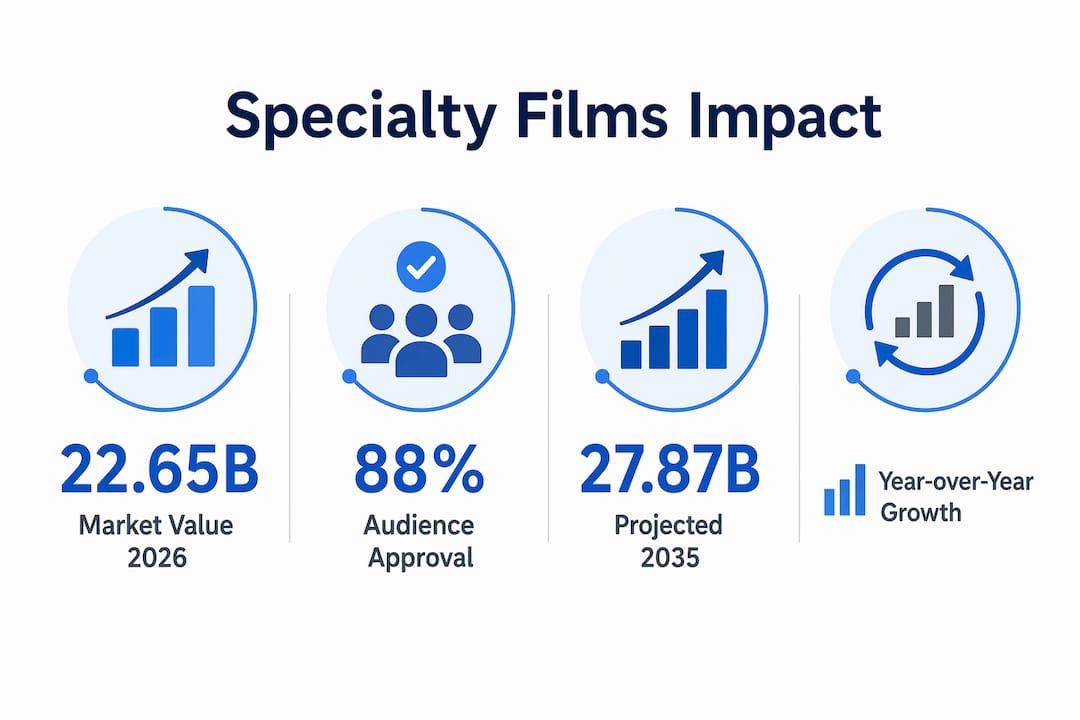
Specialty films are defined as niche, independent, or curated cinematic works that exist outside the mainstream studio system, and they represent the most culturally vital segment of modern cinema. These films carry stories that major studios routinely pass over: immigrant experiences, grief told through surrealist imagery, queer narratives set in rural America. Understanding why specialty films matter means recognizing that cinema’s power to shape culture runs deepest at its edges, not its center. A 2026 national survey found that 88% of moviegoers see their local independent cinema as a cultural hub. That number signals something larger than box office preference. It signals identity.
Why specialty films matter for storytelling and artistic expression
Specialty films give filmmakers creative freedom that studio productions rarely allow. Without the pressure to appeal to the broadest possible audience, directors can pursue character complexity, unconventional narrative structure, and visual experimentation that mainstream cinema avoids. The result is cinema that actually challenges how audiences think and feel.

The brain processes visuals 60,000 times faster than text. That biological fact explains why film is the most direct medium for starting societal conversations. Specialty films exploit this advantage fully, using image and sound to communicate ideas that resist easy explanation.
The artistic methods common in specialty cinema include:
- Nonlinear narrative structure: Films like those from the mumblecore movement use fragmented timelines to mirror how memory actually works.
- Long-take cinematography: Extended uncut shots force audiences to sit with discomfort rather than escape it through editing.
- Diegetic sound design: Specialty films often strip away musical scores entirely, using ambient sound to create emotional texture.
- Unreliable narration: Characters who mislead the audience force active interpretation rather than passive consumption.
- Hyper-local specificity: Stories rooted in a single neighborhood or subculture create universal resonance through precise detail.
These techniques rarely appear in multiplex programming because they demand patience from audiences. Specialty films treat that patience as a feature, not a flaw.
Pro Tip: If you are a filmmaker or creative, study how specialty films use negative space and silence. The absence of conventional storytelling cues is often where the most powerful meaning lives.
The importance of specialty films to artistic culture cannot be overstated. They function as a laboratory for cinematic technique. Methods that debut in specialty cinema, from handheld camera work to naturalistic dialogue, often migrate into mainstream films a decade later. Specialty films do not follow trends. They create them.
How do specialty film theaters build community?
Specialty film exhibition delivers public value that goes well beyond box office revenue. It builds community connection, local pride, and long-term cultural memory. That is a fundamentally different value proposition than a multiplex showing the same blockbuster across twelve screens.
The 2026 Art House Convergence National Audience Survey found that 70% of moviegoers call their local indie theater a “very valuable” lifestyle destination. That language matters. “Lifestyle destination” means people are not just watching films. They are building habits, relationships, and cultural identity around these spaces.
Art house theaters achieve this through programming that multiplexes cannot replicate:
- Director Q&As and post-screening discussions that turn passive viewing into active dialogue
- Curated thematic series that connect films across decades, countries, and movements
- Festival partnerships that bring international and regional cinema to local audiences
- Membership models that create financial loyalty and community belonging simultaneously
- Event screenings tied to anniversaries, social movements, or local history
Art house theaters that adopt membership and curated programming models show consistent year-over-year box office growth. The business model works precisely because it prioritizes depth of engagement over volume of tickets.
The indie cinema resurgence across America reflects a clear audience preference: curated, intimate experiences over large multiplex spectacles. Audiences exposed to specialty films tend to see international and independent cinema as central to their community identity. That is not nostalgia. That is a deliberate cultural choice.
What is the market size and economic impact of specialty films?
The specialty films market was valued at USD 22.65 billion in 2026 and is projected to reach USD 27.87 billion by 2035, growing at 2.33% annually. That growth rate is steady rather than explosive, which reflects the resilience of a sector built on loyal audiences rather than viral moments.
The economic significance of specialty films extends beyond ticket sales. Consider the ecosystem each specialty film supports:
| Economic Layer | What It Generates |
|---|---|
| Production | Jobs for independent crews, local talent, and regional vendors |
| Exhibition | Revenue for art house venues, concessions, and event programming |
| Distribution | Income for boutique distributors and film festival circuits |
| Merchandise | Demand for custom apparel, posters, and branded creative goods |
| Cultural tourism | Foot traffic to neighborhoods anchored by indie theaters |
Post-pandemic recovery in specialty cinema has been driven by audiences actively seeking experiences that streaming cannot replicate. A film watched alone on a laptop does not generate the same cultural memory as a sold-out art house screening followed by a two-hour conversation at the bar next door. The social dimension of specialty film exhibition is its economic engine.
High-performance specialty films also drive innovation across adjacent industries, including pharmaceuticals and electronics, where regulatory requirements push material science forward. That same spirit of precision and purpose defines the cinematic specialty film sector. Both operate on the principle that tailored solutions outperform generic ones.
Common misconceptions about niche films and their audiences
The biggest misconception about specialty films is that their limited audience is a failure. It is not. Artistic specialty films rarely aim for mass market consumption. Their success depends on reaching the right audience with depth, not the largest audience with breadth.
A second misconception is that specialty films are inaccessible or deliberately obscure. Most are not. They are specific. A film about a Haitian family navigating immigration paperwork in Miami is not obscure. It is precise. Precision is not the same as exclusion.
A third misconception is that small budgets mean lower quality. Specialty films often achieve greater emotional impact per dollar than studio productions because every creative decision is intentional. There is no committee approval process softening the edges.
Pro Tip: When evaluating a specialty film, resist the urge to measure it against blockbuster pacing. Ask instead what the film is trying to make you feel, and whether it succeeds on its own terms.
The role of independent films in the broader film industry is to absorb creative risk so that the industry as a whole can evolve. Studios watch specialty films closely. When a low-budget film about grief or identity connects with audiences, studios take note and eventually fund larger versions of similar stories. Specialty cinema is the research and development arm of the film industry, and it operates without a safety net.
Balancing artistic integrity with market realities is the central challenge of specialty film exhibition. Curators and distributors must select films that honor their artistic vision while still drawing enough audience to keep venues financially viable. That tension is not a weakness. It is what keeps specialty cinema honest.
Key Takeaways
Specialty films matter because they create cultural infrastructure, drive artistic innovation, and build communities that mainstream cinema cannot replicate.
| Point | Details |
|---|---|
| Cultural identity | 88% of moviegoers see indie theaters as cultural hubs, not just entertainment venues. |
| Artistic innovation | Specialty films pioneer techniques like long-take cinematography and nonlinear narrative that later shape mainstream cinema. |
| Community building | 70% of audiences call indie theaters a “very valuable” lifestyle destination, driven by curated programming and events. |
| Economic resilience | The specialty films market is projected to grow from USD 22.65 billion to USD 27.87 billion by 2035. |
| Creative risk | Specialty films absorb artistic risk for the entire industry, making them the sector’s most important creative engine. |
Why I think specialty cinema deserves more credit than it gets
Spend enough time in art house theaters and you notice something that never shows up in market reports. The audience is different. Not demographically. Behaviorally. People linger. They argue about what a film meant. They come back the following week for the next one in a series. That kind of engagement is rare, and it does not happen by accident.
The value of niche cinema is often framed as cultural charity. Support indie films because they are good for you, like vegetables. That framing is wrong and slightly condescending. Specialty films are not medicine. They are the most alive part of cinema. They take risks that matter, and they fail in ways that teach the industry something.
What I find most compelling is how specialty film spaces create permission for audiences to care openly about cinema. In a multiplex, you watch and leave. In an art house, you are expected to have an opinion. That expectation changes how people engage with film, and it changes how they engage with each other. That is not a small thing.
The ongoing need to support specialty film ecosystems is not sentimental. It is practical. Without these films and the theaters that show them, cinema loses its capacity to surprise. And a medium that cannot surprise its audience is already dying.
— Anthony
Transferkingz and the creative world of specialty film
Specialty films inspire passionate communities, and those communities express themselves through more than just conversation. They create merchandise, event branding, and custom apparel that carries the identity of the films they love.
Transferkingz specializes in high-quality DTF transfer printing that gives creatives and small businesses the tools to bring those ideas to life. Whether you are producing custom gear for a film festival, branded merchandise for an indie theater, or apparel for a film collective, Transferkingz delivers vibrant, durable prints with no minimum order requirements and fast turnaround times. The role of transfer films in creative production is exactly what Transferkingz has built its reputation on. Your vision deserves print quality that matches it.
FAQ
What are specialty films in cinema?
Specialty films are niche, independent, or curated cinematic works produced outside the mainstream studio system. They prioritize artistic expression, cultural specificity, and storytelling depth over mass-market appeal.
Why do indie theaters matter to local communities?
A 2026 national survey found that 88% of moviegoers see their local indie theater as a cultural hub. These venues build community identity through curated programming, events, and social engagement that multiplexes do not offer.
Are specialty films financially viable?
The specialty films market was valued at USD 22.65 billion in 2026 and is projected to reach USD 27.87 billion by 2035. Art house theaters with membership models and curated programming consistently show year-over-year box office growth.
Why do specialty films have small audiences?
Small audiences are a deliberate feature, not a failure. Specialty films target specific communities with depth and precision rather than pursuing the broadest possible viewership.
How do specialty films influence mainstream cinema?
Specialty films function as the industry’s creative research and development sector. Techniques and story types that debut in specialty cinema, from naturalistic dialogue to unconventional structure, regularly migrate into studio productions over time.
0 comments