

TL;DR:
- Premium inks use high-quality pigments and resins to produce vibrant, durable prints with better equipment protection. They reduce hidden costs and improve longevity, wash resistance, and consistency, making them a smarter investment for print businesses. Testing and tracking production metrics over time clearly demonstrates their long-term cost benefits and production stability.
Premium inks are specially formulated printing fluids that use superior pigments, resins, and chemical stabilizers to produce sharper colors, longer-lasting prints, and better equipment protection than standard alternatives. For print professionals and small business owners running custom apparel and merchandise operations, the question of why use premium inks comes down to one core truth: ink quality determines both the product your customer holds and the equipment you rely on every day. Direct-to-Film (DTF) printing in particular depends on ink consistency to deliver the vivid, wash-resistant results that keep customers coming back.
What are the key quality advantages of premium inks?
Premium inks produce measurably better print quality through superior pigment concentration and resin chemistry. The result is higher optical density, meaning colors appear richer and more saturated on fabric. EcolON Premium inks, for example, comply with ISO and ASTM standards and demonstrate stable, VOC-free formulation with excellent ink transfer. That compliance matters because it gives you a repeatable benchmark, not just a marketing claim.
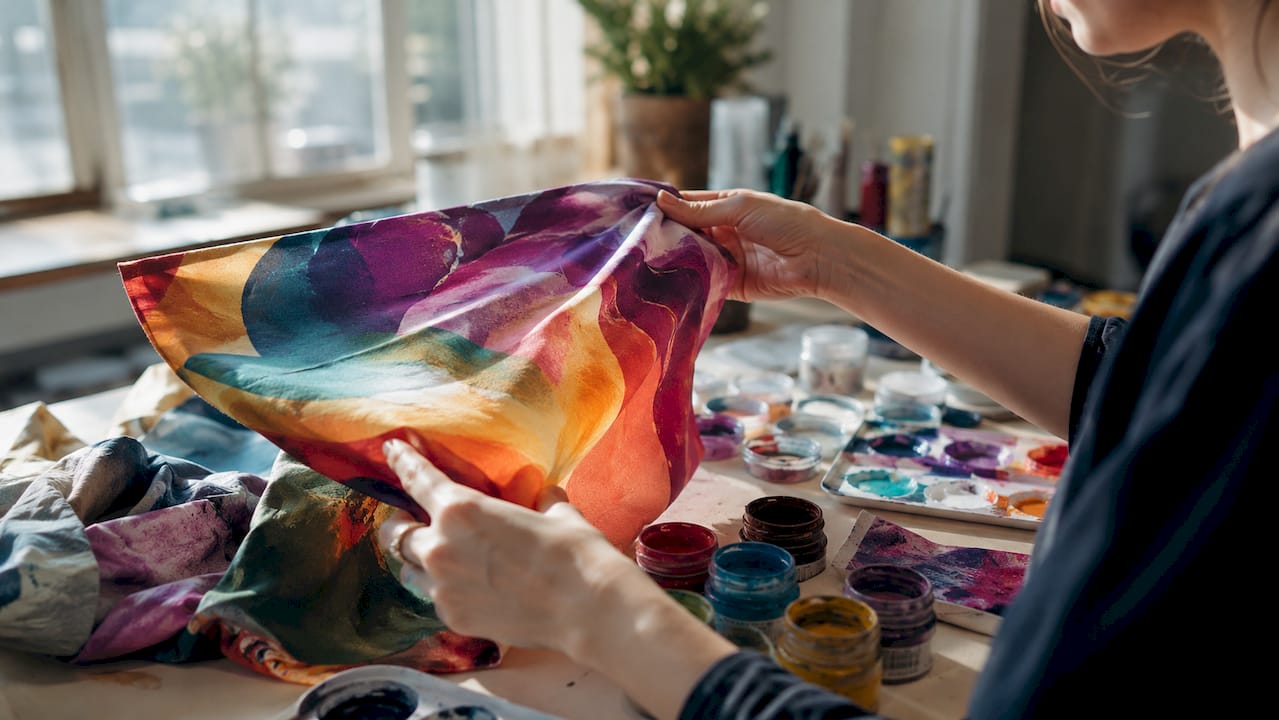
Pigment ink vs. dye ink: what the difference means for apparel
Pigment inks bind to fabric fibers using resin carriers, which is why they resist fading and cracking after repeated washing. Dye inks dissolve into the substrate and produce vivid initial results, but they break down faster under UV exposure and laundering. For custom apparel, where a customer might wash a shirt 50 times before replacing it, pigment-based premium DTF inks are the clear choice for long-term color retention.
Standard inks often use lower-grade pigment particles with inconsistent sizing. That inconsistency creates uneven dot reproduction on the print surface. Premium formulations control particle size tightly, which translates to sharper edges, finer detail, and more accurate color matching across print runs.
Pro Tip: Run a side-by-side wash test before committing to any ink. Print the same design with your current ink and a premium alternative, wash both 20 times, and photograph the results under the same lighting. The difference in color retention is usually obvious by wash 10.
Here is how premium and standard inks compare across the quality factors that matter most to apparel printers:
| Quality Factor | Premium Inks | Standard Inks |
|---|---|---|
| Color vibrancy | High optical density, vivid saturation | Moderate, may appear flat |
| Wash resistance | Endures many wash cycles with minimal fading | Fading and cracking common after repeated washing |
| Detail reproduction | Tight particle sizing, sharp dot placement | Inconsistent particle size, softer edges |
| Color accuracy | Consistent across print runs | Variable, batch-to-batch drift common |
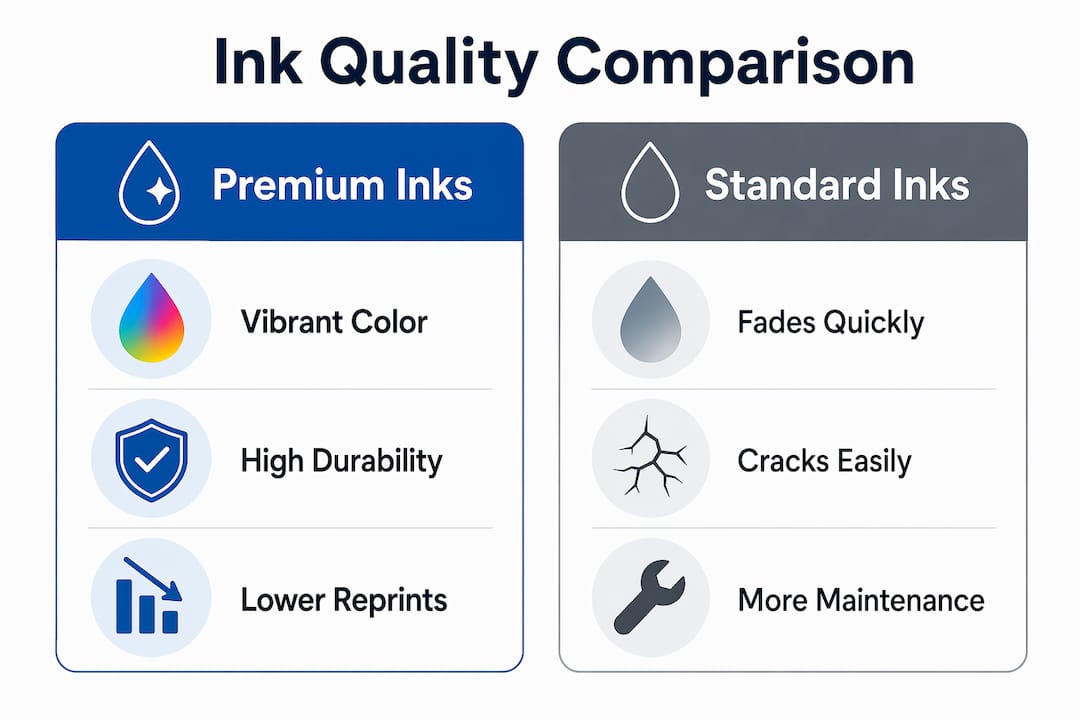
The business case for superior ink quality is straightforward. Customers who receive a shirt that fades after five washes do not reorder. Customers who receive a shirt that still looks sharp after 30 washes become repeat buyers and refer others.
How do premium inks reduce hidden printing costs?
The real cost of cheap ink shows up in maintenance logs, not on the invoice. Low-quality or incompatible inks increase nozzle clogs, cleaning frequency, and downtime, raising hidden maintenance costs that most shops never track. A printhead cleaning cycle wastes ink, time, and machine capacity. Run three or four of those per shift and the savings from cheaper ink evaporate fast.
Premium inks with low sediment formulations address this directly. Resolute Premium DTF Inks report 50% fewer head cleans and 30% longer printhead life compared to standard alternatives. A printhead for a commercial DTF printer can cost several hundred to several thousand dollars. Protecting that component with the right ink is not optional for a profitable shop.
Here is how the hidden cost math typically plays out over a production quarter:
- Cleaning cycles. A shop running cheap ink may perform 3–5 head cleans per day. A shop using premium ink may perform 1–2. That difference adds up to hours of lost production weekly.
- Reprints. Inconsistent ink flow causes banding, color shifts, and failed prints. Each reprint consumes film, ink, and press time. Premium ink selection lowers reprint rates by delivering consistent output from the first sheet.
- Printhead replacement. Premature printhead failure from incompatible ink is one of the most expensive surprises in DTF production. OEM-compatible inks are engineered to protect printhead nozzles through rigorous compatibility testing, reducing blockage risk.
- Downtime labor. Every minute your press is down for maintenance is a minute your team is not producing sellable output. That labor cost is real even if it never appears on a supply invoice.
Pro Tip: Track your cleaning cycles and reprint rate for two weeks with your current ink. Then switch to a premium formulation and track the same metrics. Most shops see the difference in the data within the first week.
Ink selection affects overall profitability more than consumable cost alone. The right frame is cost per sellable unit, not cost per liter. Premium ink that produces 98 sellable prints per 100 attempts beats cheap ink that produces 85, even if the cheap ink costs 30% less per bottle.
Do premium inks actually last longer on custom apparel?
Premium DTF inks are engineered specifically to endure the physical stress that apparel printing demands. Washing, stretching, and heat exposure all degrade ink adhesion over time. Premium inks produce prints that endure many wash cycles with significantly less fading and cracking compared to lower-quality alternatives. That durability is not accidental. It comes from resin systems designed to flex with fabric rather than crack under stress.
For DTF shops specifically, white ink settling is a major production disruptor. White ink is the base layer in DTF printing and must stay suspended evenly in the ink line. Premium formulations with low sedimentation rates reduce white ink settling, which means fewer production interruptions on long runs and tighter schedules. That operational stability directly supports on-time delivery, which is a competitive advantage for small shops.
Here is a summary of durability factors where premium inks outperform standard options:
| Durability Factor | Premium Ink Performance | Standard Ink Performance |
|---|---|---|
| Wash cycle resistance | Minimal fading after 30+ washes | Noticeable fading by wash 10–15 |
| Crack resistance | Resin flex technology reduces cracking | Brittle adhesion, cracking common |
| White ink stability | Low sedimentation, consistent flow | Frequent settling, requires agitation |
| UV fade resistance | Pigment chemistry resists UV degradation | Faster color breakdown under UV |
The brand reputation angle matters here too. Every print you ship is a walking advertisement. A faded or cracked design reflects directly on your business, not on the ink manufacturer. Premium ink is one of the few investments in your shop that your customers actually see and feel.
Environmental conditions also play a role. Ink viscosity and stability depend on temperature and humidity. Uncontrolled conditions increase clogging risk and degrade adhesion even with premium inks. Keeping your print environment between 65°F and 75°F with 40%–60% relative humidity protects your ink investment and your output quality.
Premium inks vs. budget inks: which is right for your shop?
Budget inks are not always the wrong choice. For low-volume hobbyist printing or short-run promotional items with no wash durability requirement, standard inks may produce acceptable results at lower cost. The problem is that most print businesses grow beyond that use case quickly, and the ink habits formed early become expensive to correct later.
The formulation gap between premium and budget inks goes beyond color brightness. The difference between premium and cheap inks includes flow stability, clog risk, and equipment health. Budget inks often use generic pigment blends not tested against specific printhead architectures. That mismatch creates unpredictable behavior under production conditions.
Validating which ink works best for your operation requires structured testing. A/B testing across weeks, measuring setup time, cleaning cycles, ink consumption, and reprints, gives you real data instead of vendor claims. Run both inks through identical jobs and compare cost per sellable unit, not cost per bottle.
| Comparison Factor | Premium Inks | Budget Inks |
|---|---|---|
| Upfront cost | Higher per liter | Lower per liter |
| Cost per sellable unit | Lower due to fewer reprints and waste | Higher when reprints and downtime are counted |
| Printhead longevity | Extended life through compatibility testing | Shortened life from incompatible chemistry |
| Color fidelity | Consistent across batches | Variable, prone to batch drift |
| Wash durability | High, suitable for retail-quality apparel | Low to moderate, not reliable for repeat washing |
| Operational stability | Low sedimentation, fewer clogs | Higher clog frequency, more maintenance |
The decision point is clear for shops producing custom apparel at any meaningful volume. Premium inks deliver better output, protect expensive equipment, and lower the true cost of production. Budget inks trade short-term savings for long-term risk.
Key takeaways
Premium inks lower total production cost, protect equipment, and deliver the wash-resistant color quality that custom apparel customers expect and repeat buyers demand.
| Point | Details |
|---|---|
| Quality drives retention | Premium pigment and resin formulations produce vivid, wash-resistant prints that keep customers reordering. |
| Hidden costs favor premium | Fewer cleaning cycles, fewer reprints, and longer printhead life make premium inks cheaper per sellable unit. |
| Durability is measurable | Premium DTF inks show significantly less fading and cracking after 30+ wash cycles compared to standard alternatives. |
| Operational stability matters | Low sedimentation in premium inks reduces white ink settling and production interruptions on long runs. |
| Test before you commit | A/B testing across two weeks of production gives you real cost-per-unit data to justify the switch. |
The real reason i always recommend premium inks
I have watched shops make the same mistake repeatedly. They buy the cheapest ink available, run it for three months, and then wonder why their printhead failed, their reorder rate dropped, and their margins are worse than when they started. The math on cheap ink looks good on a purchase order. It looks terrible on a quarterly P&L.
The thing most articles miss is that premium ink is not just a quality upgrade. It is a risk management decision. A printhead replacement on a commercial DTF printer can cost more than a year’s worth of premium ink. One failed printhead from incompatible chemistry wipes out every dollar you saved on budget ink and then some.
I also think the customer loyalty angle is undervalued. When someone buys a custom shirt from your shop and it still looks sharp after 40 washes, they do not just reorder. They send their friends. That word-of-mouth is worth more than any marketing spend, and it starts with the ink you chose before they ever placed an order.
My practical advice: stop evaluating ink by price per liter. Start tracking cost per sellable unit and reorder rate from customers who received prints made with each ink type. Those two numbers will tell you everything you need to know. The shops I have seen grow consistently are the ones that figured this out early and never looked back.
For anyone considering the switch, also look at your DTF print durability practices holistically. Ink is the biggest lever, but cure temperature, film quality, and application pressure all interact with ink performance.
— Anthony
See what premium DTF inks can do for your shop
Transferkingz uses professional-grade DTF inks formulated for vivid color, wash resistance, and operational consistency across every order. Whether you are running a small custom apparel shop or scaling up production, the ink quality in every transfer is built to meet retail-grade durability standards.
Transferkingz offers custom DTF printing services with no minimum order requirements and fast turnaround times. You can upload your artwork, use the gang sheet builder to maximize film usage, and receive transfers ready to press. Explore the full range of printing solutions at the Transferkingz Print Point to find the right fit for your production volume and quality goals.
FAQ
What makes premium inks different from standard inks?
Premium inks use higher-grade pigments, engineered resins, and controlled particle sizing that standard inks lack. Those formulation differences produce better color accuracy, wash resistance, and printhead compatibility.
How do premium inks reduce printing costs over time?
Premium inks lower cost per sellable unit by reducing reprints, cleaning cycles, and printhead failures. Controlled A/B tests show that premium inks produce fewer waste outputs despite their higher upfront price.
Are premium DTF inks worth it for small businesses?
Yes. Small shops benefit most from premium DTF inks because a single printhead failure or high reorder rate from poor print quality can threaten the entire operation. The wash resistance and color fidelity of premium inks directly support customer retention.
How does environment affect premium ink performance?
Temperature and humidity directly impact ink viscosity and adhesion. Keeping your print space between 65°F and 75°F with 40%–60% relative humidity protects ink stability and reduces clog risk even with premium formulations.
How do i test whether premium inks are right for my workflow?
Run an A/B test over two weeks using identical jobs with both ink types. Track cleaning cycles, reprints, and sellable output per job. Compare cost per sellable unit rather than cost per liter to get an accurate picture of true production value.
Recommended
- High-Quality DTF Ink for Stunning Transfers: Achieve Vibrant, Durable – Transfer Kingz
- Inkjet vs DTF printing: best method for custom apparel 2026 – Transfer Kingz
- Top Textile Printing Methods for Custom Apparel Success – Transfer Kingz
- How ink quality impacts DTF printing: guide for small businesses – Transfer Kingz
0 comments